Aiswei Computing is a provider of intelligent solutions, with its business primarily divided into two parts: intelligent terminals and embodied intelligence. Based on Aiswei Computing’s RISC-V+AI ecological technology platform, it can provide intelligent solutions to a wide range of customers. Moreover, Aiswei Computing also demonstrates numerous advantages in the RISC-V ecosystem and supply chain.
With the grand opening of the fifth RISC-V China Summit at the Zhangjiang Science Hall in Shanghai, a feast of wisdom and innovation has begun.
As the most influential industry summit in the RISC-V field in China, the RISC-V China Summit has been promoting the prosperous development of the open-source chip ecosystem for five consecutive years. This year’s summit gathers hot industry topics and brings together global experts, business leaders, and developers to explore the cutting-edge development and industrial implementation of RISC-V technology.
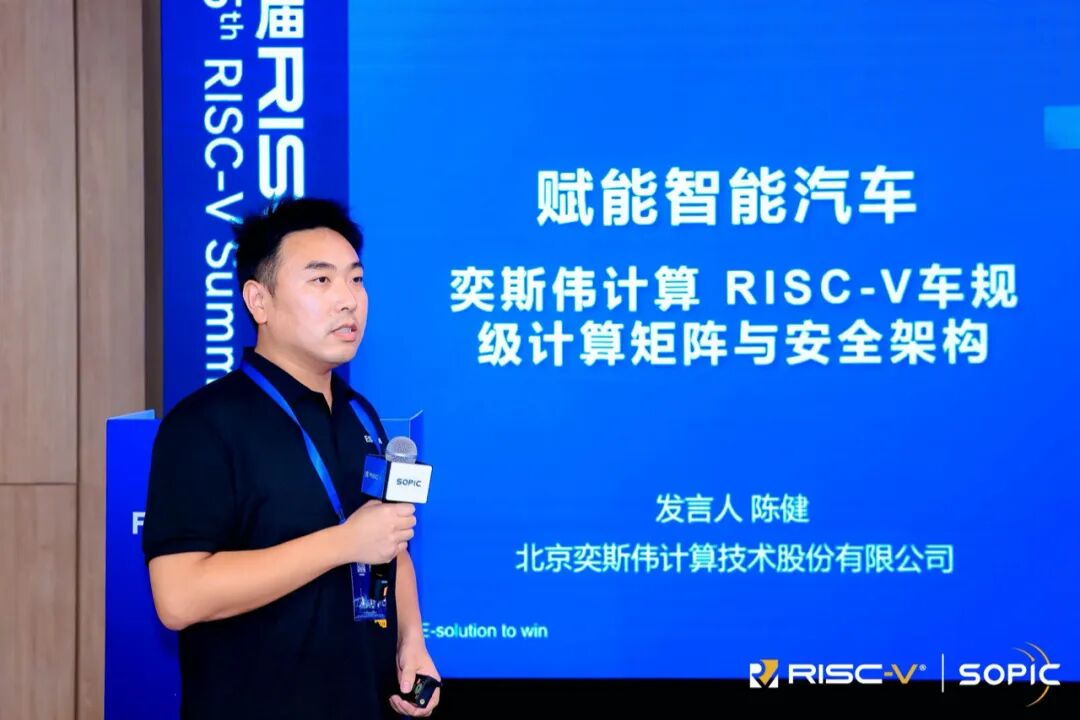
At the special “Automotive Electronics Sub-Forum” of this year’s forum, Chen Jian from Beijing Aiswei Computing Technology Co., Ltd. delivered an exciting speech titled “Empowering Intelligent Vehicles: Aiswei Computing’s RISC-V Automotive-grade Computing Matrix and Safety Architecture,” reporting on Aiswei Computing’s relevant applications in the automotive-grade MCU field, sharing his thoughts and understanding of technology development, and providing insights into the future of the industry.
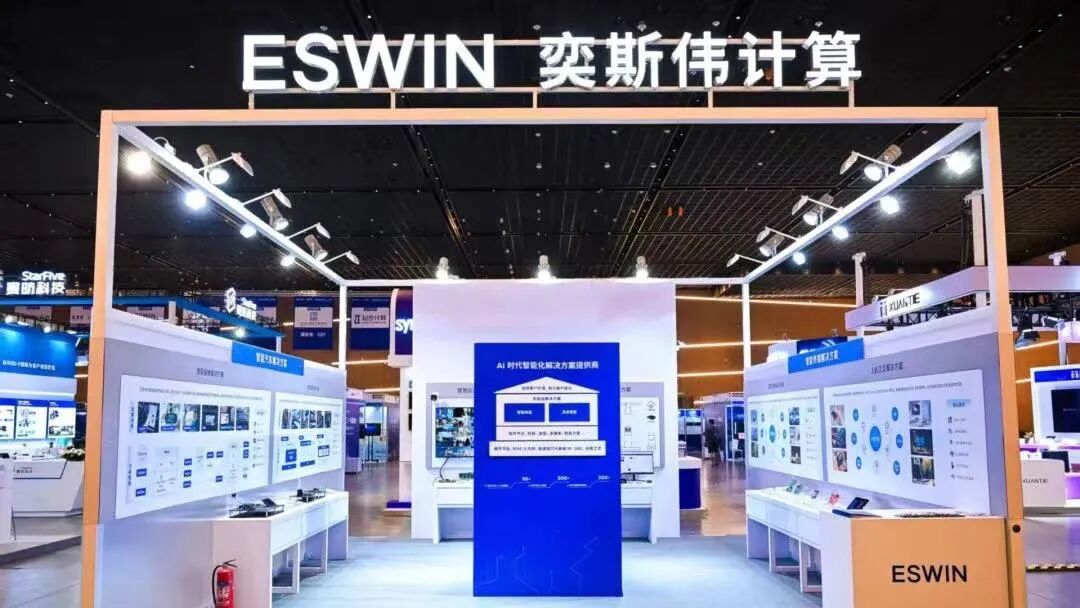
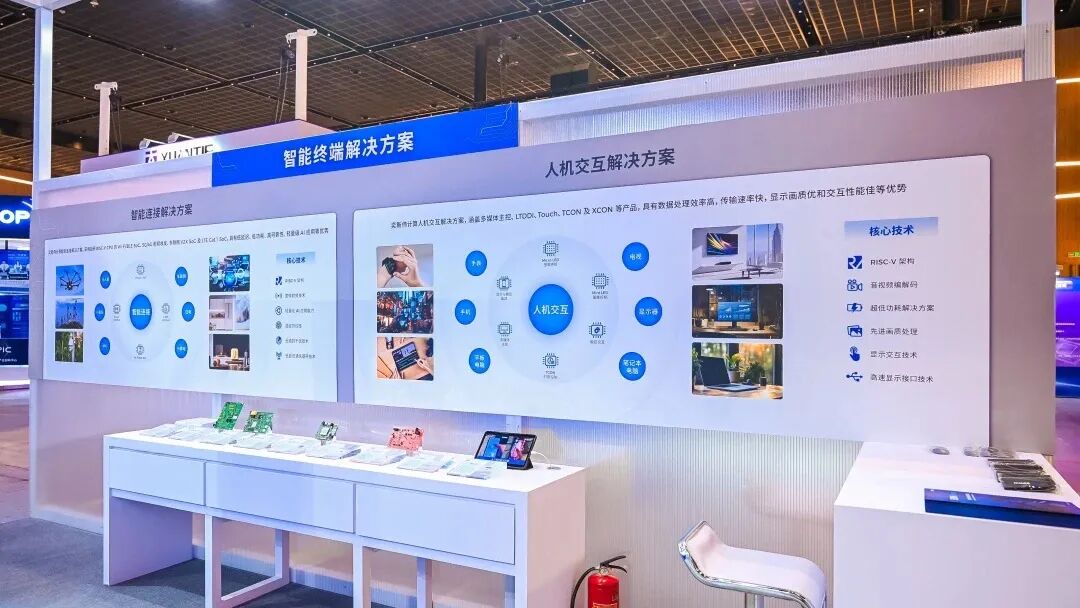
As the head of the MCU+ Development Center of Aiswei Computing’s automotive division, Chen Jian introduced that Aiswei Computing is a provider of intelligent solutions, with its business primarily divided into intelligent terminals and embodied intelligence. Based on Aiswei Computing’s RISC-V+AI ecological technology platform, it can provide intelligent solutions to a wide range of customers.
“Aiswei Computing categorizes RISC-V into different levels for automotive-grade RISC-V and product matrix, distinguishing its computing power, while mapping different computing powers to the company’s automotive-grade computing chips, providing a mapping relationship for different application scenarios of the chips. We can see that we currently have layouts in perception, connectivity, general control, and regional controllers,” said Chen Jian.
From a product perspective, Aiswei Computing has a mainstream regional controller and multimedia processor chip, primarily supporting regional control-level AI computing. The significant difference from traditional domain controllers is that it adopts a high-performance core based on RISC-V while enhancing AI acceleration. Meanwhile, this chip can achieve faster startup speeds and lower power consumption compared to traditional domain control chips, while providing rich peripheral resources.
Furthermore, Aiswei Computing also has a chip related to motor control and perception connectivity, which differs from traditional motor control MCUs, as it supports lightweight AI applications, significantly enhancing customer experience in the field of body control. Additionally, this chip also supports fast startup.
“We have extensively adopted RISC-V cores in some chip designs, with a heterogeneous chip architecture of big and small cores, achieving fast startup and low power consumption, giving us a certain advantage among similar chips,” Chen Jian explained.
Exploring Aiswei Computing’s advantages in the RISC-V ecosystem and supply chain, it can be found that Aiswei Computing obtained the ASIL-D system certification early on and has developed multiple chips that meet ASIL-B functional safety standards.
Chen Jian stated: “We comply with the entire process control and can design functional safety from ASIL-B to ASIL-D on different chip hardware. The main reason we can develop a large number of chips in a short time is that we develop chips for different application scenarios based on a relatively mature technology platform, which is also one of our core competitive advantages, rooted in our profound understanding of the entire chip industry.”
Accelerating RISC-V Automotive Application Development: How IAR Overcomes Challenges and Wins the Future?
In the first half of this year, the penetration rate of new energy vehicles has reached 50.2%
E Weekly Car News | Geely and Zeekr sign merger agreement, Luobo Kuai Pao collaborates with Uber to reach an agreement
Promoting the industrialization of autonomous and controllable automotive-grade MCU, how does Wuhan Binary Semiconductor do it?