I am a man in flip-flops, a long-term automotive electronics engineer in the magic city.
As usual, I share a piece of text I like to avoid becoming an engineer with high knowledge but low culture:
Achieve extreme simplicity in desires, understand your true desires, remain unaffected by external trends, do not blindly follow or conform. Focus all your energy on yourself. First, eliminate the excess, find patterns in everything, with integrity as the foundation; second, think systematically, design boldly, and verify cautiously; third, adhere to the “one-page rule,” meaning that regardless of how complex the work is, it should be clearly described on one page; fourth, resolutely oppose half-hearted efforts, oppose unnecessary formalities, and oppose the mentality of being overly accommodating.
Unconsciously, August has arrived. Sitting in front of the computer, typing words serves as a memory of time for myself. Years later, when I click again, I hope it will trigger memories, allowing the present moments to be conveyed to that time.
1. Background Information
As the transportation industry shows a trend towards electrification, vehicles must have safe, reliable, and user-friendly systems, which puts immense pressure on engineers and software architects. The embedded software for electric vehicle (EV) powertrains is extremely complex and requires specialized solutions to address the challenges in the development process.
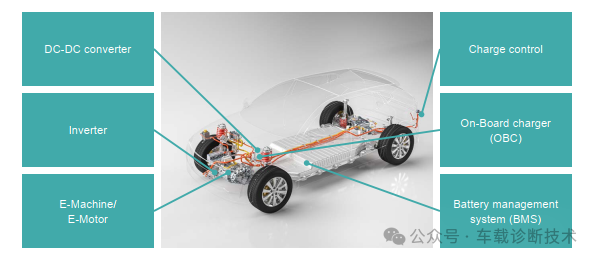
Before delving into the numerous challenges faced in developing embedded systems for electric vehicles (EVs), let’s first understand the six key components of the EV powertrain:
-> DC Voltage Converter
This is a high-frequency power conversion circuit that uses high-frequency switches along with inductors, transformers, and capacitors to smoothly convert switching noise into stable DC voltage. In electric vehicles, the DC voltage converter is responsible for monitoring and precisely controlling the flow of high-voltage current during the DC voltage conversion process, ensuring that the current can safely and effectively enter the auxiliary dual-volt battery or standard battery.
-> Inverter
The inverter plays a crucial role in the energy conversion process of electric vehicles. It efficiently converts the DC power from the high-voltage battery of the electric vehicle into AC voltage, providing the necessary power for the vehicle’s propulsion system.
-> Electric Motor
The electric motor, as the core driving component of the electric vehicle, has the capability to monitor and precisely control the phase current and torque applications of the motor drive. It cleverly utilizes the principle of magnetic flow to convert electrical energy into mechanical energy, providing strong and stable power output for the electric vehicle.
-> Charging Control Component
The specific design and function of this component may vary depending on the country or technology used. It primarily utilizes specialized protocols to regulate and standardize the charging process of electric vehicles while efficiently and safely communicating with charging stations or electric vehicle supply equipment (EVSE) to ensure a smooth charging process.
-> On-Board Charger (OBC)
The on-board charger is an important part of the electric vehicle charging system. It converts the AC power provided by the charging station into DC power to charge the vehicle’s battery. Additionally, the OBC has the capability to monitor and protect the charging rate, allowing real-time monitoring of various parameters during the charging process to ensure safety and stability while performing other monitoring and protection tasks related to charging.
-> Battery Management System (BMS)
The battery management system is the “smart steward” of the high-voltage battery in electric vehicles. It can monitor multiple status and condition parameters of the high-voltage battery in real-time, including total voltage, state of charge, and environmental factors, providing strong assurance for the safe operation and efficient use of the battery.
The EV (electric vehicle) powertrain system is like a precisely coordinated organic whole, where the six components must work closely together to unleash the maximum performance potential of the vehicle. However, in the critical phase of software development, there are numerous challenges: not only are there complex issues arising from the architectural level that need to be addressed, but there are also key factors such as safety and security that must be comprehensively considered to ensure the system operates reliably under various conditions. Furthermore, the situation regarding charging protocols is also concerning, as different regions have their own differentiated standards, and these protocols are continuously evolving and updating, undoubtedly adding more variables and difficulties to software development and system integration.
2. Development of Electric Vehicle Powertrain Systems – Challenges and Solutions
With the rapid development of electric vehicle (EV) technology, its complexity is increasing day by day, and the trend of integration among subsystems is becoming more pronounced. In this context, electronic control unit (ECU) developers are facing many new architectural challenges that urgently require effective solutions.

1. Architectural Challenges – The Dual Challenge of Integration and Safety
Improving system integration is one of the important strategies to address the complexity of EVs, leading to the emergence of the “combination box” architecture. This architecture innovatively integrates two EV functions within one ECU, such as combining the on-board charger (OBC) with the DC voltage converter, OBC with the inverter, and the inverter with the DC voltage converter. This integration not only simplifies the vehicle’s wiring layout and reduces the number of enclosures used but also allows two functions to share the same cooling and control system, effectively reducing system costs and improving space utilization.
This integrated architecture also brings new safety challenges. If any function within the combination framework must have automatic fault protection, then the entire architecture must pass the Automotive Safety Integrity Level (ASIL) certification. ASIL is a risk classification system established by the ISO 26262 standard for the functional safety of road vehicles, which imposes strict requirements on the safety performance of the system. To meet this certification standard, developers need to leverage advanced tools and technologies, such as using AUTOSAR stacks with multi-core support and AUTOSAR basic software (BSW), which can provide strong safety guarantees to ensure stable and reliable operation under various complex conditions.
2. Security Challenges – Protective Barriers Against Cyber Threats
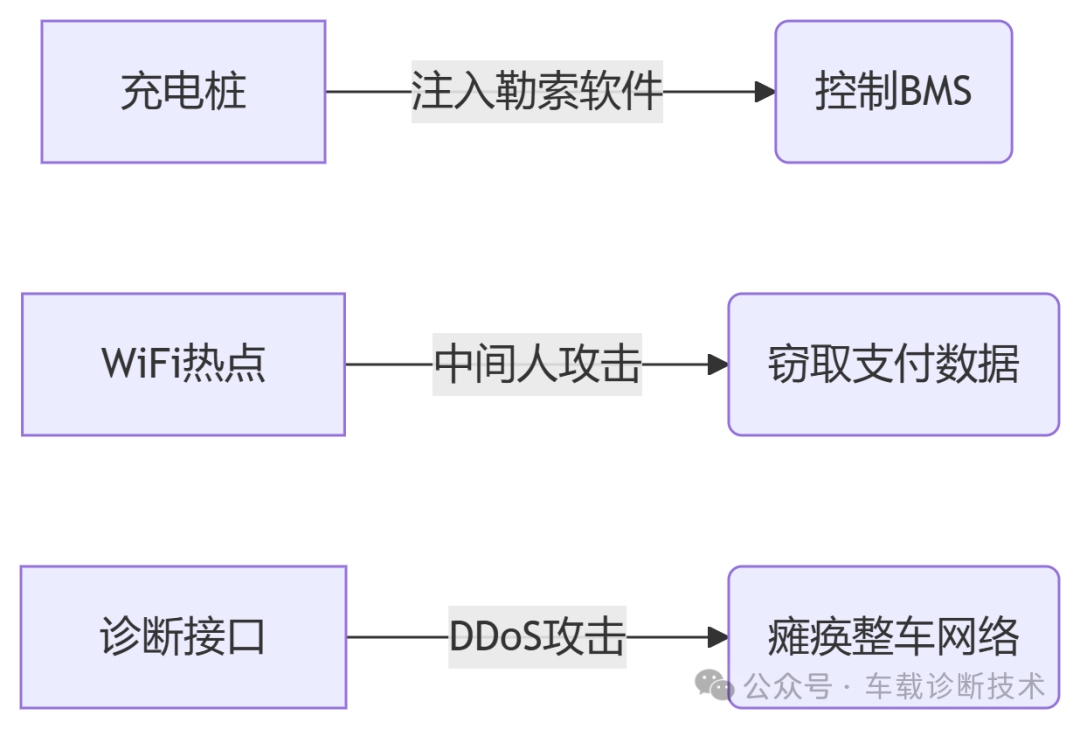
Modern vehicles are gradually evolving towards networking and intelligence, with their electrical architecture becoming increasingly complex, featuring numerous access points such as diagnostic ports, USB and WiFi connections, and charging ports connecting to charging stations or electric vehicle supply equipment (EVSE). These numerous access points pose potential cyber threats to EVs, making them susceptible to ransomware, malware, or distributed denial-of-service (DDoS) attacks, which can seriously threaten the security of personal data and payment information.
For example, a compromised charger may be injected with ransomware or trojans, allowing control over the vehicle; hackers may also damage the battery pack, causing the vehicle to malfunction. More seriously, an attacked EV may transfer risks to the EVSE, potentially affecting the entire grid network. Among the many components, the charging control and battery management system (BMS) are particularly vulnerable, as they directly communicate with charging stations and involve critical actions such as authentication and payment.
To ensure the network security of EVs, ECUs must have advanced security features. Firewalls serve as the first line of defense, effectively protecting the vehicle network from unauthorized external access; the Transport Layer Security (TLS) protocol can provide encryption protection for data transmitted between the vehicle, charging stations, and networks, preventing data from being stolen or tampered with during transmission; secure on-board communication (AUTOSAR BSW SecOC) modules enable two or more peers to securely transmit application data while exchanging information over embedded networks, ensuring the confidentiality and integrity of communication; hardware security modules (HSM) further enhance system security by adding additional security layers, including encryption, decryption, and authentication functions.
3. Safety Considerations – High-Voltage Barriers for Driving Safety
Driving safety is always the primary requirement for all vehicles, and for EVs that introduce high-voltage components, safety requirements are even stricter. Taking the BMS as an example, it must be able to monitor various parameters of the battery in real-time, such as state of charge, overall condition, environmental temperature, etc., to ensure that the EV battery operates normally within specific voltage and temperature ranges. If the temperature of a cell exceeds the target range, the BMS will immediately take corrective measures, even isolating the faulty cell to prevent the failure from affecting the performance and safety of the entire battery pack. Therefore, the BMS must have automatic fault protection capabilities to ensure battery safety under various extreme conditions.
The inverter, as a key component of the EV, functions to convert DC power into AC power to provide power to drive the electric motor, thereby determining the speed of the vehicle. Any errors during this process could lead to dangerous behaviors, such as unintended acceleration, posing a serious threat to passenger safety. Therefore, the inverter must also comply with strict functional safety standards.
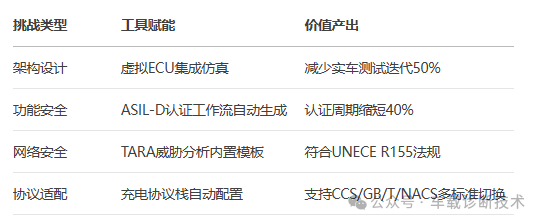
Due to the critical impact of the aforementioned system components on the overall safety of the EV system, the design of all these components must comply with specified ASIL requirements. To meet ASIL standards, all interacting modules must achieve the same or higher level of ASIL certification, ensuring that the safety performance of the entire system meets a unified high standard. Additionally, other components must also be meticulously designed to meet the requirements for fault-free interference (FFI), avoiding safety issues caused by mutual interference between components.
4. Charging Protocols – Compatibility Challenges Under Evolving Standards
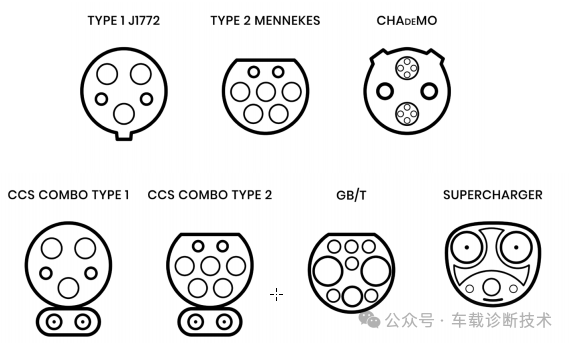
Although the EV and plug-in hybrid EV markets are relatively mature, chargers and charging technologies are still evolving. Currently, there are various charging standards on the market, with CHAdeMO being a DC fast charging device developed by five major Japanese automakers, widely used in North America, Europe, and Japan. CCS Combo 1 and 2 provide an additional DC charging port, while GB/T is primarily used in the Chinese market;
Superchargers developed and used by Tesla have both AC and DC charging capabilities. Given that these charging standards are continuously evolving, to ensure compatibility between EVs and roadside EVSE, a communication stack must be used to develop the ECU. The communication stack can provide standardized communication interfaces and protocols, ensuring smooth communication and data exchange between EVs and EVSE produced by different manufacturers, thereby providing users with a convenient and efficient charging experience.
Exploring Comprehensive Solutions
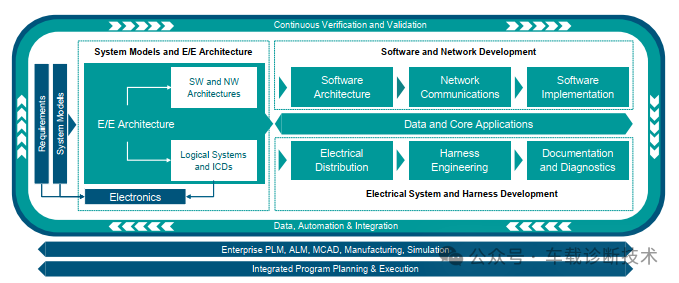
Every challenge contains the potential to be transformed into an opportunity. System tools are needed to provide us with a comprehensive electrical/electronic (E/E) system development approach, which is expected to tackle many challenges in EV embedded software design. Developers can perform system architecture design, functional safety analysis, network security assessment, and charging protocol compatibility testing on a unified platform, achieving integrated management from design to verification.
This approach not only improves development efficiency and shortens time-to-market but also ensures that the system meets industry-leading standards in safety, reliability, and compatibility. With powerful system tools, we hope to break through the barriers in EV powertrain system development, advancing electric vehicle technology to new heights and laying a solid foundation for the future of intelligent transportation and sustainable development. Let us work together to embrace the full arrival of the electric vehicle era.
3. What is the AUTOSAR Layered Software Architecture?
AUTOSAR, as the core standard in the automotive software field, has been jointly developed by all major automotive original equipment manufacturers (OEMs) and the vast majority of tier-one suppliers. This standard provides a unified and standardized framework for the development, integration, and management of automotive electronic software, strongly promoting the standardization and collaborative development of software technology in the automotive industry.
AUTOSAR adopts a layered software architecture, carefully constructing five functional and clearly defined software layers that cleverly position themselves between application software and microcontrollers, working together to ensure the efficient and stable operation of automotive electronic systems.
-> AUTOSAR Runtime Environment (RTE)
The RTE acts as an intelligent bridge, abstracting the application layer from the basic software layer (BSW). It is responsible for managing communication between application components, shielding the complexities of underlying hardware and software, allowing application software developers to focus on implementing business logic without excessive concern for underlying details, thus improving development efficiency and software portability.
-> Service Layer
The service layer acts as the “behind-the-scenes steward” of the automotive electronic system, silently providing comprehensive service support in the background. It encompasses network services, ensuring efficient and reliable data transmission and communication between various electronic control units (ECUs) in the vehicle; it has memory management functions to allocate and release system memory resources reasonably, ensuring stable system operation; it also provides communication services for the application layer, enabling information exchange between different application components. Additionally, the service layer integrates an operating system, providing core functions such as task scheduling and resource management, which are key supports for the normal operation of automotive electronic systems.
-> ECU Abstraction Layer
The ECU abstraction layer sits above the microcontroller abstraction layer (MCAL) and plays the important role of a “hardware adapter.” It allows the communication stack and transceivers above it to operate independently of the specific hardware configuration of the ECU. Regardless of the hardware platform used by the ECU, through the encapsulation and adaptation of the ECU abstraction layer, the upper software can operate and access in a unified manner, greatly improving software reusability and cross-platform compatibility, reducing development costs and cycles.
-> Microcontroller Abstraction Layer (MCAL)
MCAL software serves as the link between upper-layer software and microcontroller hardware. It can directly access the peripheral modules and external devices of the on-chip microcontroller (MCU) mapped to memory, abstracting and encapsulating the specific operational details of the hardware, making the upper software layer independent of the specific model of the MCU. This means that when replacing the MCU, only the MCAL needs to be configured and adjusted accordingly, while the upper software does not require large-scale modifications, thus enhancing the system’s flexibility and scalability.
-> Complex Drivers
Complex drivers enable direct interaction between the runtime environment and hardware. They are custom-developed based on specific requirements and play an indispensable role in automotive electronic systems. By accessing other functions in the MCU or peripherals, complex drivers can achieve specific functionalities, even completing functions not supported by the AUTOSAR standard itself, providing strong support for innovation and customization in automotive electronic systems.
The AUTOSAR standard components within these layers are universal for all users, providing a unified foundation and specifications for the development of automotive electronic software. However, considering the differences in application functions and hardware among different OEM-customized ECUs, these components can be configured to meet the personalized requirements of each specific use case. It is worth noting that highly configurable (and sometimes even optional) middleware components can be used to provide BSW functionalities, further enhancing the system’s flexibility and adaptability, allowing AUTOSAR to be widely applied in various types of automotive electronic systems.