 From J. Am. Chem. Soc.
Hi, everyone! Those who study chemistry know that the essence of chemistry is the reorganization of electrons, and the essence of chemical reactions is electron transfer. Essentially, all reactions are electrochemical reactions, and electricity fundamentally touches the core of chemical reactions. In recent years, more and more practical methods have emerged from research. Today, let’s take a look at the electrochemical selective coupling achieved through base replacement:
⭐ Electrochemical Selective C-O Coupling⭐Mechanism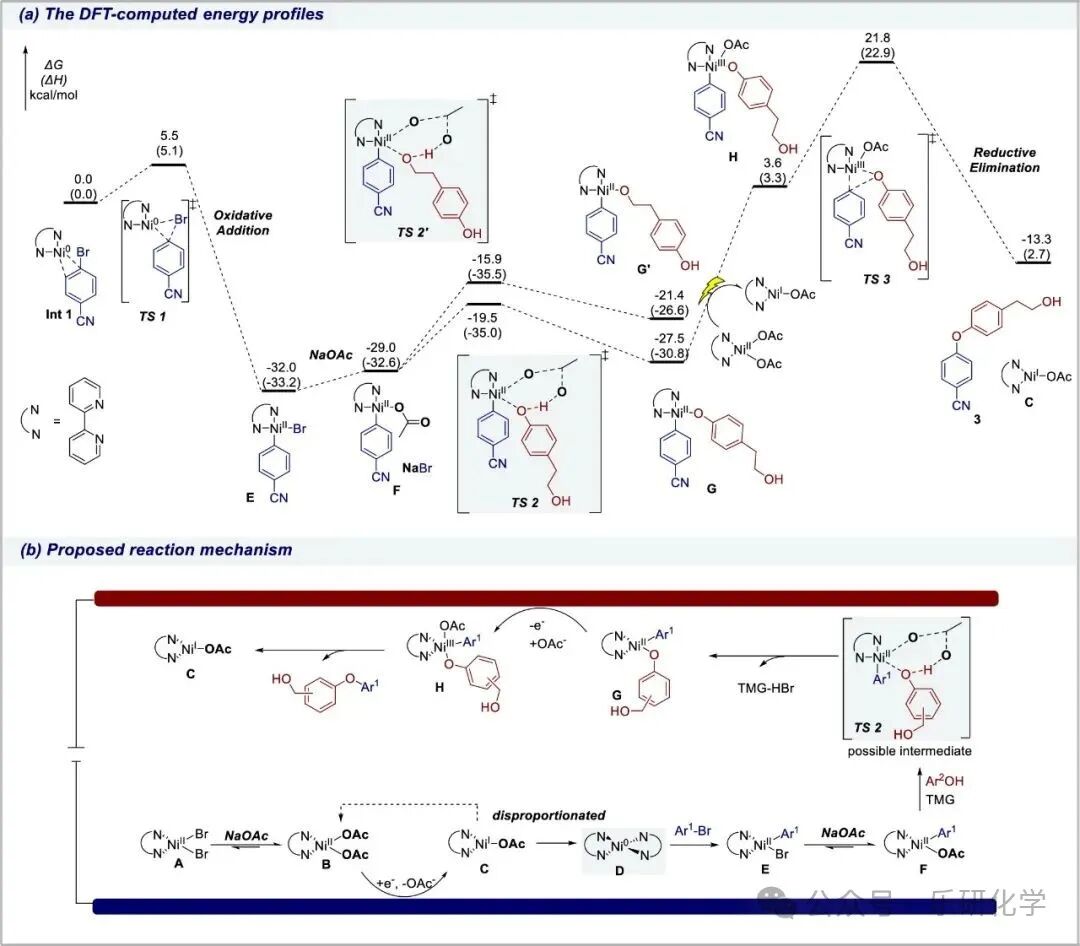 Substrate Expansion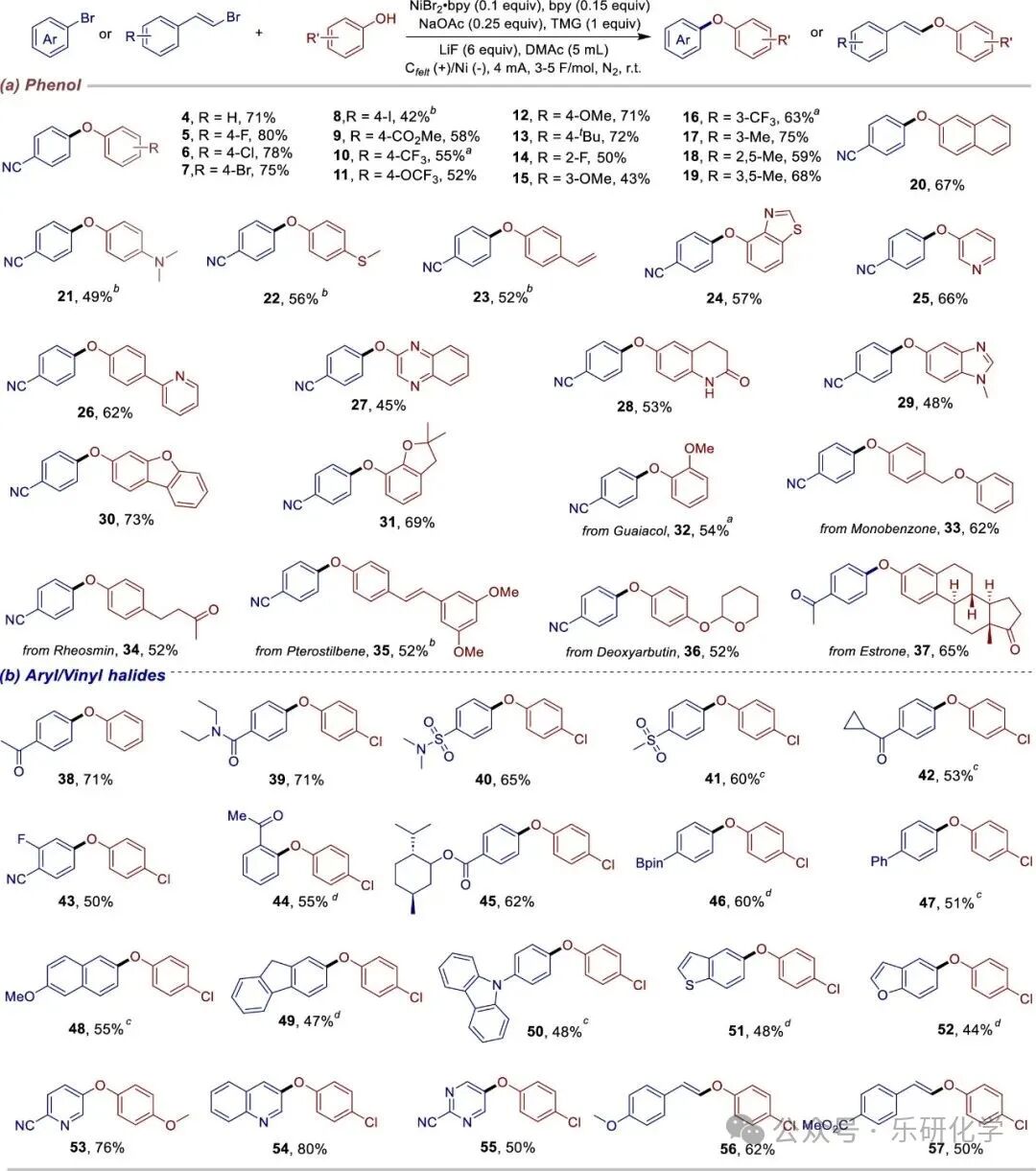
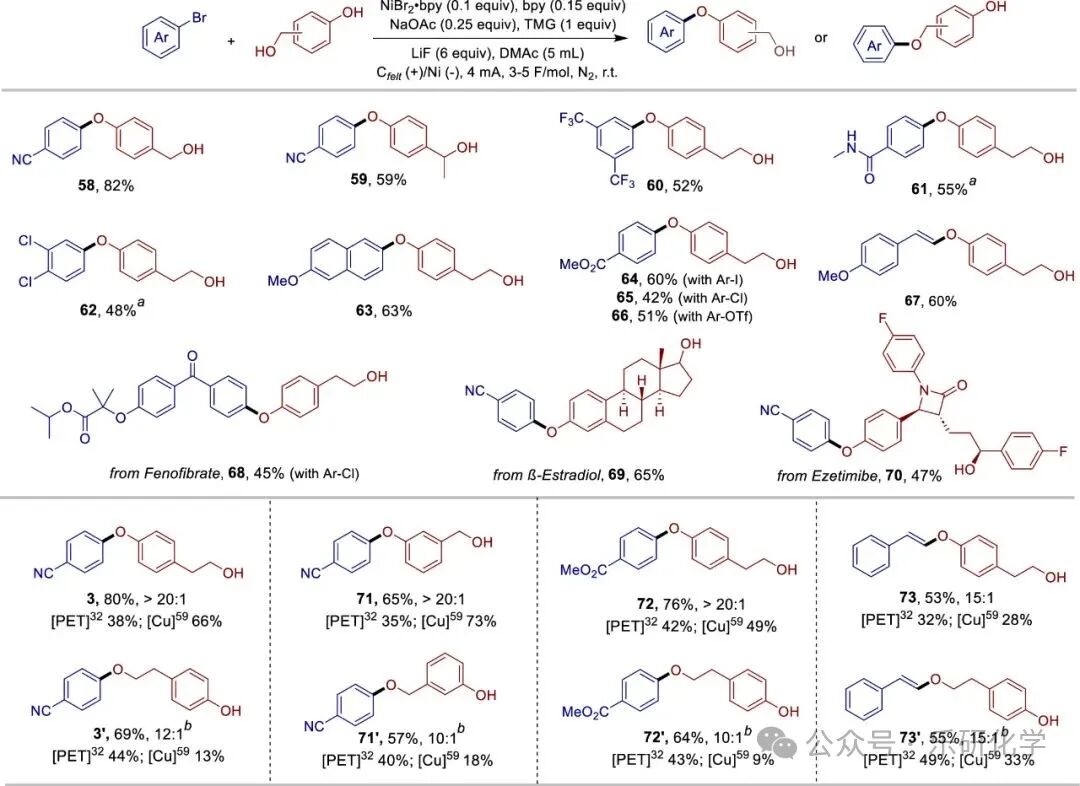
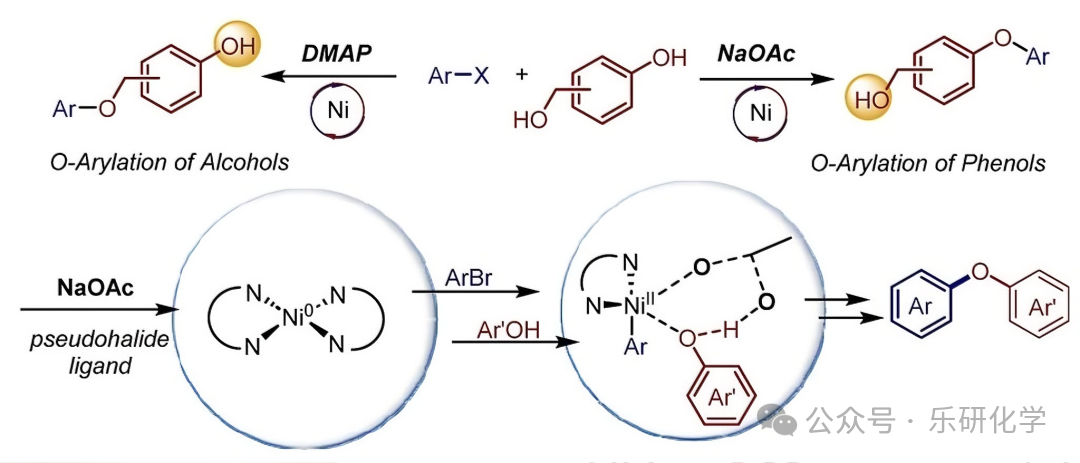
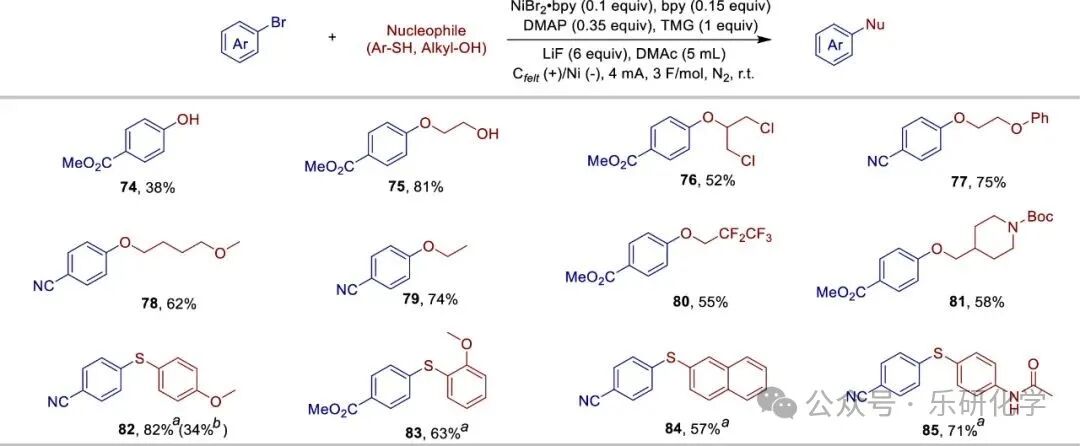 Highlights[1] Professors Yi Hong and Aiwen Lei from Wuhan University have deeply researched the field of electrochemistry and developed electrochemical selective C-O coupling under base regulation.; [2] This method has a very broad substrate range, where various electron-withdrawing and electron-donating groups on bromobenzene or bromostyrene, such as cyano, carbonyl, amide, sulfonamide, sulfone, boronic esters, and alkoxy groups, do not interfere with the reaction. Various electron-withdrawing and electron-donating groups substituted on phenols can be successfully coupled. A crucial point is that using NaOAc as a base allows phenols with hydroxyl groups to selectively achieve phenolic hydroxyl C-O coupling, while using DMAP as a base selectively achieves alcohol hydroxyl C-O coupling.
[3] DFT and SWV experiments indicate that acetate acts as a ligand, forming a six-membered ring intermediate with phenolic hydroxyl and nickel, facilitating ligand exchange and improving the selectivity and efficiency of coupling. When using DMAP as a base, DMAP selectively inhibits the competitive nucleophilic substitution pathway, thus directing the reaction towards the coupling of aliphatic alcohols and aryl halides.
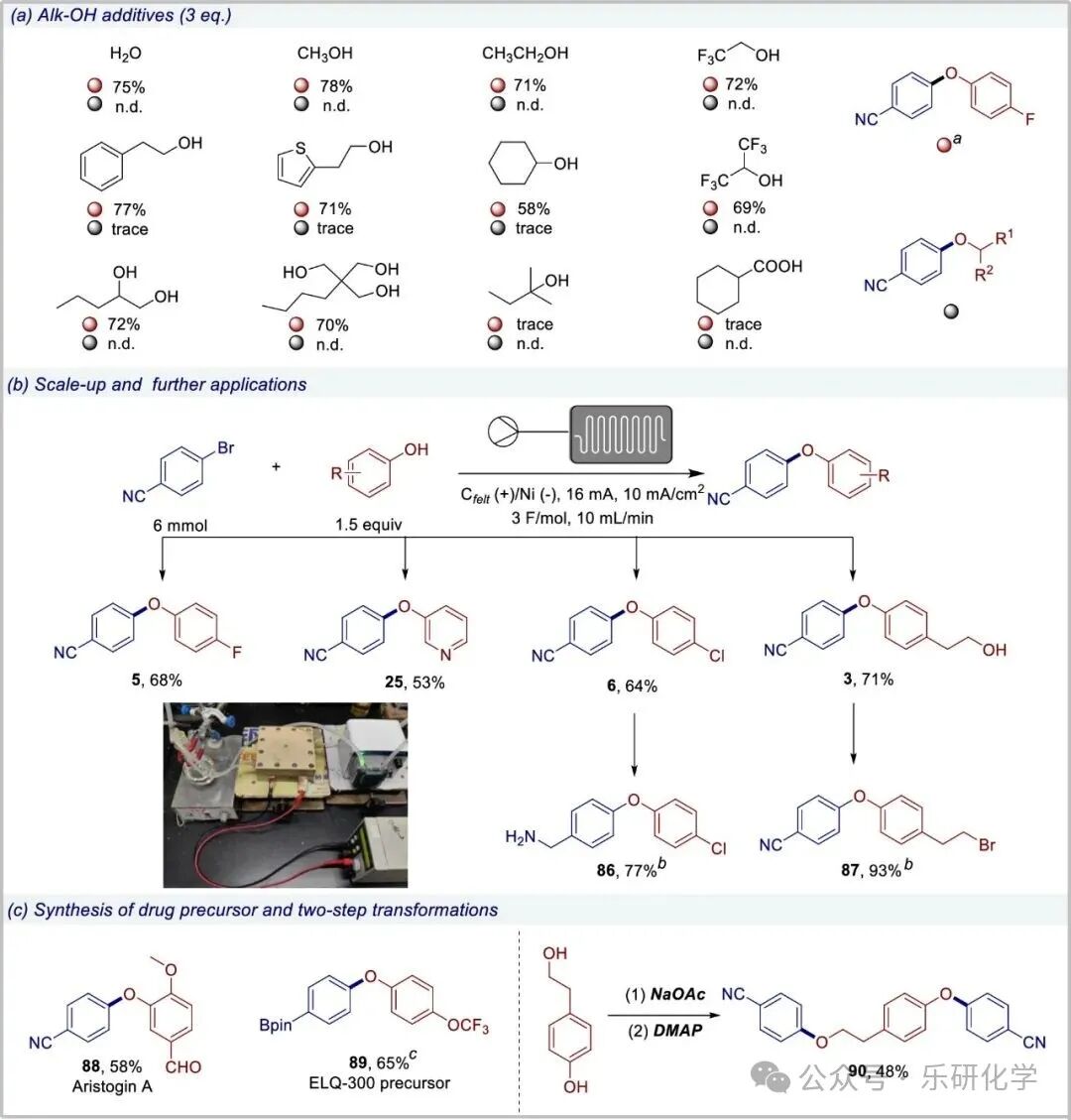
[4] This method exhibits excellent tolerance to water, allowing for efficient conversion of most aliphatic alcohols except for tertiary alcohols and carboxylic acids, and can be released through fluid electrochemistry. Additionally, thanks to the selective control of the base, phenols containing alkyl alcohols can be stepwise controlled for secondary transformation.
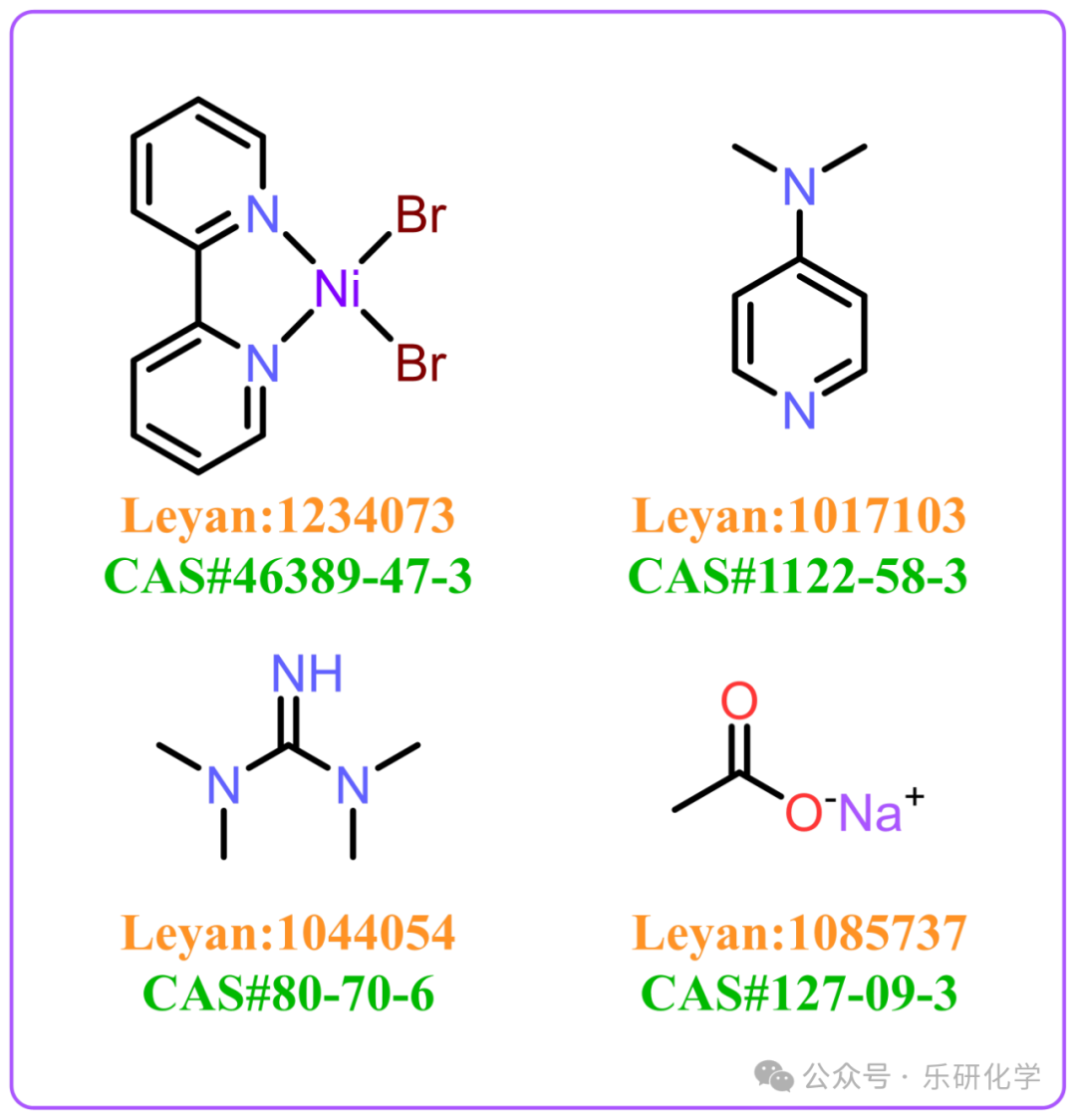
 [5] The catalysts and reagents required for the reaction are all commercially available, making them easy to obtain.
 ReferencesUnveiling the Switchable Chemoselectivity Mechanism in Electrochemical Nickel-Catalyzed C(sp²)–O Coupling of Phenols and Aliphatic AlcoholsShuxiang Zhu, Zhipeng Guan, Yanlong Liu, Heng Zhang, Aiwen Lei, Hong YiJ. Am. Chem. Soc. 2025, XXXX, XXX, XXX-XXXDOI : 10.1021/jacs.5c07188