Journal:Advanced Materials (Impact Factor 32.086)Team: University of California, BerkeleyAcademician Jeffrey R. Long’s Team
Prospects for Simultaneously Capturing Carbon Dioxide and Harvesting Water from Air
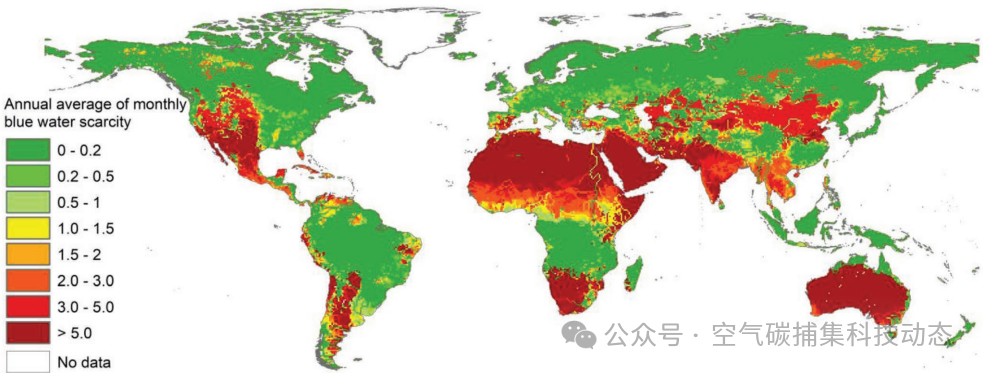
1. Disruptive Breakthrough: Simultaneous Carbon Capture and Alleviating Water Scarcity
Traditional Direct Air Capture (DAC) technology faceshigh water consumption issues:
- Solvent-based DAC consumes4.7 tons of water for every ton of CO₂ captured (Carbon Engineering data)
- Solid adsorbent methods still require1.4 tons of water/ton of CO₂ (due to steam regeneration losses)
The Long team proposes a paradigm shift:
“Instead of viewing co-adsorbed water as a burden, we should transform it into a resource.” By designing multifunctional adsorbents, we can capture water molecules while capturing CO₂, achieving:✅ Reduced carbon capture costs: Water as a byproduct offsets 30% of operational costs✅ Addressing water scarcity in arid regions: Water produced meets drinking standards
🔬 2. Material Innovation: Amine-Functionalized MOF Achieves Selective Co-Adsorption
1. Breakthrough Material: Mg₂(dobpdc)(3-4-3) Tetraamine Modified MOF
- Dual-Site Capture Mechanism:
- CO₂ Capture Site: Amines form stable ammonium carbamate with CO₂ (chemical adsorption)
- H₂O Capture Site: Hydrophilic channels physically adsorb water molecules through hydrogen bonding
- Performance Parameters:
Indicator Dry State (400ppm CO₂) Wet State (61% RH) CO₂ Adsorption Capacity 8 wt% Maintains >7.5 wt% H₂O Adsorption Capacity – 25 wt% Cyclic Stability 200 cycles decay <3% 15 steam cycles without amine loss
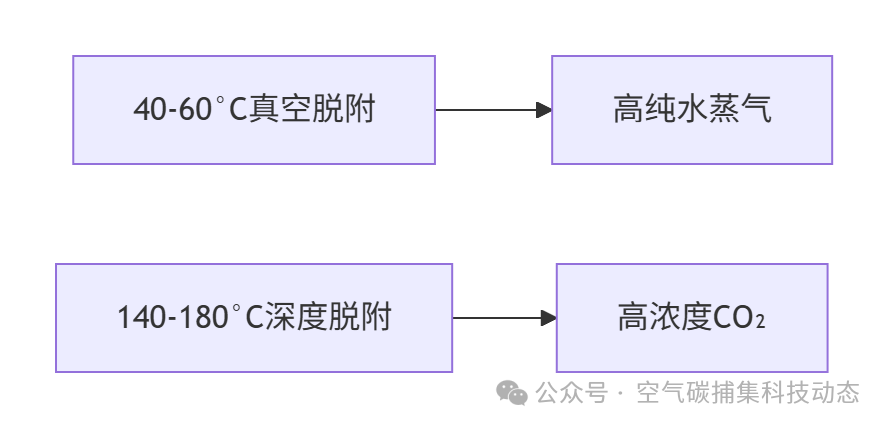
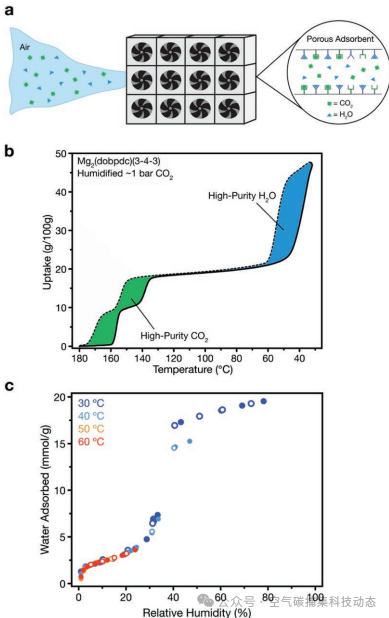 140°C, achieving staged desorption.
2. Humidity Gain Effect
In environments withrelative humidity >35% (Figure 4c):
- Water molecules promote the disentanglement of amine chains,increasing CO₂ diffusion rate by 47%
- Forming ammonium bicarbonate pathways,adsorption stoichiometry optimized from 1:2 to 1:1
⚙️ 3. Process Revolution: Single-Stage Adsorber Disrupts Traditional Two-Stage Design
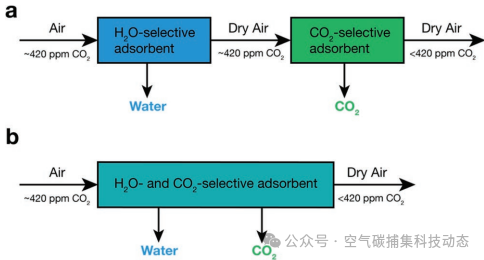
Comparison of Two Process Routes (Literature Section 5):
| Configuration Scheme | Advantages | Limitations |
|---|---|---|
| Two-Stage Adsorber | Can use dedicated water adsorbents (e.g., MOF-303) | Equipment cost ↑30%, pressure drop loss ↑15% |
| Single-Stage Multifunctional Adsorber | Simplified equipment, operational costs ↓25% | High material development difficulty |
The Long team chooses the single-stage path:
- Achievingdual capture with one device
- Staged desorption process:
🧪 4. Characterization Technology Breakthrough: Decoding Co-Adsorption Molecular Behavior
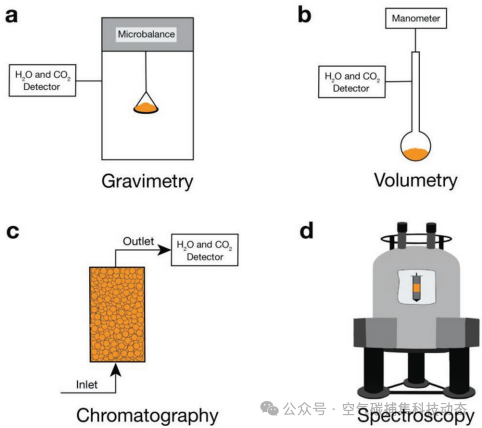
Four Core Detection Methods (Figure 7):
- Thermogravimetric-Mass Spectrometry Coupling: Real-time monitoring of CO₂/H₂O desorption kinetics
- Variable Temperature Volume Method: Accurate determination of co-adsorption isotherms
- Pervaporation Curve Method: Simulating industrial gas flow conditions
- In Situ Infrared/NMR: Analyzing molecular-level interactions
🌐 5. Application Prospects: Targeting Three Sustainable Development Goals
Potential Impact of Technology:
- 💧 Goal 6: Access to drinking water in water-scarce regions like the Middle East/North Africa
- ⚡ Goal 9: Distributed DAC devices reduce grid load
- 🌱 Goal 13: Negative carbon emissions + water regeneration dual environmental benefits
Economic Assessment:
- When water production >0.25L/kg of adsorbent per cycle
- Water revenue can cover30% of DAC operational costs
Industry Dynamics: ExxonMobil has invested R&D resources, aiming to establish a 10 tons/day demonstration facility by 2028
💎 Conclusion
Professor Jeffrey R. Long envisions:
“In the future, every DAC plant will become a water production center, a dual gift of negative carbon technology to humanity.”Technical Challenges:
- Developing CO₂/H₂O co-adsorbents with higher water capacity
- Optimizing condensation systems to improve water recovery rates (current limit 85%)Image Statement: All images are sourced from literature Figures 1/4/6/7, complete charts can be found in the original text Adv. Mater. 2022, 2204277.DOI: 10.1002/adma.202204277
#CarbonCaptureRevolution #AirWaterHarvesting #MOFMaterials #SustainableDevelopment