Since the global AI boom, this wave of technological advancement has rapidly penetrated industries, sparking a new revolution in the robotics sector. Especially on March 5 of this year, when “embodied intelligence” was included in the government work report, the field of humanoid robots, representing embodied intelligence, has become increasingly heated. After the Spring Festival in 2025, the valuation of humanoid robot projects skyrocketed. When we first encountered Yushu, its valuation was 3.785 billion yuan, which was still in the first half of 2024, and a year later, the valuation has soared to over 20 billion yuan.
By July of this year, several well-known humanoid robot companies, including Zhijili Power, Yundongchu, and Pashini, have announced their latest financing news. According to IT Juzi data, as of now, there have been 99 financing events in the domestic humanoid robot sector this year, far exceeding last year’s total of 67. Zhongqing Robotics completed Pre-A++ and A1 rounds of financing in July, raising nearly 1 billion yuan, with investors including Xpeng Motors’ Xinghang Capital, JD.com, and CATL’s Puxian Capital, while other major companies like BYD, Huawei, and Meituan have also entered the fray.
While many believe that the era of humanoid robots replacing humans in factories to screw bolts and assist the elderly in household chores is imminent, there are also many dissenting voices. A typical example is Zhu Xiaohu from Jinsha River Venture Capital, who claims to be exiting humanoid robot companies in bulk. He believes that the commercialization scenarios for humanoid robots are unclear and that there is no sustainable business model that creates continuous value for customers. Currently, the main clients are universities and enterprises for demonstration purposes, rather than sustainable commercial clients. Given the variety of opinions, let’s take Yushu Robotics as a leading example to examine the current commercialization status of humanoid robots.
 How well are Yushu’s humanoid robots selling?
Let’s get straight to the point. The following chart shows Yushu Technology’s sales performance in 2023:
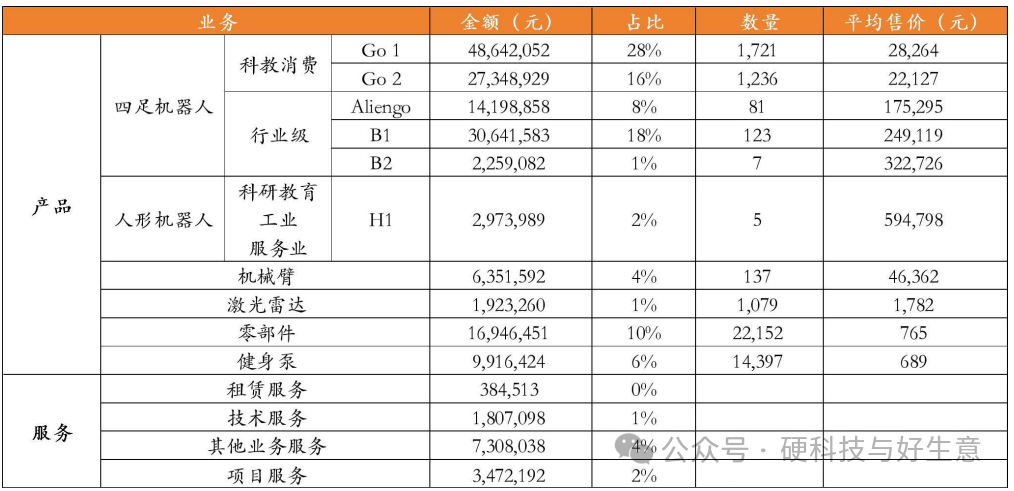
It can be seen that Yushu Technology’s revenue is closely related to its product innovation and iteration. In June 2021, Yushu released the first generation Go1 robotic dog, which was the company’s first quadruped robot aimed at the consumer market, with all core components developed in-house. The low-end version was priced at 16,000 yuan, which, although consumer-grade, was still a daunting price for ordinary families. By 2023, the sales of Go1 reached 1,721 units, bringing Yushu nearly 50 million yuan in revenue. On July 12, 2023, the Go2 was released, with a rapid price reduction to below 10,000 yuan, reaching a price of 9,997 yuan, and within six months, the sales of Go2 reached 1,236 units.
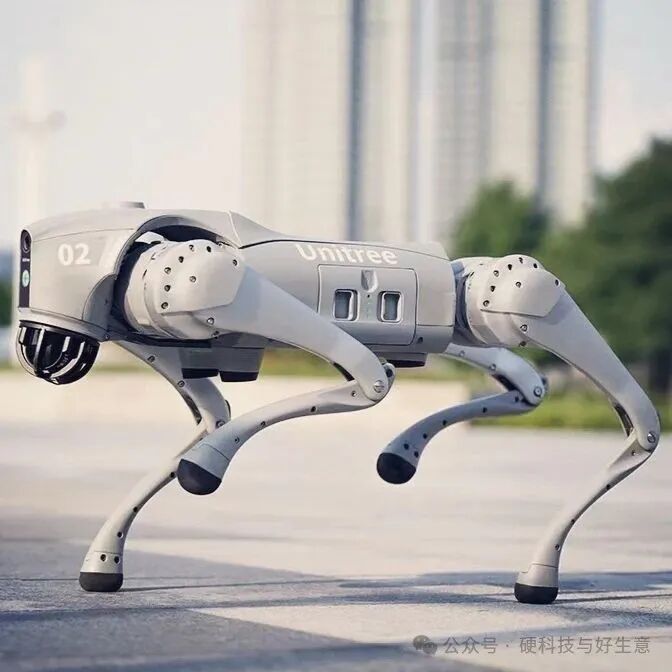
Before 2023, the sales of Yushu’s quadrupeds accounted for 44%, almost half of the company’s revenue. The humanoid robot was released on August 15, 2023, selling only 5 units that year, with an average price of 590,000 yuan. However, by May 13, 2024, when Yushu released the G1, the price plummeted to 99,000 yuan, and the annual sales of humanoids soared to 1,500 units, with revenue contributions rising rapidly. The quadruped also saw rapid growth, with sales reaching 23,700 units. On July 25, 2025, the R1 will be released, starting at 39,900 yuan, and sales are expected to continue to expand. In May, Wang Xingxing publicly stated that the contract amount had exceeded 1.2 billion yuan, but the G1 quadruped robot still contributed over 60% of the revenue.
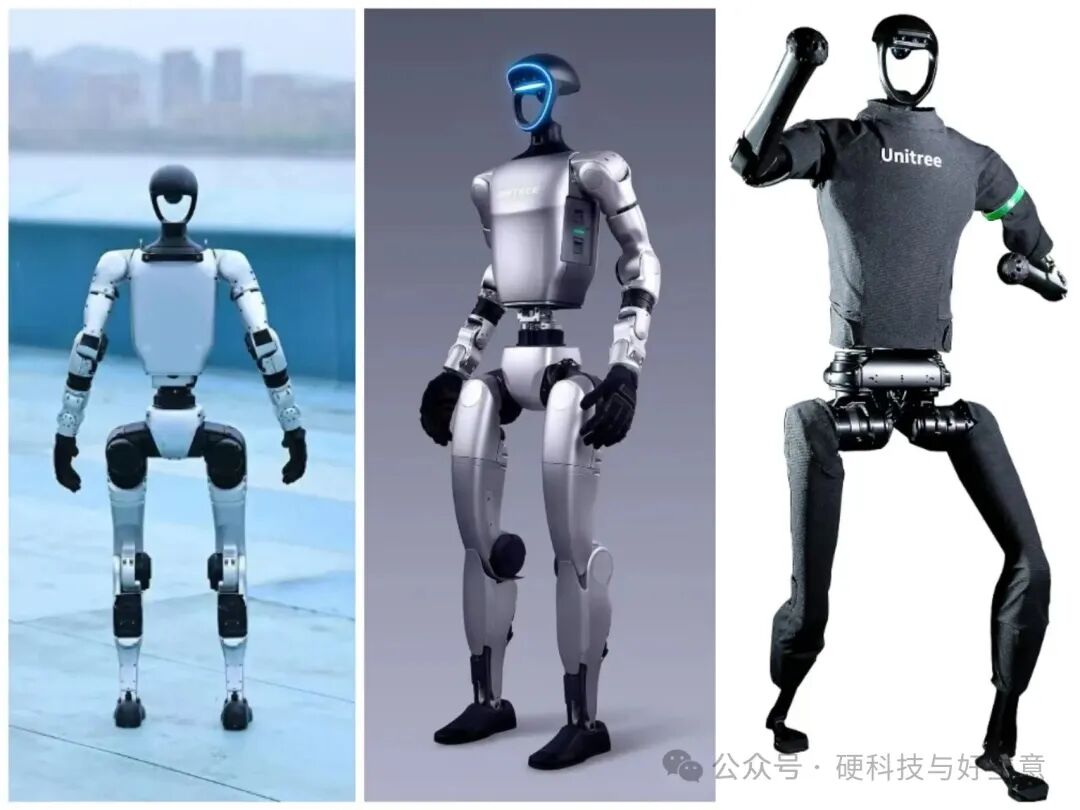
From quadrupeds to humanoids, thanks to the significant drop in product prices, Yushu’s sales have also rapidly increased. However, the revenue share from quadrupeds has not decreased but rather increased from 44% to 60%. Therefore, for consumer-grade products, 10,000 yuan is a clear threshold. Yushu’s humanoid robots are rapidly reducing costs, but they are still clearly far from the 10,000 yuan mark.
 The Technological Development Cycle of Humanoid Robots
Currently, the widely accepted view on the technological development cycle of humanoid robots divides it into the following stages:
• 2024-2025: Achieving generalized capabilities in autonomous mobility (robots can reach designated locations based on instructions after entering any environment, demonstrating general mobility capabilities);
• 2024-2026: Achieving generalized capabilities in grasping or simple operations based on grippers or similar complexity actuators;
• 2026-2028: Achieving generalized capabilities in operations based on dexterous hands (general operational capabilities);
• After 2030: Forming embodied intelligence, with the gradual development of robot AGI approaching maturity.
The mainstream view places the maturity cycle of humanoid robots after 2030. Although it is still early to predict the timeline for AGI realization, overall, based on the current performance of humanoid robots in task completion, it is necessary to address the issues of generalization in gripper and further dexterous hand operations, as most existing videos of humanoid robots completing tasks are done in ideal environments or laboratories, with a very high error rate in real-world scenarios.
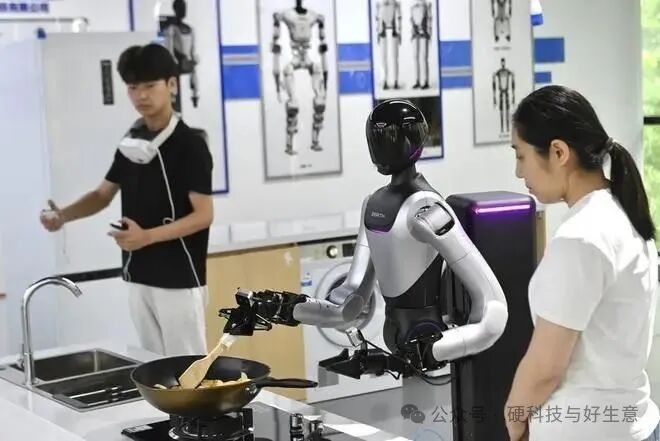
From a technical perspective, for humanoid robots to commercially enter households, they must go through at least three stages: the first is the “cerebellum stage”, where actions are highly aligned with human movements; the second is the “generalization and transfer capability stage”, which requires the machine to have a certain amount of understanding of the real world and data; the third is the “brain stage”, which continues to evolve based on existing VLA, VLM, and other models, allowing robots to truly possess the ability to learn and explore in the physical world, approaching AGI.
Currently, we are still in the cerebellum stage. Although this stage is very necessary, as mobility is a prerequisite for interaction in the physical world, aligning closely with human movements is also a prerequisite for all subsequent tasks, whether in industrial or household scenarios.

Back to Reality
As a representative enterprise of domestic humanoid robots, Wang Xingxing has expressed his views on humanoid robots in many occasions. For example, at the 16th Annual Meeting of the New Champions (Summer Davos Forum) in June this year, he clearly stated that he does not agree that this is the commercial year of humanoid robots, believing that the current annual shipment volume in the industry is low and has not yet formed a commercial closed loop, meaning that the commercial value generated by robots has not yet exceeded labor costs. As a star entrepreneur born in the 80s, having such clarity and honesty is commendable.
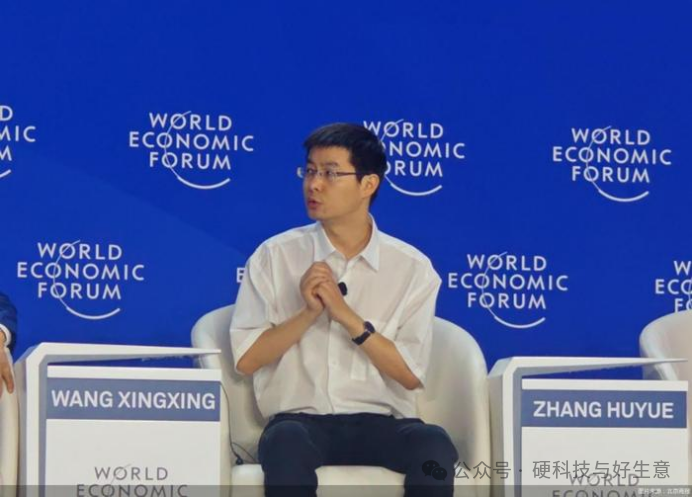
Many may dismiss the flashy performances of robots, but from a commercial perspective, even if they cannot currently provide functional value, as long as there is continuous effort and iteration, with costs constantly optimized and capabilities continuously improved, the market will surely reward them. Currently, the “cerebellum” functions of humanoid robots are still being refined. Whether it is boxing, dancing, or marathons, as long as they can attract people’s attention, they still hold value. As Wang Xingxing said, commercial performances can indeed realize part of the commercial value.
For many, this may be far from their expectations, and the road to AGI remains long, but great things have never been achieved overnight. Just seeing the rapid iteration of humanoid robots excites me immensely. I wish our domestic robotics industry to grow stronger and hope to see more humanoid robots entering our lives soon. I also wish the upcoming global first 2025 World Humanoid Robot Games great success.