Reported by Machine HeartMachine Heart Editorial Team
Do you remember this humanoid robot with expressions that resemble a real person?
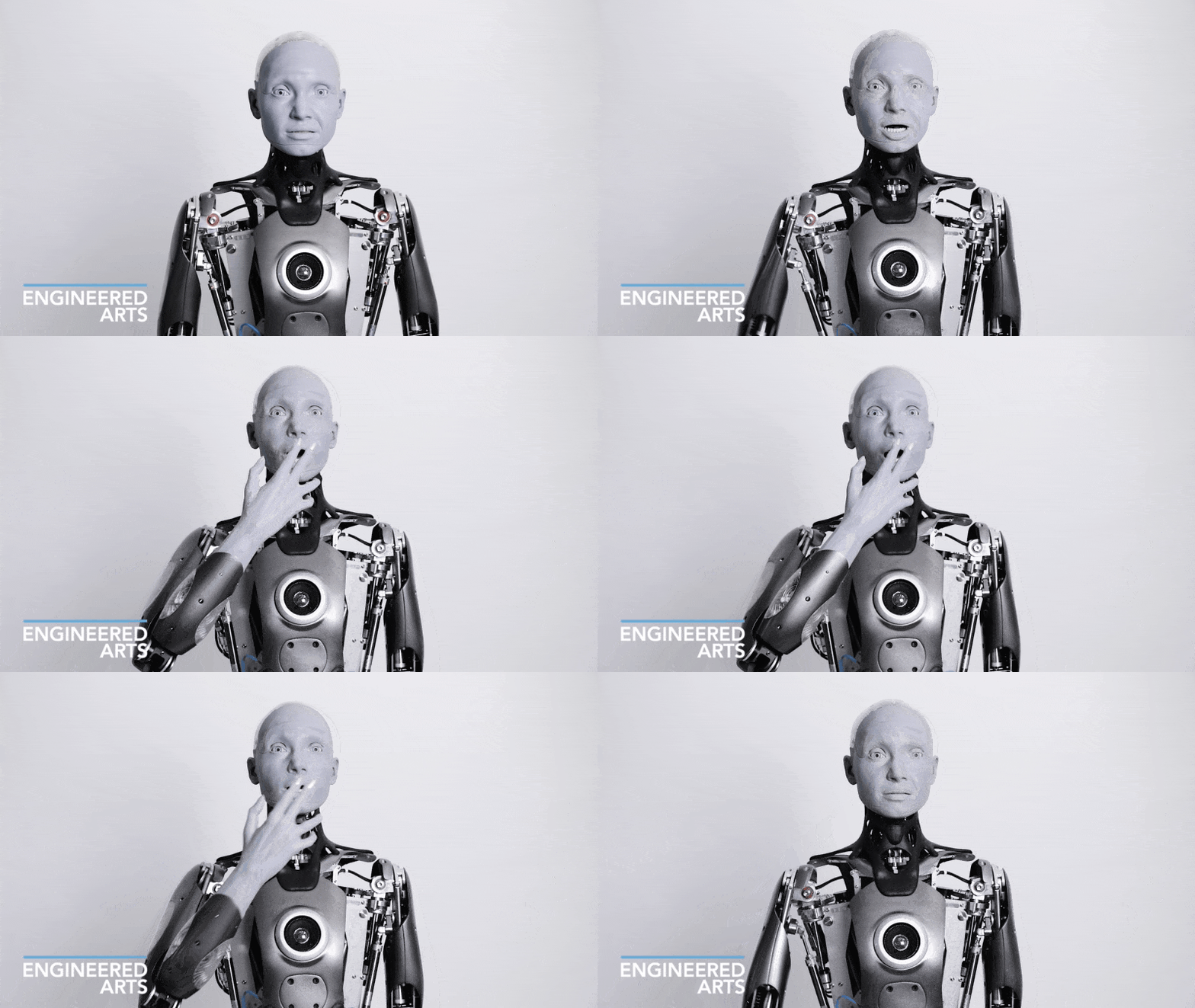
It is named Ameca, manufactured by a UK company called “Engineered Arts.” Recently, this robot has undergone a new upgrade:
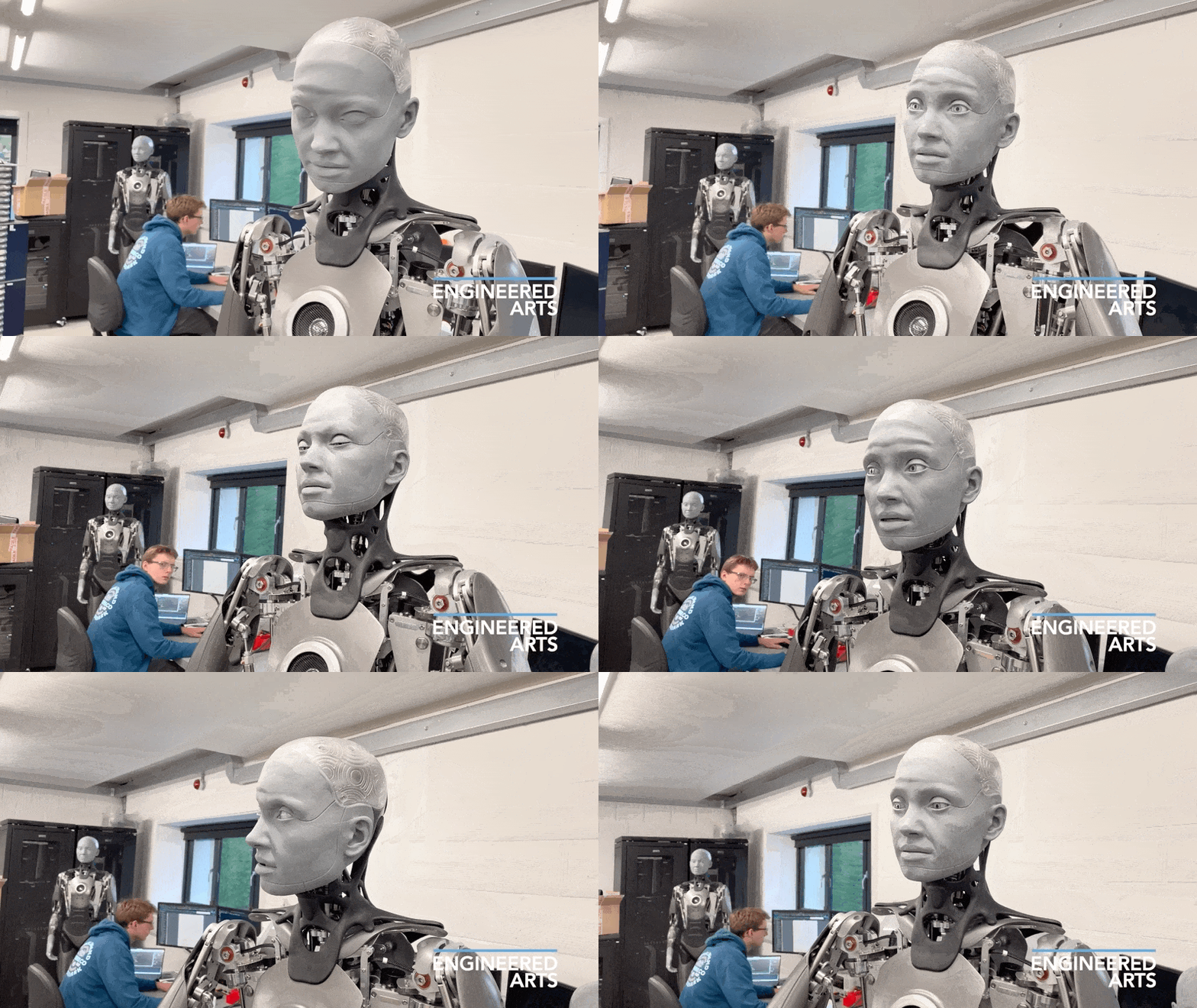
From the video, we can see that Ameca is not only expressive but also has the ability to observe its surroundings and communicate with people, with customizable voice tones and speech styles.
Ameca’s speaking ability is achieved by integrating a large language model (previously GPT-3), making the interaction experience very similar to that of a voice version of ChatGPT.
The ability to observe the world comes from various cameras installed in its eyes, chest, and other areas. These cameras can recognize faces, objects, and the surrounding environment, determining who is paying attention or making eye contact during conversations. Sometimes, Ameca needs to try multiple times to accurately see a target (for example, the anatomical model of a human head seen in the video). At the recently held 2024 Mobile World Congress (MWC 2024), Ameca was interviewed by many media outlets.
Previous videos showed that if Ameca were equipped with arms, it could also perform simple tasks, such as drawing (after integrating the text-to-image AI model Stable Diffusion) and awkward dancing.
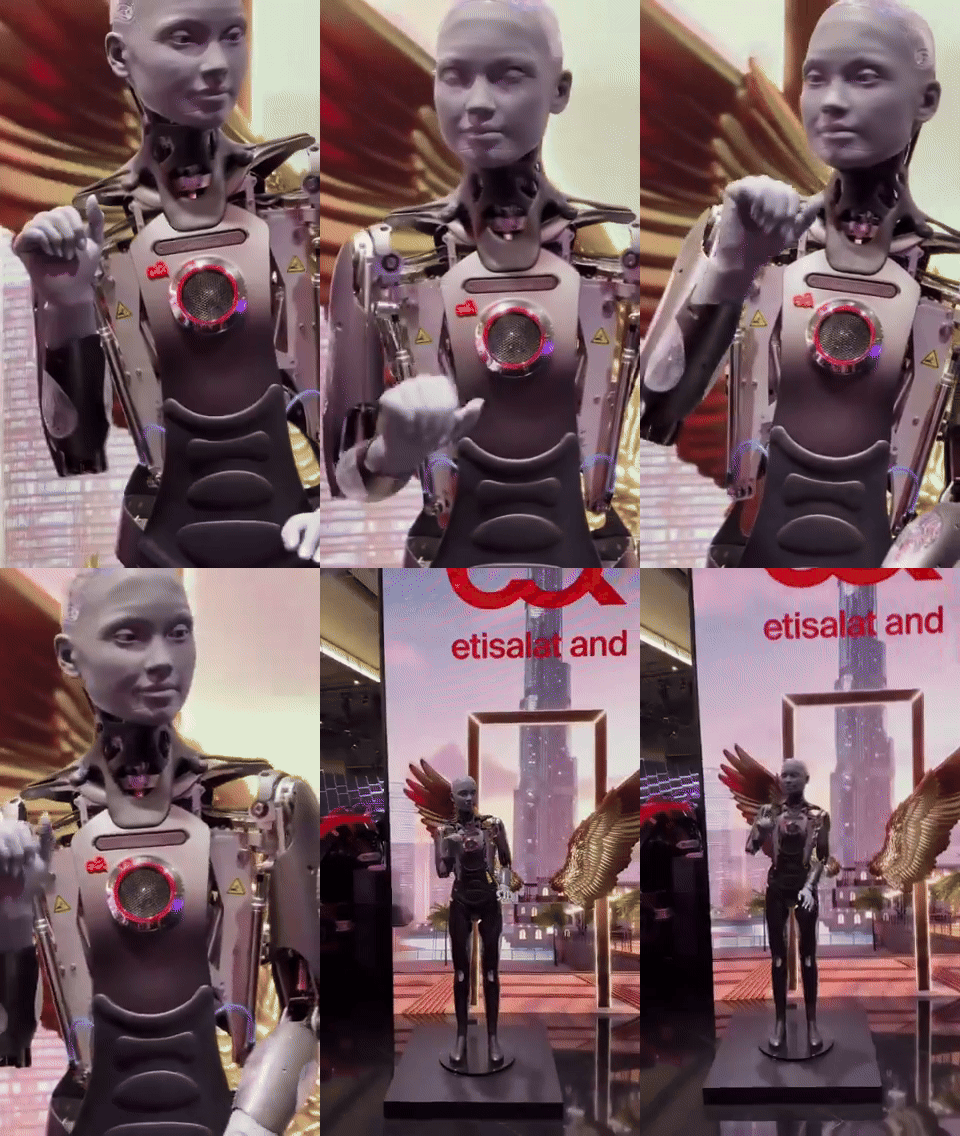
Of course, Ameca currently cannot walk and is fixed to the floor. However, the lab is testing experimental legs.
It is worth noting that Ameca is quite expensive. According to media reports, the price of Tesla’s Optimus (which Musk estimates will be less than $20,000 after mass production) is even less than one-tenth of the basic model of Ameca.
The UK robotics company Engineered Arts, which developed Ameca, is not large and is located in Falmouth, UK. The head, Will Jackson, was born into an artistic family, with both parents involved in robot manufacturing, which influenced him to create robots for theme parks, film entertainment companies, museums, and other institutions. Some provide guiding services, while others are used as research platforms by universities. In recent years, they have invested all their resources into the development of Ameca, which is the most advanced robot the company has created to date.
Will Jackson firmly believes that building humanoid robots is to enable them to perform tasks that involve interaction with humans (rather than for factories and warehouses). For example, after years of development, Ameca may become a companion for the elderly (reminding and caring). To this end, they have also taught the robot to play chess, but its chess level cannot be too high.
To successfully interact with humans, robots need to have a face—Jackson believes that the human face is the highest bandwidth communication tool we possess. The expressions that a face can convey are much more than what can be said. Therefore, Ameca’s face is made of a latex skin controlled by an electronic system, allowing for dynamic expressions that are very expressive.
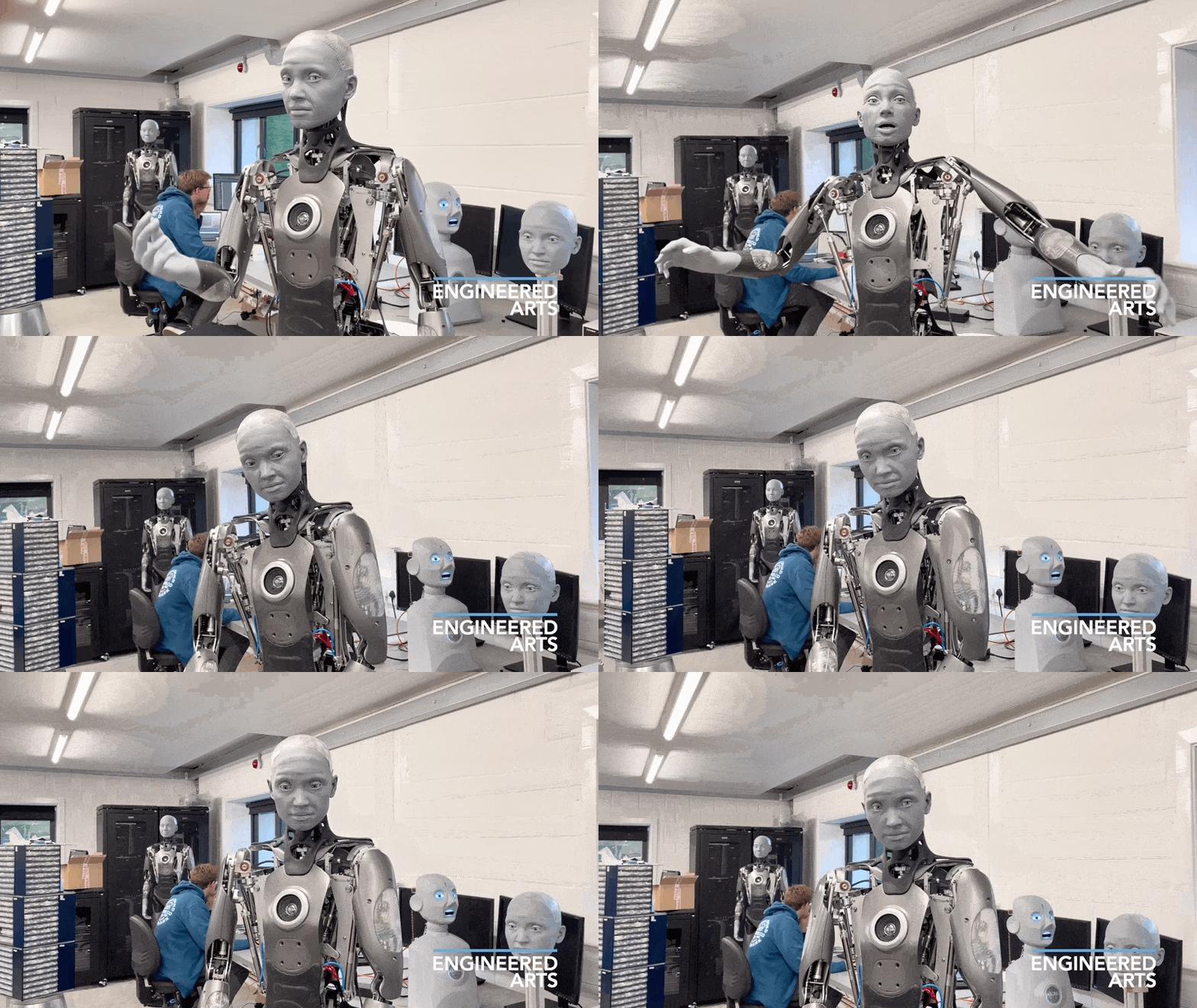
In the first half of the video, besides the British accent, did you also notice Ameca’s micro-expressions? It smiles when joking; closes its eyes when thinking, and sometimes rolls its eyes?
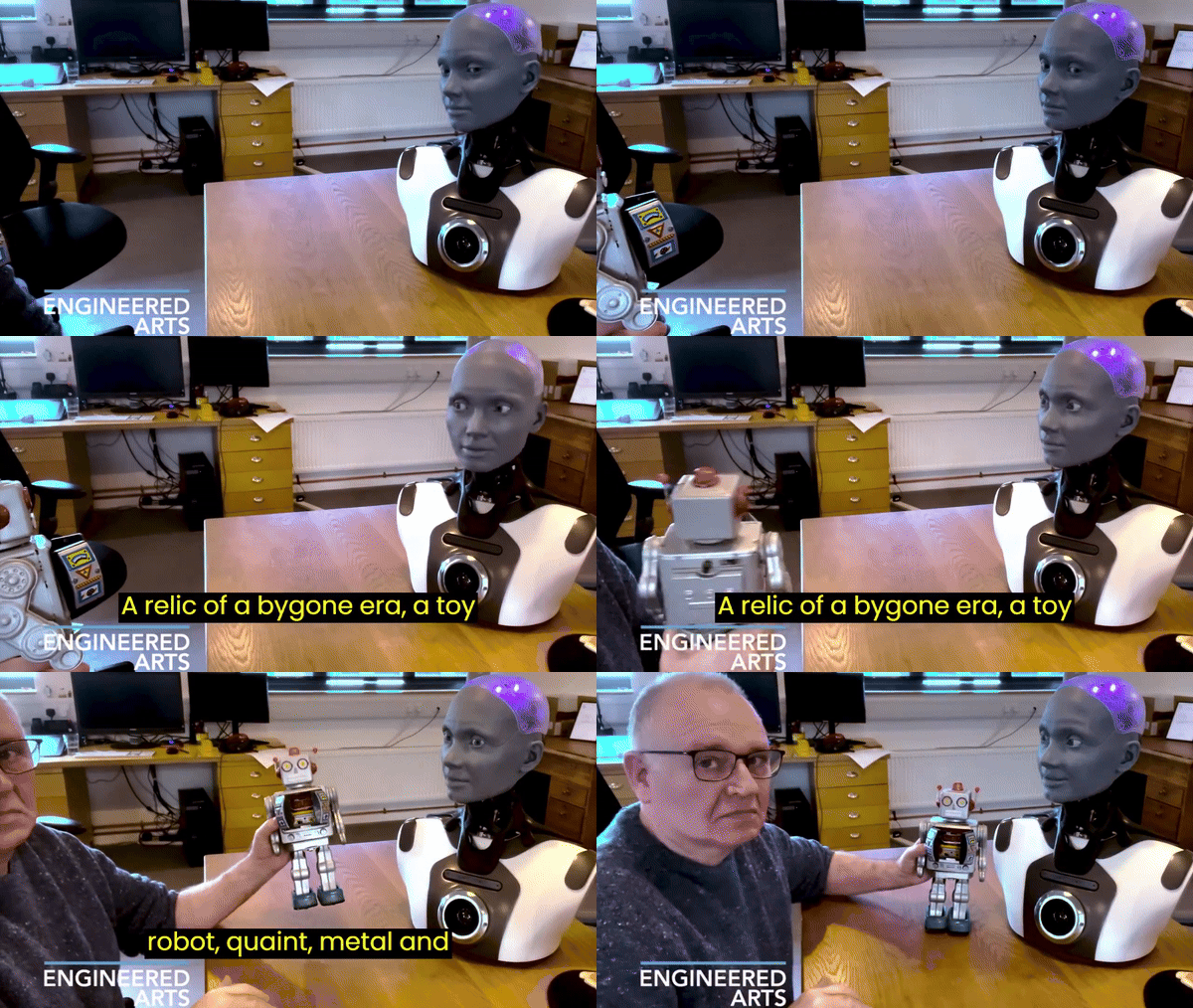
Engineered Arts initially created animated characters for the entertainment industry and has the capability to construct extremely realistic faces, but later intentionally designed Ameca’s face based on impressions from science fiction novels, with gray skin, visible seams, and no hair. It is said that this design is to avoid the uncanny valley effect.
As for the safety issues of humanoid robots interacting with humans, the company is also addressing them through engineering methods. Jackson noted that one reason human limbs can avoid harming others is that they are both sturdy and soft. However, there is currently no actuator that is both compact and powerful enough to achieve this in robots. Nevertheless, they are working hard to overcome this challenge, as if Ameca were to lose control and bump into someone, it would lose its purpose of social interaction.
Reference Links:
https://www.youtube.com/watch?time_continue=1&v=VXlpF3DrVP0&embeds_referring_euri=https%3A%2F%2Ftwitter.com%2F&source_ve_path=Mjg2NjY&feature=emb_logo
https://www.economist.com/science-and-technology/2022/11/07/humanoid-robots-are-getting-close-to-reality?utm_medium=cpc.adword.pd&utm_source=google&ppccampaignID=17210591673&ppcadID=&utm_campaign=a.22brand_pmax&utm_content=conversion.direct-response.anonymous&gad_source=1&gclid=CjwKCAiAivGuBhBEEiwAWiFmYU9-IIvzfA2H0haQ-9meiKTYeebsVZlOgpxwmkxtTMSL80_37JK3QxoChkkQAvD_BwE&gclsrc=aw.ds

© THE END
For reprints, please contact this public account for authorization
Submissions or inquiries: [email protected]