This is a very valuable question: 3D printing and AI (Artificial Intelligence) are both regarded as “disruptive technologies,” but their development trajectories and market potentials are vastly different.
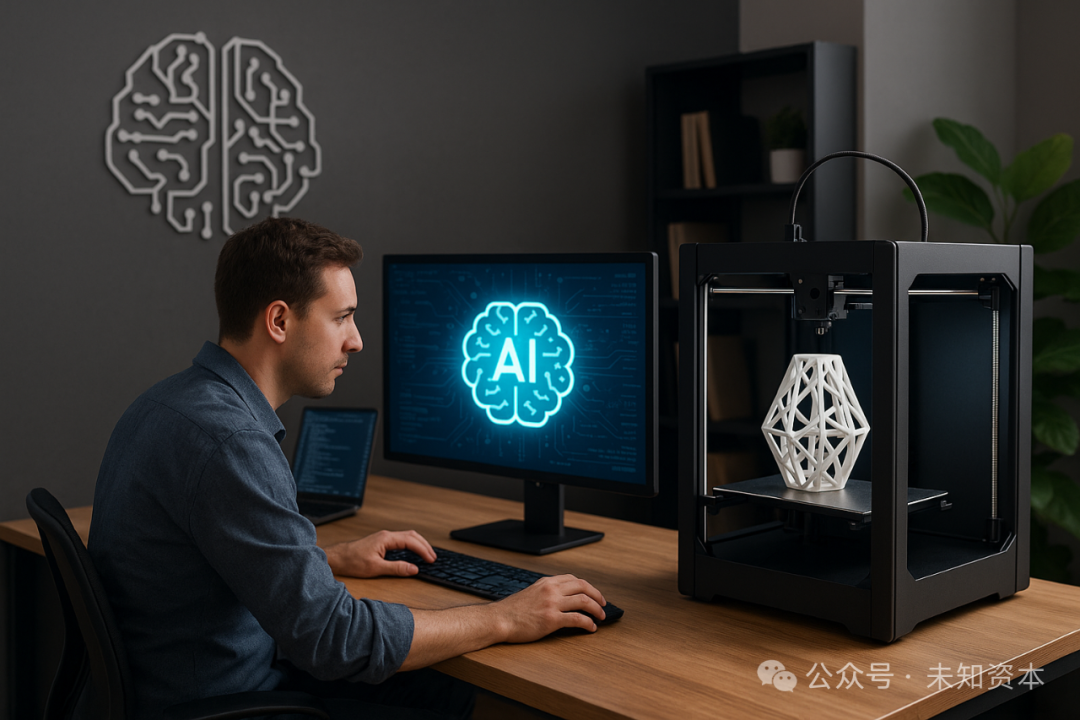
Below, I will compare the two from five dimensions: technological maturity, market size, industry penetration, investment attractiveness, and long-term potential, and provide a conclusive judgment.
1. Comparison of Technological Maturity
| Dimension | AI | 3D Printing |
|---|---|---|
| Technology Iteration Speed | Very fast (one version every six months) | Slow (one generation every few years) |
| Threshold | High (requires algorithms + data + computing power) | Medium (requires equipment + materials + design) |
| Core Breakthroughs | Models like GPT have exceeded expectations | Materials, speed, and cost remain bottlenecks |
| Industrial Standards | Preliminary norms have been established | Most fields lack standards, and regulation lags |
✅ AI technology has entered an explosive phase, while 3D printing is still in a stage of localized breakthroughs.
2. Comparison of Market Size and Growth Rate
| Item | AI | 3D Printing |
|---|---|---|
| Global Market Size (2024) | Over $200 billion | Less than $20 billion |
| Annual Compound Growth Rate (CAGR) | 30–40% | 15–20% |
| Revenue of Leading Companies | OpenAI, NVIDIA revenue/market cap in the hundreds of billions | Leading 3D printing companies (like Stratasys) have revenues below $1 billion |
| Capital Investment Scale | Huge (investments from angel to IPO) | Cooling down, VC interest waning |
✅ The AI market is much larger than the 3D printing market and is still expanding rapidly.
3. Industry Penetration Capability
| Dimension | AI | 3D Printing |
|---|---|---|
| B2B Applications | CRM, customer service, industrial inspection, finance, copywriting, image analysis, etc. | Industrial parts, molds, medical prosthetics, construction, education, etc. |
| B2C Applications | ChatGPT, AI drawing, AI video, etc. | DIY toys, consumer electronics casings |
| Integration with Mainstream Industries | Strong (almost all industries are being rewritten by AI) | Weak (only applicable in specific manufacturing segments) |
| Cost Sensitivity | Marginal cost approaches zero | Materials/printing/energy consumption remain high cost factors |
✅ AI is “pervasive across all industries,” while 3D printing is a “tool for specific industries.”
4. Investment Heat and Expected Returns
| Item | AI | 3D Printing |
|---|---|---|
| Investor Attention | Top VCs/PEs flocking | Most VCs are exiting or observing |
| IPO Pathways | OpenAI, Anthropic, Scale AI, etc. are hot | 3D printing companies have low valuations and slow growth |
| Risk-Return Ratio | High risk but extremely high potential | Slow returns, difficult to achieve explosive growth |
| Policy Support | Governments worldwide continue to invest | Only partial support in military/manufacturing policies |
✅ AI is a capital-favored field, while 3D printing has entered a “rational cooling period.”
5. Long-term Potential and Strategic Position
| Item | AI | 3D Printing |
|---|---|---|
| National Strategic Position | Core level (information, national defense, finance, etc.) | Auxiliary level (manufacturing, logistics) |
| Labor Replacement/Reconstruction Capability | Very strong (replacing white-collar/blue-collar/mental work) | Limited (reconstructing part of the production path) |
| Impact on Global Structure | Very deep (information, employment, military, ethics) | Moderate (supply chain, tactical level) |
| Potential to Create New Platforms | Yes (AI platforms = future operating systems) | Difficult (strong tool attributes, does not constitute a platform) |
✅ AI will reconstruct human social structures, while 3D printing will improve localized manufacturing logic.
Conclusion: Who Has Greater Market Potential?
| Conclusive Comparison | AI | 3D Printing |
|---|---|---|
| Current Attractiveness | ★★★★★ | ★★☆☆☆ |
| Explosive Potential | ★★★★★ | ★★★☆☆ (in specific scenarios) |
| Strategic Value | ★★★★★ | ★★☆☆☆ |
| Suitability for Startups/Investment | Highly recommended | Cautious participation (unless focusing on military/medical and other essential scenarios) |
❝ AI is an “information revolution” that is reshaping all industries; while 3D printing is a “manufacturing patch” that has irreplaceability in specific applications. ❞