
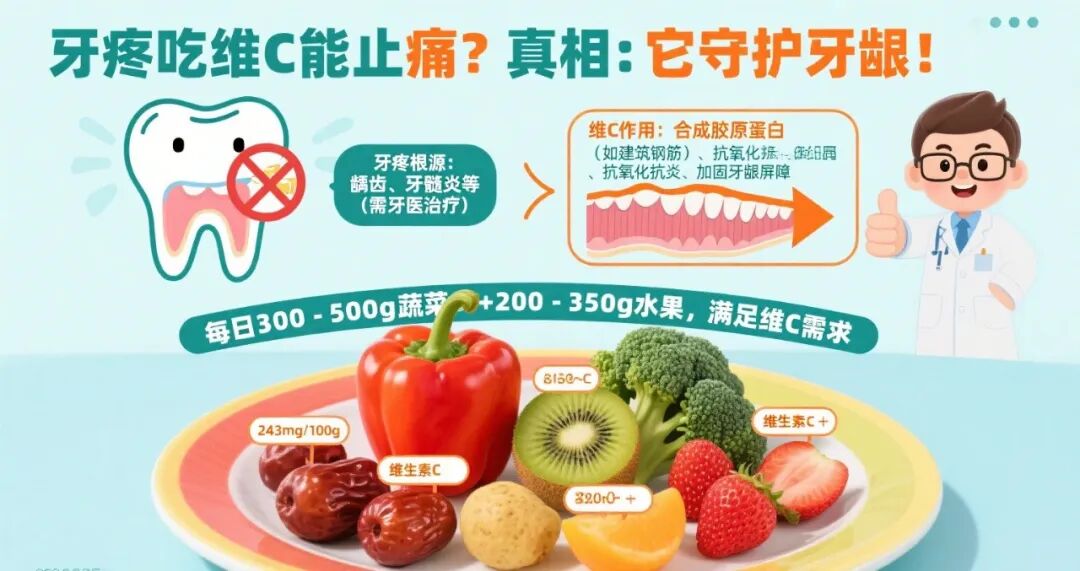
When a toothache strikes, many people’s first reaction is:“Let’s take some VitaminC!” Some articles even claim that VitaminC can treat toothaches. As a nutrition health advisor for the Chinese Nutrition Society, I must tell everyone:VitaminC cannot directly treat toothaches, but it is indeed a guardian of our oral health, especiallygum health!
🔍VitaminC: The “Guardian” of Gum Tissue
The causes of toothache are very complex, with dental caries (cavities), pulpitis, apical periodontitis, and pericoronitis being the most common “culprits”. These conditions require professional dental treatment (such as fillings, root canal therapy, anti-inflammatory treatment, or even tooth extraction), and VitaminC cannot replace these treatment methods.
So, what key role does VitaminC play in the mouth?
- The “Engine” of Collagen Synthesis: VitaminC is an essential factor for collagen synthesis. Collagen is a core structural component of oral soft tissues such as gums and periodontal ligaments, akin to the steel bars in a building. A lack of VitaminC hinders collagen synthesis, making gum tissue weak and prone to damage.
- The “Cornerstone” of Gum Health: A strong collagen network ensures that the gums tightly envelop the teeth, forming a natural sealing barrier against bacterial invasion. A lack of VitaminC can create vulnerabilities in this barrier.
- The “Antioxidant Defender” Against Inflammation: When gums are inflamed, a large number of free radicals are produced. VitaminC is a powerful antioxidant that can neutralize these harmful free radicals, helping to reduce oxidative damage and inflammatory responses in gum tissue.
⚠️Lack of VitaminC: A Warning from the Gums!
When the body is chronically deficient in VitaminC, the gum tissue is the first to be affected:
- Gum Bleeding: The earliest and most common signal! Bleeding can occur when brushing, eating hard foods, or even with light touch, and the gums become swollen, soft, and bright red or dark red.
- Gum Recession: Long-term deficiency leads to the destruction of supporting structures, causing the gums to gradually recede, exposing the tooth roots, making the teeth appear longer, which not only affects aesthetics but also increases sensitivity and the risk of root cavities.
- Increased Risk of Loose Gums and Tooth Loss: Severe and prolonged VitaminC deficiency (scurvy) can lead to severe destruction of periodontal tissue, resulting in loose teeth or even tooth loss. Historically, sailors on long voyages suffered from scurvy due to a lack of fresh fruits and vegetables, with oral symptoms being a significant marker.
Therefore, saying that VitaminC can “cure toothaches” is a great misunderstanding. Its core role is to maintain gum health and prevent discomfort caused by gum issues (such as gingivitis and periodontitis) that lead to swelling and bleeding. For toothaches caused by other reasons (such as cavities reaching the nerve), VitaminC is powerless.
📊Scientific Data: Are We Really Getting Enough VitaminC?
According to the “Scientific Research Report on Dietary Guidelines for Chinese Residents” and related surveys, some residents in our country, especially those with insufficient fruit and vegetable intake, have not reached the ideal level of VitaminC intake, posing a certain risk of deficiency.
🍊How to “Fill Up” on VitaminC for Gum Health?
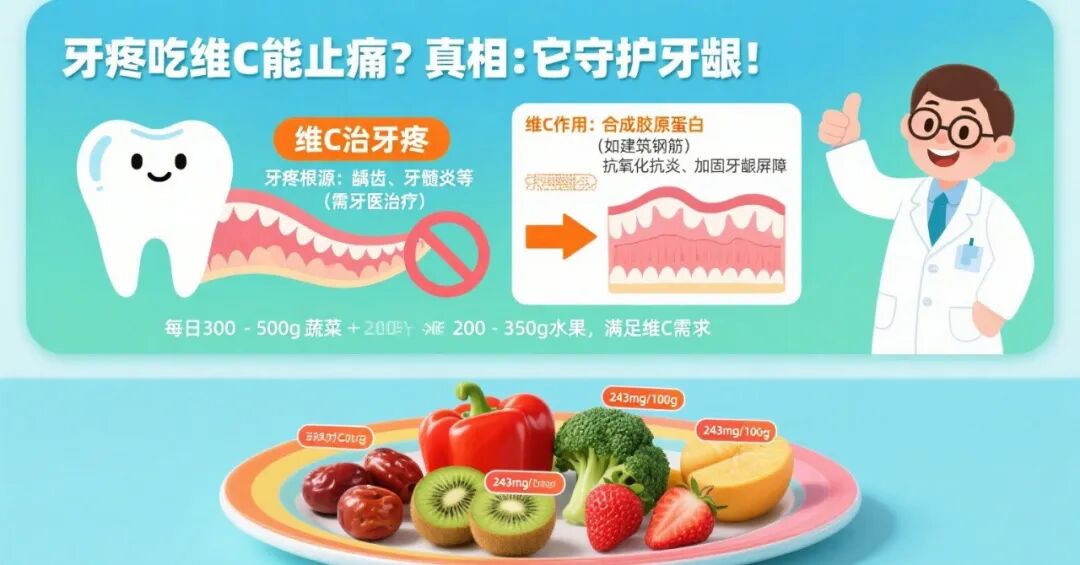
The Chinese Nutrition Society recommends that the daily intake of VitaminC for adults is 100 milligrams, with a suggested intake of 200 milligrams/day to prevent chronic diseases. The upper tolerable limit is 2000 milligrams/day (long-term excessive intake may cause diarrhea and other discomfort). The safest and most effective way is through food!
Ranking of Food Sources of VitaminC (per 100 grams):
|
Food Name |
VitaminC Content (mg) |
Notes |
|
Fresh Jujube |
About 243 |
3 medium-sized fresh jujubes can meet the daily requirement for adults! |
|
Kiwi (Gold Kiwi) |
About 161 |
Sweet and sour, the VitaminC content is nearly 3 times that of oranges! |
|
Strawberries |
About 47 |
Sweet and juicy, a cup of strawberries easily meets the daily requirement. |
|
Bell Peppers (Red Capsicum) |
About 130 |
The king of VitaminC among vegetables, best stir-fried or eaten raw in salads. |
|
Broccoli |
About 56 |
Blanch or stir-fry to retain more nutrients. |
|
Bitter Melon |
About 56 |
Though bitter, it is nutritious and a great summer dish for clearing heat. |
|
Oranges |
About 33 |
A classic fruit source, easy to obtain. |
|
Hawthorn |
About 53 |
Sour and appetizing, can be soaked in water or made into cakes. |
Dietary Tips:
- Fresh is Best: Prioritize fresh, brightly colored fruits and vegetables. VitaminC is sensitive to heat, oxygen, alkalinity, and prolonged soaking.
- Smart Cooking: Vegetables should be stir-fried, blanched, or eaten cold, minimizing high-temperature cooking. Fruits are best eaten raw.
- Avoid Long Storage: Consume as soon as possible after purchase; the longer the storage time, the more VitaminC is lost.
- Do You Need Supplements? For the vast majority of healthy individuals with a normal balanced diet, additional VitaminC supplements are not necessary. Unless a doctor or nutritionist clearly diagnoses a deficiency or in special physiological/pathological conditions (such as severe picky eating, digestive absorption disorders, increased needs during pregnancy and lactation, etc.), consider using under guidance.
📌Key Summary: The Truth You Need to Know About Toothaches and VitaminC
- VitaminC Does Not Cure Toothaches: If you have a toothache, please see a dentist immediately! Identify the cause and treat accordingly (such as fillings, root canal therapy, etc.).
- VitaminC Protects Gums: Adequate intake of VitaminC is fundamental to maintaining the structural integrity of the gums and preventing gum bleeding and recession, thereby reducing discomfort caused by gum issues.
- Food Sources are the Safest and Most Effective: Eating enough 300-500 grams of fresh vegetables (with half being dark-colored) and 200-350 grams of fresh fruits daily easily meets VitaminC needs. Include fresh jujubes, kiwis, bell peppers, broccoli, and strawberries in your daily menu!
Next time you have a toothache, don’t rely on VitaminC tablets! Timely medical treatment is the correct answer. At the same time, remember to add a variety of colors to your plate every day, using the VitaminC from natural foods to build a solid health defense for your gums, making your smile more confident!💪
Swollen and bleeding gums may be the body’s cry for help—
A programmer with a long history of irregular eating experienced gum bleeding for six months. After medical examination ruled out periodontal disease, the nutritionist found that his intake of fruits and vegetables was severely insufficient. After adjusting his diet and increasing VitaminC-rich foods for two weeks, his gum bleeding miraculously improved. It turned out that the body had long been sending signals, but we just hadn’t understood them.
Protecting oral health starts with every bite of fresh fruits and vegetables!
|
Shu Ling Yi |
Natural Vitamin C |
 |
 |

Special Note: Please optimize and adjust your nutritional plan under the precise guidance of a certified professional nutritionist, based on scientific nutritional knowledge.