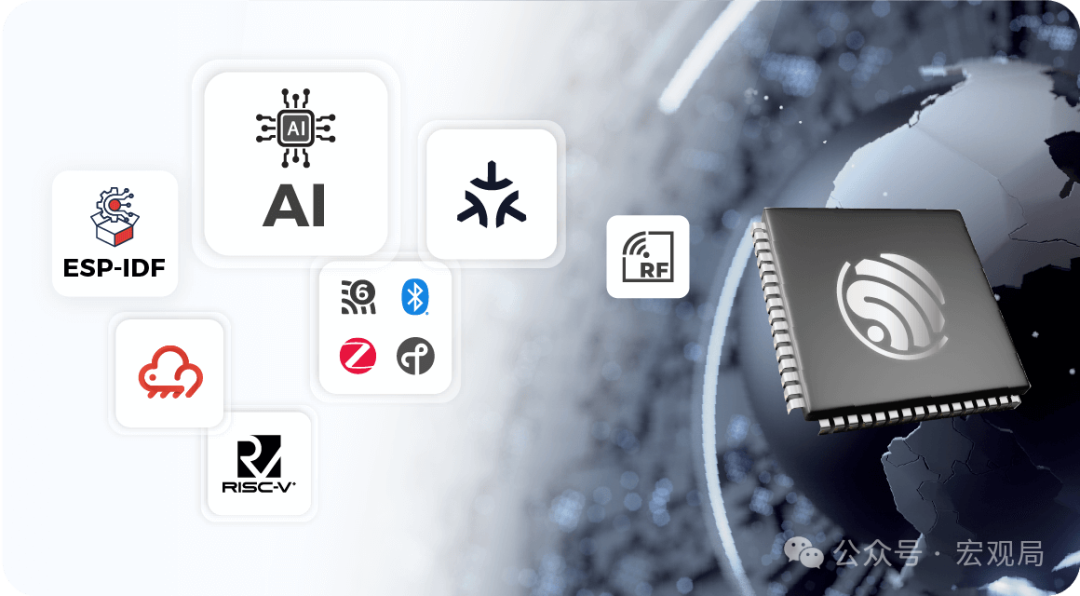
 You may not have heard of “Espressif Systems”, but you have likely used its products—whether you realize it or not. The “brains” inside your smart speakers, robotic vacuum cleaners, cameras, and even AI voice toys for your children are often just a small chip costing less than 20 yuan—ESP32.
This tiny chip is a hallmark ofthe leading domestic chip manufacturer, Espressif Systems. Over the past decade, this company has emerged from a corner in Shenzhen, leveraging affordable, stable, and user-friendly chips to penetrate the global smart hardware development scene.
From geek enthusiasts to large-scale projects, from DIY toys to industrial applications with over 1 billion units shipped globally, the success of the ESP32 is no coincidence. So, how did this low-profile domestic chip manufacturer quietly become the “invisible champion” of the AIoT era?
Starting Point: The “Divine Development Board” Priced at 10 Yuan
The story begins in 2014.
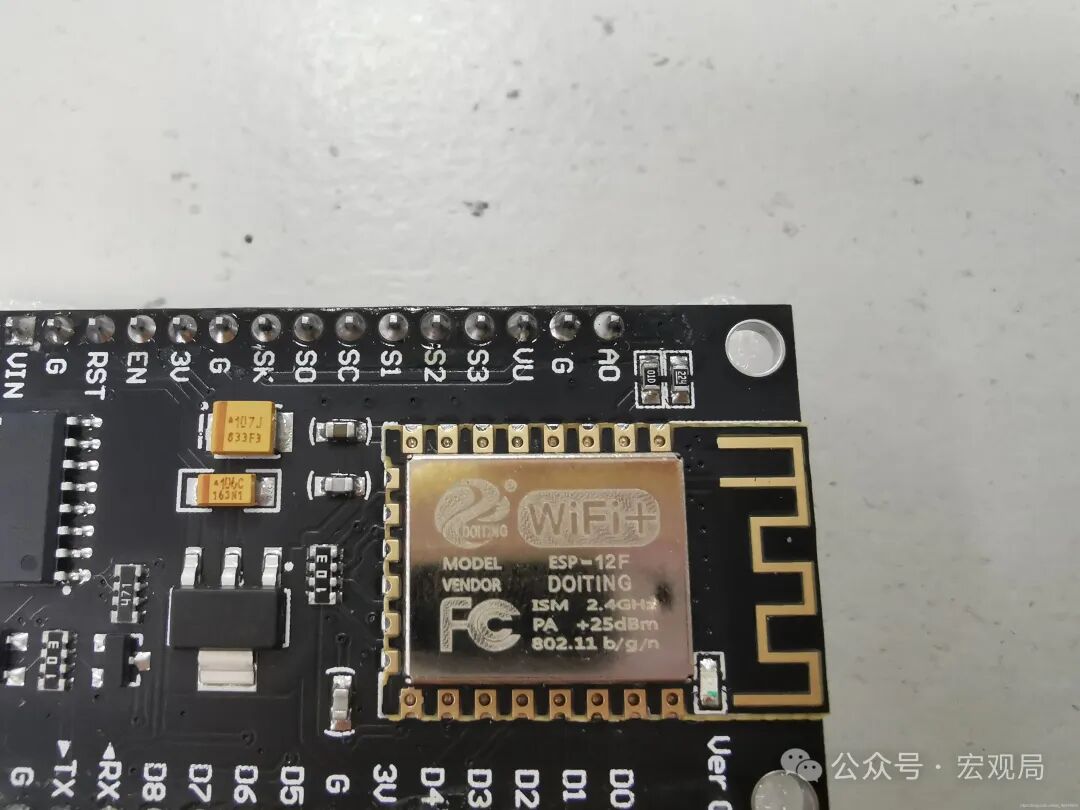
That year, the newly established Espressif Systems released its first chip development board—ESP8266. This board, no larger than a fingernail, came with a built-in Wi-Fi module and was priced at only 10 yuan. Compared to development modules that typically cost hundreds, it was a “price killer”.
Before long, this board became wildly popular among foreign enthusiasts, with the open-source community quickly following suit, creating tutorials, case studies, and even DIY smart locks, remote sockets, and smart pet feeders—all made possible with it.
It was even dubbed the “Redmi phone of the IoT world”.
Upgrade: How Did ESP32 Achieve Its Fame?
In 2016, Espressif launched theESP32 series. For developers, this was akin to the upgrade from the original iPhone to the iPhone 4—similarly affordable, but with enhanced functionality, lower power consumption, and full support for both Bluetooth and Wi-Fi modules, along with greater expandability.
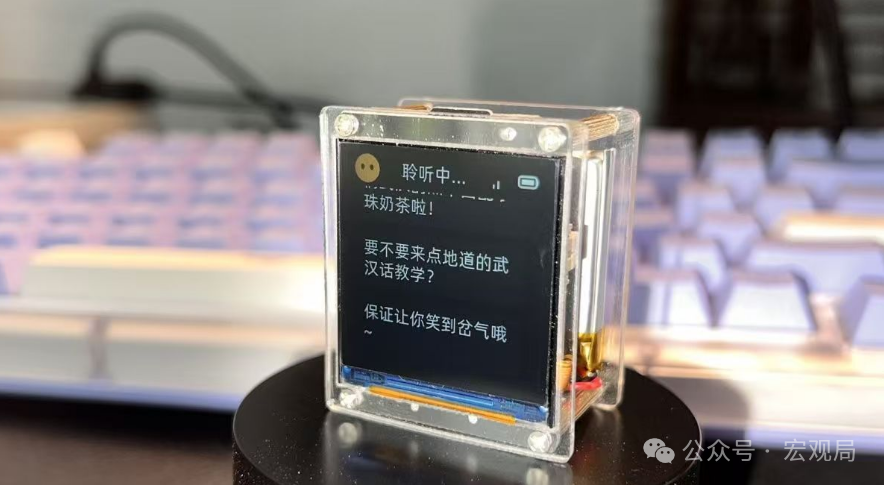
You can use it to create smart light bulbs, industrial detectors, voice assistants, and even run simple AI models, such as the recently popular “Xiao Zhi AI” project.
Espressif continuously iterated, not only upgrading functionality but also supporting domestic architectures, laying the groundwork for future domestic replacements.
Not Just Selling Chips, But Building an Ecosystem
Unlike many domestic chip manufacturers that only sell modules,Espressif acts more like a “technology platform”:
- Self-developed chips + drivers + operating systems + comprehensive open documentation;
- Continuous investment in the open-source community, supporting global developers;
- Connecting the development process from hardware to software, from cloud to local.
It doesn’t just sell you a chip; it hands you an entire “toolbox for product development”, helping you avoid detours.
Thanks to this complete ecosystem, the ESP32 has become thepreferred platform for global smart hardware startups, solidifying its unshakeable position.
Three Key Scenarios Supporting 2 Billion Yuan Revenue
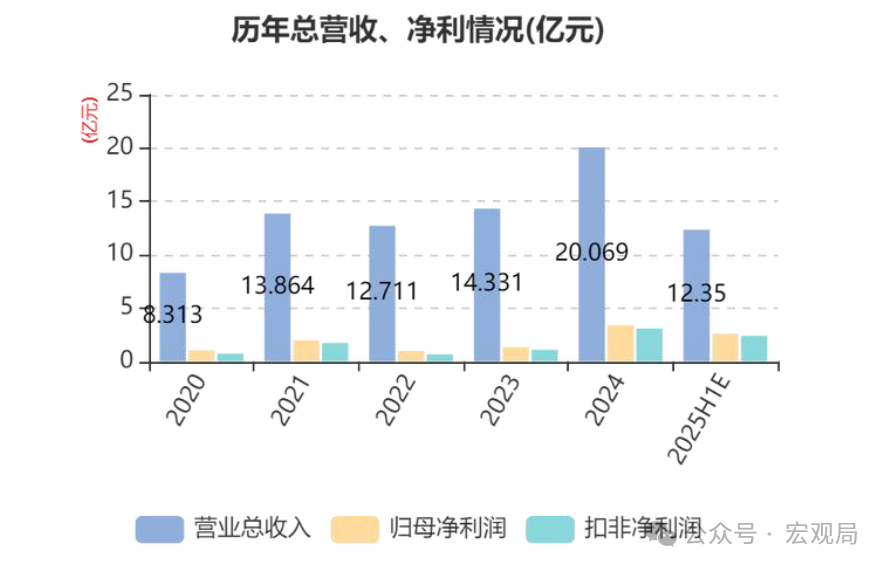
According to financial reports,Espressif Systems’ revenue is expected to exceed 2 billion yuan in 2024, with net profit growing over 70% year-on-year. This is not luck, but a result of hitting three major trends:
- Mature Overseas Markets—over 70% of revenue comes from overseas, with many enthusiasts and startup teams in Europe and America using ESP solutions for prototyping.
- Smart Home Proliferation—from smart light bulbs and speakers to curtains, the ESP32 has long been the industry default choice.
- AI Boom Benefits—AI toys and voice assistants are starting to explode, with the recent popularity of Xiao Zhi AI being a prime example.
Additionally, thewave of domestic replacements is accelerating, with many manufacturers that originally used Qualcomm and Broadcom solutions beginning to switch to Espressif—similar performance at half the price, why not?
What Potential Does Espressif’s Valuation Hold?
Espressif Systems currently has a market value of approximately 25 billion yuan. Based on profits, a reasonable valuation can be given:
- Estimated net profit for 2025:473 million yuan
- Assuming a PEG of 1.5 (reasonable valuation), corresponding PE of 60
- Reasonable valuation = 473 × 60 = 28.38 billion yuan
This means the current stock price still has over 20% upside potential. More importantly, Espressif is not an island; the direction it is heading—AIoT + Open Source Hardware + Domestic Replacement—is precisely the three main lines with the most trend certainty in the industrial chain.
In Conclusion: Value Is Not Just Measured by “How Many Chips Were Sold”
If we only look at how many ESP32 chips it has sold or the revenue growth rate, we may underestimate Espressif’s long-term potential.
What deserves more attention is how it has established a substantial “moat” through ecological advantages amidst the widespread “price war quagmire” in domestic chips.
Unlike typical MCU manufacturers that compete on parameters and prices, it has evolved towards a platform, building a system where “developers are assets”. As more and more Chinese developers and startup teams begin to create products based on the ESP platform, this “infrastructure of underlying chips” may be the key to determining Espressif’s future space.
Valuation will ultimately return to the penetrative power of the business model. Espressif is answering a more long-term question:
In the AIoT era, is it possible to have a Chinese version of “NVIDIA + Arduino”?
This question currently has no answer, but the question itself indicates that it deserves continued attention.