Application Cases of Ceramic 3D Printing in the 3C Industry
– Project Background –
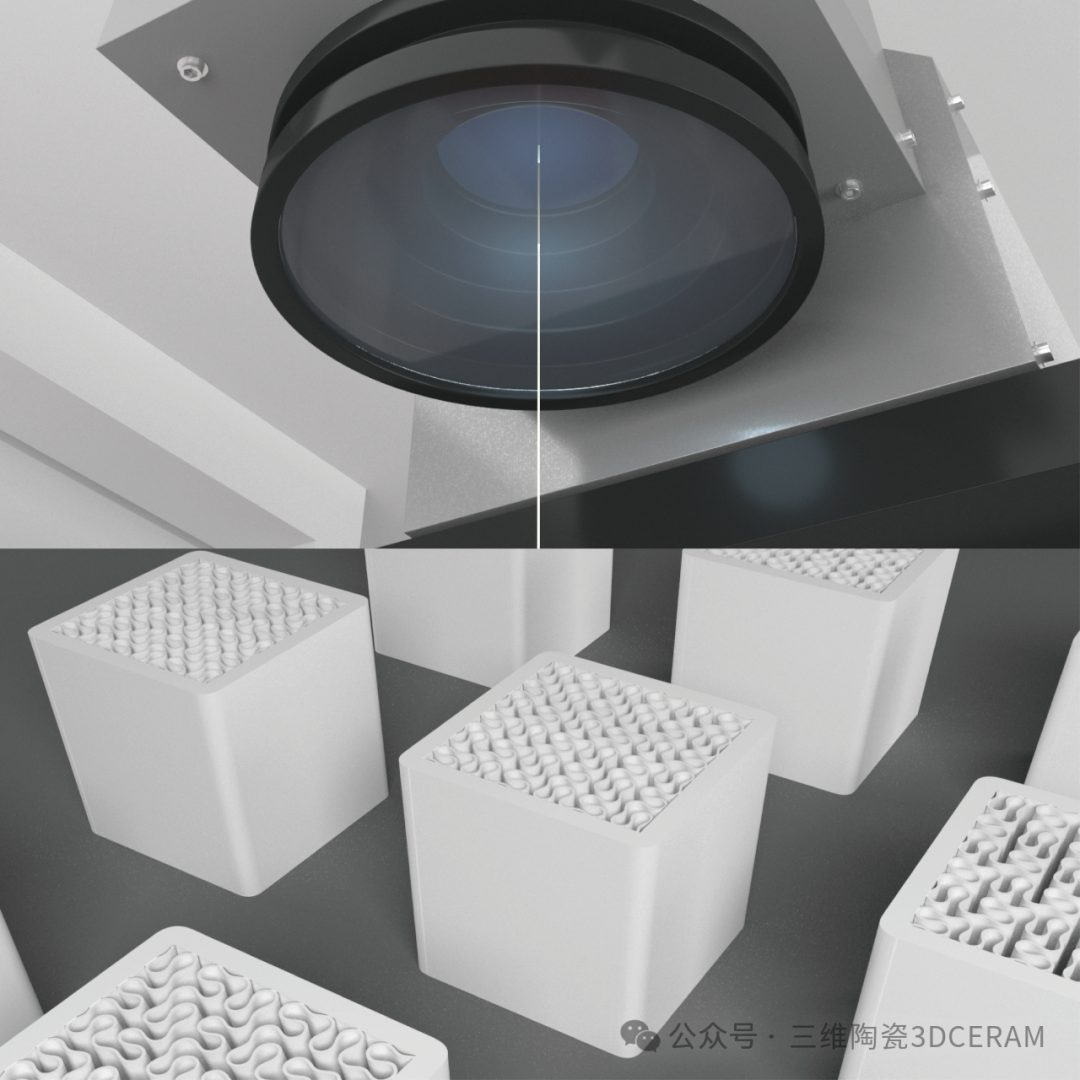
In the field of ceramic 3D printing, the demand for high-precision and complex structures of ceramic parts in the 3C industry is growing.
This small-batch pilot project involves the demand for zirconia ceramic 3D printed parts, which require high technical standards for material fluidity, printing precision control, and the stability of the debinding and sintering process.

Technical Requirements
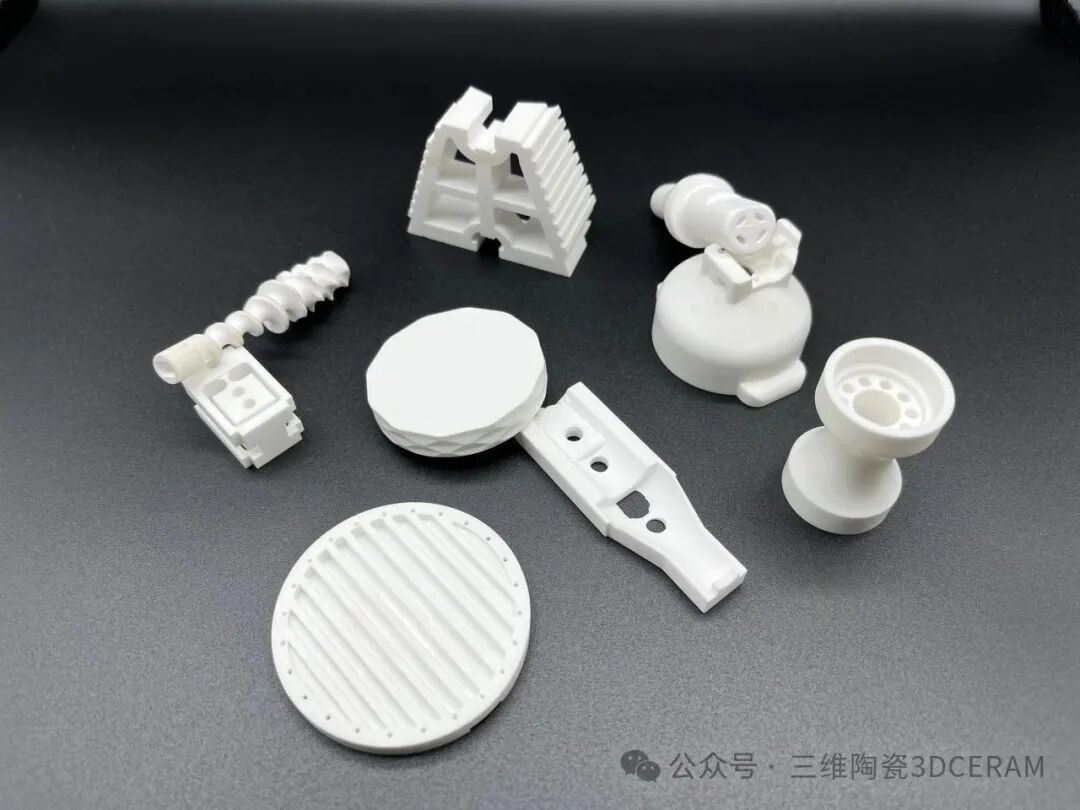
The client requires the production of special complex structures of zirconia ceramic 3D printed parts.
The specific indicators are: dimensional accuracy ±0.02mm, minimum wall thickness 0.5mm, minimum aperture 0.2mm. Since this project involves the manufacturing of special products, we customized a complete solution for the client and optimized the process and technology during the project.
Process Optimization
(1) Material Formula Optimization
To address the issues of poor fluidity and difficult cleaning of zirconia ceramic materials, multiple formula experiments were conducted:
1. Adjusting the content ratio of ceramic raw material formulas and conducting multiple rounds of experiments.
2. Changing the surface properties of material particles to solve the problem of poor formula fluidity.
3. Introducing additives to improve sintering activity.
Through multiple orthogonal experiments, the optimal formula was determined, and cleaning efficiency was improved.
(2) Printing Parameter Optimization
The team possesses an advanced precision compensation algorithm control system:
Focusing on optimizing printing parameters to ensure that each layer of material can be accurately stacked, the precision compensation algorithm minimizes the geometric deviation between the design model and the printed part.
(3) Innovation in Debinding and Sintering Process
Innovations were made in the debinding and sintering processes and curves: during sintering, thin-walled ceramic parts are prone to deformation and warping. Our technical team conducted extensive simulations and actual tests, repeatedly adjusting the debinding and sintering processes (including debinding atmosphere, custom kiln tools, placement methods, and sintering media) and sintering curves to ensure that the samples maintain perfect shape after high-temperature sintering.
Current Technical Challenges
The remaining technical challenge is the cleaning of some flow channels,and the following solutions are proposed:
1. Debugging specialized cleaning equipment to achieve maximum cleaning efficiency.
2. Developing a set of customized fixtures and supporting facilities.
3. Updating auxiliary cleaning equipment, conducting testing and debugging, and performing practical operations.
Project Significance
This project aims to achieve key technological breakthroughs in ceramic 3D printing in the 3C field. In the future, we will continue to optimize the ceramic additive manufacturing process chain, providing the 3C industry with a full-process solution including topology optimization design, process simulation, and mass production, promoting the mass application of ceramic 3D printing in various industry fields.
AboutWuhan Sanwei
Wuhan Sanwei Ceramic Technology Co., Ltd. is a professional provider of ceramic additive manufacturing solutions. Based on the rich experience of the creative team in the industrial ceramic field, the company continuously innovates and uses various additive manufacturing technologies such as photopolymerization, thermal melting extrusion, and binder jetting to provide 3D printing equipment, part processing, printing materials, post-processing thermal equipment, and collaborative R&D services for scientific research and industrial clients.
After years of technical cultivation and industry accumulation, we focus on innovative manufacturing of ceramic 3D printing, providing customized solutions for the entire process in fields such as medical, aerospace, electronics, and industry.