☆Follow this public account to never miss an update☆
In electric vehicles, 40% of the cost comes from the battery, which acts as the “heart” providing the “blood-pumping function” for the electric vehicle. The performance and lifespan of the battery are crucial indicators of the electric vehicle’s performance. How can we monitor these indicators and ensure that each battery operates optimally?It all depends on the Battery Management System (BMS), which acts as the “nanny” of the battery operation system. It processes a rich variety of signals, including: cell data, collision detection, CAN, charging, water pump, high voltage, insulation, and more.
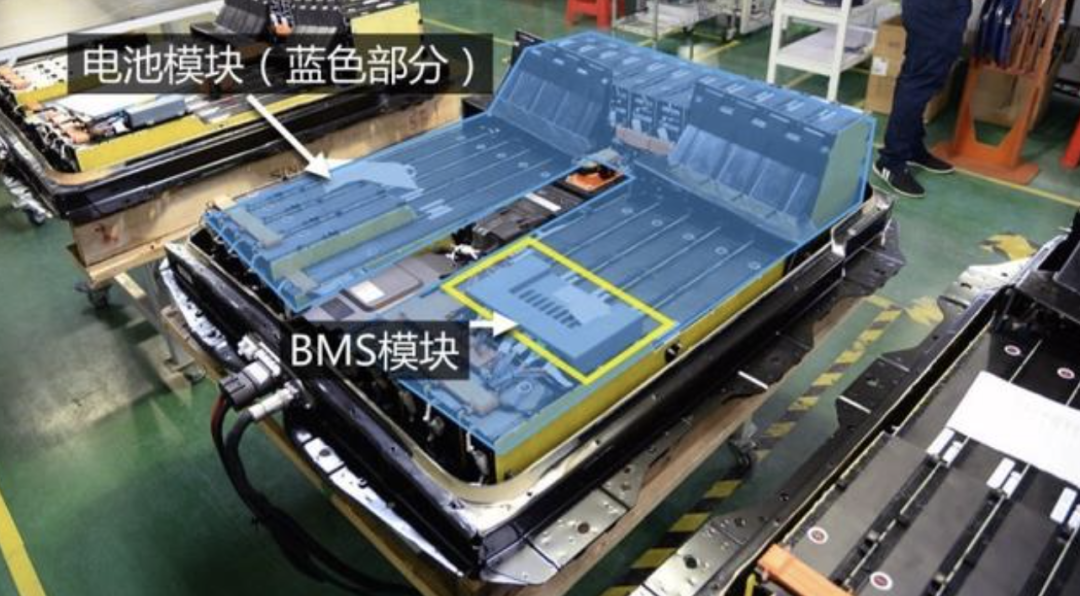
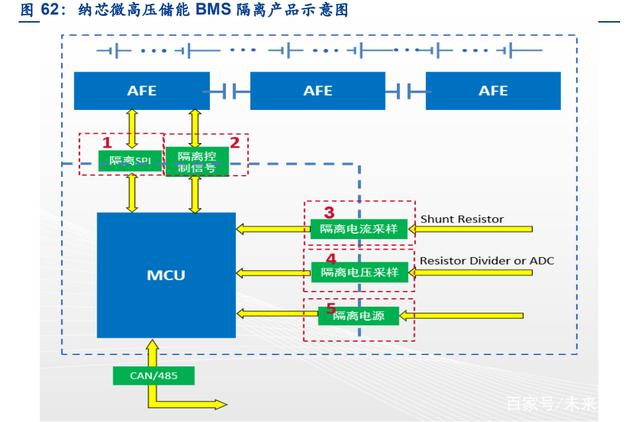
Over-discharging can cause permanent damage to the battery. In extreme cases, overheating or overcharging of lithium batteries can lead to thermal runaway, battery rupture, or even explosion. Therefore, the BMS can accurately measure the usage status of the battery pack, protect the battery from excessive charging and discharging, balance the charge among each battery in the pack, and analyze the battery’s charge to convert it into understandable range information, ensuring the safe operation of the power battery.What are the main chips in BMS?AFE Module: Achieves battery information collection and state monitoring functionsThe AFE (Analog Front End) includes components such as sensor interfaces, analog signal conditioning (including impedance transformation, programmable gain amplification, filtering, and polarity conversion), analog multiplexers, sample-and-hold circuits, ADCs, data buffers, and control logic. Some AFEs also come with MCUs, DACs, and various driver circuits.Battery Balancing Module: Enhances battery endurance and cycle lifeBattery imbalance can affect both the battery’s endurance and its cycle life. Battery imbalance is manifested when multiple battery cells connected in series do not have equal voltages, especially at the end of charging and discharging. When batteries with different full charge capacities are connected in series, the charging current is the same, but the battery with the lower full charge capacity will reach a higher voltage first, resulting in unequal voltages among the batteries. Even if the full charge capacities are the same, if the SOCs are different, the battery with the higher SOC will show a higher voltage, leading to unequal voltages. Furthermore, differences in internal resistance (R) among the batteries during charging and discharging can also lead to voltage differences. Additionally, external factors (such as localized heating of the battery pack or thermal imbalance among individual batteries) can also lead to different aging rates and internal resistance imbalances. Ultimately, this can manifest as unequal voltages among battery cells.The balancing circuit mainly includes active balancing and passive balancing. Active balancing transfers excess charge from the cell with the most charge to the cell with the least charge, or transfers it to the entire battery series, achieving energy recovery. Passive balancing dissipates excess charge from the cell with the most charge as heat through resistors.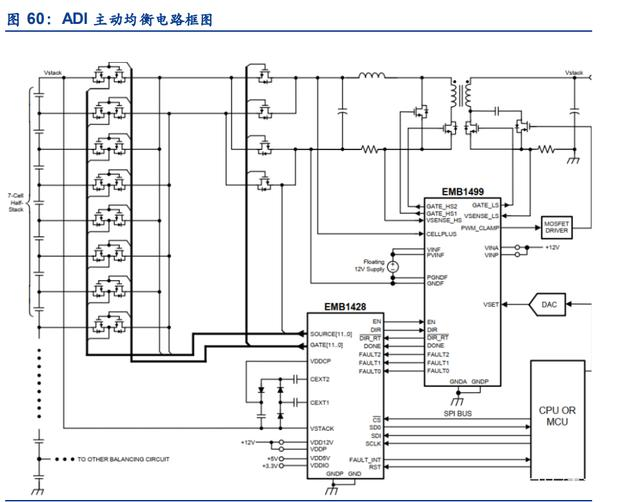 Computing Unit (MCU, etc.): Implements control and computation functionsAs a computing platform, the MCU needs to meet certifications such as AEC-Q100 and ISO26262. Taking the ADI 48V hybrid BMS system as an example, the MCU performs functions such as relay control, SOC/SOH estimation, balancing control, and data collection for voltage, current, and temperature. Compared to consumer-grade and industrial-grade MCUs, automotive-grade MCUs have higher industry barriers. Automotive-grade semiconductors have stringent requirements for reliability, consistency, safety, stability, and longevity, making development challenging: the external temperature variations during vehicle operation require high-performance temperature control; the typical design lifespan of a vehicle is usually over 15 years, far exceeding the lifespan requirements of consumer electronics; regarding failure rates, automotive manufacturers typically demand zero failures for automotive-grade semiconductors; and in terms of safety, high functional safety standards for automotive electronics provide sufficient safeguards for the mass production of increasingly complex electronic systems. The supply cycle for automotive-grade semiconductors must cover the entire lifecycle of the vehicle, requiring reliable, consistent, and stable supply, which imposes high demands on corporate supply chain arrangements and management.Isolation Circuit: Achieves electrical isolation between high and low voltage modulesIsolation devices achieve electrical isolation between high and low voltage modules, using technologies such as opto-isolation and digital isolation. Isolation devices can convert input signals and output them to achieve electrical isolation at both ends. Electrical isolation ensures the safety of signal transmission between high voltage circuits and low voltage circuits; without electrical isolation, if a fault occurs, current from the high voltage circuit could directly flow to the low voltage circuit, damaging the circuit and equipment. Additionally, electrical isolation eliminates ground loops between the two circuits, blocking the propagation of common mode and surge interference signals, thereby enhancing the safety and reliability of electronic systems. Devices transmitting signals between high voltage (strong current) and low voltage (weak current) typically require electrical isolation and must pass safety certifications. They are widely used in information communication, power meters, industrial control, and electric vehicles.
 Main BMS Chip Manufacturers in Europe and AmericaIn BMS chips, there are not many AFE options available. The AFE structures we encounter are largely similar, with differences primarily in the number of sampling channels, and the types and architectures of internal ADCs.The main suppliers of AFE include ADI, TI, ST, Panasonic, NXP, and Renesas. Among them, ADI’s product line mainly comes from the acquisition of Linear Technology and Maxim (in 2019, ADI acquired Linear Technology and collaborated with automakers like GM to develop wireless BMS, launching a wireless BMS system and platform that monitors battery data and analyzes it throughout the entire lifecycle from production to recycling, maximizing the value of power batteries), while Renesas’s products mainly come from its acquisition of Intersil. The suppliers of AFE products are primarily foreign companies, and currently, no domestic manufacturers are known to provide AFE chips.
 Major AFE Suppliers and Product ModelsFrom the perspective of MCUs, the main suppliers include TI, ST, NXP, Infineon, and Renesas. Currently, many domestic MCU manufacturers are actively developing automotive-grade products, such as Zhongying Electronics, Zhaoyi Innovation, Beijing Junzheng, Xinhai Technology, Guomin Technology, Unisoc, Nasta, Lexin Technology, Broadcom, Fudan Microelectronics, Shanghai Beiling, and Jingfeng Mingyuan, among others.
 Major MCU Suppliers and Product ModelsIn terms of ADCs, the main suppliers currently include TI, ADI, ST, and Renesas, most of which are American companies. Although ST has some products, its product range is relatively limited. Domestically, there are mainly Shanghai Beiling, Sirepu, and Shengbang Technology.For digital isolation, it is mainly used for digital communication between high and low voltage, such as SPI communication between high voltage sampling on the BMS main control board and the MCU, as well as SPI communication between the sampling board AFE and the MCU. The main suppliers include ADI, TI, and Silicon Labs. Of course, in addition to using digital isolators, opto-isolators or transformer isolation solutions can also be employed.Representative BMS ChipsTIHigh-Precision Battery Monitor, Balancer, and ProtectorThe electrification of automobiles is rapidly developing in an irreversible trend, and the BMS system has become a primary core issue. TI has made significant contributions in the electric vehicle BMS field, having released both wired and wireless BMS solutions that meet ASIL D standards, leading the industry.
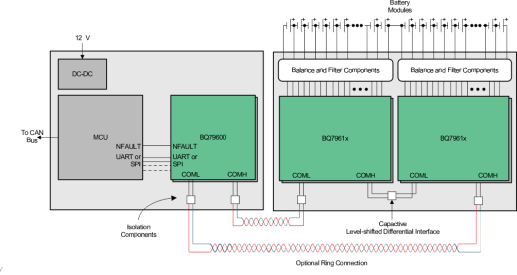 BQ79614-Q1CircuitTopology Source: TIBQ79614-Q1 is a high-precision battery monitor, balancer, and protector that can be applied to hybrid and pure electric vehicle BMS modules. It can monitor battery temperature in real-time to avoid overheating and can autonomously perform pause and start operations. This chip operates at a voltage of 12V and can quickly monitor the voltage of 14 batteries with high precision within 128μS.The BQ79614-Q1 chip integrates a front-end filter and a post-ADC low-pass filter. The front-end filter is designed to reduce costs and can use a simple, low-voltage differential RC filter in the battery input circuit. The ADC low-pass filter is used to monitor the filtered DC voltage, facilitating the calculation of the battery’s charge state. The chip can be used for measuring external thermistors, and the BQ79614-Q1 can communicate with the BQ7600 device or directly with the MCU via UART. In case of communication line anomalies, the MCU can communicate directly with the battery pack through an isolated differential daisy chain.ST L9963E Battery Monitoring Protection ChipSTMicroelectronics (ST) has led the semiconductor market for many years, with chip applications spanning multiple fields, and has become a major supplier of automotive chips. In the automotive sector, to meet market and design needs, it has launched the L9963E battery monitoring protection chip, aimed at solving the design challenges of battery management systems faced globally, including in China. The new product adopts a unique architecture that can measure 4 to 14 series-connected battery cells, with sample signals being desynchronized without any delay. Test results show that although up to 31 L9963E devices can be connected in a daisy chain, the overall chain delay is still less than 4 s.The voltage measurement accuracy of L9963E is very high, with a maximum error of ±2 mV, and it can also measure current to understand the actual capacity of each battery cell. Moreover, the architecture ensures that each battery cell has dedicated resources for handling the data monitored by the chip, whereas similar market products typically share data processing resources among battery cells. By providing dedicated processing resources for each cell, we can deliver synchronized readings and avoid delays caused by desynchronization. Within a daisy chain network structure, the L9963E can also communicate via a serial bus, achieving bandwidth of up to 2.66 Mbps, while most industry bandwidth hovers around 1 Mbps. Thus, reading and processing 434 battery cells requires between 4 milliseconds and 16 milliseconds.
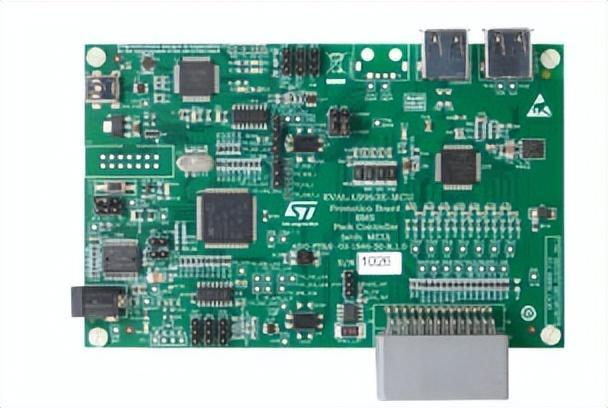 EVAL-L9963E-MCUAs electric vehicles become cheaper, cost constraints become increasingly important. Powerful chips that are too expensive lose much of their appeal. Uniquely, the L9963E offers rich functionality without increasing the die size, maintaining cost-effectiveness. Additionally, traditional BMS chips require each battery cell to be paralleled with an external Zener diode. During assembly, the system cannot know which battery cell will make contact with the connector first, and this is always a random event, so a Zener diode must be used on each battery cell to protect the battery management chip. The L9963E adopts hot-swappable and robust architecture, allowing engineers to avoid these Zener diodes, thereby simplifying PCB layout and reducing overall costs.ADI12-Channel Battery MonitorAccording to ADI’s official website, they launched the first integrated high-voltage battery stack monitor as early as 2008, and it has since undergone iterations to its fourth generation, with the fifth generation product still in the development stage.
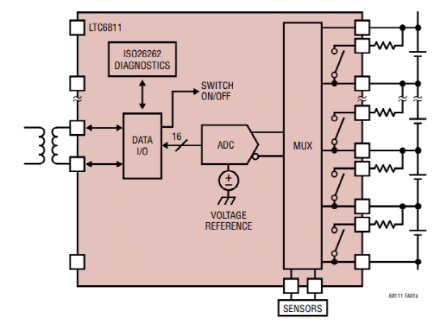 LTC6811-1 Framework Diagram Source: ADILTC6811-1 is ADI’s fourth-generation BMS IC, a battery group monitor that can detect voltages of up to 12 series-connected batteries, with measurement accuracy higher than that of ST L9963, with a total measurement error of less than 1.2mV, completing the detection of 12 batteries in just 290μs. The LTC6811-1 can connect multiple batteries in series, allowing for real-time monitoring of battery status in high-voltage battery strings. This chip also features an ISOSPI interface, enabling high-speed remote communication with other devices. The LTC6811-1 can connect 12 battery groups in a daisy chain, achieving multi-channel communication functionality, monitoring battery status, and performing pause and start operations based on the current battery status, with the chip powered by an isolated power supply.Infineon Multi-Channel Battery Monitoring and Balancing System ICInfineon has launched battery management ICs including the TLE9012DQU and TLE9015DQU models, providing optimized solutions for battery monitoring and balancing. The new battery management ICs achieve higher measurement accuracy and excellent application robustness, offering system solutions for battery modules, module-less battery technology, and battery chassis integration technology that meet the highest automotive functional safety level ASIL-D and comply with ISO26262 standards.This IC product line is suitable for industrial, consumer, and automotive applications, such as mild hybrid electric vehicles (MHEV), hybrid electric vehicles (HEV), plug-in hybrid electric vehicles (PHEV), and pure electric vehicles (BEV), as well as battery management systems for energy storage systems, two-wheeled and three-wheeled electric vehicles. The IC series includes TLE9012DQU and TLE9015DQU models.
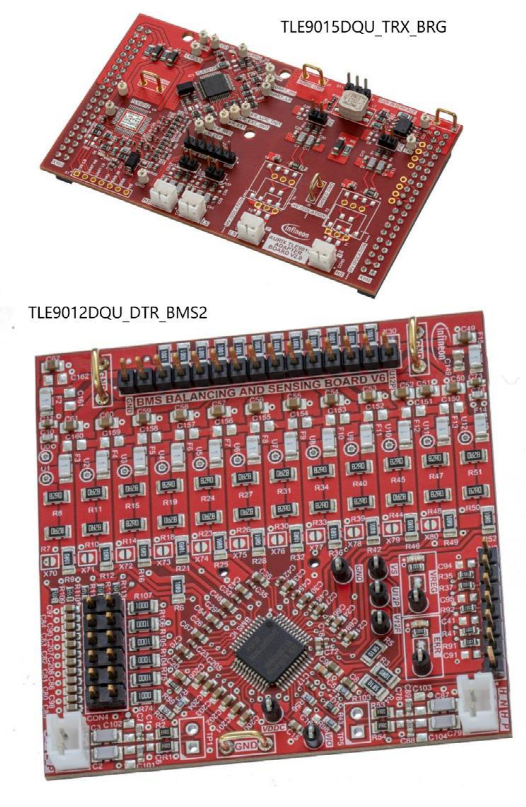 Among them, TLE9012DQU is a multi-channel battery monitoring and balancing system chip capable of performing highly accurate voltage measurements to estimate the state of charge (SoC) and state of health (SoH) of the battery, which are critical requirements for all battery management systems.TLE9015DQU is a battery monitoring transceiver chip used to connect multiple TLE9012AQU chips in a daisy chain structure. It supports ring communication through two pairs of UART and iso UART interfaces, reducing costs and improving system efficiency. By integrating a fault management unit, this module can also achieve bidirectional information flow.How are Domestic BMS Chips Doing?Currently, the domestic BMS chip market size is several billion units annually, with only a 20% share coming from domestic brands, and even fewer that can be used in electric vehicles. The market is largely monopolized by foreign manufacturers, while domestic BMS companies primarily engage in secondary development, including hardware design and software construction.However, domestic semiconductor companies have begun to establish a presence in the BMS chip field. Despite a decline in global BMS market growth due to the impact of COVID-19 in 2020, China’s BMS market remains significant. According to the Huajing Industry Research Institute, the demand scale for China’s BMS market in 2020 was 9.7 billion yuan. In the future, as the electric vehicle market expands and battery efficiency requirements increase, the BMS market scale is expected to achieve stable growth. According to estimates from Business Wire and compiled by the Forward Industry Research Institute, the global BMS market size is expected to reach $6.512 billion in 2021 and could reach $13.1 billion by 2026, with a CAGR of 15%. According to Mordor Intelligence, the global battery management chip market is expected to reach $9.3 billion by 2024, indicating a broad market space.What Happens to Old Batteries from Electric Vehicles?China’s electric vehicle sales began to grow significantly in 2015, and with the increasing number of vehicles, as of the end of March 2022, the total number of electric vehicles in the country reached 8.915 million, accounting for 2.90% of the total number of cars.Although BMS chips are continuously upgraded to better optimize battery performance and extend battery life, once the capacity of the power battery decreases to 80%, a new battery must be replaced. With the development of electric vehicles in recent years, the number of retired power batteries has shown a yearly increasing trend.In 2020, over 200,000 power batteries were retired in China, and in 2021, this number was around 320,000, a year-on-year increase of 60%. Industry insiders expect a large-scale retirement wave of power batteries in the next 2-3 years. After 2025, the number of retired batteries is expected to grow to millions annually.The disposal of retired batteries has become an urgent development challenge for the electric vehicle industry. According to statistics, the current recycling rate of power batteries in China is only about 10%, making the demand for recycling and utilization of retired power batteries increasingly urgent.The Ministry of Industry and Information Technology, the Ministry of Science and Technology, the Ministry of Ecology and Environment, the Ministry of Commerce, and the State Administration for Market Regulation recently jointly issued the “Management Measures for the Cascade Utilization of New Energy Vehicle Power Storage Batteries” (hereinafter referred to as the “Measures”). This “Measures” encourages cascade utilization enterprises to collaborate with electric vehicle manufacturers, power storage battery manufacturers, and scrapped vehicle recycling and dismantling enterprises to strengthen information sharing and utilize existing recycling channels to efficiently recycle retired power batteries for cascade utilization. It encourages power storage battery manufacturers to participate in the recycling and cascade utilization of retired power storage batteries.On June 17, the Ministry of Ecology and Environment and six other departments jointly released the “Implementation Plan for Coordinated Reduction of Pollution and Carbon” which clarifies the promotion of clean and low-carbon energy supply systems and electrification of terminal energy consumption, aiming for new electric vehicle sales to reach about 50% of total new vehicle sales in key areas for air pollution prevention by 2030. Among the measures, it mentions “promoting the recycling and utilization of retired power batteries, photovoltaic components, wind turbine blades, and other new types of waste materials.”It is understood that the recycling of power batteries mainly has two directions—cascade utilization and regeneration utilization. When the capacity of retired power batteries is between 20% and 80%, cascade utilization is the first choice. When the battery capacity drops to 20% or below, it no longer has cascade utilization value and can be used for regeneration.Countries and regions that developed electric vehicles earlier, such as Europe, the United States, and Japan, have established relatively complete power battery recycling systems. At the same time, more and more car manufacturers and equipment companies are beginning to use retired batteries as energy storage devices to support energy storage systems. Car manufacturers like Skoda, Renault, and Nissan are collaborating with energy companies to utilize retired batteries for energy storage.
Source: Electronic Engineering World
Limited Time Free Offer
17B. Limited Time Free Offer for the 17th Material Collection from the New Energy Vehicle Technology Institute (Technical Specifications Summary for the 2022 National Vocational College Skills Competition in New Energy Vehicle Testing and Maintenance)
17A. Free Offer for the 2022 National Vocational College Skills Competition (Proposed Regulations for the Automotive Category)
16. Free Offer for the 16th Material Collection from the New Energy Vehicle Technology Institute (Shanghai Volkswagen Training Materials: Tiguan PHEV)
10. Free Offer for the 10th Material Collection from the New Energy Vehicle Technology Institute (Audi e-tron Service Technical Training)
1. Free Offer for the First Material Collection from the New Energy Vehicle Technology Institute (119 PPT Presentations)
Disclaimer: This public account maintains neutrality regarding all original, reprinted, and shared content, statements, opinions, and judgments. The articles, videos, images, etc., published are copyrighted by the authors. If any reprinted works have incorrect author or source markings or involve infringement, please kindly remind the original authors and contact the editor for deletion.
If you like this article, feel free to share it and spread knowledge for joy.