The rapidly developing technology is quietly changing our lives.
New productive forces represent innovation, breakthroughs, and transformation, injecting infinite vitality into the field of technology assisting the disabled. Technological products should not be cold tools but powerful supports that can warm hearts and help disabled individuals better integrate into society.
The China Disabled Persons Magazine has launched a series of reports titled “Technology Assisting the Disabled: Sharing a Better Life,” inviting us to explore the wonderful combination of new productive forces and technology assisting the disabled in this special topic, experiencing the hope and beauty brought by technology and feeling the “future” that has entered reality.
The “Investigation Report on the Current Needs and Support Resources of Families with Autism and Neurodevelopmental Disorders in China” shows that
the cost of early intervention for autism is enormous,
far exceeding the payment ability of ordinary families in China.
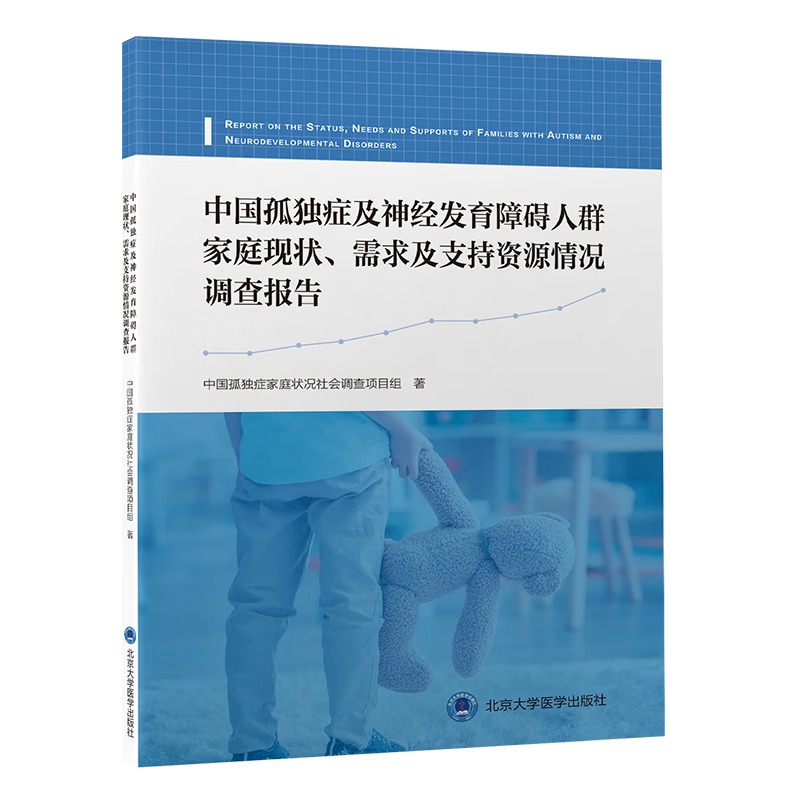
▲ “Investigation Report on the Current Needs and Support Resources of Families with Autism and Neurodevelopmental Disorders in China” published by Peking University Medical Press
Currently,
early intervention for autism is primarily reliant on manual intervention,
with rehabilitation institutions
having a high individual training volume,
low teacher-student ratios,
and high costs.
This is because the cost of human resources is too high,
and it can be anticipated that in the future, it may become increasingly expensive.

AI cognitive robots represent a brand new model for intervention in special children,
providing intelligent assessment and individualized rehabilitation training courses
through a one-on-one digital intervention system and supporting services,
with two classes per day, each lasting 30 minutes,
for children aged over two years with cognitive developmental ages less than 72 months.
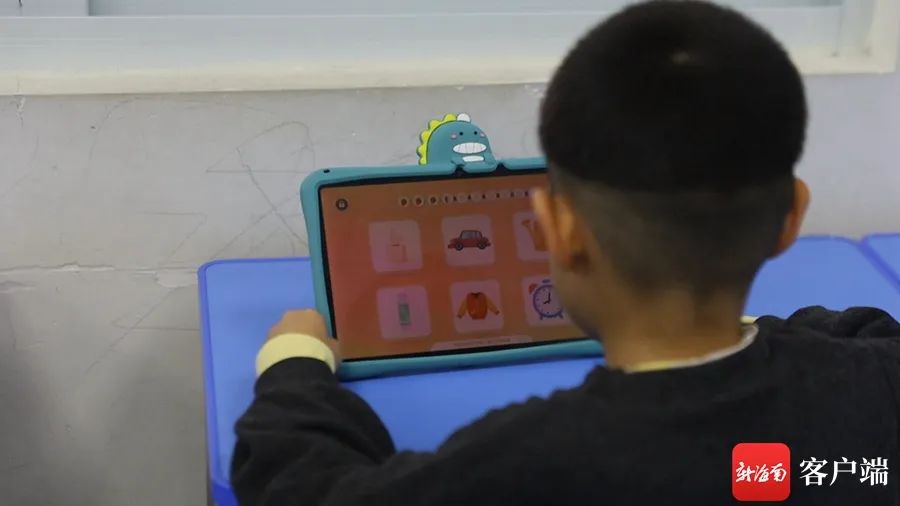
Currently, the digital therapy for autism in Hainan can partially replace rehabilitation therapists to conduct cognitive training, with over 850 children in the province accumulating nearly one million minutes of training. Experts indicate that preliminary clinical research has found significant improvements in cognitive performance and developmental abilities among children who continuously use digital therapy. The image shows a child undergoing cognitive training with digital therapy.
AI cognitive robots are based on children’s developmental milestones
and principles of neural plasticity,
utilizing behavioral analysis intervention strategies,
effectively treating cognitive ability defects in children with autism spectrum disorders, global developmental delays,
and intellectual disabilities,
thereby improving their social adaptation abilities.
Video source丨New Hainan Client, Nanhai Net

In the past,
rehabilitation therapists needed to constantly prepare lessons,
prepare new teaching aids,
and repeatedly change positions during training,
giving instructions, assisting, and reinforcing,
which was time-consuming and labor-intensive.
AI cognitive robots can effectively replace this part of the work.
This not only liberates rehabilitation therapists and parents,
allowing them to focus on more core tasks,
and giving them more time for social interactions with children,
and for practicing speech and language,
but also enables skills learned by children in digital therapy to be applied in real life immediately.

Professor Li Ling from Hainan Provincial Women and Children’s Medical Center’s Department of Pediatric Rehabilitation introduced the current usage of digital therapy for autism.
The number of teaching content in AI cognitive robots
far exceeds any traditional teaching system.
Each key intervention project is broken down into levels of varying difficulty,
with the granularity of level breakdown meeting the needs of the weakest users;
for users who learn quickly,
AI cognitive robots will rapidly increase the difficulty,
improving rehabilitation efficiency
and allowing children to progress faster.
AI cognitive robots can also accomplish many tasks
that are difficult to design on traditional desktops,
such as combinations of degree adverbs and verbs,
various real sound discrimination,
and abstract concepts related to changes over time.

Fast and Slow Comparison
The expert team from Beijing Medical University Sixth Hospital
conducted randomized controlled experimental research on AI cognitive robots,
exploring the effectiveness of digital cognitive intervention
for the rehabilitation of children with autism.
The research conclusions indicate:
Digital cognitive intervention has a significant improvement effect on the cognitive performance
and overall developmental abilities of children with autism,
and the average number of sessions per day for children in the experimental group undergoing digital rehabilitation training can significantly predict
the progress of children’s cognitive performance and overall developmental abilities.
In other words:
The more you teach, the more they learn.


In the intervention process for autism,
AI cognitive robots cannot fully replace human intervention.
Because autism is ultimately a social communication disorder,
it is a problem that arises in interactions with people,
but we can attempt to utilize the advantages of AI,
liberating people from complex and heavy workloads,
especially in the most time-consuming and energy-intensive cognitive projects..
(The content involved in this article is derived from publicly available materials. Readers involved in specific operations or decisions are advised to consult professionals and exercise caution. This public account will not be liable for any direct or indirect losses arising from this.)
Source丨China Disabled Persons Magazine (ID: zgcjrzzs)
Written by丨Huang Ting
Edited by丨Chen Xi, Zhang Shuai
References丨The Paper, Nanhai Net, Nanguo Metropolis Daily, Autism Rehabilitation Agency alsolife official website, Zhihu
★ Please indicate the source when reprinting



Video Account


Douyin
(Scan with Douyin)