As a global leader in embedded system development software solutions, IAR is always focused on providing customers with high-performance and high-security development tools. Its powerful and flexible product lineup covers all aspects of embedded software development, enabling customers to easily and quickly develop embedded products for various fields.
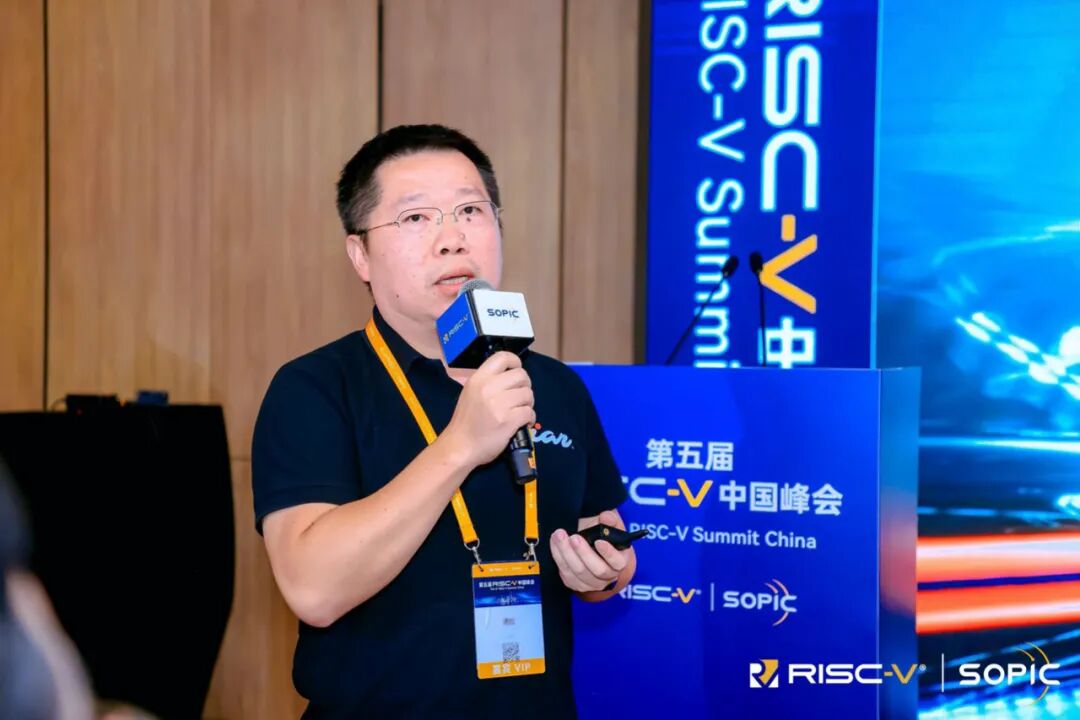
IAR Systems China Senior Engineer Pan Feng
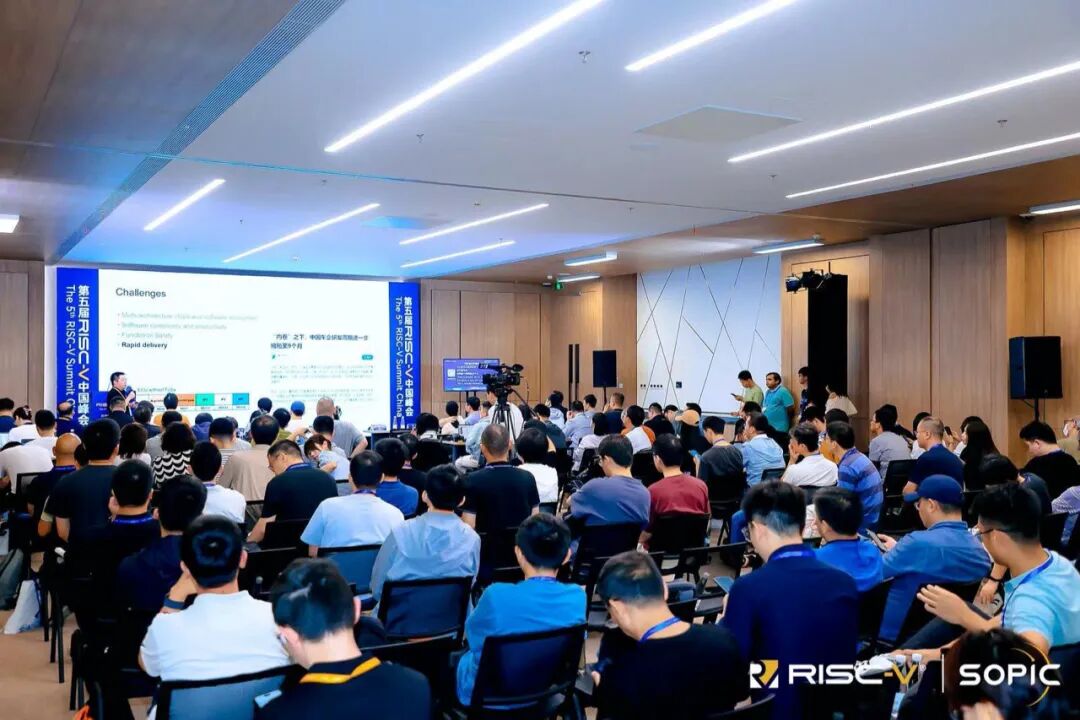
As a grand event for global open-source chip technology, the fifth RISC-V China Summit was grandly held at the Zhangjiang Science Hall in Shanghai. This summit has continuously promoted the prosperous development of the open-source chip ecosystem for five years. This year’s summit took it a step further by specially setting up an “Automotive Electronics Sub-Forum” to bring wisdom sharing to the industry.
IAR Systems China Senior Engineer Pan Feng delivered a speech titled “Accelerating RISC-V Automotive Application Development: Challenges, Responses, and IAR Practices,” analyzing industry pain points and sharing IAR’s response measures and practical experiences.
PART 01Industry Pain Points and Challenges
As a global leader in embedded system development software solutions, IAR is always focused on providing customers with high-performance and high-security development tools. Its powerful and flexible product lineup covers all aspects of embedded software development, enabling customers to easily and quickly develop embedded products for various fields.
According to Pan Feng, challenges in automotive application development come one after another, mainly including the following:
First, there are various chip architectures in the automotive electronics field, generally divided into three categories: one is the proprietary or self-owned architectures claimed by chip manufacturers, but many of these architectures are outdated and no longer used; the second is general architectures, with ARM architecture being one of the earliest developed; and the third is the RISC-V architecture, which has seen rapid development in the automotive field over the past two to three years.
Second, software complexity and productivity. Over the past 5 to 10 years, the proportion of software in electronics has increased significantly, leading to an increase in overall software complexity. However, project operational efficiency has not improved in line with the increase in software complexity, which means that current professionals in the automotive industry, especially in the software field, must rely on manpower to catch up with overall productivity.
Third, functional safety. “More than 10 years ago, we were still discussing how to persuade car manufacturers to implement functional safety, but this is no longer a topic of discussion. The current pain point is that implementing functional safety affects the overall development progress and increases workload, so we need to think about how to quickly implement functional safety under these circumstances,” said Pan Feng.
Fourth, rapid delivery. Pan Feng stated, “This is the ultimate challenge among all challenges, as the first three challenges contradict the final rapid delivery. For example, in a project from 2016, when I was at Tier 1, there was a safety key project with an 18-month cycle, which was 6 to 12 months ahead of other competitors. This meant our entire project delivery cycle was ahead of the industry by 6 to 12 months. However, by 2023, the delivery cycle has changed to 9 months. Recently, a friend revealed that the delivery cycle has now been ‘compressed’ to 6 months. This shows that rapid delivery poses the greatest challenge for automotive industry applications.”
 PART 02Progressing Through Practice, Overcoming Common Challenges
In the face of industry challenges, IAR has implemented various measures in practice, specifically as follows:
First, platformization. The same hardware can be differentiated by high, medium, and low-end through software. Nowadays, IAR uses platform-based software to quickly apply mature toolchains to RISC-V development.
Second, use certified components and tools as much as possible. “This includes certified CPU IP cores, certified chips, certified middleware, and certified toolchains, such as compilers and static analysis tools. These are effective means to accelerate our development process.”
Third, optimize processes. For example, agile development has been used by some new car manufacturers in recent years. Another example is the left shift, which has now been applied to design, verification, and other development processes.
Fourth, the automotive industry now widely uses low-code development, a typical example being the configuration tools of AUTOSAR, which use low-code tools for relevant designs during the design phase to avoid inefficiencies or quality issues caused by manual coding.
As an embedded system development software solution provider, IAR has generated numerous cases during the practice process and coordination with customers. For example, IAR provides a complete set of architecture-agnostic products, offering customers a one-stop solution that includes code writing, compilation, and final debugging, supporting multiple architectures with a single integrated development environment. The benefit of this approach is that IAR has a wide range of chip architectures, which can help quickly migrate from other architecture development projects to the RISC-V architecture.
For instance, IAR can provide powerful AMP and SMP hybrid multicore debugging modes, leveraging advantages in the compilation chain to debug advanced functions at a low cost for the industry.
It can be seen that although there are many challenges in RISC-V automotive application development, IAR has also implemented many measures to overcome these difficulties. “As a toolchain provider, we do our utmost to contribute to the rapid advancement of RISC-V,” said Pan Feng.
Focusing on the Chain Expo: Highlights of the Smart Car Chain Exhibition Area
E-Weekly Car News | Geely and Zeekr Sign Merger Agreement, Luobo Kuai Pao and Uber Reach Cooperation
Promoting the Industrialization of Self-Controlled Automotive MCUs, How Does Wuhan Binary Semiconductor Do It?