









A Beginner’s Guide to Avoiding Pitfalls in PLC Programming |
A Summary from Experienced Engineers

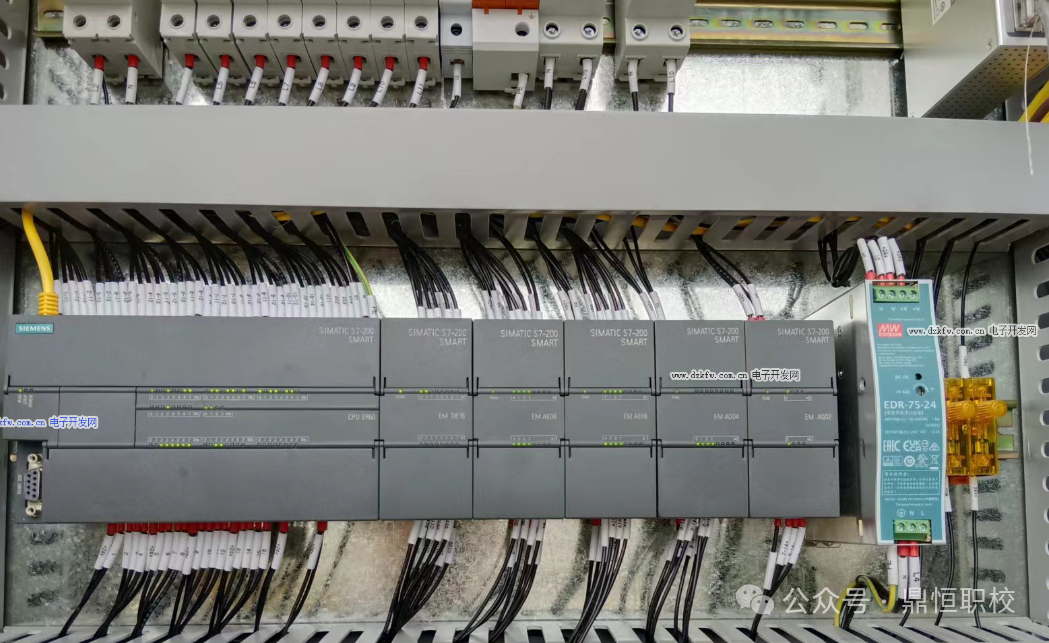
In the field of industrial automation, PLCs (Programmable Logic Controllers) are no longer just simple logic control devices; they have become the intelligent control core that integrates data processing, communication, motion control, and various other functions. However, with the richness of features, beginners often find themselves lost. This article summarizes the three fundamental points that engineers should master first when learning PLCs, based on practical experience, to help them avoid detours.
01
The “Heartbeat” of PLC: Scan Cycle
Just as a person’s heartbeat determines vital signs, the PLC’s scan cycle directly affects system performance. A certain automotive production line experienced issues due to engineers neglecting the scan cycle, resulting in asynchronous movements of robotic arms—every 30 seconds, a car was assembled incorrectly, leading to losses of up to a million.
Key Understanding:
Typical Scan Cycle = Input Sampling + Program Execution + Output Refresh
For high-speed devices, it is recommended to choose PLC models with a scan cycle of <1ms
During programming, monitor the cycle time as if you were “reading an ECG”

02
The “Kitchen Philosophy” of Memory Allocation
A student once complained: “Why does my temperature data always fluctuate?” Upon inspection, it was found that he had stored analog values in the discrete address area. This is akin to using soy sauce as vinegar; no matter how good the cooking skills, delicious food cannot be made.
Practical Tips:
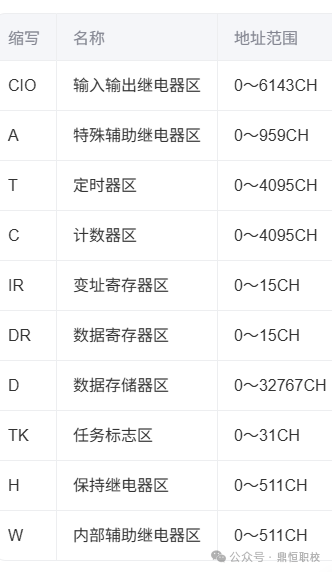
1. The CIO area of Omron CP1H is like the “spice rack”—most commonly used
2. The DM area is the “refrigerator’s cold storage”—suitable for storing recipe parameters
3. Verify address understanding by lighting test lamps
03
“Morse Code” of Base Conversion
Base conversion (binary, decimal, hexadecimal, etc.) is an essential skill for PLC engineers and a key distinction between professional engineers and ordinary electricians. In Japanese PLCs, it is usually stipulated:
1 channel (Channel) = 1 word (Word) = 2 bytes (Byte) = 4 digits (Digital) = 16 bits (Bit).
No matter how data is presented, its underlying form is always binary. For example:
Storing the decimal 100 in D100, its binary value is 00000000 01100100.
If storing the value 99999, due to exceeding the 16-bit limit, the PLC will automatically use addresses D200 and D201 to store it in a concatenated manner. At this point, viewing the values of D200 or D201 alone may be meaningless, but concatenating them can restore the original data.



The functions of PLCs are becoming increasingly powerful, but the basics are always the cornerstone of progress. The three key points of scan cycle, memory allocation, and base conversion may seem simple, yet they are the root of many problems. It is recommended that beginners solidify these fundamentals before delving into advanced features to avoid learning in a “castle in the air” manner.
-END-