Introduction to Linux System Users and Permissions
Introduction to Linux System Users and Permissions

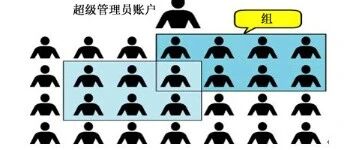
1. Root User (Super Administrator) Whether it is Windows, macOS, or Linux operating systems, a multi-user permission management system is employed. In the Linux system, the account with the highest privileges is called root (super administrator). The root user has the highest level of system operation permissions, while ordinary users’ permissions are usually subject to … Read more


Description of Linux File Attributes

Description of Linux File Attributes

1. File Owner The Linux system is a multi-user, multi-tasking operating system. The user’s role (who you are) is identified by UID (user) and GID (group). Users are divided into three categories: superuser, ordinary user, and virtual user. UID (user): The user’s UID is akin to our ID card, while the username is like our … Read more

25 Linux Server Security Tips You Can Always Use!

25 Linux Server Security Tips You Can Always Use!

Everyone thinks that Linux is secure by default, and I generally agree (this is a controversial topic). Linux does indeed have a built-in security model. You need to enable it and customize it to achieve a more secure system. Linux is harder to manage, but correspondingly more flexible, with more configuration options. For system administrators, … Read more

Linux Basics: User and Group Management

Introduction In Linux systems, all operations are based on users (<span>User</span>) and user groups (<span>Group</span>). From file permissions, system logins, to service operations and security management, the user mechanism is essential. In this article, we will delve into: The basic concepts of Linux users and user groups The system files related to user management in … Read more

Complete Guide to Linux Users and Groups: From Creation to Permissions

Linux User and Group Management: From Creation to Permission Control1. Basics of the Linux User System2. Core User Management Commands3. User Group Management Commands4. Password Management5. User Information Query Commands6. Configuration File Details7. Password Policies and Security8. Practical Cases9. Best Security Practices10. Troubleshooting11. Summary Linux User and Group Management: From Creation to Permission Control In … Read more

Linux User and Group Management

🐧 Linux System User and Group Management This chapter mainly explains the methods of Linux user and group management, including account addition, modification, deletion, password management, group management, and related system file structures. This knowledge is fundamental for system maintenance, security control, and permission management. 🧭 1. Management of Linux System User Accounts Linux is … Read more

Script for Adding New Users in Linux

Modify the following fields: Change username to the desired username; Change usergroup to the desired user group; Change userpwd to the user’s home directory; After renaming the file to <span>user.sh</span>, execute the script. #!/bin/bash groupadd -g 1102 usergroup && useradd -u 1102 -g username -d /userpwd -c "userremarks." -m -s /bin/bash username echo "userpassword" | … Read more

A Journey Through Linux Cybersecurity – User Groups and Users

You have gained basic access to the server, and now you need to create covert accounts, disguise identities, and form a privileged team! Are you ready to become a master of user management? 🎯 Act 1: Reconnaissance – Viewing User Intelligence cat /etc/passwd # View all user profiles cat /etc/group # View all organizational structures … Read more

Linux Identity and Access Control

Linux Identity and Access Control In Linux systems, Identity and Access Control (IAC) is at the core of security management. It ensures secure access to resources through users, groups, permissions, and advanced mechanisms such as SELinux, preventing unauthorized operations and data breaches. According to an OWASP report, access control vulnerabilities are the primary risk in … Read more

Basic Linux Practice Multiple Choice Questions – 13

61. Question: In package management,____ is a collection of patches, configuration files, and scripts used to adapt software source code to a specific distribution. Option 1: Source package Option 2: Binary package Option 3: Source code Option 4: Dependency Correct answer: 1 Explanation: In package management, a “source package” is a collection of patches, configuration … Read more