Fundamentals of Object-Oriented Programming in C
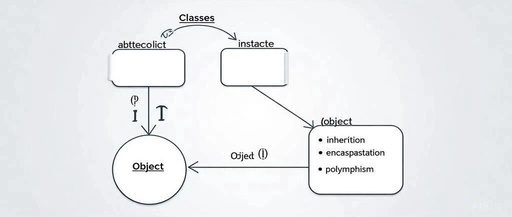
Fundamentals of Object-Oriented Programming in C

What is Object-Oriented Programming (OOP) Object: Girlfriend, Boyfriend, Entity (an individual of a class of things) Type: Classification, Category The four main characteristics of Object-Oriented Programming: Abstraction: Abstracting things, abstracting properties, abstracting behaviors Properties: Common characteristics of a class of things, e.g., humans: age, name, ID, gender… Behaviors: Common behaviors of a class of things, … Read more

In-Depth Analysis of C++ Virtual Function Tables and Virtual Pointers: The Core Mechanism for Achieving Polymorphism

In-Depth Analysis of C++ Virtual Function Tables and Virtual Pointers: The Core Mechanism for Achieving Polymorphism

1. The Essence of Polymorphism and the Structure of Virtual Function Tables Polymorphism is a core feature of object-oriented programming, achieved through base class pointers/references calling overridden functions in derived classes to implement runtime dynamic binding. For example, in an animal sound system: cpp class Animal { public: virtual void speak() const { cout << … Read more

Mastering C++ Inheritance: Core Techniques of Object-Oriented Programming

Mastering C++ Inheritance: Core Techniques of Object-Oriented Programming

In C++ programming, inheritance is one of the three main features of object-oriented programming and an important means of code reuse. Many beginners feel confused when facing the concept of inheritance, so today we will delve into this core concept in an easy-to-understand manner. The essence of inheritance is a mechanism for code reuse, which … Read more

A Comprehensive Guide to C++ Virtual Functions: From Underlying Principles to Practical Applications

A Comprehensive Guide to C++ Virtual Functions: From Underlying Principles to Practical Applications

It is well known that the polymorphism mechanism in C++ is one of the core aspects of object-oriented programming, and virtual functions are key to achieving polymorphism. Many developers can use them but often have a superficial understanding of their underlying mechanisms. Today, we will systematically clarify the working principles, usage scenarios, and precautions of … Read more

Path to Full Marks in GESP C++ Level 6 (Latest Version September 2025)

Path to Full Marks in GESP C++ Level 6 (Latest Version September 2025)

Detailed Explanation of GESP Examination Syllabus | C++ Level 6Grade Examination of Software ProgrammingC++ Certification Knowledge System (Level 6)1. Assessment Objectives Master the basic knowledge of trees, and be able to distinguish and use Huffman trees, complete binary trees, and binary search trees. Master search algorithms and choose the optimal search algorithm based on different … Read more

Comprehensive Analysis of Procedure-Oriented and Object-Oriented C Programming: A Beginner’s Guide

Comprehensive Analysis of Procedure-Oriented and Object-Oriented C Programming: A Beginner's Guide

Comprehensive Analysis of Procedure-Oriented and Object-Oriented C Programming: A Beginner’s Guide Introduction: The “Dual Identity” of C Language and the Core Differences in Programming Paradigms The C language is a native Procedure-Oriented Programming (POP) language—it lacks keywords such as class, object, and inheritance that are characteristic of Object-Oriented Programming (OOP). Its original design intent is … Read more

C++ Programming Guidelines – Class Design

C++ Programming Guidelines - Class Design

01 Class Design A class is the foundation of object-oriented design. A good class should have a single responsibility, a clear and concise interface, low coupling between classes, high cohesion within the class, and effectively demonstrate encapsulation, inheritance, polymorphism, and modularity.02 Single Responsibility of Classes Explanation: A class should have a single responsibility. If a … Read more

The “Split Personality” of C++ Keyword: The Three Core Identities of static

The "Split Personality" of C++ Keyword: The Three Core Identities of static

The “Split Personality” of C++ Keyword: <span>static</span>‘s Three Core Identities From functions, globals to classes, understand the true meaning of <span>static</span> in different contexts Introduction: <span>static</span> — The “Chameleon” of C++ Hello, C++ engineers. In the “Hall of Fame” of C++ keywords, if <span>const</span> is a rigorous contract officer, then <span>static</span> is a mysterious agent … Read more

Understanding C++ Polymorphism: Implementation Principles and the Role of Virtual Function Tables

Understanding C++ Polymorphism: Implementation Principles and the Role of Virtual Function Tables

When you write Base* ptr = new Derived(); ptr->func(); in your code, have you ever stopped to think: how does the compiler know to execute the func() of the Derived class instead of the Base class? Clearly, the pointer type is Base, yet it can accurately find the implementation in the derived class — this … Read more

Object-Oriented Programming Concepts Illustrated with LCD Driver Examples

Object-Oriented Programming Concepts Illustrated with LCD Driver Examples

Follow+Star PublicAccount to not miss exciting contentSource Material | Network In the early days, microcontrollers had limited performance and resources, making object-oriented programming a “luxury.” Today, with improved performance and resources, object-oriented programming has become a trend. Today, we will discuss the concepts of object-oriented programming in conjunction with examples of driving LCDs. Overview of … Read more