The Role of Inhibitory Circuits in Hippocampal Memory Processing
The Role of Inhibitory Circuits in Hippocampal Memory Processing

Although the number of interneurons in the hippocampus accounts for only 10-15% of the total cell population, their γ-aminobutyric acid (GABA) inhibitory circuits play an important role in the memory functions of the hippocampus. In recent years, as more and more studies focus on the dynamic organization of inhibitory circuits in the hippocampus and their … Read more
Zeng Linghui’s Research Group at the Medical School Reveals the Mechanism by which Somatostatin Interneurons (SOM-INs) Regulate Excitatory Synapses through Astrocytic Purinergic Signaling

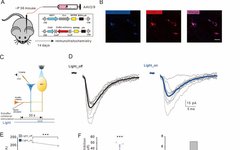
Zeng Linghui's Research Group at the Medical School Reveals the Mechanism by which Somatostatin Interneurons (SOM-INs) Regulate Excitatory Synapses through Astrocytic Purinergic Signaling

01 Introduction Research has confirmed that GABAergic neurons regulate synaptic excitability by activating presynaptic GABAB receptors (GABABRs). However, recent studies have shown that astrocytes also express GABABRs and can respond to the activity of GABAergic neurons. Nevertheless, it has been challenging for researchers to distinguish or overlook whether astrocytic GABABRs are involved in the mechanisms … Read more

Scientists Reveal Reward Learning Pathway Mediated by Somatostatin Neurons

Scientists Reveal Reward Learning Pathway Mediated by Somatostatin Neurons

Assessing the positive or negative valence of external sensory cues and translating them into appropriate behavioral responses is crucial for animal survival in complex or challenging environments. Negative valence signals lead to aversive/avoidance behaviors, while positive valence signals promote reward/approach behaviors. Much previous research has focused on the neural structures within the emotional processing network … Read more

Overview and Lecture: Research Progress on the Correlation Between Cholecystokinin and Depression

Overview and Lecture: Research Progress on the Correlation Between Cholecystokinin and Depression

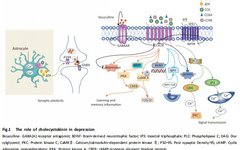
Abstract Depression is a mental disorder characterized by significant and persistent low mood. Recent studies have found that cholecystokinin (CCK), a small molecule brain-gut peptide (BGP), is widely distributed in the central nervous system (CNS) and the enteric nervous system (ENS). To clarify the relationship between CCK and the pathogenesis of depression, this article reviews … Read more