Linux Find Command: Detailed Explanation of find, grep, and ripgrep (rg)

Linux Find Command: Detailed Explanation of find, grep, and ripgrep (rg)

1. Detailed Explanation of the find Command 1.1 Purpose <span>find</span> is the most powerful file search tool in Linux, capable of recursively searching for files in a directory tree. It supports filtering by various criteria such as name, type, size, and time, and can perform various operations on the search results. 1.2 Syntax find [path] … Read more

Kirin Linux | The Ultimate Showdown: find -exec vs xargs for Efficient Shell Batch Processing

Kirin Linux | The Ultimate Showdown: find -exec vs xargs for Efficient Shell Batch Processing

Note: This article is an original work by Liu Feng from Anyatech. Please respect intellectual property rights. When sharing, please indicate the source. No unauthorized copying, adaptation, or reproduction is allowed. Introduction In Linux system administration and daily development, we often face a common requirement: to find a batch of files that meet certain criteria … Read more

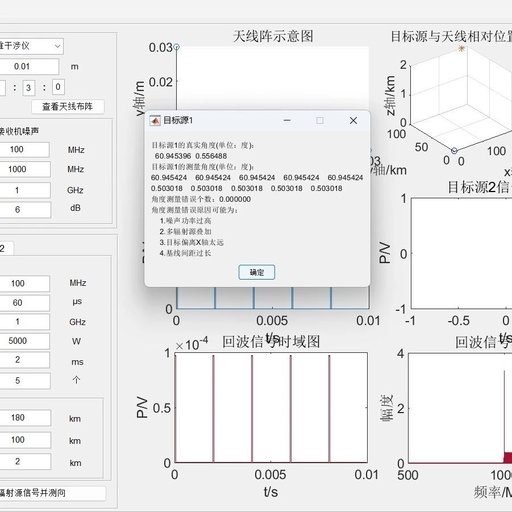
Direction Finding: Virtual MATLAB Simulation of Multi-Baseline Interferometer

Direction Finding: Virtual MATLAB Simulation of Multi-Baseline Interferometer

✅ Author Profile: A MATLAB simulation developer passionate about research, skilled in data processing, modeling simulation, program design, complete code acquisition, paper reproduction, and scientific simulation. 🍎 Previous reviews can be found on my personal homepage:MATLAB Research Studio 🍊 Personal motto: Investigate things to gain knowledge,complete MATLAB code acquisition and simulation consultation content available via … Read more

Finding Files in Linux: More Reliable Than Finding a Partner!

1. The “Courier Sorter” of File Searching: whereis 1.1 Basic Usage: The Precision Trio whereis is known as the “courier sorter” in the Linux world, specifically responsible for locating binary files (.bin), help documents (.man), and source code files. For example, if you want to know where the “ls” command is hidden, just typewhereis ls, … Read more

Common Linux Commands: ln, cp, rm, find

1. ln ln is short for link.Links can be understood as “shortcuts” or “aliases” for files/directories. There are soft links and hard links, with soft links being more commonly used. ln [options] <source file> <target link> Soft links, also known as symbolic links, are more like “shortcuts” in Windows systems. -s –symbolic Create a soft … Read more

Searching for Files in Linux: Essential Commands and Techniques

Searching for Files in Linux: Essential Commands and Techniques

Quickly finding files in Linux is an essential skill for system administration and daily use. Here are several of the most commonly used and effective methods, starting with the simplest and fastest. 1. <span>locate</span> command – The simplest and fastest method <span>locate</span> is fast because it does not search the disk in real-time but queries … Read more

Four Easy Ways to Search for Files and Folders in Linux

Four Easy Ways to Search for Files and Folders in Linux

Linux is a powerful operating system, ubiquitous from servers to personal computers. Unlike the intuitive graphical interface of Windows, Linux relies more on command-line operations, and its file system is more complex. You might encounter scenarios where you need to find a configuration file but don’t know where it’s hidden; or you want to confirm … Read more

Commands for Bulk Deleting Files and Empty Files in Linux

In Linux, the command to delete files or directories is rm (remove). Function Description: Deletes files or directories. Syntax: rm [-dfirv][–help][–version][file or directory…] Additional Notes: Executing the rm command can delete files or directories. To delete a directory, you must add the ‘-r’ parameter; otherwise, it will only delete files by default. Parameters: -d or … Read more

Linux | 19. File Search: find, locate, which

Linux | 19. File Search: find, locate, which

Introduction When dealing with massive amounts of data, you may need to search for or locate specific files that meet certain criteria. In this case, file retrieval within the system is necessary. Searching in Windows is straightforward, using the File Explorer for retrieval. Alternatively, the powerful tool in Windows—Everything—can assist in quickly completing file search … Read more

Linux File Search Tools: Locate vs. Find – Which is Your Best Choice?

Linux File Search Tools: Locate vs. Find - Which is Your Best Choice?

There are many search tools in Linux, and today we will mainly discuss two tools: locate and find. 01 Locate 1. Performance Overview Queries the pre-built file index database on the system /var/lib/mlocate/mlocate.db Note: If this file is deleted, locate will not work. The database must be manually updated (updatedb), or the system must be … Read more