embedded-hal: An Abstraction Interface for Efficient Hardware Interaction in Embedded Systems
embedded-hal: An Abstraction Interface for Efficient Hardware Interaction in Embedded Systems

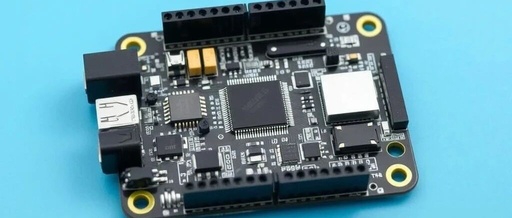
In today’s embedded system development, fast and efficient interaction with hardware is a fundamental requirement. To address this, there is an important project in the Rust ecosystem – embedded-hal. This article will provide a detailed introduction to the background, uses, and how to apply it in practical development. What is embedded-hal? embedded-hal (Hardware Abstraction Layer) … Read more


Detailed Explanation of Assembly Language Macros

Concept and Function of Macros Macros are an important tool in assembly language for achieving code reuse and modular programming. They allow programmers to define a reusable code template that generates repeated code sequences in a program through simple macro calls. Syntax for Defining Macros In the NASM assembler, macros are defined using<span>%macro</span> and <span>%endmacro</span> … Read more

Modularization in Embedded Programming

Modularization in Embedded Programming

For many, in the process of embedded software development, modularization seems like a mirage, a written term, a past trend—modularization seems to have never truly been realized. When boasting, people often disdainfully say: “You may not have seen a pig run, but have you never eaten pork?” In fact, if the subject of discussion is … Read more

Say Goodbye to Repetitive Work! The Art of Reusing FB/FC Blocks in PLC Programming

Say Goodbye to Repetitive Work! The Art of Reusing FB/FC Blocks in PLC Programming

In the world of PLC (Programmable Logic Controller) programming, repetitive work is the enemy of efficiency. Imagine having to write code from scratch every time you encounter a similar control task; this not only wastes time but also increases the likelihood of errors. The reuse of FB (Function Block) and FC (Function) blocks acts like … Read more

Extracting Reusable Driver Layers from STM32CubeMX Generated Code — HAL/LL Encapsulation Practices

Extracting Reusable Driver Layers from STM32CubeMX Generated Code — HAL/LL Encapsulation Practices

In embedded project development, STM32CubeMX is widely used for its visual configuration and one-click generation of initialization code. However, as project complexity increases, we gradually find that the structure of the code generated by CubeMX, while convenient for beginners, is not conducive to code reuse and cross-project migration. To address this issue, extracting and encapsulating … Read more

Modular Programming and Library Management in Assembly Language

Modular Programming and Library Management in Assembly Language

1. Evolution of Modular Programming In assembly language development, code reuse techniques have undergone three main stages of development: Source File Inclusion (INCLUDE) – The most basic method of reuse Object Module Linking – Intermediate reuse solution Subroutine Libraries – The most efficient reuse mechanism 2. Comparative Analysis of Three Implementation Methods 2.1 Source File … Read more

Go Language HTTP Middleware Chain: Goroutine Pooling Technology | Code Reuse Strategy

Go Language HTTP Middleware Chain: Goroutine Pooling Technology | Code Reuse Strategy

Click the above“blue text” to follow us Go Language HTTP Middleware Chain: Goroutine Pooling Technology | Code Reuse Strategy “Brother Feng, our website traffic has suddenly surged, and the server CPU is maxed out!” This was a message sent urgently by a student yesterday. After checking the logs, I found that a large number of … Read more

Optimization of Dynamic Address Mapping for Multi-I2C in SoC

Optimization of Dynamic Address Mapping for Multi-I2C in SoC

For many years, I have been troubled by a reuse issue in C, such as when we establish an I2C IP register address offset, and there are multiple I2Cs on the SoC, each with irregular offsets. How can we solve the problem of calling this function with different offsets for multiple I2Cs in a single … Read more