Complete Guide to Python Logic and Control Flow

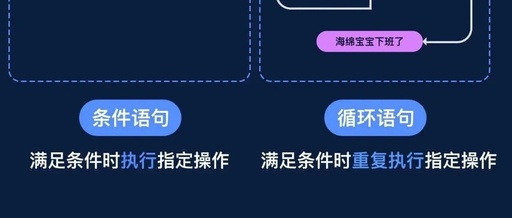
Part One: Overview of Program Control Structures 1.1 What is Control Flow In programming, control flow refers to the order in which instructions are executed in a program. By default, a program executes line by line from top to bottom in the order the code is written, which is known as sequential structure. However, real-world … Read more

Rust Learning Plan – Day 3 Basic Operations and Control Flow

Today’s topic is: Control Flow — enabling your program to make choices, loop, and have logic. Rust’s control flow is similar to Python but is stricter and safer. Day 3 Learning Plan (approximately 1–2 hours) Learning Objectives • Master <span>if</span>, <span>else if</span>, and <span>else</span> • Understand the three types of loops: <span>loop</span>, <span>while</span>, and <span>for</span> … Read more

C++ Conditional and Loop Control: while Loop

Loop Syntax A loop repeatedly executes a set of statements until a specific condition is met. In C++, the while loop: as long as the condition is true, the while loop will repeatedly execute a set of statements until a certain specific condition is satisfied. Syntax: while (condition) { // Loop body, statements to be … Read more

Python Statement Structures

Python Statement Structures

1. Sequential StructureFrom top to bottom, from left to right, skip any indented methods or class methods directly2. Branching Structure (Selection Structure)(1) if~elseif condition: execute statementelse: execute statement if and else are mutually exclusive; only one clause can be executed during each run of the code The branching structure must have at least one if; … Read more

Basic Python Syntax 2: If and For

Basic Python Syntax 2: If and For

Basic Python Syntax 2 If-Else Basic Format if condition: # Actions to take if the condition is met else: # Actions to take if the condition is not met Example moon = 666 if moon == 666: print("Correct") else: print(f"Incorrect") Output: Correct No additional elements are needed after elseAnother example: m = 1 n = … Read more

C++ Fundamentals 006 [Notes Version – Three Basic Structures]

C++ Fundamentals 006 [Notes Version - Three Basic Structures]

Click the blueFollow usC++ Fundamentals 005 – Three Basic StructuresSequenceBranchLoop01Sequence Structure: The sequence structure in C++ is the most fundamental control structure in programming, where the program executes statements in the order they are written, without branches, loops, or jumps. It is the simplest of the three basic structures (sequence, selection, loop), reflecting a “top-down, … Read more

Introduction to Python (Wheelchair Level)

Introduction to Python (Wheelchair Level)

I will explain using relatively simple language, and I will provide analogies for each code snippet. It may become aesthetically tiring, so I hope for your support. print() The meaning is “print”, which is to output. You can fill the parentheses with numbers, strings (which must be enclosed in quotes), and variables.For example: when you … Read more

Beginner’s Guide to Python: A Step-by-Step Tutorial on the While Loop

Beginner's Guide to Python: A Step-by-Step Tutorial on the While Loop

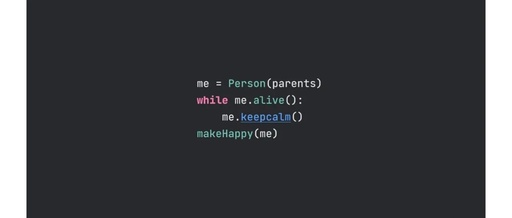
The word <span><span>while</span></span> means “during…”; thus, a <span><span>while</span></span> loop can be understood as “looping while…”. Indeed, in a <span><span>while</span></span> loop, the computer repeats execution of a certain block of code as long as the condition is met, and stops the loop when the condition is no longer satisfied. Let’s understand this looping pattern through the … Read more

Lesson 6: C++ Programming

Lesson 6: C++ Programming

1 Introduction Everyone knows that repeating the same action is called a loop. Similarly, in C++, there are loops. What are the specific uses of loops in C++? Of course, there are many, such as calculating 2 raised to the power of 11, which requires multiplying that number repeatedly. Another example is counting how many … Read more