Reverse Engineering of UART Protocol: 128 Ways to Real-Time Decode Serial Data with FPGA

Reverse Engineering of UART Protocol: 128 Ways to Real-Time Decode Serial Data with FPGA

1. Experimental Task Task: Based on the STEP-MAX10M08 core board and STEP BaseBoard V4.0 baseboard, complete the design of a serial port monitoring system and observe the debugging results. Requirements: Design a serial port monitoring system to monitor the serial port (UART) receiving data in real-time and display the data on the baseboard’s 8-digit digital … Read more

Solutions for Single USB to Multiple Serial Ports

Solutions for Single USB to Multiple Serial Ports

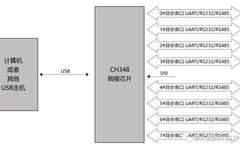
Serial ports (UART) are a very commonly used interface in embedded systems, but most modern computers lack hardware serial ports. Generally, serial ports are expanded through methods like USB to serial or PCIe bus expansion. USB to serial is a very common solution. Common USB to serial chips include CH340/341, CP2102, and PL2302. However, these … Read more

How To Solve MacBook Not Recognizing Arduino Serial Port

How To Solve MacBook Not Recognizing Arduino Serial Port

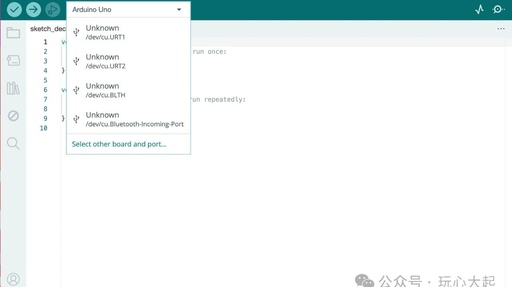
How To Solve MacBook Not Recognizing Arduino Serial Port? Recently, I purchased a domestic Arduino basic learning kit, but encountered the issue of the MacBook not recognizing the Arduino serial port during usage. After extensive research, I have summarized the following experiences, hoping to help those who are similarly confused! Problem Analysis: Chip Determines Recognition … Read more

A Deep Dive into the ESP8266/ESP32 Automatic Download Circuit

A Deep Dive into the ESP8266/ESP32 Automatic Download Circuit

Background Recently, I needed to create an ESP32 board by myself. Considering cost and packaging, I planned to choose CH340E as the USB-to-serial chip. Generally, ESP8266/ESP32 boards have an automatic download circuit that allows users to enter download mode for firmware flashing without pressing a button. However, the automatic download circuit requires serial chip support … Read more