C++ Programming Tips: Avoid Providing Default Empty Constructors Unless Necessary

C++ Programming Tips: Avoid Providing Default Empty Constructors Unless Necessary

1. Default empty constructors are not necessaryCompared to other constructors, the characteristic of a default empty constructor is that it can construct an object without requiring any parameters.However, we cannot always create objects this way in practice. For example, when creating an “ID card” object, the ID number is always required. Therefore, providing a default … Read more

Introduction to Object-Oriented Programming in Embedded C++

Introduction to Object-Oriented Programming in Embedded C++

Follow our official account to keep receiving embedded knowledge! 1. Comparison of Object-Oriented and Procedure-Oriented Programming Imagine you want to build a house. Procedure-Oriented: It’s like you are doing everything yourself. Your thinking is linear: “First, I will move bricks -> then mix cement -> next, build walls -> finally, put on the roof.” You … Read more

Essential Techniques of Placement New in C++ Development

Essential Techniques of Placement New in C++ Development

From WeChat Official Account: Program Cat Master <span>placement new</span> is a special mechanism in C++ that constructs objects at a pre-allocated memory address, without involving any memory allocation operations. It completely bypasses the default heap memory allocation process and is a key mechanism for low-level memory management. What is<span><span>placement new</span></span> In simple terms, it allows … Read more

How to Call C# Code from C++

How to Call C# Code from C++

Return Basic Data Types 1. First, create a C# class library project named CSharpLib. Create a class named ExportClass and add a GetID function as follows: public class ExplortClass { public int GetID() { return 1024; } } 2. Create a CLR Empty Project named CSBridge, which will serve as the intermediate bridging library.Change the … Read more

Understanding nullptr in C++

Understanding nullptr in C++

In C++, <span>nullptr</span> is a keyword introduced in C++11 to represent a null pointer, which is a type-safe and semantically clear null pointer constant specifically used to replace the traditional <span>NULL</span> macro or the integer <span>0</span> to indicate that a pointer does not point to any object. 🎯 1. What is <span>nullptr</span>? ✅ Definition: <span>nullptr</span> … Read more

The Evolution of C++ Type Casting: From C’s ‘One-Size-Fits-All’ to C++’s ‘Four Surgical Knives’

The Evolution of C++ Type Casting: From C's 'One-Size-Fits-All' to C++'s 'Four Surgical Knives'

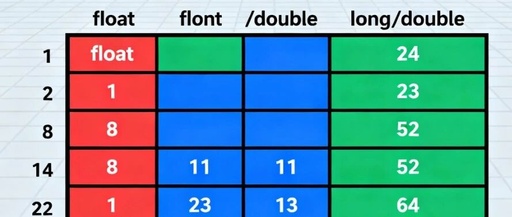
The Evolution of C++ Type Casting: From C’s ‘One-Size-Fits-All’ to C++’s ‘Four Surgical Knives’ Stop using<span>(T)</span>! A detailed explanation of<span>static_cast</span>, <span>dynamic_cast</span>, <span>const_cast</span>, and <span>reinterpret_cast</span> Introduction: The ‘Simple and Brutal’ Hammer of C In the programming practices of C and early C++, we relied on a ‘universal’ type conversion method—the C-style cast. Whether converting a<span>float</span> to … Read more

Fundamental Concepts of C++: Code Comments

Fundamental Concepts of C++: Code Comments

Comments Comments are statements that explain the intent of the code. Adding comments in C++ code can help better understand what the program is doing. The compiler ignores everything in the comments, so this information will not appear in the output and will not be executed by the computer. Comments that start with two slashes … Read more

C++ Abstract Classes and Interfaces: Principles, Examples, and Practical Guide

C++ Abstract Classes and Interfaces: Principles, Examples, and Practical Guide

In C++, interfaces are typically implemented through abstract classes. An abstract class is a class that cannot be instantiated and contains at least one pure virtual function. A pure virtual function is a virtual function declared in a base class without an implementation, forcing derived classes to override it. This mechanism allows us to define … Read more