Introduction:
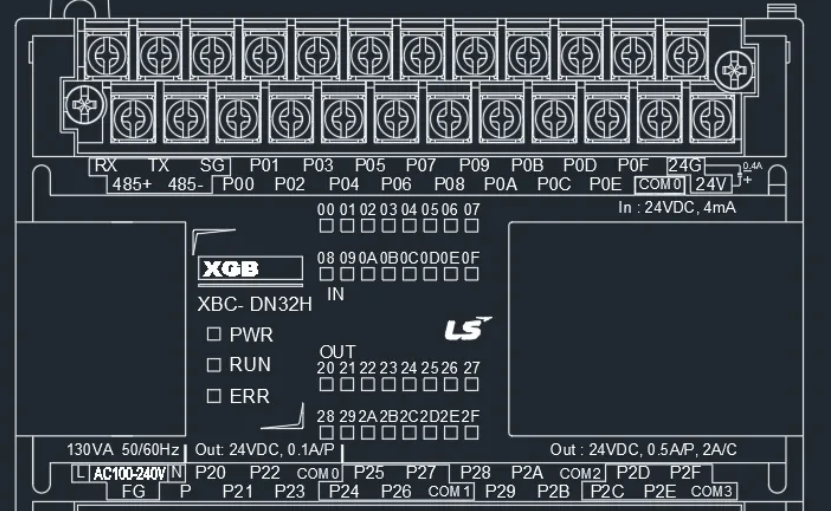
During the interview process for electrical engineers, many companies exhibit a phenomenon: whether it is HR or technical leaders, they measure the level of PLC engineers based on the number of points they have worked on in projects.Some HR personnel often ask questions like “What is the maximum number of points in the projects you have worked on?” This is understandable since HR is typically not from a technical background.However, it is perplexing that sometimes even the electrical leaders ask the same question, which is quite baffling. It seems that in their view, the level of an electrical engineer is solely determined by the number of points in the projects they have completed.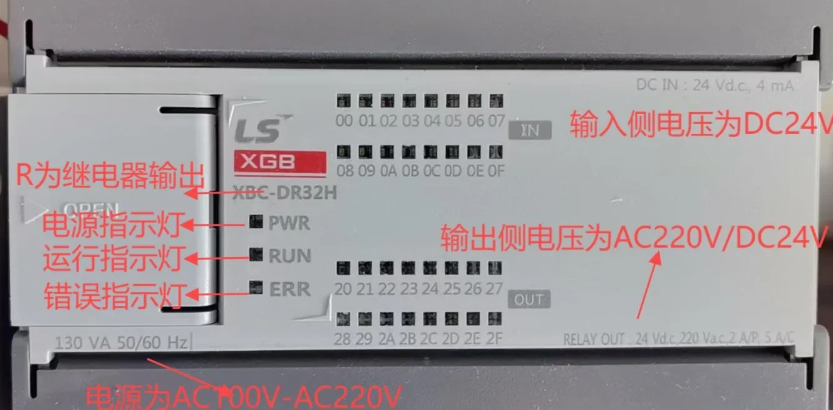
1. The ‘Non-linear Relationship’ Between Number of Points and Project Complexity
In PLC, the “points” essentially refer to the number of input and output signals (such as DI/DO, AI/AO), but the “quality” and “associated logic” of the signals are more important than quantity:
- 1. A 1000-point pump control system may only involve the independent start-stop logic of hundreds of valves and motors, with a single type of signal (mostly digital), and repetitive control logic (e.g., “stop the pump if the liquid level is high”). The engineer’s work is more about mechanical I/O configuration and program duplication.
- 2. A 100-point precision motion control system (such as semiconductor packaging equipment), although it has fewer points, may involve:
- Multi-axis synchronous control (e.g., 10-axis interpolation motion based on EtherCAT, requiring understanding of bus cycles and pulse synchronization mechanisms);
- Real-time communication with vision systems (e.g., receiving visual positioning data via PROFINET to dynamically correct motion trajectories);
- Complex safety logic (e.g., three-level interlocking for emergency stop signals, redundant design for safety PLC). This type of project requires engineers to have high demands for “algorithm understanding”, “mastery of bus protocols”, and “dynamic debugging experience”, far beyond mere point accumulation.
2. Core Competencies that Truly Reflect PLC Engineer Level
-
Simplification of Complex Logic
When faced with chaotic process requirements (such as multi-stage temperature control + pressure interlocking in a chemical reactor), the ability to use structured programming (such as SCL language, function block FB) to modularize logic, making the program highly readable and maintainable, is more important than “how many lines of code were written”.
-
Cross-system Integration CapabilityIn modern industrial scenarios, PLCs rarely work in isolation but need to interface with robots, vision systems, SCADA, and MES systems. For example:
- Can PLC data be uploaded to MES via OPC UA for production data traceability?
- Can the PLC and collaborative robot’s Modbus communication be debugged to achieve seamless integration of “robot grabbing → PLC positioning”?This “system thinking” is key to evaluating senior engineers and is unrelated to the number of points.
Fault Diagnosis and Optimization CapabilityWhen equipment is down, the ability to quickly locate problems through PLC alarm logs and variable monitoring (e.g., “Is the bus communication interruption due to the terminal resistor not connected, or is it a conflict of slave addresses?”) reflects experience more than “how many projects have been done”. Additionally, the ability to optimize program scan cycles (e.g., placing non-critical logic in background tasks) to improve equipment response speed is also a core competitive advantage.
Interference Resistance and Reliability Design CapabilityIn complex electromagnetic environments (such as welding workshops), the ability to avoid PLC malfunctions through reasonable grounding design and signal isolation schemes (e.g., using optocouplers) is a greater test of fundamentals than “how many sensors were configured” — often, a small grounding error can paralyze an entire production line.
3. Why Does ‘Number of Points’ Become a Frequent Interview Question?
When technical leaders ask this question, there may be two deeper reasons:
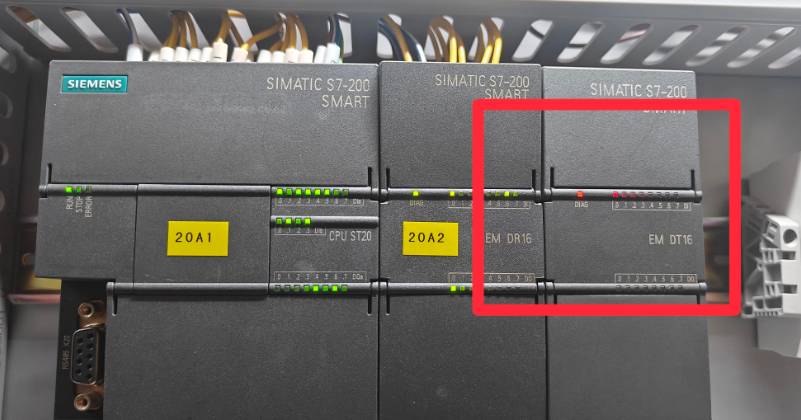
- 1. Quick Screening for ‘Large Project Experience’: Although one-sided, when hiring junior engineers, “having worked on projects with over 1000 points” at least indicates that the candidate has been exposed to complex wiring and large-scale I/O configurations, making them more capable of quickly adapting to similar projects than a complete novice (essentially, it is “using scale to filter experience”, rather than “using scale to define level”).
- 2. Limited Understanding of ‘Complex Problems’: Some technical leaders who have focused on a single field for a long time (such as only doing assembly line control) may not realize the technical depth of “small-scale precision control”, leading to evaluation criteria that remain at “how large can it be done” rather than “how precise can it be done”.
We welcome everyone to leave comments and engage in discussions!