TEANMA

Introduction
In the audio field, the HiFi circle has always pursued the ultimate sound quality experience, striving to restore every detail of music as authentically as possible. However, despite the widespread application of Bluetooth technology in consumer audio products, from wireless headphones to Bluetooth speakers, which has brought great convenience to people, Bluetooth has never become mainstream in the HiFi circle. There are many deep-seated reasons behind this, which we will analyze in depth below.
Inherent Limitations of Bluetooth Technology
1
Bandwidth Limits the Threshold for Lossless Transmission
HiFi seeks high-fidelity restoration of audio signals, meaning it aims to reproduce the original state of recordings as closely as possible. However, from its inception, Bluetooth was not designed for high fidelity. Early Bluetooth protocols like HSP and HFP focused on voice calls, with a bitrate of only 64kbps, which is even below MP3 quality. Although later advancements like SBC, AAC, and aptX emerged, they still could not overcome a fundamental bottleneck: the bandwidth for Bluetooth transmission is too narrow.
Audio files must be encoded and compressed for Bluetooth transmission. Taking the common SBC encoding as an example, it removes some audio information that is less sensitive to the human ear or less important in specific audio environments to reduce data volume to fit Bluetooth’s limited transmission bandwidth. While it can provide near-lossless sound quality, it still requires compression of the original audio signal, which strictly speaking is not true lossless transmission.
For example, a CD’s lossless audio quality requires a bitrate of 1.4Mbps, while the current mainstream high-definition Bluetooth codecs include:
-
Sony LDAC supports up to 990kbps;
-
Qualcomm aptX Lossless claims to transmit CD lossless, but in reality, it compresses 1.4Mbps to below 1Mbps;
-
Huawei L2Hc 3.0 can reach 1.5Mbps in domestic environments, barely covering CD-level bitrate.
The problem is that the Hi-Res audio sources commonly listened to by HiFi enthusiasts generally have bitrates above 2Mbps, and Bluetooth, even at its best, cannot achieve true lossless transmission. You can think of it this way: Bluetooth is a “single-lane road,” while HiFi audio sources are a “large truck”—no matter how good the driving skills, the road isn’t wide enough to accommodate it.
2
Transmission Delay Leads to Compromised Sound Quality
Bluetooth transmission is not a simple “transmit-receive” process, but a complex relay: audio source → digital encoding → compression → wireless transmission → reception and decompression → digital-to-analog conversion → amplification and output. Each step incurs a loss of signal integrity. Especially the compression step is lossy, which loses some audio details, and the Class D amplifiers used at the headphone end to save power can easily lead to high-frequency distortion and insufficient dynamics.
More critically, there is the issue of delay. Bluetooth transmission typically has a delay of 100-300ms. While this delay may not be easily noticeable during casual music listening, for HiFi enthusiasts, it can become a significant problem in certain scenarios. For example, when watching movies, the desynchronization of sound and picture can severely disrupt immersion; in gaming, delay may prevent players from accurately judging the direction and timing of sounds, affecting the gaming experience. For HiFi users who pursue perfect synchronization of audio and visuals and have an extreme demand for sound details, such delays are unacceptable.
3
Poor Signal Stability
Bluetooth connections are easily affected by interference; other wireless devices, walls, and even excessive distance can lead to unstable signals. When Bluetooth signals are interfered with, audio may experience interruptions or distortion, which is fatal for the stable, high-quality audio output that the HiFi circle pursues. Imagine enjoying a melodious song, only to suddenly experience sound stuttering or noise; that wonderful musical experience would be instantly ruined. In environments where HiFi systems are located, there may be various electronic devices, such as wireless routers and microwaves, which can interfere with Bluetooth signals, making Bluetooth seem unreliable in HiFi applications.
Characteristics and Demands of HiFi Equipment
1
Demand for High-Quality Decoding
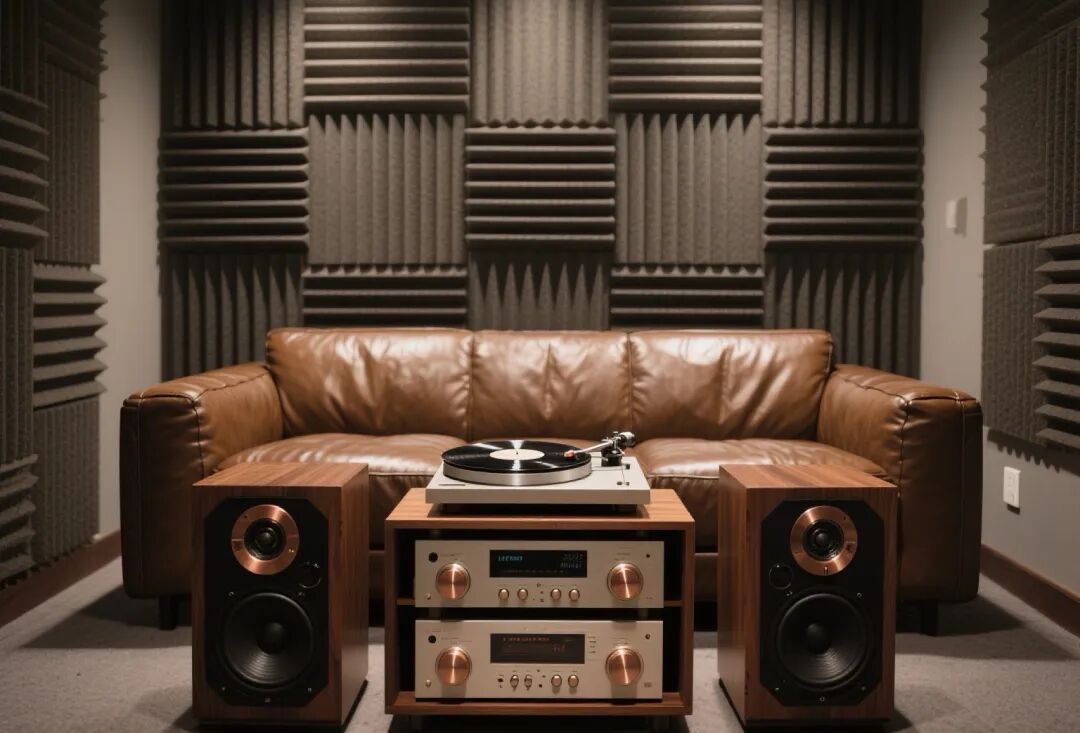
To achieve high-fidelity sound quality, HiFi equipment often requires powerful decoding capabilities to handle various high-spec audio formats. From the common CD quality of 44.1kHz/16bit to higher standards of Hi-Res audio, such as 192kHz/24bit, and even higher studio master standards, HiFi equipment needs to accurately restore every audio detail. However, Bluetooth headphones or speakers, due to size and power consumption limitations, find it difficult to incorporate high-performance decoding chips. True wireless earbuds typically have cavities only the size of a fingernail, leaving very limited space for battery, Bluetooth chip, and microphone, which severely restricts acoustic design.
In contrast, traditional wired HiFi equipment can be equipped with more professional and powerful decoding modules, better able to handle various complex audio signals and achieve more precise audio decoding and restoration. For example, a professional HiFi player can finely process lossless audio files, clearly presenting every note in the music, while Bluetooth headphones, constrained by their own conditions, find it hard to reach such decoding levels.
2
Dependence on Stable Power Supply
A stable power supply is crucial for the stable operation of HiFi equipment and ensuring sound quality. Key components in HiFi audio systems, such as amplifiers, require stable current to ensure consistent power output and reduce signal distortion.
Bluetooth headphones or speakers typically use built-in small batteries for power, which have limited capacity. The batteries in Bluetooth headphones generally range from 40-60mAh; if a “high-end” circuit is forcibly implemented, the battery life may drop from 5 hours to 2 hours, which can lead to unstable power output and subsequently affect sound quality. Additionally, voltage fluctuations during the charging process can also interfere with audio signals. In contrast, wired HiFi equipment connects directly to mains power, providing a more stable and reliable power supply, ensuring consistency and stability in sound quality.
3
Need for Acoustic Design Space
The acoustic design of HiFi equipment is crucial for sound quality. To achieve better sound effects, HiFi speakers require reasonable cabinet designs to optimize sound propagation and resonance effects; HiFi headphones need carefully designed ear cups and cavity structures to enhance sound sealing and layering. However, Bluetooth headphones, in pursuit of portability and compact appearance, often face significant limitations in acoustic design space. Smaller cavities cannot accommodate larger, higher-performing drivers, nor can they achieve complex and refined acoustic structure designs, making it difficult for Bluetooth headphones to compete with traditional HiFi headphones in terms of low-frequency extension, high-frequency reach, and sound spatiality. For example, a high-end wired HiFi headphone, with its larger ear cups and carefully designed internal acoustic structure, can create a wider soundstage, making users feel as if they are in a live music setting, while Bluetooth headphones struggle to achieve such effects.
Perceptions and Traditions in the HiFi Market
1
Long-Established Wired Cognition
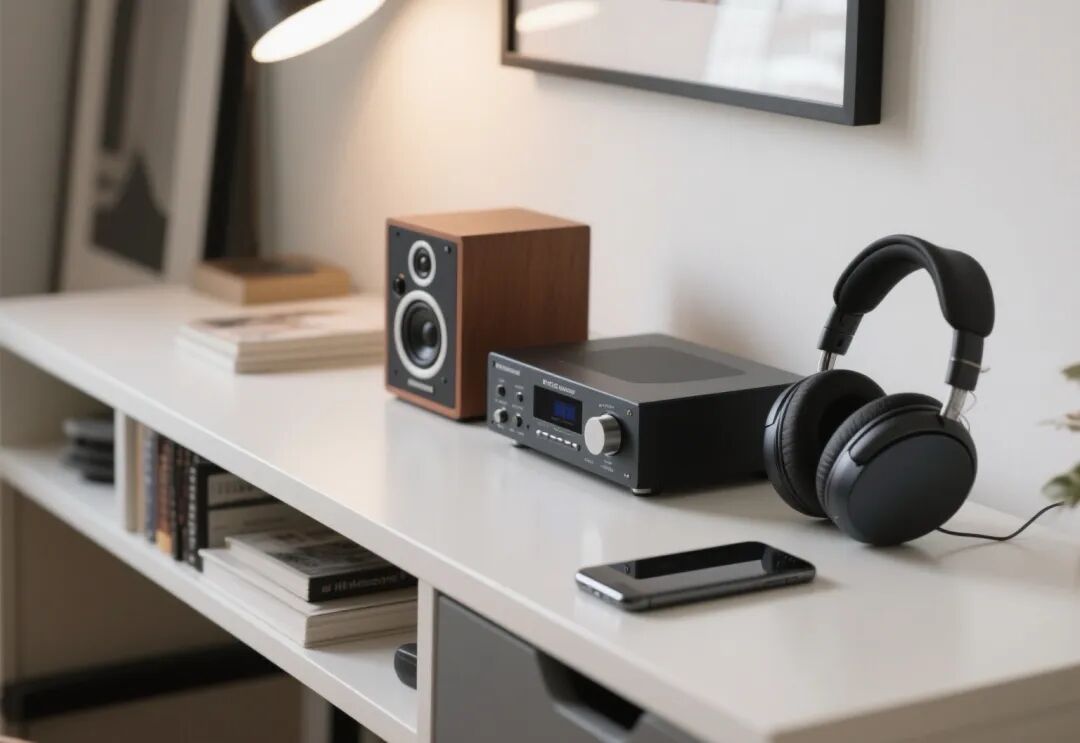
Throughout the long history of HiFi development, wired connections have always been mainstream. From early turntables to later CD players, amplifiers, and speakers, all were connected via wired methods. This long-standing usage habit and technological heritage have led HiFi enthusiasts to have a deep trust and reliance on wired connections. In their view, wired connections can provide more stable and purer audio signal transmission, making them a reliable way to achieve high-fidelity sound quality. Bluetooth, as a relatively new wireless transmission technology, has lower recognition in the HiFi circle, and many HiFi players still prefer traditional wired devices, believing that only wired connections can truly meet their stringent sound quality requirements.
2
Stereotypes About Bluetooth Sound Quality
Despite significant advancements in Bluetooth technology in recent years regarding sound quality, stereotypes about poor Bluetooth sound quality still exist in the HiFi circle. Early Bluetooth technology indeed had poor audio transmission quality, with significant sound quality loss, and this preconceived notion is deeply rooted in the minds of many HiFi enthusiasts. Even now, while Bluetooth technology has made remarkable progress, and some high-end Bluetooth audio products have greatly improved in sound quality, it is still difficult to change some people’s inherent views on Bluetooth sound quality. When choosing HiFi equipment, they often subconsciously exclude Bluetooth products and prefer to choose wired devices that have stood the test of time and guarantee sound quality.
3
Differences in Brand and Product Positioning
HiFi brands typically position their products around high quality and high-fidelity sound as core selling points, focusing on sound quality performance and technological research and development. In contrast, Bluetooth audio is more often positioned in the consumer market as convenient and practical consumer-grade products, emphasizing the convenience and multifunctionality brought by wireless connections, such as noise cancellation, multi-device connectivity, and water resistance for sports. The pursuit of sound quality is relatively less extreme. This difference in brand and product positioning leads HiFi brands to be relatively conservative in the research and promotion of Bluetooth products, with fewer resources invested. While some brands focused on Bluetooth audio may have advantages in Bluetooth technology and product functionality, they still lag behind traditional HiFi brands in terms of professionalism and recognition within the HiFi circle.

Like and Share

Request for Likes