This is hard to say, as there are no organizations that specifically track this. However, the number of MCU positions is increasing because MCUs are becoming more powerful, capable of performing tasks that were previously only possible with Linux, gradually encroaching on Linux’s market.
However, MCUs typically have a single core, and running Linux on them is wasteful; moreover, Linux lacks high real-time performance, making it unsuitable for control applications. The strength of MCUs lies in their ability to adapt to more application scenarios, with fewer cases of running Linux on MCUs, which are more often used in bare-metal or RTOS environments.
Currently, the main trends in MCU updates focus on image processing, AI, and UI, which are the three most performance-intensive areas. Tasks that previously required Linux in conjunction with MPUs can now also be handled by MCUs, and the simplicity and ease of use of MCU + RTOS make development convenient.
Regarding real-time performance, Linux still cannot achieve the effectiveness of RTOS, as Linux was not designed for high real-time scenarios. Task scheduling has delays and unpredictability, making it impossible to achieve microsecond-level response times. For high real-time scenarios like motor control and power control, RTOS and bare-metal solutions are still the only options.

In Shenzhen, there are many MCU positions, while Linux positions are relatively few. Even when there are positions, they often require more driver development, and it is rare to see application layer roles. However, it is often a case of ‘hanging a sheep’s head to sell dog meat’; they claim to be hiring for driver development, but in reality, not much of the work involves actual driver development. They just hope that candidates understand driver development. In the Yangtze River Delta region, there are more Linux application roles.
MCU + RTOS can serve as a solid foundation, and later one can gradually transition to Linux. If there is enough time, one can learn Linux applications and then focus on driver development. However, the competition in Linux is fierce; even those with three years of experience and two bachelor’s degrees and a master’s degree can still be laid off. It is essential to hone technical skills.
There are indeed many MCU positions; STM32 is just one part of it. Many low-end products use very limited materials, and these also fall under the MCU category. Linux positions are relatively fewer, but the salaries are indeed higher. However, in IT, Linux is basically a prerequisite. The level of understanding of Linux can, in some sense, be seen as a measure of a programmer’s technical proficiency. As for educational background, both MCU and Linux roles can be filled by candidates with bachelor’s or master’s degrees.
Historically, the demand for MCU positions has been greater than for Linux software development roles. With a little observation, we can also find that the positions for Linux application development are often much more numerous than those for Linux BSP or Linux driver development.
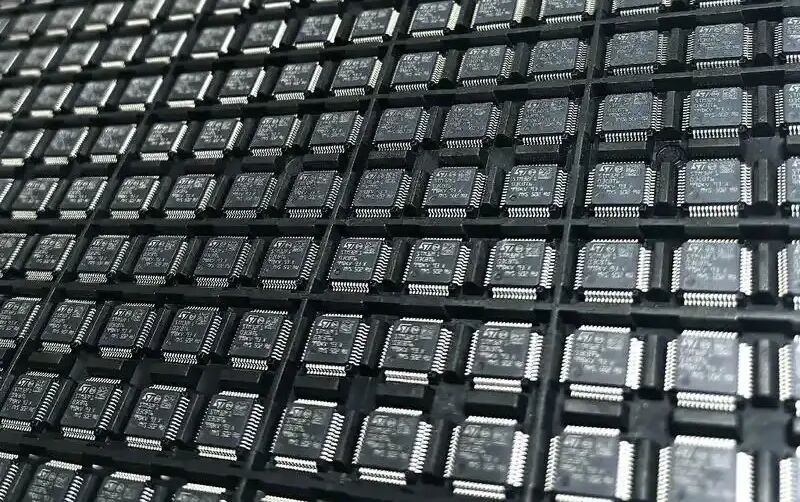 In the future, self-developed MCU chips will be a trend, as Linux systems are too large. The operational efficiency is low, and a larger system complicates the work chain, making it difficult to troubleshoot issues and find root causes. The same functionality can be achieved with MCUs, which can be more efficient and simpler to implement, primarily because the chain is simpler, making it easier to resolve and troubleshoot problems. For example, when USB devices made with Linux encounter issues, troubleshooting can be very challenging.Around us, there are numerous embedded products, and in fact, many of their basic functions can be adequately handled by ordinary MCU chips. Take the various smart home and smart kitchen appliances we encounter in daily life; the complexity of their software logic does not necessarily require the use of more expensive and technically demanding SoC chips. Many basic MCU chips can already meet the hardware requirements for product development.
 From the perspective of enterprise development costs, if an MCU is sufficient to achieve the same product functionality, why choose a more expensive SoC chip? Furthermore, with the continuous advancement of chip integration technology, today’s MCUs are no longer just simple GPIOs and basic timers; an increasing number of extended cores and external devices are enriching their functionalities.From a technical standpoint, an MCU development engineer can become proficient in relevant technologies in about a year; however, Linux development positions are different. The technical skills required for these roles are more complex and diverse, and it typically takes around two years of experience to reach a proficient level in this field.Therefore, from a recruitment perspective, it is natural that there are many more MCU positions available.