
If we say that past robots were like “rigid men”, then the newly developedbionic artificial muscles from Northwestern University will endow robots with an unprecedented “flexible soul”. This artificial muscle breaks through the rigid limitations of traditional mechanical drives, and its bionic design concept allows robot movements to closely resemble the fluidity and flexibility of biological motion. It no longer relies solely on gears and bearings to transmit power, but instead achieves actuation through the intelligent deformation of special materials, similar to the contraction and relaxation of human muscle fibers, enabling more precise and complex motion commands, paving a new path for flexible robots in human-robot collaboration and precision operations.
Currently, the global flexible robotics field is facing the industry pain point of balancing material performance and actuation efficiency, and the emergence of this bionic artificial muscle technology from Northwestern University provides a new approach to solving this problem. It not only promotes the transition of flexible drive materials from the laboratory to practical applications but also has the potential to accelerate the intelligent upgrade of human-robot interaction scenarios, and may even change the automation production model of traditional manufacturing, leading the flexible robotics industry into a more imaginative development stage.
The related paper on this research achievement is titled “Architected Soft Actuators for Artificial Musculoskeletal Systems” and published in the journal Advanced Materials. Taekyoung Kim is the first author, with Elito A. Dunn, Melinda Chen, and Ryan L. Truby as co-authors.
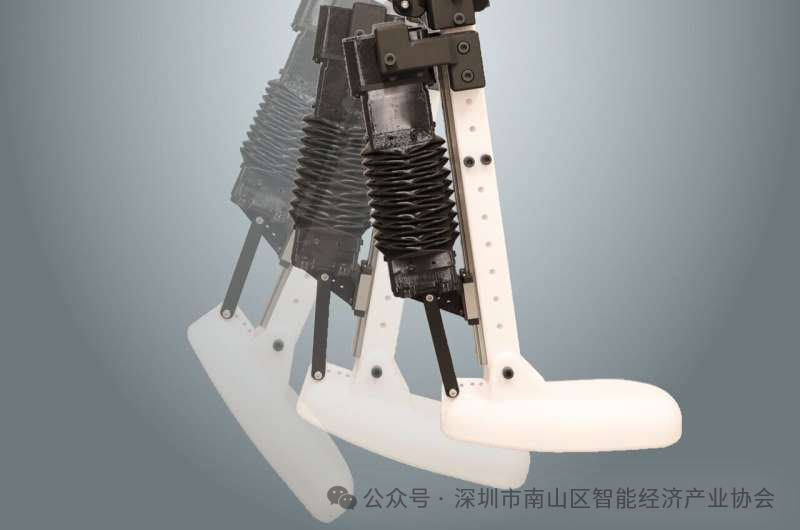
(Figure 1) A synthetic image of a robot leg with integrated artificial muscles bending at the ankle and knee
▍Breaking Traditional Limitations, Bionic Design as the Key
Currently, most robots are composed of rigid materials and mechanisms, which can perform precise movements for specific tasks, but struggle to adapt smoothly to uneven terrain and cannot interact safely and flexibly with humans in the complex and ever-changing real world. Ryan Truby, head of the Northwestern University Robotics Materials Laboratory, pointed out: “The real world is constantly changing and extremely complex; our goal is to build biologically inspired robotic bodies that possess flexibility and adaptability to cope with the uncertainties of the physical world.”
To achieve this goal, the team looked to the structure of the human body— with both hard bones and soft muscles. The first author of the study, Taekyoung Kim, a postdoctoral researcher in Truby’s lab, stated: “To enable future robots to move more naturally and safely in unstructured environments, they must be designed more like the human body, balancing rigid skeletal structures with soft, muscle-like actuators.”
▍Birth of Artificial Muscles“
Based on this bionic design concept, the research team developed a new type of artificial muscle. In this development, the team focused on the “Manual Shear Assistor” (HSA) previously developed in Truby’s lab. HSA is a 3D-printed cylindrical structure with a complex design that allows for unique movements such as stretching and expanding when twisted, providing the basis for simulating muscle contraction and extension. The team encapsulated the HSA in a rubber origami corrugated tube structure, allowing a rotating motor to drive this structure as an actuator to extend and contract, enabling it to push and pull with powerful force, even dynamically stiffening upon activation, similar to human muscle characteristics.
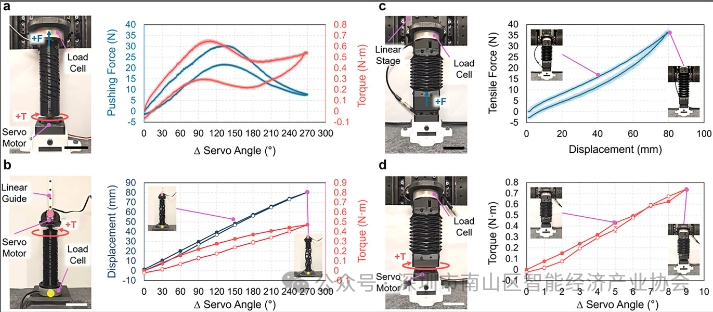
(Figure 2) Mechanical property testing of the HSA shaft and origami corrugated tube
It is worth mentioning that the team used inexpensiverubber (thermoplastic polyurethane, TPU) to 3D print the HSA shaft and the Yoshimura origami corrugated tube, reducing costs while ensuring the mechanical compliance, deformability, and sturdiness of the materials. Each artificial muscle weighs about as much as a soccer ball, slightly larger than a can of soda, can stretch up to 30% of its own length, and can contract and lift objects weighing 17 times its own weight, powered by batteries without the need for external heavy equipment.
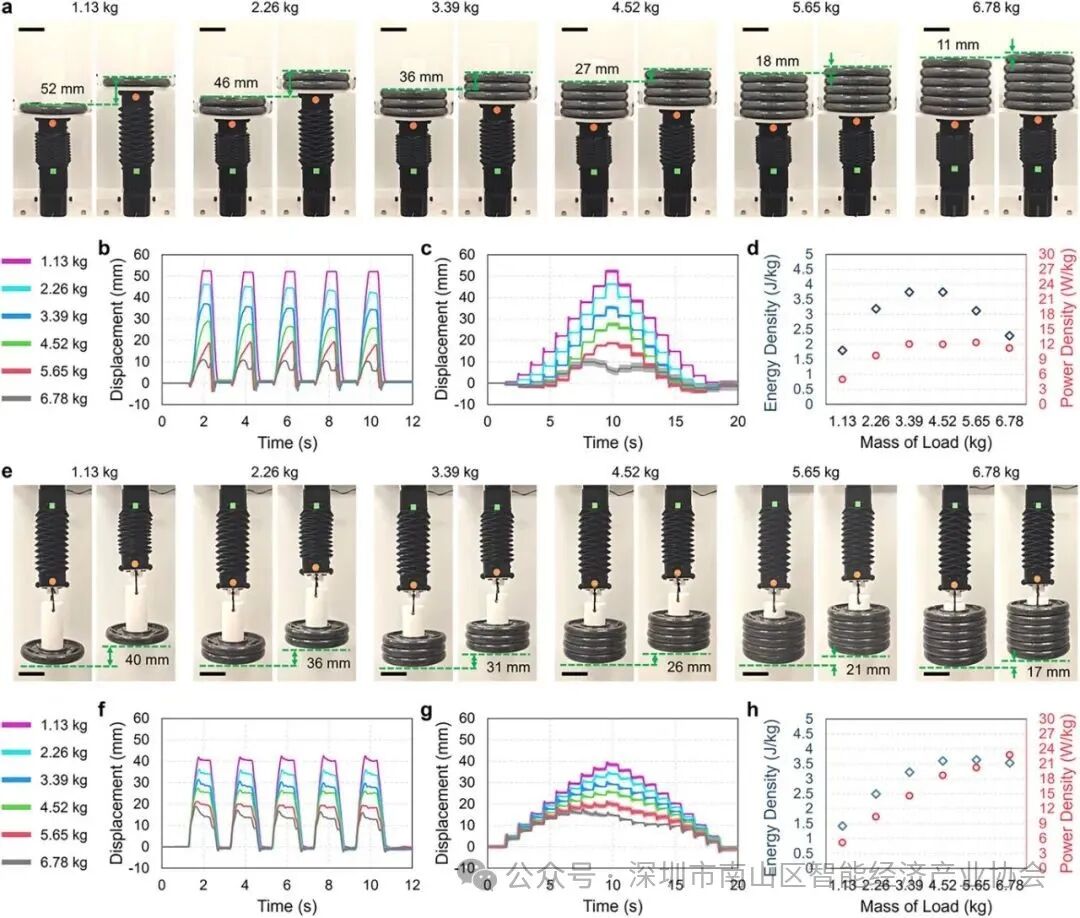
(Figure 3) Performance of the actuator when pushing and pulling different weight loads
▍Full-Size Robot Leg Validates Strength
To demonstrate the practical potential of the artificial muscles, the team constructed a full-size robot leg using 3D printing. The leg features a hard plastic “skeleton” connected by rubber-like tendon connectors, with elastic tendons linking the “quadriceps” and “hamstrings” to the “tibia” and “calf muscles” to the foot structure, allowing it to suppress motion and absorb shocks like a biological muscle-skeletal system. Additionally, the team added flexible3D-printed sensors, enabling it to detect its own movements. The sensor has a sandwich structure, with two layers of non-conductive material sandwiching a conductive flexible plastic, and as the artificial muscle moves, the sensor’s resistance changes, allowing the robot to sense the degree of muscle extension or contraction.
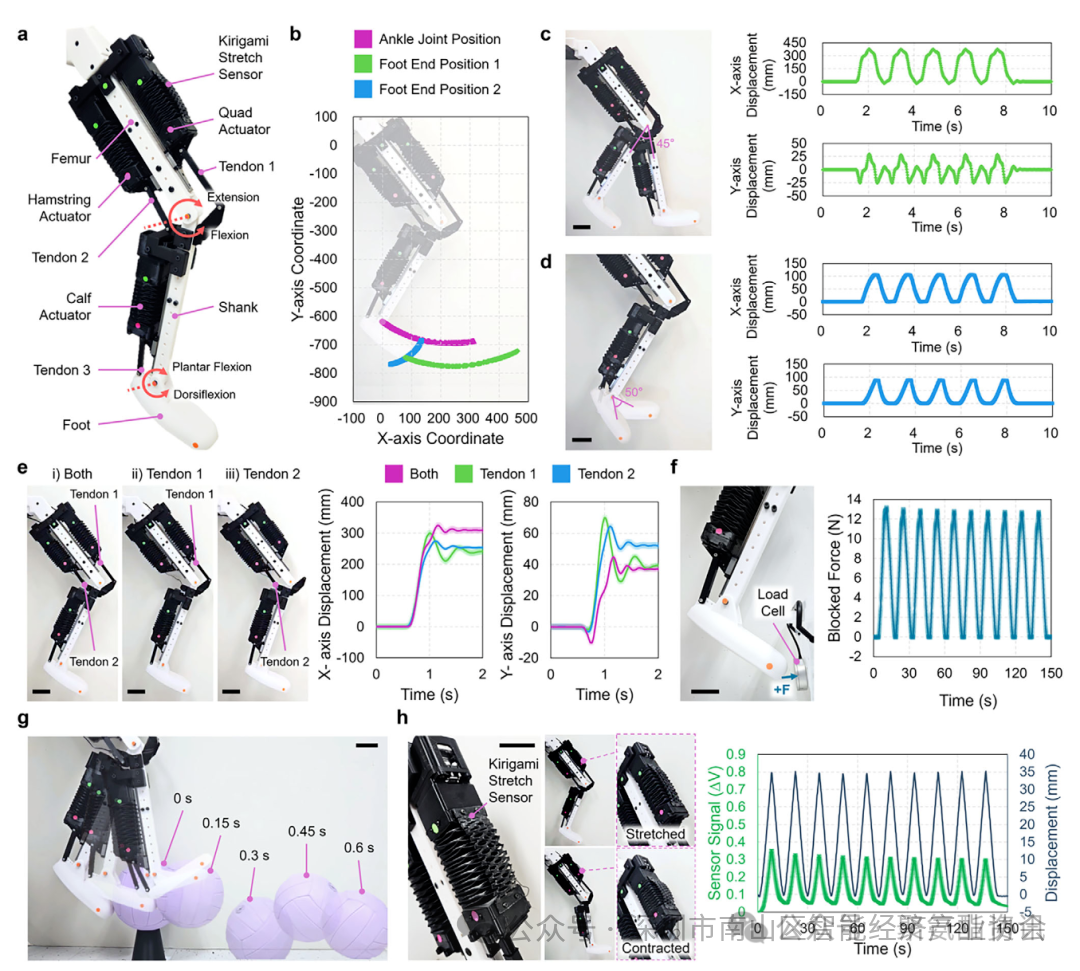
(Figure 4) Application of the human-sized bionic leg built by the actuator in the artificial muscle skeletal system
Tests show that this battery-powered robot leg has a compact structure, and a portable battery can support it to bend its knee thousands of times within an hour on a single charge. More impressively, it can bend the knee and ankle joints using three artificial muscles (quadriceps, hamstrings, and calves) to successfully kick a volleyball off its base, fully validating the practical value of the artificial muscles.
Truby stated: “By designing new materials for robots that possess the performance of biological muscle-skeletal systems, we can create robots that are more elastic and sturdy, adapting to real-world use. We look forward to these artificial muscles opening new directions for humanoid and animal-like robots.”
Source from the Internet
If there is any infringement, please contact for deletion

The purpose of the association: to serve the intelligent economy industry
Vision: to become a first-class international professional service platform for the intelligent economy
Mission: to provide services, reflect demands, standardize behaviors, and promote development What enterprises need, the association can provide, precise services, value creation
Insist on doing what enterprises cannot do
What the government cannot manage
What individuals cannot solve
Do not compete for benefits with members
Do not compete for power with the government
Do not compete for fame with scholars
Do not compete for resources with individuals
Everything for the development of members, everything for serving members, everything for member development
With the persistence of achieving one thing in a lifetime, create a valuable life
Wholeheartedly do the association, do everything possible to provide services

Membership and SubmissionContact Person | Yu YonghaoContact Number | 13380316965
| Contact Us | ||
| Serial Number | Responsible Content | Person in Charge and Phone Number |
| 01 | Vice President, Director Services | President Fan 13392892809 |
| 02 | Government Relations & Party Building & Labor Union | Luo Ying 18820990700 |
| 03 | Market Activities & Brand Activities & Exhibition Consultation | Yu Yonghao 13380316965 |
| 04 | Startup Space | Dang Junfeng 13480138058 |
| 05 |
Public Welfare Training |
He Yuelan 19820812325 |
| 06 | Startup Incubation | Wang Huijun 13392892806 |
| Serious inquiries only, please consult relevant staff based on actual needs |