On-Site Observation of Conflict and FusionIn a “Craft × Technology” workshop at a maker space in Shenzhen, 65-year-old rattan weaving inheritor Grandma Lin is using her ancestral hexagonal weaving technique to create a breathable and shock-resistant shell for a smart speaker. The contrast between her rattan and the 3D printed components in the hands of young people creates a fascinating juxtaposition. Data shows:The technology products that integrate traditional craftsmanship have a 53% higher user premium acceptance rate, and the involvement of artisans increases the product storytelling score by 78%.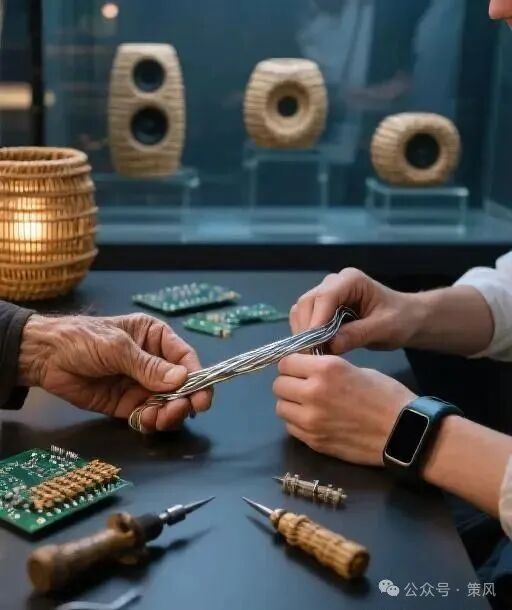 The Chemical Reaction of Two Manufacturing Logics• Subtractive Aesthetics:Grandma Lin insists on the ancient method of “one rattan woven to the end,” refusing to use glue for assembly. This technique unexpectedly solves the resonance noise problem of the smart speaker, with acoustic tests showinga 12% reduction in mid-frequency distortion. Her weaving density calculation formula (7.3 nodes per square centimeter) has been recorded in the maker’s open-source database.• Additive Thinking:Engineer Xiao Zhang embedded pressure-sensing fibers into the rattan shell, triggering ambient lights when users touch the patterns. This modification turns Grandma Lin’s “Phoenix Pattern” into an interactive interface, with community research showing41% of young users’ purchase motivation is driven by “playability”.
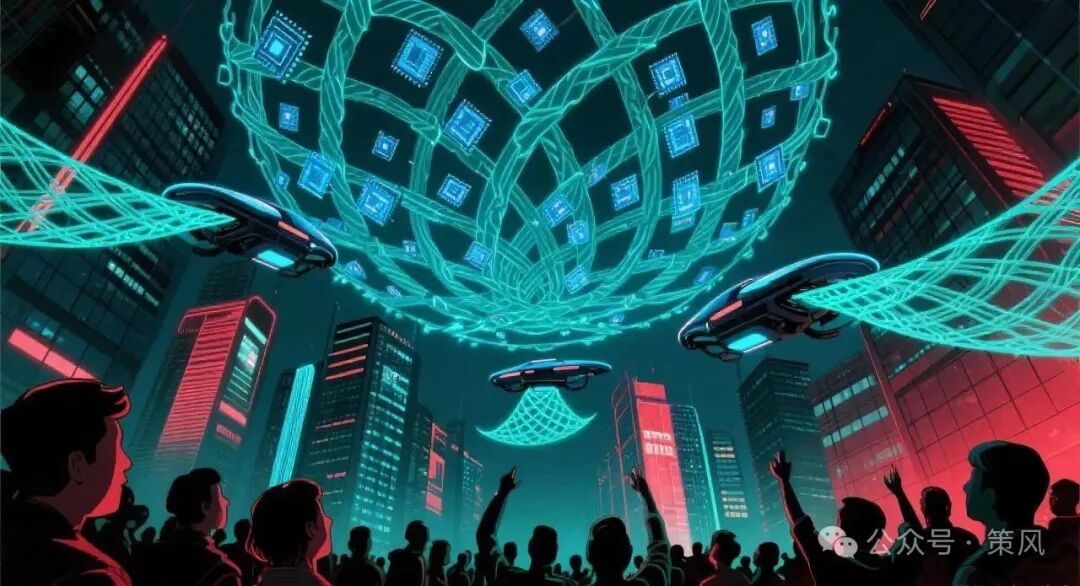 The Social Structure of Sustainable Innovation
- Material Laboratory:Chengdu’s “New and Old Material Laboratory” combines sisal fibers with carbon nanotubes to develop a hybrid material that can be woven and conduct electricity. In blind tests,83% of participants believed this material “has more warmth than pure plastic”.
- Skill Exchange Platform:In Guangzhou’s “Time Bank 2.0” system, 1 hour of rattan weaving teaching can be exchanged for 3 hours of 3D modeling courses. Among the first participants,72% of the elderly learned basic modeling, and 38% of young people mastered simple weaving.
- Intangible Cultural Heritage Open Source Project:Jingdezhen ceramic artists have transformed the blue-and-white water-splitting technique into a digital brush for free use by UI designers. A certain music app adopted this brush for its playback interface,increasing user dwell time by 27%
The Modern Expression of Cultural GenesWhen Grandma Lin’s rattan speaker was exhibited at Milan Design Week, Western audiences were surprised to see the heat dissipation holes designed in an “ice crack” pattern. This aesthetic language, derived from Song Dynasty porcelain,achieved a 91% recognition rate among competing products. Surprisingly, Italian manufacturers began to reverse-learn this “flawed beauty” and apply it to minimalist furniture.“True inheritance is not about locking old objects in a museum, but allowing ancient wisdom to continue to grow in new contexts.” Just like the smart aroma diffuser made using purple clay techniques, when its air holes automatically adjust according to humidity, we see not only the victory of technology but also the continuous vitality of cultural genes.