 In the face of humanoid robots, which represent a completely new system, the demand for chips will be entirely different due to the new hardware. The architecture also has significant operational flexibility, and for humanoid robots, this means entirely new ecological possibilities.
Experts point out that while we may never surpass Microsoft and Intel in the computer ecosystem, the future of the humanoid robot ecosystem is less certain. If we bet on the right direction, we can seize the opportunity in the era of humanoid robots, from systems to chip architecture, hardware devices, and ecosystems—one step ahead, every step ahead.
▍Competition and Challenges
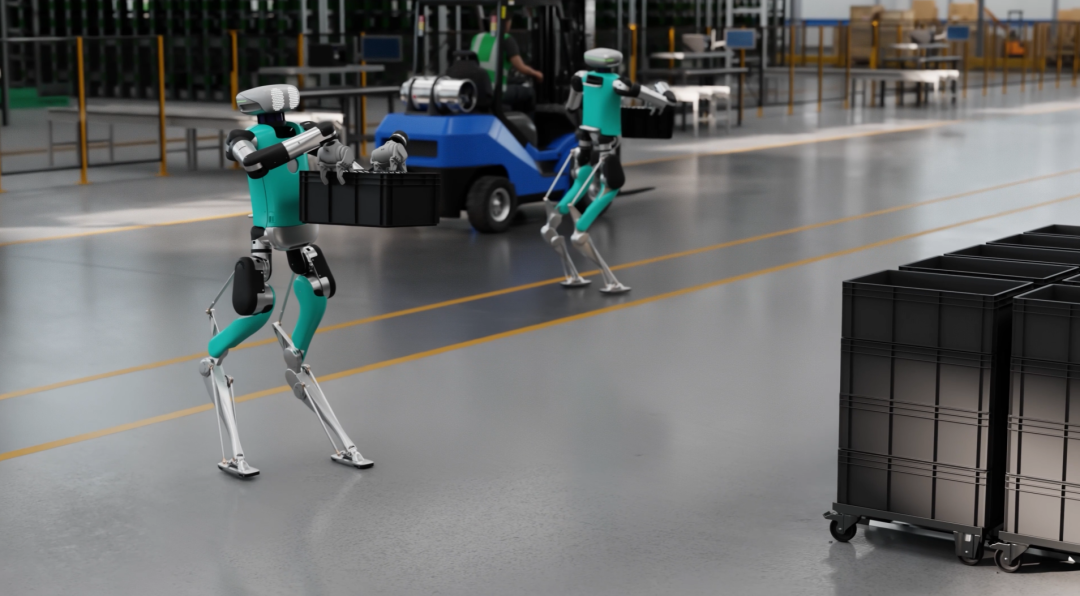
The “brain” of humanoid robots typically refers to their main control chip or computing platform(software/AI models), while the “cerebellum” mainly handles the robot’s motion control, generally using high-performance chips. Currently, NVIDIA’s Jetson, Intel’s x86 chips, Allwinner Technology, and Rockchip are the mainstream choices in the industry.
Industry insiders have noted that aside from Tesla’s Optimus robot, which uses the second-generation FSD (HW4.0) + Dojo D1 combination, UBTECH’s Walker and Walker X utilize Intel i7 7500U (2.7GHz), Intel i5 6200U (2.3GHz), and Intel i7 8665U (dual-channel, 1.9GHz); Yushutech uses Intel i5/i7 chips for electronic control and platform function chips, while the computing module uses NVIDIA’s Jetson Orin and Jetson Orin NX chips; Engine AI’s PM01 humanoid robot integrates Intel N97 processor with NVIDIA’s Jetson Orin module; Zhiyuan Robotics uses NVIDIA’s Jetson AGX Orin 64GB chip as the main chip; Xiaomi’s first-generation bionic quadruped robot CyberDog “Iron Egg” uses Allwinner Technology’s Allwinner MR813.
Currently, the U.S. has restricted or intimidated global companies from using chips to train models in China, and many in the world have realized that half of the global humanoid robot companies need to make choices regarding robot chips and architecture.
▍NVIDIA’s New Developments
NVIDIA not only provides computing power chips. NVIDIA’s founder and CEO Jensen Huang stated: “Physical AI and robotics technology will lead the next industrial revolution. From the AI brain of robots to practical simulation worlds, and to AI supercomputers used for training foundational models, NVIDIA provides building blocks for every stage of robotics development.”
Recently, NVIDIA also launched the cloud-to-robot computing platform NVIDIA Isaac GR00T N1.5 for physical AI, which can better adapt to new environments and workspace configurations, and improve object recognition when given instructions, enhancing the success rate of pick-and-place tasks. Also launched was a tool for generating synthetic motion data NVIDIA Isaac GR00T-Dreams, and the NVIDIA Blackwell system to accelerate humanoid robot development.
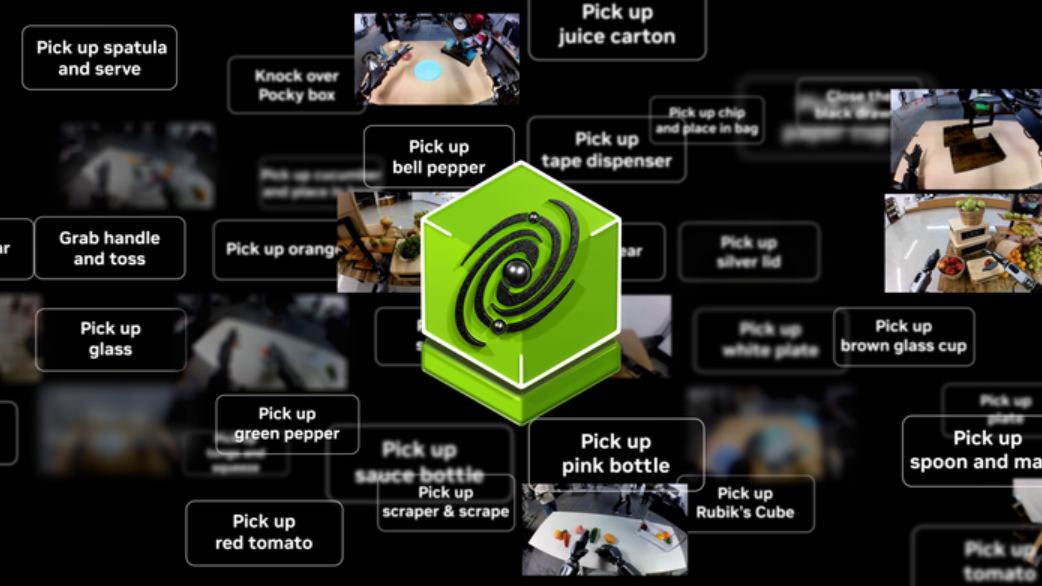
NVIDIA Isaac™ ROS is built on the open-source ROS 2™ (Robot Operating System) software framework. This means that millions of developers in the ROS community can easily leverage NVIDIA’s acceleration libraries and AI models to speed up their AI robot development and deployment workflows.
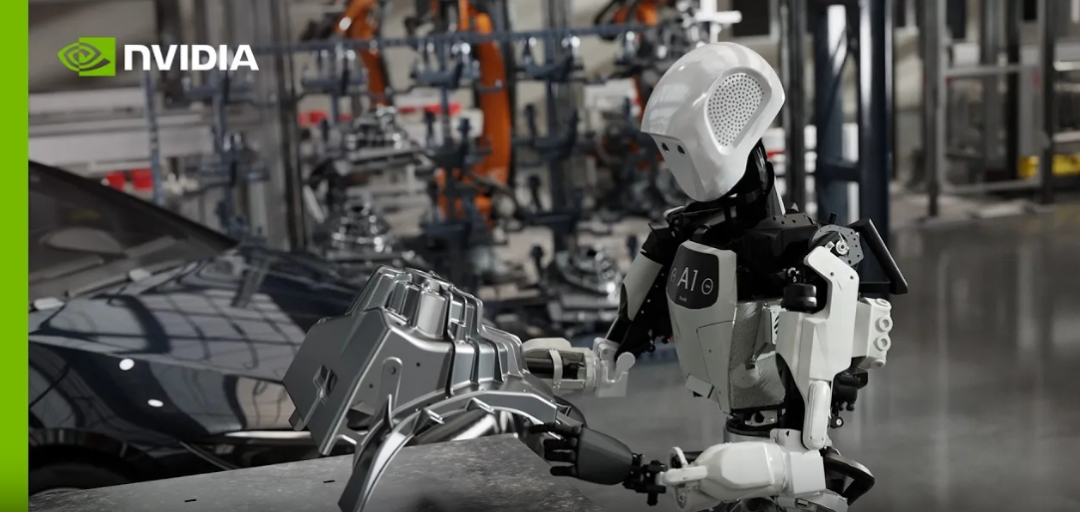
Humanoid robots and robot developers are collaborating extensively with NVIDIA. For example, Foxconn and Foxlink are using the GR00T-Mimic blueprint for synthetic motion control generation to accelerate their robot training processes. Agility Robotics, Boston Dynamics, Fourier, Mentee Robotics, NEURA Robotics, and Xiaopeng Robotics are using NVIDIA Isaac Sim and Isaac Lab to simulate and train their humanoid robots. Skild AI is using the simulation framework to develop general robotic intelligence, while General Robotics is integrating it into its robotic intelligence platform.
Additionally, according to a report from Tianfeng Securities, NVIDIA’s virtual simulation technology has made significant progress in the robotics field. Yushutech is also utilizing NVIDIA’s technology to achieve intelligent development of humanoid robots through innovative training frameworks. With MimicGen, Omniverse, and the Isaac platform, NVIDIA is building industry advantages and accelerating the transition of robots from theory to large-scale applications.
In just a few years, NVIDIA has developed into a company with a market value of $3 trillion. It will decompose the functional infrastructure from AI to robotics across various stages, forming a flexible, modular product matrix, and timely launch semi-custom AI infrastructure NVLink Fusion, opening the ecological door, thereby continuously expanding its data center ecosystem and market influence globally.
However, the U.S. Department of Commerce has further strengthened export control measures on AI chips to China since October 2023—prohibiting NVIDIA from supplying its high-end flagship products A100 and H100 GPUs to the Chinese market, and even including the H20 chip, which is specifically designed for the Chinese market, in the ban.
▍Huawei’s Robot Chip Ecosystem
Huawei’s latest chip may become an alternative. On April 28, 2025, media reported that Huawei has developed an AI chip codenamed Ascend 910D. Vijay Rakesh, an analyst at Mizuho Securities, stated in early May that by 2025, Huawei’s Ascend 910 series AI chips could sell over 700,000 units in the Chinese market alone.
Ascend 910D adopts the Da Vinci architecture 3.0, using 3D Cube technology, integrating 64 AI cores per chip, achieving a 200% increase in computing density and a breakthrough in storage-computing integration. At the same time, the self-developed HBM3e memory achieves a bandwidth of 4TB/s, surpassing the H100’s 3.35TB/s photonic interconnect technology, and uses silicon photonic modules to achieve ultra-high-speed interconnection between chips, reducing latency to the nanosecond level.
This architectural innovation allows the theoretical peak computing power of Ascend 910D to reach 1.2 PFLOP/s, surpassing NVIDIA’s H100’s 989TFLOPS. BF16 computing power reaches 300PFLOP/s, achieving an architectural-level overtaking. Under TF32 precision, the computing power is 512TFLOPS, surpassing H100’s 495TFLOPS for the first time.
On May 14, the U.S. Department of Commerce suddenly announced a global ban on Huawei’s Ascend AI chips. The content of this ban is quite severe. The U.S. Department of Commerce’s Bureau of Industry and Security (BIS) explicitly stated, “Huawei’s Ascend 910B, 910C, and 910D chips are included in the key control list. Using these chips anywhere in the world is considered a violation of U.S. export control regulations.”
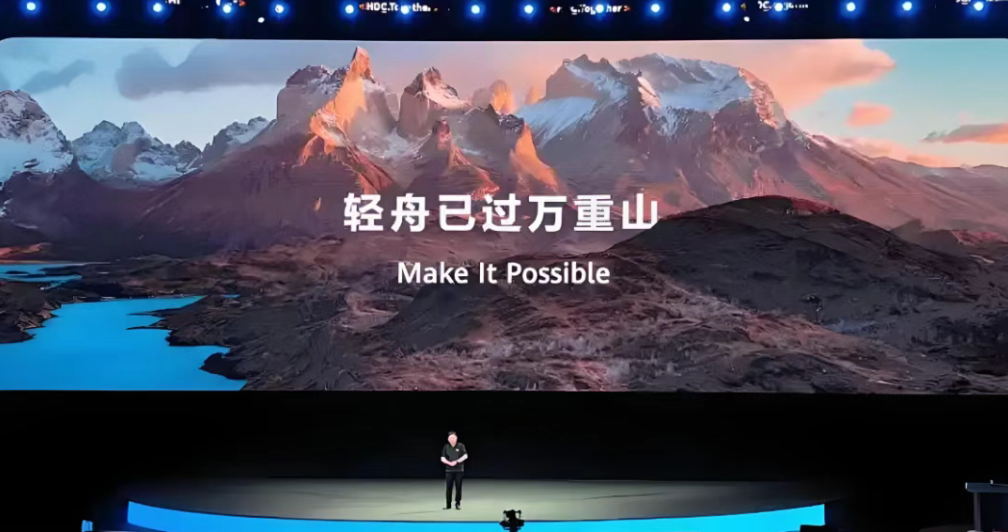
Huawei’s development strategy in the robotics field focuses on technological empowerment and ecological collaboration, benchmarking against NVIDIA. Both aim to establish foundational technology standards centered around AI large models + computing hardware + open ecosystems. Huawei relies on Ascend AI chips, Kunpeng computing platform, Pangu large model, and HarmonyOS to build the underlying technology architecture, creating the “brain” and “nervous system” of robots. By providing edge computing capabilities through Ascend chips, Huawei achieves real-time decision-making and motion control for robots, while the Pangu large model provides algorithm support for embodied intelligence, and HarmonyOS enables cross-device collaboration, forming a “computing power + algorithms + operating systems” trinity of technological closed-loop. This technological architecture not only provides integrated hardware and software solutions for robots but also lays a solid foundation for future ecological cooperation.
In terms of business model, Huawei adopts a “selling shovels” approach, avoiding direct involvement in hardware manufacturing, and instead empowering industry chain partners through an open ecosystem. Collaborating with UBTECH, Leju, and other robotics companies to co-build a humanoid robot + open platform, jointly promoting the OEM production of components such as LiDAR and torque sensors, while collaborating with hardware manufacturers to develop supporting chips, reducing its own heavy asset investment risks. This strategy not only attracts numerous partners to share data and resources, accelerating model iteration and scene implementation but also forms a sustainable revenue model through value-added services such as algorithm optimization and chip customization. Benchmarking against NVIDIA, while Huawei also focuses on AI large models and computing ecosystems, it places greater emphasis on the in-depth integration of vertical scenarios, such as streamlining the entire process of “brain” – “cerebellum” – “micro-control chips” in the industrial field, enhancing the precise control and real-time action management of robotic arms, forming a technological moat.
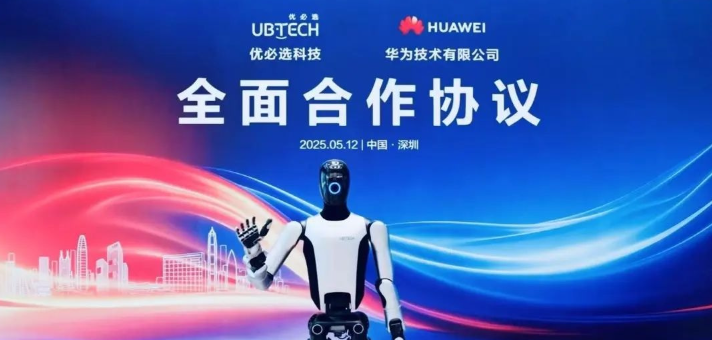
In contrast, NVIDIA focuses more on the moat of foundational platform capabilities: NVIDIA builds a complete technology stack centered around JetsonThor chips + ProjectGR00T foundational models, from model training (DGX systems), development tools (Isaac) to hardware control, lowering the industry entry threshold through general foundational models; Huawei chooses a technology combination of Pangu large models + Ascend computing + HarmonyOS, complementing the hardware capabilities and large/small brain capabilities of partners like UBTECH and Leju to co-build an “embodied intelligence innovation center,” focusing on vertical integration in industrial and home scenarios, forming a closed loop of “scene demand – data accumulation – technology iteration,” emphasizing the technological depth of specific scenarios.
Huawei’s advantages lie in the computing power of Ascend chips, the cross-end collaboration capabilities of HarmonyOS, and the generalization algorithms of the Pangu large model, creating difficult-to-replicate technological barriers; on the other hand, by investing in Qianxun Intelligent and collaborating with industry chain companies like Keli’er, it covers key links such as sensors, actuators, and algorithm development, forming a soft and hard integrated industrial network. Additionally, Huawei focuses on industrial and home scenarios, creating a closed loop of “scene demand – data accumulation – technology iteration,” such as establishing an “embodied intelligence innovation center” to promote the deep integration of technology and scenarios, enhancing customer stickiness and accelerating commercialization. In the long run, Huawei is clear about its strategic determination to focus on ecological empowerment over the next 3 to 5 years, continuously expanding the ecological scale by lowering industry thresholds through open toolchains, ultimately forming comprehensive competitiveness in the robotics field from technological standards to industrial collaboration, with its influence expected to continue to rise as the number of robotic partners increases.
Source: Robot Lecture Hall
【Disclaimer】Content sourced from the internet, copyright belongs to the original source, for reference only. The purpose of publishing this article is to convey more industry information, not for commercial use, and does not represent this platform’s endorsement of its views and content. This article does not constitute any investment advice, and any investment based on it is at your own risk. For infringement, please contact the author for deletion, and for cooperation or any questions, please add the author’s WeChat.