In today’s wave of factory automation, PLCs (Programmable Logic Controllers) shine like a brilliant star, widely used in various control systems, managing the rhythm and efficiency of production. Watching those complex production lines operate smoothly under the precise command of PLCs, do you feel eager to unveil the mysteries of PLCs but worry that it might be too difficult to learn? Don’t be afraid, today I will give you a reassurance—learning PLCs is really not that hard!
1. Knowledge Foundation: The “Stepping Stone” of Electrical Knowledge
To step into the world of PLC learning, you at least need some electrical knowledge. Why do I say this? Because the essence of PLC programming is to achieve the functions of original electrical circuits through the controller. For electrical workers, this is like building a new house in their familiar territory, making it easy to get started. Imagine if you have no understanding of electrical principles; learning PLC would be like building a tower in the air, without a foundation, how could it be easy? So, first check your knowledge base to see if you have this “stepping stone” of electrical knowledge ready.
2. Learning Pathways: Diverse Choices, There’s Always One for You
The pathways to learn PLC are numerous, just like all roads lead to Rome. You can bury yourself in books, buy some professional PLC books, and explore the treasure of knowledge within the lines. There are also plenty of video tutorials online, like invisible teachers ready to answer your questions anytime, anywhere. If you have ample time and desire systematic learning, enrolling in a training class is also a good choice. In a training class, having a teacher explain face-to-face is like having a navigator guiding you through the sea of knowledge, allowing you to get started faster. However, no matter which pathway you choose, remember one principle—start from the basics and gradually go deeper. Never dive headfirst into complex programs just because you’ve learned a little; otherwise, you’ll find yourself in a dead end, and over time, your enthusiasm for learning will deflate like a punctured balloon.
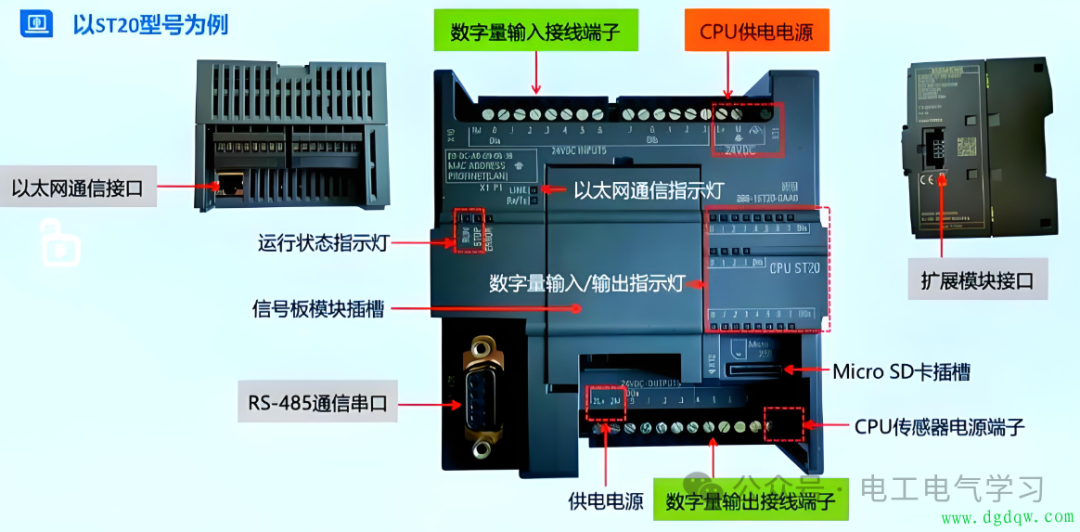
3. Brand Selection: Siemens S7-200 Series and Mitsubishi FX Series—The “Golden Partners” for Beginners
Faced with a dazzling array of PLC brands, beginners often find it overwhelming. In fact, choosing a brand that is easy to start with is crucial. Here, I recommend the Siemens S7-200 series and Mitsubishi FX series. These two series of PLCs are like “entry-level artifacts” tailored for beginners.https://www.dgdqw.com/wenku/plc/They are technically mature, having been tested in the market, like two seasoned veterans, stable and reliable. Moreover, there is a wealth of learning materials available, like a treasure mountain; as long as you are willing, you can dig up endless treasures. Why do I say that mastering these two series can basically ensure peace of mind? This is because they have an astonishing market share! They are like two giants in the industry, widely used in many factories. The learning principles of other brands’ PLCs are quite similar; once you understand Siemens and Mitsubishi PLCs, learning other brands will feel easy and enjoyable, like sailing with the wind.
4. Software and Hardware: A Dual Approach to Solidify the Foundation
Once you have chosen a brand, it’s like finding the direction to move forward. Next, you need to install the corresponding PLC programming software on your computer, which is like equipping a soldier with weapons. At the same time, download relevant video tutorials and follow them step by step. During the learning process, you should delve into hardware knowledge, understand the various components of the PLC, and familiarize yourself with the software operations, mastering the various command functions of the programming software, embedding them in your mind like memorizing martial arts secrets. Only then can you navigate the world of PLCs with ease.
5. Practical Exercises: From Simulation to Reality, “Real Combat” Brings True Knowledge
Once you have learned enough about software and hardware, it’s time to practice to test your skills. If conditions allow, it’s best to get a physical PLC and connect the circuits yourself to feel its “pulse.” If you don’t have a physical PLC, don’t worry; PLC simulation software can help you. Through simulation software, you can understand the wiring methods of PLCs, the functions of various terminals, how to connect inputs and outputs, how to connect communication lines, and the connection methods between various expansion modules. It’s like conducting drills on a virtual battlefield; when the time is right, you can write some simple programs, like controlling lights. The more you practice, the more you will find that learning PLC is not as difficult as you imagined!

Scan to watch PLC video courses for free
In summary, learning PLC is a journey full of challenges but also great fun. As long as we follow the correct methods, starting from the basics and gradually progressing, choosing the right brand, solidifying our knowledge of software and hardware, and actively engaging in practice, we can gradually conquer this technology and open a new chapter in automation control, carving out our own space in the future industrial field.
(If you have different insights, feel free to share your views in the comments section)Having read this article, don’t forget to click the bottom right toshare LookingLike👍👇Click to follow and set asstarred, to receive updates promptly.