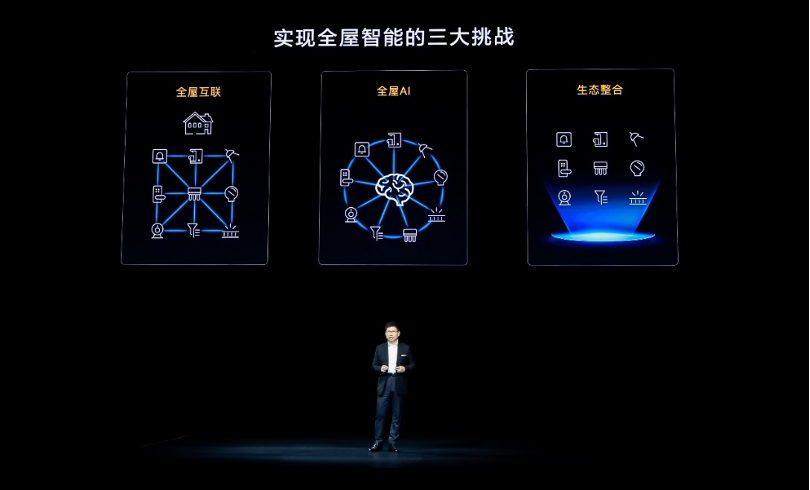
When it comes to “Whole Home Wi-Fi,” it has become a frequently mentioned buzzword in recent years, and many people are likely familiar with it. However, few can clarify its origins and future development directions. Today, at Huawei’s flagship product launch event, Huawei provided a comprehensive introduction to its whole home smart solutions, while also offering a detailed interpretation of the network foundation for whole home smart technology—Whole Home Wi-Fi.
The Origin of Whole Home Wi-Fi: Single Router Cannot Meet the Coverage and Speed Requirements of the New Era
Since the birth of Wi-Fi networks in the 1990s, technology has continuously evolved, providing us with increasingly smooth wireless network experiences and enriching our online lives. However, as we have developed, the continuous growth of services and the expansion of wireless connections from “human connections” to “thing connections” have introduced new demands on Wi-Fi network capabilities.
In the past, home broadband internet was primarily used for browsing web pages and chatting on QQ, with low performance requirements for Wi-Fi networks, as a single router was sufficient to cover the main activity areas of the home. However, with the rise of applications such as video streaming, live broadcasting, and gaming, there are higher demands for immersive and interactive experiences, leading to increasingly stringent requirements for home Wi-Fi networks in terms of coverage, speed, latency, and packet loss. Additionally, over the past year, an unprecedented pandemic has affected the lives of billions globally, significantly altering and shaping people’s online behavior habits—home isolation has accelerated the development of new services such as online work, online education, online gaming, AR shopping, AR fitness, and VR video, similar to how the SARS outbreak cultivated online shopping habits, further accelerating the upgrade of home network capabilities.
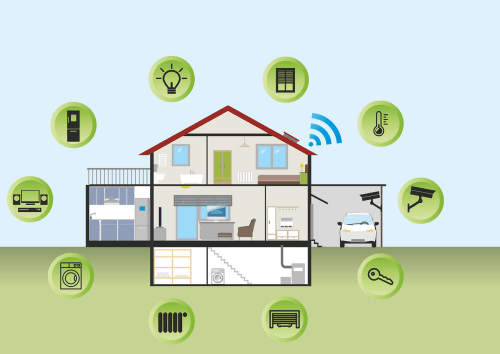
Previously, home Wi-Fi connected devices such as laptops, tablets, smartphones, and TV boxes were only responsible for “connecting people.” However, with the accelerated arrival of the AI+IoT smart living era, Wi-Fi networks will expand from “connecting people” to “connecting things,” extending from connecting laptops, tablets, and smartphones to connecting appliances and home devices such as air conditioners, sockets, lights, and curtains, ultimately forming a multi-dimensional smart network that interconnects people, devices, and environments.
This is a complex heterogeneous network, where high-traffic devices like smartphones, tablets, and PCs coexist with low-traffic devices like smart sockets and air conditioners. Additionally, low-traffic and power-sensitive devices such as temperature and humidity sensors and door magnets typically connect via Bluetooth or Zigbee, requiring protocol conversion through gateway devices before connecting to the Wi-Fi network. Therefore, not only does the Wi-Fi network need to cover the entire home to connect the distributed smart home devices, but it also needs to solve the interconnectivity issues between smart devices using different protocols, allowing all devices to communicate in a “common language.”
It is precisely to meet these new demands of the new era that Whole Home Wi-Fi has emerged.
The Connotation of Whole Home Wi-Fi: Faster, More Stable, Simpler, and Safer Coverage Without Dead Zones
Whole Home Wi-Fi, as the name suggests, is it simply about covering the entire home with Wi-Fi signals? Certainly not. To meet the above numerous demands, merely achieving signal coverage without dead zones is clearly insufficient; it must possess at least two major characteristics: first, a comprehensive upgrade of network capabilities; second, a more user-friendly and scenario-based user experience.
Comprehensive Upgrade of Network Capabilities
Firstly, the router, as the central device of the home network, must support the latest Wi-Fi 6 technology.
Wi-Fi 6 technology offers advantages such as large bandwidth, high concurrency, low latency, and low power consumption. For example, it supports a large bandwidth of 160M and 1024QAM modulation technology, providing three times the bandwidth capability compared to Wi-Fi 5; it uses OFDMA technology to divide wireless channels into multiple subcarriers allocated to multiple users, allowing different users to transmit different services concurrently within the same time period, reducing transmission latency to one-third of that of Wi-Fi 5, and significantly enhancing multi-service concurrency capabilities; it employs uplink and downlink MU-MIMO technology to use the same channel resources to concurrently transmit 8 data streams, increasing the number of concurrent users by four times compared to Wi-Fi 5; it supports TWT (Target Wake Time) functionality, allowing terminal devices to enter sleep mode when not transmitting data, reducing terminal power consumption by 30% compared to Wi-Fi 5. These capabilities precisely meet the higher performance requirements for bandwidth, latency, and packet loss rates of emerging services such as 4K/8K, VR/AR, and online gaming, as well as the higher power consumption and coverage requirements of smart home connections.
In addition to supporting Wi-Fi 6 technology, to achieve full home signal coverage and ensure a smooth Wi-Fi network experience anywhere in the house, further optimization and enhancement of Wi-Fi wireless network performance are required.
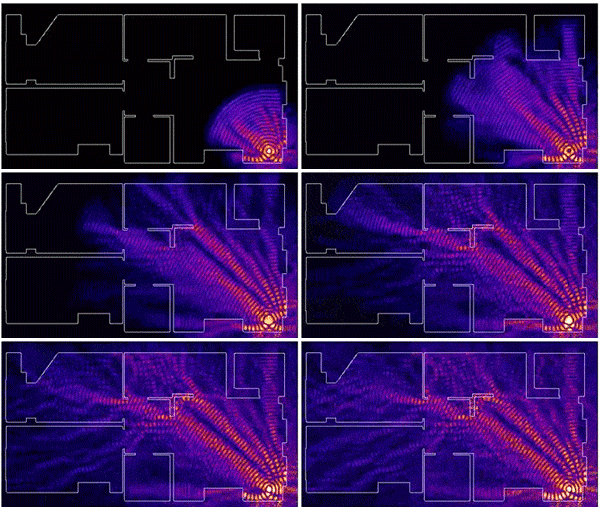
Wireless signals are “fragile and sensitive”; they not only attenuate quickly but are also easily interfered with. Most of the poor home network experiences are due to poor Wi-Fi signal coverage and high interference. The worse the wireless signal coverage and the greater the interference, the lower the modulation order, resulting in slower speeds and poorer experiences. Therefore, to achieve a high-speed, stable wireless network experience throughout the home, it is necessary to enhance the router’s transmission and reception capabilities while meeting regulatory requirements, as well as enhance interference avoidance or suppression and real-time dynamic adjustment of wireless links. For example, using multi-antenna technology to improve coverage and reduce interference, and employing interference identification technology to proactively avoid interference.
However, for medium to large-sized homes, merely enhancing the coverage and anti-interference capabilities of a single router is insufficient. It is often said that Wi-Fi signals are most afraid of bricks; 2.4GHz can only penetrate two walls at most, while 5GHz performs poorly after penetrating just one wall. This is akin to a lighting system in a home where a single light bulb cannot illuminate the entire room, resulting in coverage dead zones, let alone illuminating the entire house through walls. Therefore, in medium to large-sized home scenarios, multiple routers need to be placed in suitable locations throughout the home to ensure good Wi-Fi signal coverage in any area. Multiple routers can be connected via wired connections, power lines, or Wi-Fi wireless. Wired networking is the most stable and reliable but heavily depends on the user’s home network wiring situation; power line deployment turns existing power lines into network lines, converting power outlets into network ports, allowing users to simply plug in where the signal is weak without additional wiring, which is simple and convenient, although some electrical appliances may generate significant electrical noise, leading to a poor experience; Wi-Fi wireless deployment is also simple and popular in the European and American markets, but due to the prevalence of mid- to high-rise buildings in China, building walls cause significant wireless signal attenuation, presenting certain limitations. Despite their respective advantages and disadvantages, manufacturers or operators should be able to provide comprehensive solutions to allow users to flexibly choose based on their actual situations.
At the same time, after deploying multiple routers throughout the home, it is also required that the routers can achieve timely and rapid roaming switching, allowing users to experience no lag during gaming or video calls. This is equally important because high-definition live streaming, online education, AR/VR, and gaming services have stringent requirements for immersive and interactive experiences. If the switching between routers is not timely or if the interruption time during switching is too long, it will significantly affect the user experience.
User Experience that is Humanized and Scenario-Based
The numerous technologies mentioned above can drive an overall upgrade of home Wi-Fi network capabilities, significantly enhancing the user internet experience. However, in this smart era, Whole Home Wi-Fi should also evolve towards a more scenario-based and humanized user experience.
Many users are likely familiar with the early routers that required setup via a computer, which was very inconvenient. Later, with the arrival of the Wi-Fi 5 era, manufacturers such as Extreme Router, Xiaomi, and Huawei launched smart routers that could be set up via smartphones or tablets, making operations much simpler and more convenient, while also expanding functionalities and applications, significantly enhancing both hardware and software capabilities. Smart routers greatly lowered the usage threshold for consumers, making them more suitable for the mobile internet era and significantly promoting the rapid development of the Wi-Fi industry and mobile internet.
Now, as we enter the Wi-Fi 6 era, what changes will routers undergo? The answer is: an evolution from “smart” to “intelligent,” meaning more humanized and scenario-based, such as simplifying configuration operations and providing personalized services based on user habits and different scenarios, thereby further enhancing the consumer’s smart living experience across all scenarios and increasing the scale and value of the home Wi-Fi industry.
Currently, deploying Whole Home Wi-Fi typically requires professional personnel to come on-site for evaluation, design, installation, and maintenance, which is time-consuming and labor-intensive, hindering rapid popularization. This necessitates that the installation and setup of Whole Home Wi-Fi should be simpler and also provide visual smart diagnostic and maintenance tools to help users intuitively understand network capabilities such as speed, latency, and interference, quickly locate and fix common issues like slow internet, inability to connect, or Wi-Fi dropouts, and even achieve self-detection and self-healing of faults.
For a fully connected smart home life, Whole Home Wi-Fi not only needs to connect all smart appliances and home devices but also achieve full-stack coverage, bridging all smart device protocol stacks to truly realize the Internet of Everything. At the same time, multi-core CPUs, edge computing, and AI capabilities will become standard features of routers, significantly enhancing the experience of high-definition video services and providing personalized services in real-time based on user behavior habits and different scenarios, achieving a level of “perceptive and adaptive” service that greatly enhances the smart home living experience across all scenarios.
Whole Home Wi-Fi makes smart home life more exciting, but as the number of connected devices increases, it also raises security risks of malicious attacks and privacy breaches, such as cameras and smart speakers being attacked, leading to the leakage of sensitive information and privacy. Therefore, routers should also possess the ability to automatically identify and block malicious attack behaviors. Additionally, protecting minors’ online safety, preventing teenagers from falling into internet addiction, avoiding online temptations, and preventing online fraud are also among the humanized features that routers should possess.

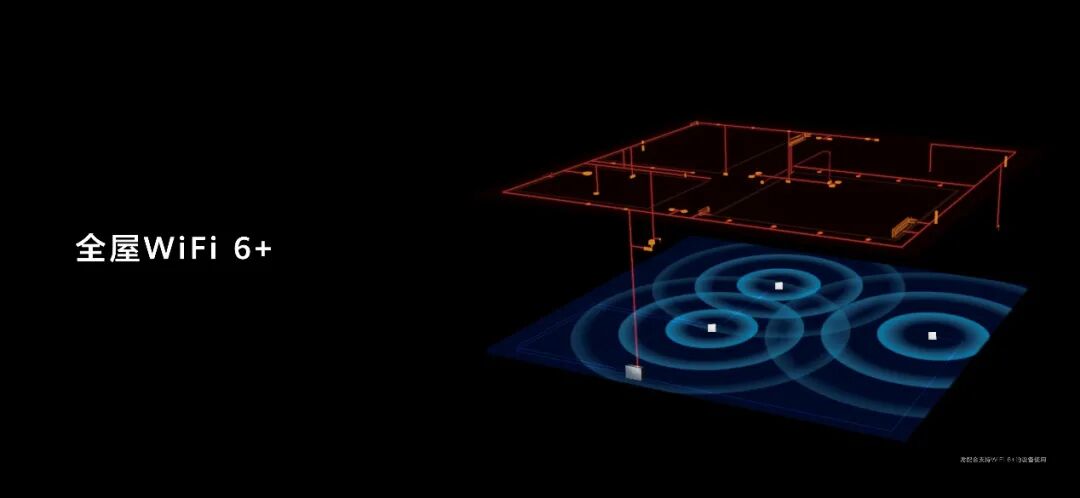
Facing the era of the Internet of Everything, redefining home networks through comprehensive enhancements in network capabilities and user experience aims to provide high-speed, stable, simple, and secure Wi-Fi signal coverage in every corner of the home. This is Huawei’s vision of Whole Home Wi-Fi. Based on Huawei’s Whole Home Wi-Fi concept, the first Whole Home Wi-Fi product equipped with the HarmonyOS—Huawei Router H6—was officially launched at this event. This product features Whole Home Wi-Fi 6+, Huawei HarmonyOS mesh+ high-speed networking, and plug-and-play sub-routers, capable of solving network coverage issues for various home types such as villas, large flats, duplexes, and complex layouts through industry-leading multi-router networking solutions, truly achieving Whole Home Wi-Fi with no dead zones, high speed, and stable coverage.
Network Optimization Recruitment Email: [email protected]Long press the QR code to follow On the road of communication, let’s walk together!