1. Introduction
In today’s digital age, our lives are surrounded by various information, making information security crucial. Have you ever noticed how passwords are stored on servers when we register accounts online? How can we ensure that the files we download from the internet are exactly the same as those provided by the official source and have not been tampered with? The answers to these questions are closely related to encryption technology, and the MD5 encryption algorithm is one of the widely used encryption methods.
MD5, short for Message-Digest Algorithm 5, is the fifth version of the message digest algorithm. It plays an irreplaceable role in the field of information security, acting as a silent guardian. Whether in user authentication for operating systems, integrity checks for software downloads, or even digital signatures, MD5 is omnipresent. Next, let us delve into the mysteries of the MD5 encryption algorithm.
2. What is the MD5 Encryption Algorithm?
The MD5 encryption algorithm is one of the widely used hashing algorithms (also known as digest algorithms or hash algorithms) in computing. It can transform data of any length into a fixed-length 128-bit hash value, typically presented in a 32-character hexadecimal format. The full name of the MD5 algorithm is Message-Digest Algorithm 5, which evolved from MD2, MD3, and MD4, and was developed in the early 1990s by Ronald Linn Rivest, and standardized in RFC 1321.
The core of the MD5 algorithm lies in performing complex calculations on the input data to generate a unique hash value, akin to giving the data a “digital fingerprint.” This hash value is unique; any slight change in the original data, even a single character, will result in a completely different MD5 value. This characteristic allows MD5 to be widely used in various fields. For instance, when software is released, developers provide the MD5 value of the software, allowing users to calculate the MD5 value of the downloaded software and compare it with the official one to determine if the software has been tampered with during the download process. In file storage, MD5 values can also be used to quickly identify duplicate files, improving storage efficiency.
3. Characteristics of the MD5 Encryption Algorithm
(1) Compression
One notable characteristic of the MD5 encryption algorithm is its excellent compression. Regardless of whether the input data is a few characters long or a large file of several GB, the output MD5 value is always fixed at 128 bits, typically presented as a 32-character hexadecimal number. This is akin to putting any size item into a specific “compression machine,” resulting in a fixed-size “compressed package.” For example, both a text file containing only “Hello” and a high-definition movie will yield the same 32-character hexadecimal MD5 value when processed by MD5 encryption. This fixed-length output characteristic greatly enhances data management efficiency during storage and transmission.
(2) Easy to Compute
The process of calculating the MD5 value from the original data is relatively simple and fast, which is one reason for its widespread application. Most programming languages have built-in MD5 library functions available for use, allowing the MD5 value to be computed with just a few lines of code. For example, in Python, using the hashlib library, the code is as follows:
import hashlib
data = "example"
md5_hash = hashlib.md5(data.encode())
print(md5_hash.hexdigest())
This quickly yields the MD5 value for the string “example.” In practical applications, such as performing MD5 checks on files uploaded by users on the server side, a large number of MD5 calculations can be completed in a short time, providing timely feedback on file integrity. Even devices with ordinary hardware configurations can quickly complete MD5 calculations without imposing excessive performance burdens on the system.
(3) Resistance to Modification
The MD5 encryption algorithm exhibits strong resistance to modification. Even the slightest alteration to the original data, such as changing a letter or adding/removing a punctuation mark, will result in a significant change in the MD5 value. This is akin to setting an extremely sensitive “fingerprint scanner” for the data; any change will yield a completely different “fingerprint.” For example, the MD5 value for the string “Hello” is “8b1a9953c4611296a827abf8c47804d7,” while modifying it to “Hello!” changes the MD5 value to “5d41402abc4b2a76b9719d911017c592,” resulting in two completely different MD5 values. This characteristic makes MD5 commonly used for verifying data integrity, ensuring that data has not been illegally tampered with during transmission or storage.
(4) Strong Collision Resistance
In theory, finding two different data sets that produce the same MD5 value is extremely difficult. This is referred to as the strong collision resistance of MD5. From a probabilistic perspective, there are a vast number of possible MD5 values, making it highly unlikely to generate two different data sets with the same MD5 value. In practical applications, it is nearly impossible to artificially create two different contents that yield the same MD5 value. For instance, in the field of digital signatures, the strong collision resistance of MD5 ensures the uniqueness and non-repudiation of signatures. If someone attempts to forge a file with the same MD5 value as the original to deceive, such attempts are virtually futile in the face of MD5’s strong collision resistance.
4. Applications of the MD5 Encryption Algorithm
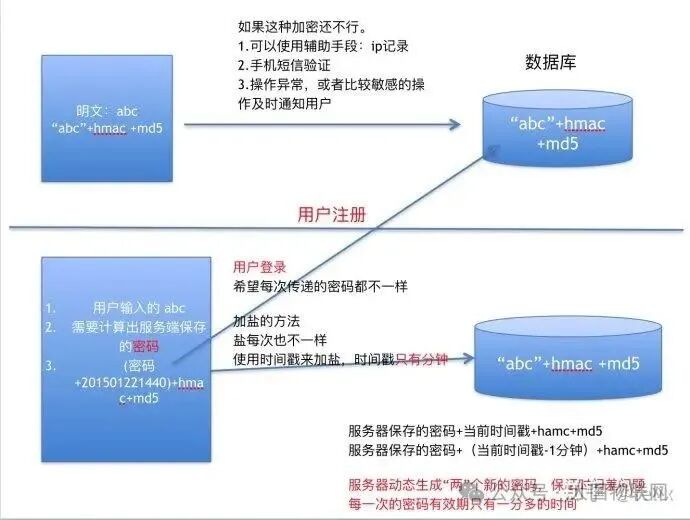
(1) Password Encryption
In user registration and login systems, MD5 encryption plays a critical role. When users register an account and set a password, the system does not store the plaintext password directly in the database; instead, it first encrypts the password using MD5 and then stores the encrypted hash value. For example, in an e-commerce platform’s user registration process, when a user inputs the password “password123,” the backend system uses the MD5 algorithm to encrypt it, resulting in a hash value like “5e884898da28047151d0e56f8dc6292773603d0d6aabbdd62a11ef721d1542d8,” which is then stored in the database.
When the user logs in, the system encrypts the entered password again using MD5 and compares the newly generated hash value with the one stored in the database. If they match, the password is correct, and the user is allowed to log in; otherwise, access is denied. This method mitigates the risk of plaintext passwords being stolen in the event of a database breach, significantly enhancing user account security.
(2) File Integrity Verification
In scenarios such as file transfer and downloads, the MD5 encryption algorithm is used to verify whether files have been tampered with. For instance, when downloading a large game installation package from a software official website, the website will also provide the MD5 value of the installation package. After downloading, users can calculate the MD5 value of the downloaded file and compare it with the official MD5 value. If they match, it indicates that the file has not been tampered with during the download process and is complete and reliable; if they differ, it suggests that the file may have been maliciously altered, posing a security risk, and users should avoid using that file.
In data backup and recovery processes, MD5 can also be used to verify the integrity of backup files. By calculating the MD5 value of the original data, a hash value is obtained, and during data recovery, the MD5 value of the restored file is calculated again. By comparing the two hash values, it can be determined whether the restored data matches the original data.
(3) Digital Signatures
In the field of digital signatures, the MD5 encryption algorithm also has significant applications. The primary purpose of digital signatures is to ensure data integrity, authenticity, and non-repudiation. For example, if a company wants to send an important electronic contract to a partner over the internet, MD5 and digital signature technology will be used to ensure that the contract is not tampered with during transmission and that the sender cannot deny having sent the contract.
First, the sender uses the MD5 algorithm to calculate the content of the electronic contract, generating an MD5 hash value. Then, the sender encrypts this hash value using their private key to obtain a digital signature. Next, the sender sends both the electronic contract and the digital signature to the receiver. Upon receipt, the receiver uses the sender’s public key to decrypt the digital signature, obtaining a hash value. Simultaneously, the receiver also calculates the hash value of the received electronic contract using the MD5 algorithm. If the two hash values match, it indicates that the contract has not been tampered with during transmission and that it was indeed sent by the claimed sender, thereby ensuring data integrity and non-repudiation.
5. Discussion on the Security of the MD5 Encryption Algorithm
(1) Existing Security Risks
Although the MD5 encryption algorithm was once widely regarded as secure and reliable, its security has gradually faced severe challenges with the rapid development of computer technology. In the current environment, there are numerous possibilities for cracking the MD5 algorithm.
From a theoretical perspective, the design of the MD5 algorithm has certain flaws, making it inadequate against some advanced cryptanalysis techniques. The collision resistance of MD5 is not absolute; although the probability of finding two different data sets that produce the same MD5 value was extremely low in the past, this probability is increasing with the significant enhancement of computational power.
In practical applications, there are various common methods for cracking the MD5 algorithm. Among them, brute force attacks are a relatively straightforward approach, which involves exhaustively trying all possible character combinations, calculating their MD5 values, and comparing them with the target MD5 value until a match is found. However, due to the vast space of MD5 values, using brute force on a standard single machine is nearly impossible, as it requires a significant amount of time and computational resources. However, with the development of distributed computing technology, using multiple computers simultaneously for brute force attacks has significantly reduced the cracking time, making it somewhat feasible.
Dictionary attacks are also a common cracking method. Hackers pre-compile a dictionary containing a large number of common passwords and their MD5 values. When they obtain a target MD5 value, they search the dictionary for matching records. If the target password happens to be one of the common passwords in the dictionary, it can be quickly cracked. For example, many users tend to use easily memorable passwords such as birthdays, phone numbers, or simple words, which are likely to be included in the dictionary, increasing the risk of being cracked.
Rainbow table attacks are a more efficient cracking method. This is an optimization of the dictionary attack, where a large number of hash values and their corresponding plaintext values are pre-computed and stored in a specific data structure. When cracking MD5 hash values, rainbow tables can quickly locate potential plaintext values, greatly improving cracking efficiency. Although constructing rainbow tables requires a significant amount of storage space, their cracking speed is very fast, posing a serious threat to the security of MD5 encryption.
(2) Countermeasures
To enhance the security of MD5 encryption, various effective countermeasures can be taken.
Salting is a commonly used and effective method. Before performing MD5 encryption on the original data, a randomly generated string (the “salt”) is added, and then the salted data is encrypted using MD5. Since the salt value is random and stored alongside the original data, even if two users use the same password, the results after salting will be completely different. For example, if both user A and user B have the password “password,” without salting, their MD5 values would be the same. However, after adding different salt values, such as user A’s salt being “salt1” and user B’s salt being “salt2,” the MD5 encryption of “passwordsalt1” and “passwordsalt2” will yield completely different results. This way, attackers cannot quickly crack passwords using pre-computed rainbow tables or dictionaries, significantly increasing the difficulty of cracking.
Multiple rounds of encryption is another way to enhance security. After performing MD5 encryption on the original data, the encrypted result can be subjected to multiple rounds of MD5 encryption. For instance, first encrypt the password “123456” using MD5 to obtain a hash value, then encrypt this hash value again using MD5, and this can be repeated for more rounds. After multiple encryptions, the complexity of the encrypted result increases significantly, requiring attackers to expend more computational resources and time to crack it. However, it is important to note that multiple encryptions will also increase computational overhead, so a balance between security and performance needs to be considered in practical applications.
In addition to the above methods, combining other encryption algorithms can further safeguard data security. For example, in scenarios with extremely high security requirements, data can first be encrypted using the MD5 algorithm and then subjected to secondary encryption using more secure algorithms like SHA-256. This multi-layered encryption approach presents attackers with multiple levels of challenges, greatly enhancing data security. Additionally, in practical applications, it is essential to strengthen user password requirements, encouraging users to set complex passwords that include uppercase and lowercase letters, numbers, and special characters, and to change passwords regularly to reduce the risk of being cracked.
Differences Between MD5, AES, and RSA Algorithms
Irreversible Algorithm (MD5): Uses a hash algorithm, during which some information from the plaintext is lost. In other words, the MD5 computation process involves information loss. Therefore, it is impossible to reverse-engineer the plaintext based solely on the MD5 computation process and the final result. Any data can be encrypted into 16 bytes, which is not very secure.
Process: When creating an account, the MD5 of the corresponding password is stored in the database. During login, the user’s input password is MD5 encrypted and sent to the server, which queries the corresponding MD5 value from the database to compare and determine if they match.
Risk: The dictionary table is very large. On MD5 websites, over 80 trillion passwords are stored, allowing for quick queries of some passwords with low complexity.
Symmetric Encryption (AES): Both encryption and decryption use the same key, requiring key transmission, which is not very secure, but fast.
Process: The key is fixed in the client-side and backend code. During login, the plaintext password is encrypted and transmitted to the backend using a fixed password, which is then decrypted using the same fixed key, and the stored password in the database is queried for comparison and authentication.
Risk: The key is hard-coded in the client-side code, posing a leakage risk.
Asymmetric Encryption (RSA): Involves a public key and a private key, where the public key encrypts and the private key decrypts, ensuring security, but is slower.
Process: The backend generates a pair of public and private keys using the RSA asymmetric algorithm. The public key is fixed in the client-side code, while the private key is stored in the backend code. During login, the input password is encrypted using the public key for transmission, and the backend uses the private key to decrypt it, then queries the corresponding password for comparison.
Security Assurance: Without access to the private key, the password encrypted with the public key cannot be cracked, ensuring absolute security of the password.