
The speed of an aircraft relative to the air is called airspeed, and the airspeed tube, as the name suggests, is a tube used to measure the aircraft’s airspeed. Based on the airspeed, pilots can assess the aerodynamic forces acting on the aircraft, calculate the aircraft’s speed relative to the Earth’s surface, and thus correctly control the aircraft, determining its flight distance and time.
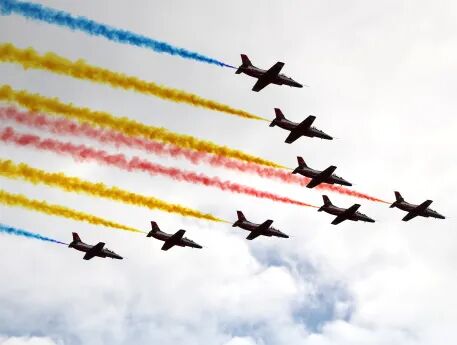
The “Red Eagle” aerobatic team uses the CJ-8 trainer aircraft for flight demonstrations, where the airspeed tube can be seen at the nose of the aircraft (Image source: “Knowledge is Power” magazine).

To Measure Airspeed, First Measure Air Pressure
According to the relativity of motion, when an aircraft is flying, the air relative to the aircraft flows past it at equal speed but in the opposite direction. Due to the different flow speeds of gases, the pressure also varies, allowing the speed of the airflow, which is the aircraft’s speed, to be inferred from the changes in gas pressure.
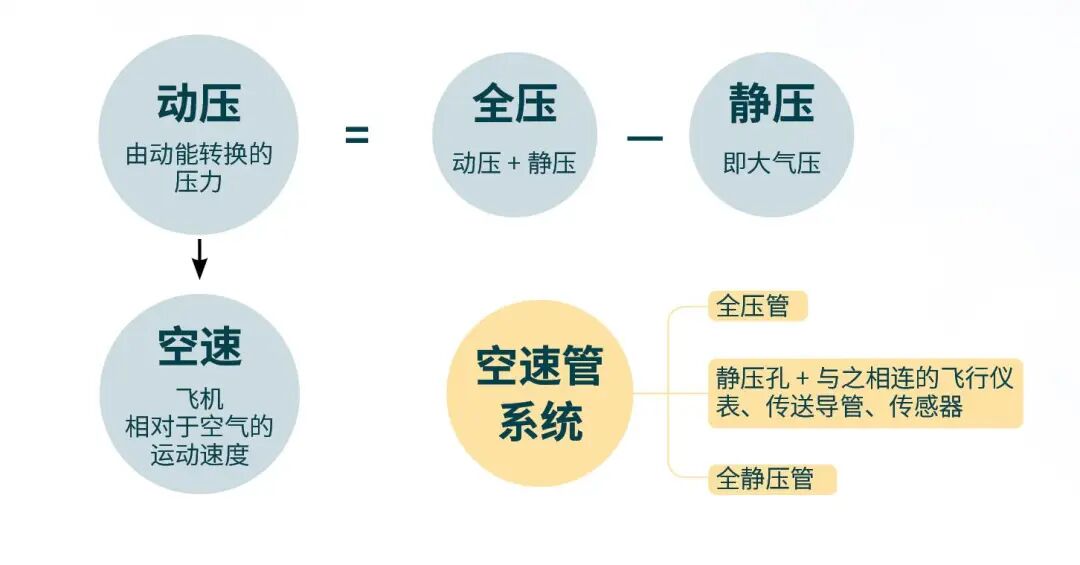
To calculate airspeed, data on static pressure and total pressure is essential. Static pressure is the external air pressure acting on the aircraft in a vertical plane when it is at rest or in motion, which is atmospheric pressure. The static pressure varies with the altitude of the aircraft, which is why measuring static pressure is necessary.
(Image source: “Knowledge is Power” magazine)
Total pressure is the pressure measured on the aircraft’s surface directly facing the airflow when the airflow is completely obstructed and its speed is reduced to zero during flight, also known as total pressure. Total pressure consists of two parts: one part is the pressure converted from kinetic energy, known as dynamic pressure; the other part is static pressure.
In practical operations, directly measuring airspeed is challenging; therefore, dynamic pressure (dynamic pressure = total pressure – static pressure) is often calculated to estimate airspeed. The collection and measurement of total pressure and static pressure data are achieved through total pressure tubes, static pressure ports, or total static pressure tubes, along with connected flight instruments, transmission conduits, sensors, etc., forming the airspeed tube system.

Airspeed Tubes Are Divided This Way
Strictly speaking, the airspeed tube refers only to the total pressure tube, but people often refer to the total static pressure tube, which measures both total pressure and static pressure, as an airspeed tube.
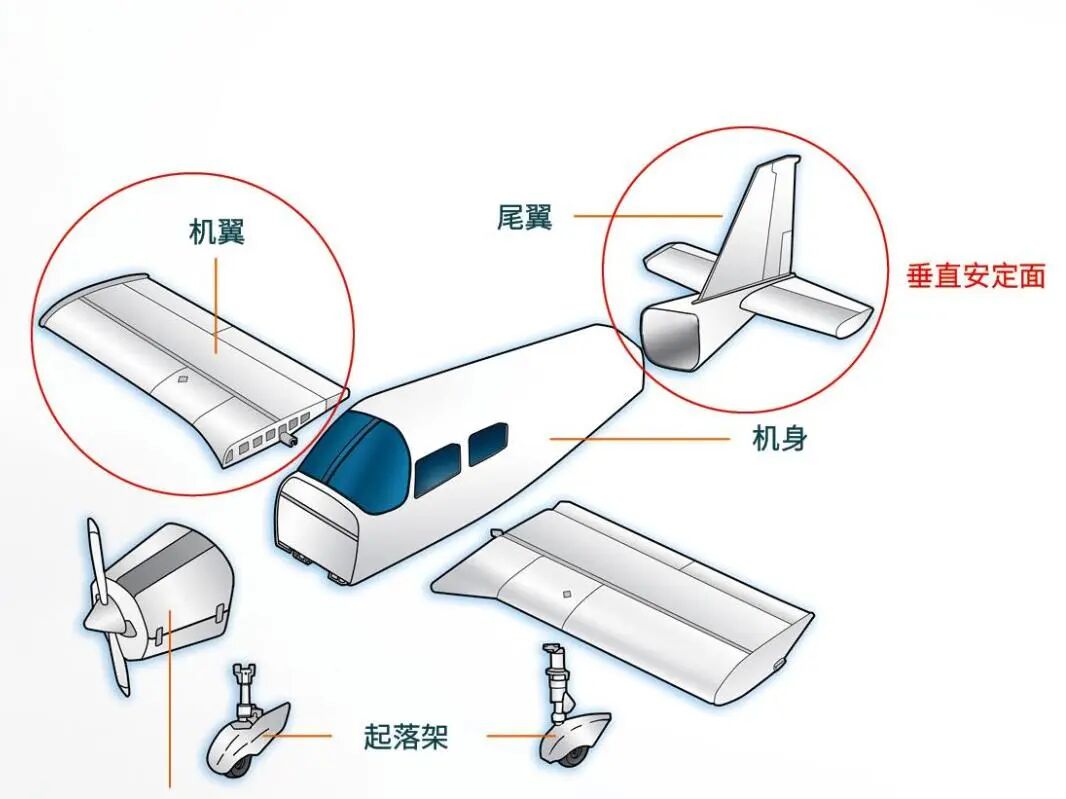
Total pressure tubes are usually located at the front of the fuselage, under the wings, or on the vertical stabilizer, in places where they can fully contact the airflow. The front end of the tube has an opening that collects the total pressure of the airflow, with the opening facing the airflow.
(Image source: “Knowledge is Power” magazine)
Inside the total pressure tube, there is also a baffle to prevent water or foreign objects from entering the total pressure line. At the lowest point of the tube, there is a drainage hole to expel water and dust particles.
Some aircraft are equipped with static pressure ports, located on the smooth surface of the fuselage’s front side, free from airflow interference, with the entrance perpendicular to the aircraft’s heading to ensure stable airflow at the static pressure port for accurate static pressure measurement.
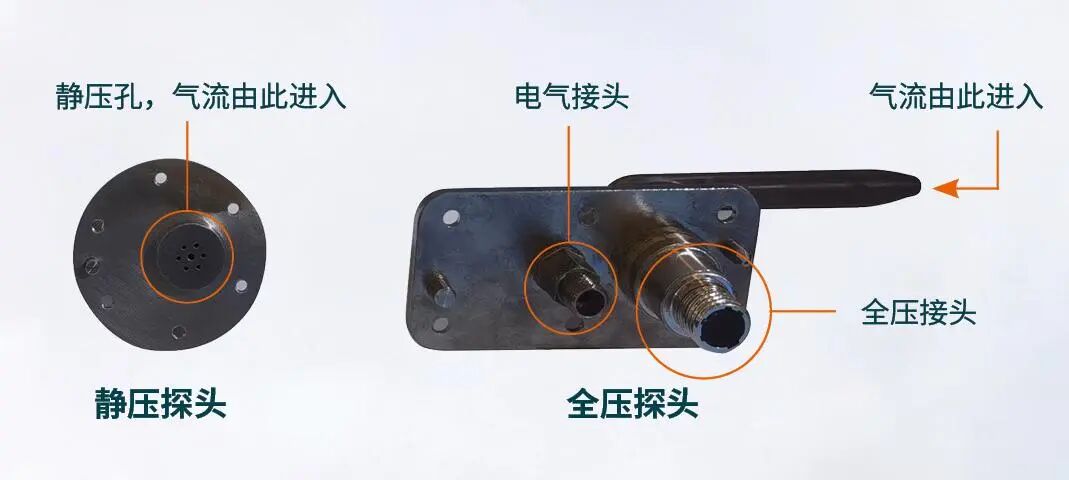
Static pressure probe and total pressure probe of a civil aviation passenger aircraft
(Image source: “Knowledge is Power” magazine)
Some aircraft’s total pressure tubes also have static pressure ports; this type of tube is called a total static pressure tube. Total static pressure tubes generally include total pressure, static pressure, and heating components, with a very smooth surface to minimize disturbance to the airflow, allowing for accurate collection of static pressure data.

Redesigning the Nose “Spike”
In the past, airspeed tubes on fighter jets were often installed at the nose position, resembling a thin spike. This was because the aircraft would push away the airflow around the fuselage during flight, but this affected airflow does not truly reflect the airspeed. To obtain accurate airspeed measurements, the airspeed tube had to be placed at the front of the aircraft, maintaining a distance from the fuselage.
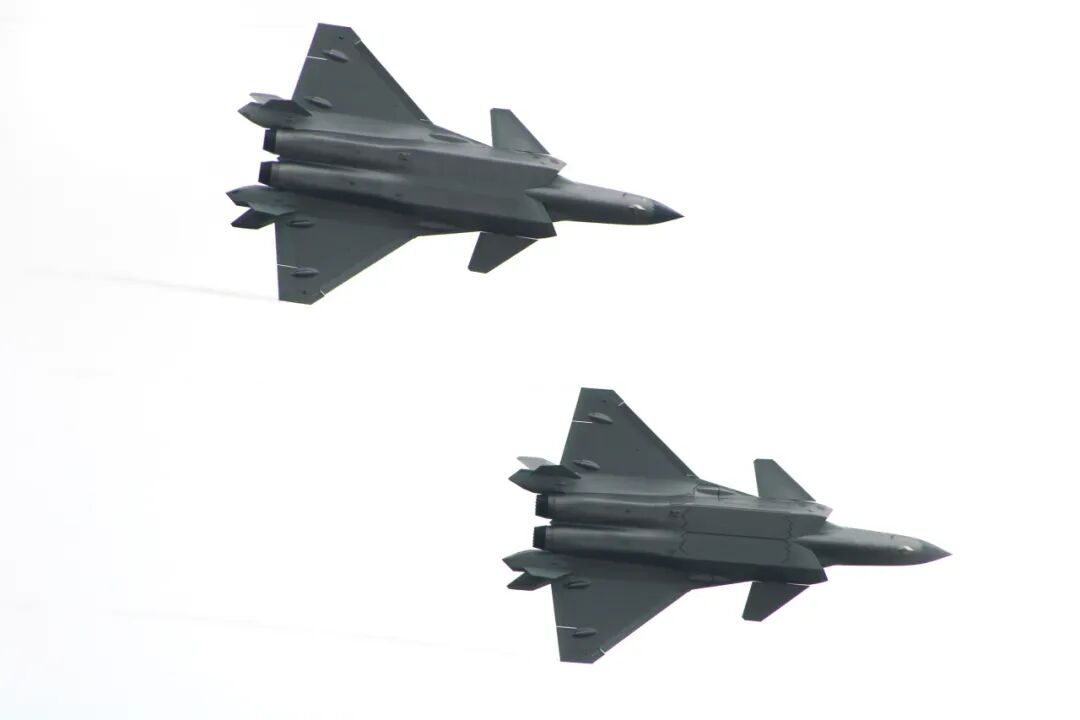
The J-20 fighter jet has eliminated the spike-shaped airspeed tube at the nose
(Image source: “Knowledge is Power” magazine)
In recent years, with the development of fighter jets, the demand for stealth performance has increased. However, metal airspeed tubes reflect radar waves, weakening the stealth capabilities of the fighter jets; additionally, to enhance stealth performance, the shape of the aircraft needs to be as smooth as possible, reducing sharp edges. Therefore, many modern fighter jets have eliminated the airspeed tube at the nose in favor of L-shaped static pressure tubes located on the nose or sides of the fuselage to ensure stealth performance.
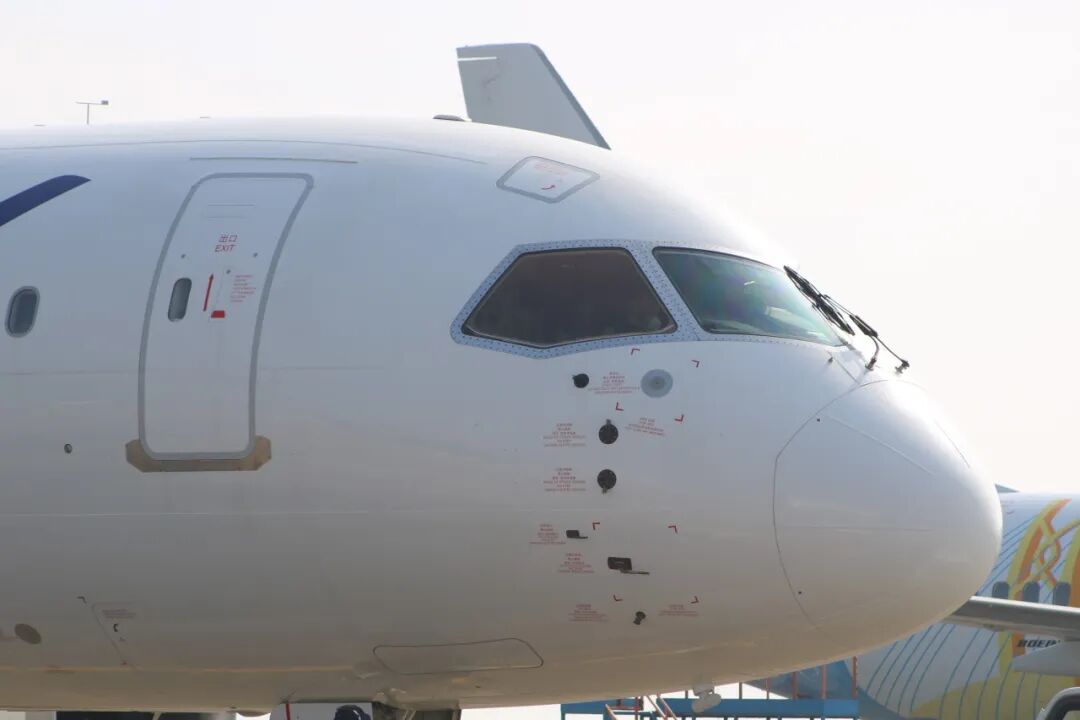
The airspeed tube on the side of the C919 aircraft’s nose. For safety reasons, civil aviation passenger aircraft often have more airspeed tubes than military fighter jets (Image source: “Knowledge is Power” magazine)
The airspeed tube may seem unremarkable, but it carries significant responsibilities and is indispensable. Will you be able to design a more concealed and better-performing airspeed tube in the future?

Written by | Yi Man
Editor | Gao Lin, Duan Yangyang
Operational Editor | Duan Yangyang
Quality Review | Ye Lei
❖ Source: “Knowledge is Power” magazine
“The Aircraft’s “Sensor” —Airspeed Tube” ❖

Order Now for 2025
“Knowledge is Power” magazine
Price: 360 Yuan
And take home a whole year’s worth of knowledge!