First, what is 3D printing? What are the types of 3D printing? Where is 3D printing used? Let’s continue to explore!
What is the Definition of 3D Printing:
3D printing (3DP) is a type of rapid prototyping technology, also known as additive manufacturing. It is a technology that constructs objects based on digital model files, using powder-like metals or plastics and other adhesive materials, by printing layer by layer.
Classification of 3D Printing:
1. FDM: Fused Deposition Modeling, main material is ABS.
2. SLA: Stereolithography, main material is photosensitive resin.
3. DLP: Digital Light Processing, main material is photosensitive resin. *The forming principles of SLA and DLP technologies are the same; SLA technology uses laser polarized scanning to cure points, while DLP uses digital projection technology for layered curing. DLP has better precision and printing speed than SLA.
Application Areas of 3D Printing:
3D printing is usually achieved with digital technology material printers. It is commonly used in mold manufacturing, industrial design, etc., to create models, and has gradually been used for direct manufacturing of some products, with parts already produced using this technology. This technology is applied in jewelry, footwear, industrial design, architecture, engineering and construction (AEC), automotive, aerospace, dental and medical industries, education, geographic information systems, civil engineering, firearms, and other fields.
In this issue, let’s learn about 3D laser printers and “laser internal carving”.
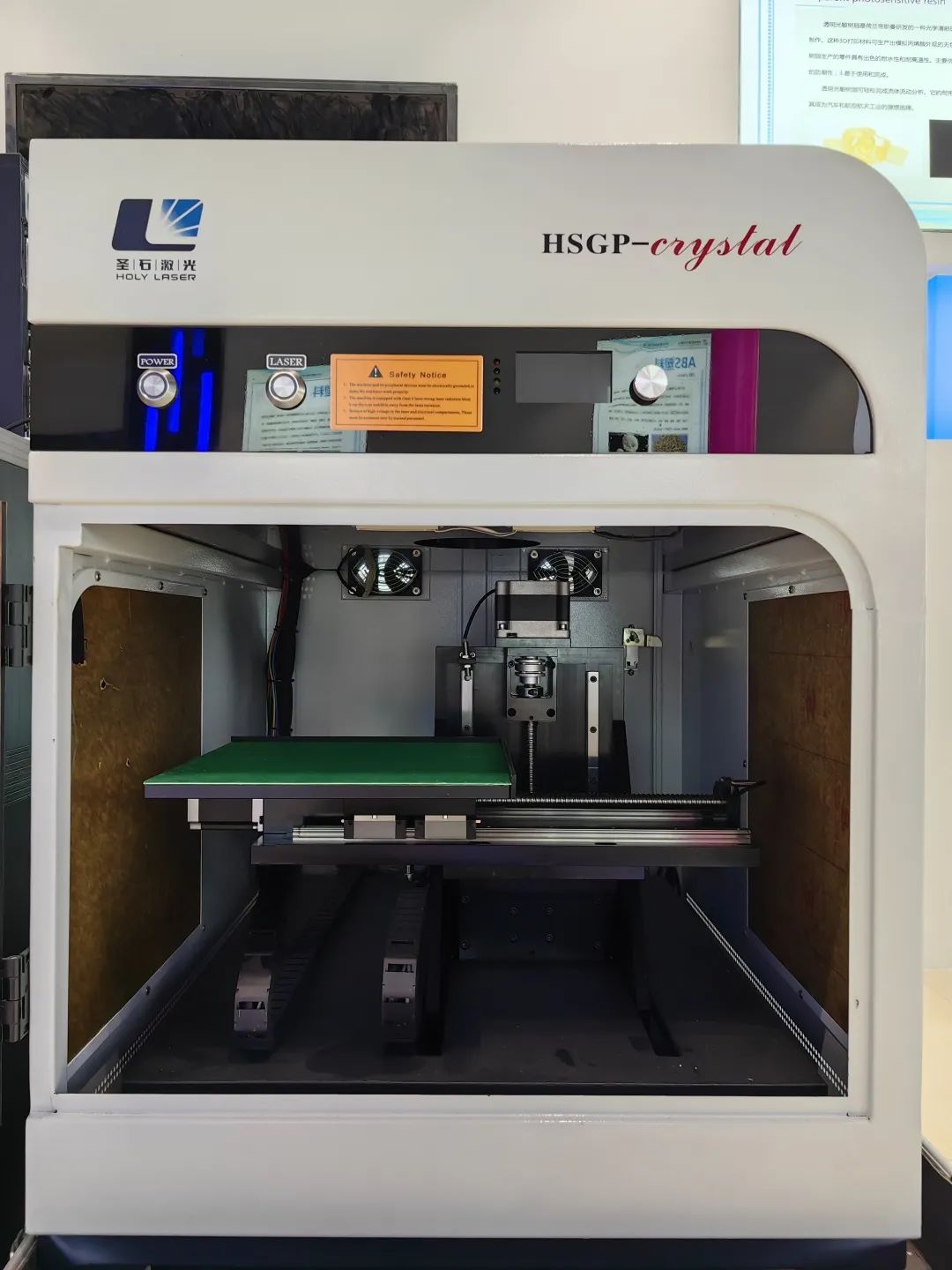
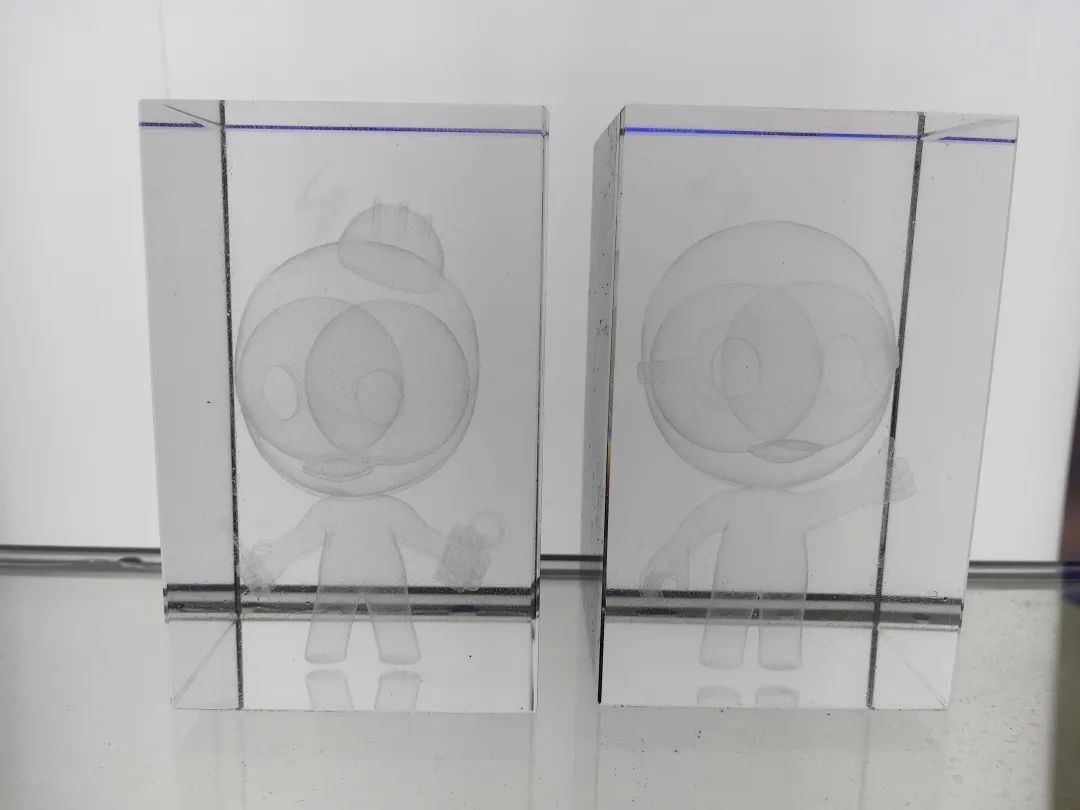
Introduction to Laser Internal Carving: The patterns carved inside crystals and glass are made using computer-controlled laser engraving machines. In fact, most of the crafts you usually see are not real crystals, but rather artificial crystals. The “laser” is the most useful tool for performing “internal carving” on artificial crystals (also known as “crystal glass”). Using laser internal carving technology, flat or three-dimensional patterns can be “carved” inside crystal glass.
Principle of Laser Internal Carving:
The principle of laser internal carving is a nonlinear optical phenomenon. Although transparent materials are generally transparent to lasers and do not absorb laser energy, they can produce nonlinear effects such as multiphoton ionization and above-threshold ionization under sufficiently high light intensity. Therefore, at the focal point of a sufficiently intense laser, transparent materials will absorb laser energy and produce micro-explosions in a short time, with a large number of micro-explosion points arranged to form the desired pattern.
Functions of Laser Internal Carving:
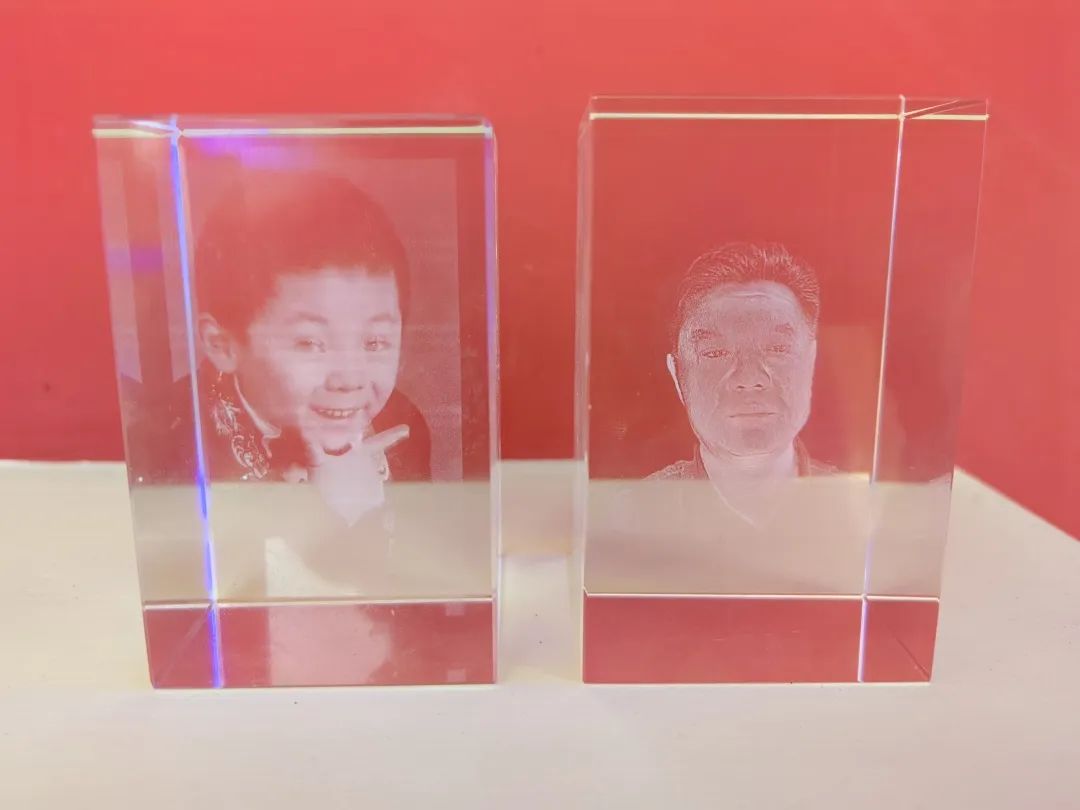
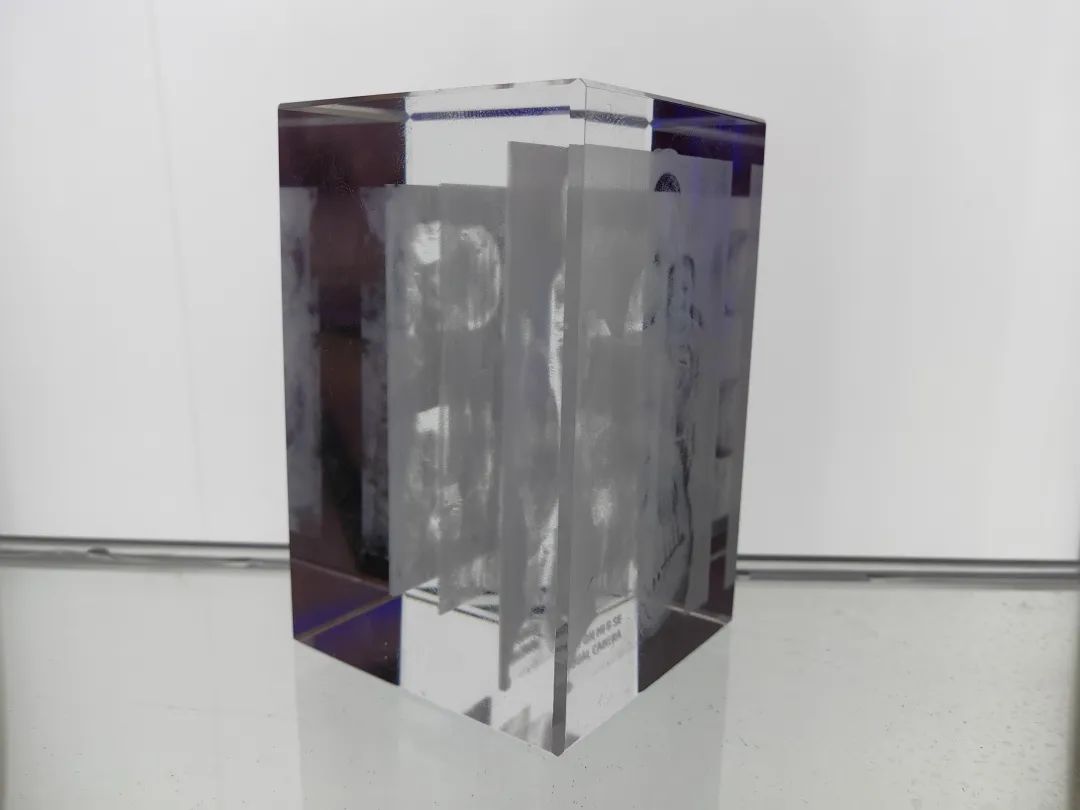
It can carve flat or three-dimensional patterns in transparent materials such as crystal and glass, allowing for the engraving of 2D/3D portraits, names, handprints, trophies, and other personalized gifts and souvenirs. It can also mass-produce models and 3D scene displays of 2D/3D animals, plants, buildings, cars, boats, aircraft, etc.
Features of Laser Internal Carving:
1. Uses advanced galvanometer technology combined with a 2KHz semiconductor-pumped YAG frequency-doubling laser, resulting in very fine and bright explosion points, faster engraving speed, and more detailed, vivid, and realistic patterns;
2. Key components are sourced from Germany and the USA, ensuring a more reasonable design and good long-term operational stability;
3. Equipped with self-developed software, combined with a 3D camera for precise production of 3D portraits;
4. Adapts to the needs of personalized and rapid mass processing, with one device capable of meeting the production volumes for multiple storefronts and e-commerce sales.
Showcase of Laser Internal Carving Products

Scan to Follow

Dongguan New Materials Exhibition Hall for Manufacturing Industry