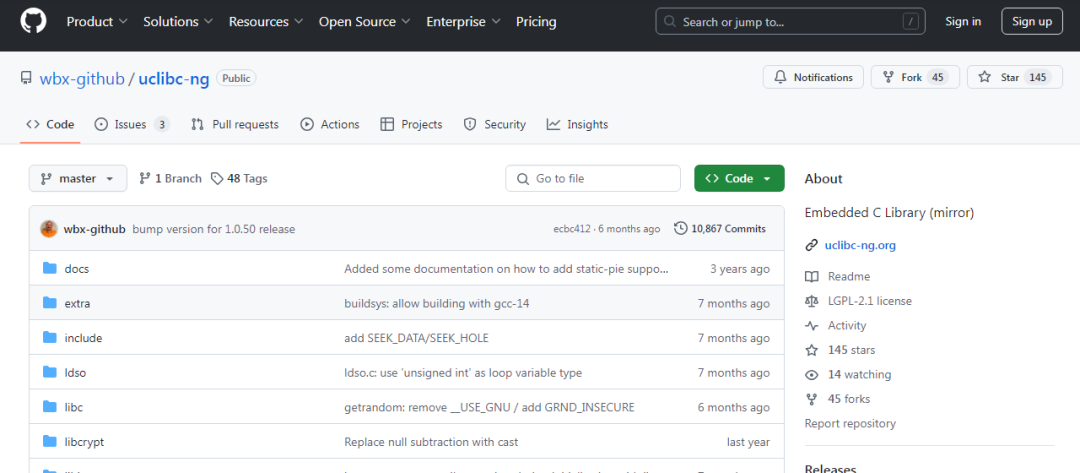
uClibc-ng is a lightweight C library designed for embedded Linux systems. It is significantly smaller than the GNU C Library (glibc) but is nearly fully compatible with most applications supported by glibc. For resource-constrained embedded devices, uClibc-ng is an ideal choice as it can significantly reduce the size of the system image, thereby improving performance and reducing resource consumption.
The Origin and Development of uClibc-ng
uClibc-ng evolved from the uClibc project, inheriting its lightweight characteristics while undergoing numerous improvements and enhancements. It is maintained by Waldemar Brodkorb based on contributions from Erik Andersen and others, and follows the LGPL-2.1 license, allowing commercial closed-source applications to use it.
Core Advantages and Features
The main advantage of uClibc-ng lies in its small size and high compatibility with glibc. This means that many applications written for glibc can run on uClibc-ng with just a simple recompilation. This greatly simplifies the porting process and reduces development costs.
- • Lightweight: uClibc-ng is significantly smaller than glibc, which is crucial for embedded systems with limited memory and storage space.
- • High Compatibility: uClibc-ng strives to maintain compatibility with glibc, ensuring that most applications can be seamlessly ported.
- • Support for Shared Libraries and Threads: uClibc-ng supports shared libraries and POSIX threads, enabling it to run complex applications.
- • Wide Processor Architecture Support: uClibc-ng supports various processor architectures, including Alpha, ARC, ARM, Blackfin, CRIS, FR-V, HPPA, IA64, KVX, LM32, M68K/Coldfire, Metag, Microblaze, MIPS, MIPS64, NDS32, NIOS2, OpenRisc, PowerPC, SuperH, Sparc, Tile, x86, x86_64, and Xtensa, making it applicable to a variety of embedded devices.
- • Standard Compliance: uClibc-ng strives to adhere to C language standards, enhancing the portability and maintainability of the code. However, it does not support all of glibc’s GNU extensions, which is to maintain its lightweight characteristics.

Installation and Configuration
The installation of uClibc-ng typically requires using buildroot or other embedded Linux build systems. Specific installation steps can be referenced in the project’s INSTALL file and the documentation on the official website. Due to its dependencies and the complexity of the build process, installing uClibc-ng directly on a desktop operating system is usually not straightforward and may require additional tools and configurations.
Application Scenarios
uClibc-ng is best suited for resource-constrained embedded Linux systems, such as:
- • IoT Devices: Smart home devices, wearables, industrial control systems, etc.
- • Embedded Routers: Small routers, networking devices, etc.
- • Embedded Systems: Embedded systems in automotive electronics, aerospace, etc.
Comparison with glibc
The main difference between uClibc-ng and glibc lies in their size and feature sets. glibc is a powerful C library that includes a vast array of features, but it also comes with a larger footprint. uClibc-ng focuses on providing the core functionalities needed for embedded systems while minimizing size. Therefore, the choice between the two libraries depends on the specific application scenarios and requirements. If your embedded system has very limited resources and does not require all the functionalities of glibc, then uClibc-ng is a better choice. If your system has relatively abundant resources and needs the richer features provided by glibc, then glibc is more suitable.
Limitations and Drawbacks
While uClibc-ng is lightweight and powerful, it also has some drawbacks:
- • Feature Limitations: Compared to glibc, uClibc-ng has a relatively limited feature set.
- • Community Support: Although there are active developers, its community size is still smaller compared to glibc.
- • Learning Curve: Due to its focus on embedded systems, its configuration and build process is more complex compared to glibc.
Conclusion
uClibc-ng is an excellent lightweight C library, particularly suitable for development in embedded Linux systems. It has a small footprint, good glibc compatibility, and wide processor architecture support. Although it is slightly inferior to glibc in terms of functionality, its advantages in resource-constrained environments make it an ideal choice for many embedded projects. Developers need to weigh its advantages and disadvantages based on specific needs and resource constraints to choose the appropriate C library.
Project Address: https://github.com/wbx-github/uclibc-ng