ChemDraw is a software used by chemists worldwide to draw molecular structures. The invention of this software once saved the marriage of Dave and Sally Evans. Harvard University chemistry professor David A. Evans recounts the story of ChemDraw and published an article in the German journal Angewandte Chemie (DOI:10.1002/anie.201405820).
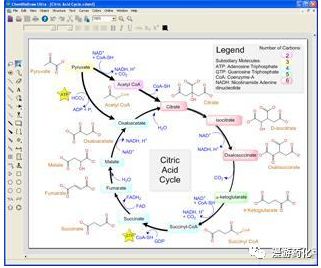
In 1983, Evans’s laboratory moved from the California Institute of Technology to Harvard, and his wife, Sally, also gave up her teaching job in mathematics and science at Westlake School for Girls. The students there were typically daughters of well-known figures or those who later became celebrities, such as movie stars and comedians.
Dave and Sally Evans arrived in Massachusetts in the fall of 1983. By then, it was too late for Sally to find another teaching job. However, Sally agreed to help Dave establish his new laboratory, effectively becoming the lab manager.
Sally recalled that much of the work at that time was worthwhile, such as designing the new lab with architects and creating promotional materials for Harvard’s chemistry department. But drawing chemical structures was tedious and frustrating. She would sit at the drafting table for four hours with drafting tools and templates to draw those chemical structures, which became part of her husband’s presentation slides and papers.
Chemists who completed their research before the advent of chemical structure drawing software surely remember the monotony of drawing chemical structures. Scott E. Denmark, a chemistry professor at the University of Illinois at Urbana-Champaign, once said, “I learned how to be a draftsman from the papers I wrote in 1980. In my early career, from 1980 to 1985, all the illustrations I needed for papers that were to be converted into slides were hand-drawn. If I made a mistake while drawing, I had to erase everything and start over. You can imagine how much time that took.” He said this while using a specialized eraser like a dentist with tweezers.
Sally Evans said, “If the ink smudged the drawing, I had to start over. After I finished a complex molecule, if Dave changed a functional group, I had to redraw the structure.”
One afternoon in early 1985, to vent her frustration, Sally asked a graduate student named Stewart Rubenstein, “What are you going to do to save my marriage?”
At that time, Rubenstein was working on a computer-aided synthesis project called LHASA (Logic & Heuristics Applied to Synthetic Analysis) in E.J. Corey’s research group. He completed his undergraduate studies at Stanford University and later came to Harvard. He was interested in the intersection of computer science and chemistry. He learned programming skills while in high school in Thailand, where his father was a chemical engineer. Rubenstein recalled that he was working on an IBM mainframe owned by his classmate’s father and had the opportunity to use the computer at night.
Rubenstein and Sally Evans became friends and discussed the new Macintosh computer they had purchased. Rubenstein recalled, “The Macintosh was the first computer that could draw well.” He decided he had to have one, and at the end of 1984, he bought a Mac with his own money.
Dave and Sally Evans also bought a Mac in early 1985. Dave Evans recalled, “On the first night we had the computer, I looked at its drawing software, MacDraw, and said to Sally, ‘This software shouldn’t be too difficult to use for correcting drawn structures.’”
Besides saving their marriage, Rubenstein was motivated to invent a software for drawing structures. He said, “I planned to write a paper containing hundreds of chemical structures.”
Thus, ChemDraw began its development journey. Rubenstein remembers starting to write the software, with feedback from Dave and Sally. Later, Dave’s students also provided feedback.
Sally Evans recalled that one day Rubenstein excitedly approached her and said he had come up with a tool to draw hexagons. Rubenstein said that by clicking the mouse, one could change the size of the hexagons at will. Sally replied, “No, I want them to be the same size.” She understood that chemists wanted standard rings, standard bond lengths, and standard bond angles.
The software developed step by step in this manner. Sally became the communication bridge between chemists’ needs and Rubenstein’s software development. In July 1985, ChemDraw made its first appearance at the Gordon Research Conference in New Hampshire. During a break at the conference, Rubenstein and Evans demonstrated the software. Due to bad weather that day, all attendees were indoors, resulting in a relatively high attendance.
Stuart L. Schreiber, a chemistry professor at Yale University, watched the demonstration and immediately realized that the drawing boards and the tedious drawing of chemical structures he deemed important had become history.
Schreiber was the first person to purchase ChemDraw. He said, “Seeing the impact of ChemDraw on the Macintosh was the most striking and direct. Undoubtedly, this would change the way chemists and others in the scientific community think.” At that time, Schreiber was proudly using a Xerox Memorywriter electronic typewriter with two lines of editable text. “Clearly, the combination of the Macintosh and ChemDraw needed to be embraced by us.”
The term ChemDraw was primarily spread by Dave Evans in the first year. Rubenstein said that during his presentations, Dave drew beautiful structures on many slides and thanked the foundation, graduate students, and postdocs on the last slide. He would also thank the software ChemDraw that allowed Dave to draw these structures and included Rubenstein’s phone number. “So people called to ask me how they could get the software,” he said.
Dave Evans said, “Writing this software is actually not a big deal. If we hadn’t done it, someone would have written it in the coming years. That’s why the software was accepted so quickly. I am very picky about drawing standards, and it really meets my standards. Its quality was also at an appropriate level when it was promoted. We also conducted acceptance tests to ensure that people wouldn’t frequently experience failures while using it.”
Homer Pearce, a scientist at Eli Lilly and Company, recalled when Evans first came to the company office to demonstrate the software in 1985. He said, “I was amazed at how intuitive the software was and how perfectly it drew chemical structures. Inputting these structures and obtaining different formats was so easy.”
“Within two years after Evans’s visit, every chemistry laboratory at Eli Lilly had a Macintosh running ChemDraw. It truly changed the way we think about ideas. Detailed descriptions of synthetic schemes and these chemical structures could be saved in a computer database for future reference, and this capability is of profound significance,” Pearce said.
Rubenstein was more cautious about his contributions to chemistry. He said, “I was at the right place at the right time, using the right professional skills. Dave told me my biggest contribution to chemistry was making the structures built by some famous chemists clearer.”
After the successful development of ChemDraw, Rubenstein left the research institute. He said that in the following years, he continuously paid registration fees to Harvard, hoping to return to complete his studies. He tried to sell ChemDraw to a publisher, but it didn’t work out. Shortly after founding Cambridge Scientific Computing (later changed to CambridgeSoft), he hired his brother Michael to help answer phones and develop software. At that time, Michael had just graduated from Oberlin College, majoring in theater arts and minoring in computer science. The company began to grow from then on. According to Michael J. McManus, who worked at CambridgeSoft for ten years, with each version update, the software introduced many new features, many of which were developed at the request of customers.
McManus said, “Stewart Rubenstein was very good at accepting feedback from others. This product could become what it is today thanks to those enthusiastic users and the company’s incorporation of feedback.” He also mentioned that other drawing software, such as ChemIntosh, emerged at that time, providing necessary competition for the company. When it was sold to PerkinElmer in 2011, CambridgeSoft already had a large number of employees.
Today, ChemDraw is the most popular chemical structure drawing software. According to the information director of PerkinElmer, the software has users worldwide, exceeding one million, and is no longer limited to Macs. The Windows version was released in 1994.
Source:Chemistry Department of Tsinghua University Student Association
Edited and organized by the “Scientific Drawing Assistant” WeChat public account