Decreased Clearance of Low-Density Lipoprotein Cholesterol is Causally Associated With Increased Mortality of Septic Shock.
Takahashi, Campbell, Nakada, Walley (2025) Crit Care Med (IF: 6)1st District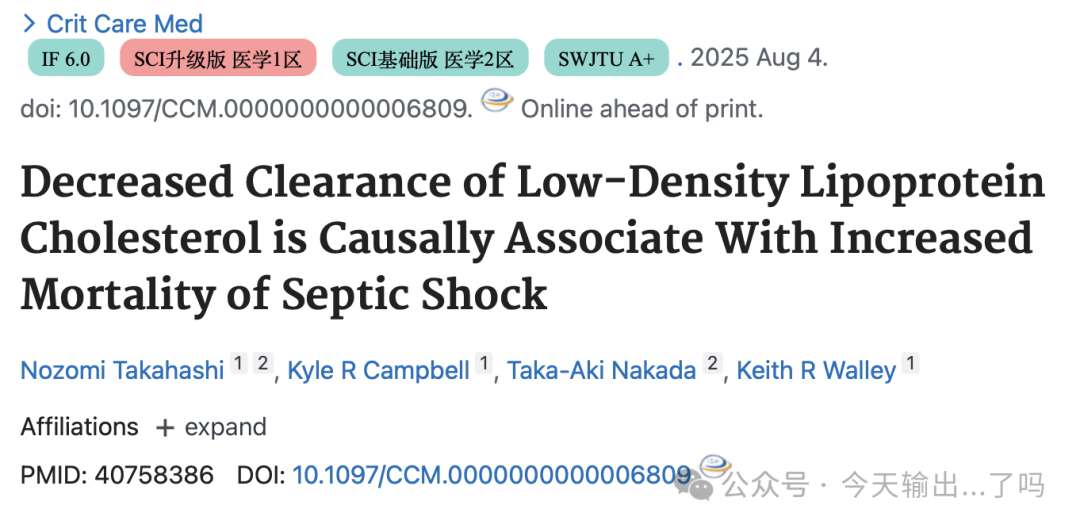
1. Abstract
Objective
This study aims to investigate whether low-density lipoprotein cholesterol (LDL-C) levels, determined by the balance of clearance and production, causally contribute to the increased 28-day mortality in patients with septic shock.
Methods
Patients with septic shock were included, and their LDL-C levels and genotypes were measured. Based on genomic data from over 150,000 Japanese participants (including summary statistics from genome-wide association studies), we genetically predicted pre-infection LDL-C levels. Two-sample Mendelian randomization was employed to analyze the causal relationship between genetically predicted pre-infection LDL-C levels and 28-day mortality, and to clarify whether LDL-C clearance or production was a potential mechanism by analyzing the genotypes of PCSK9 (proprotein convertase subtilisin/kexin type 9) and HMGCR (3-hydroxy-3-methylglutaryl-CoA reductase). The study was conducted in multiple ICUs in Japan, including 614 genotyped patients with septic shock, without any intervention beyond standard treatment.
Results
-
Genetically predicted pre-infection LDL-C levels (141 mg/dL) were significantly higher than the directly measured LDL-C levels at the time of admission for septic shock (40 mg/dL, p < 0.001).
-
Two-sample Mendelian randomization indicated that high genetically predicted pre-infection LDL-C levels were causally associated with increased 28-day mortality in septic shock (hazard ratio 2.78, p=0.039).
-
Variants in the PCSK9 gene (which increase LDL-C clearance via the LDL receptor, simulating PCSK9 inhibitor treatment) were associated with reduced mortality (p=0.003); however, variants in the HMGCR gene (which reduce LDL-C production, simulating statin treatment) were not associated with reduced mortality (and even showed the opposite effect, p=0.039).
-
The main genetic variants driving the association between high genetically predicted LDL-C levels and mortality were located in apolipoprotein genes (ApoB100-rs13306206 and ApoE-rs7412), which are involved in the binding of LDL-C to the LDL receptor.
Conclusion
Reduced LDL-C clearance is the causal mechanism linking high genetically predicted pre-infection LDL-C levels to increased mortality in septic shock. Variants in the PCSK9, ApoB, and ApoE genes (all related to the LDL receptor or its interaction with LDL-C) are key drivers. Enhancing LDL receptor-mediated clearance of pathogen lipid toxins may improve outcomes in septic shock.
2. Summary of Key Content
This study is the first to explore the causal relationship between “genetically predicted pre-infection LDL-C levels” and “28-day mortality” in patients with septic shock using Mendelian randomization, clarifying that “reduced LDL-C clearance” is the core mechanism. The research focuses on the pathological role of lipid metabolism abnormalities in septic shock, providing a theoretical basis for targeted interventions (such as improving LDL receptor function).
3. Analysis and Learning Points
1. Research Background and Clinical Significance
The core pathology of septic shock is the dysregulation of the host immune response and multiple organ damage, and lipid metabolism abnormalities (such as dysregulated lipoprotein metabolism in inflammatory states) may be involved. Traditionally, LDL-C is considered “bad cholesterol,” but in patients with septic shock, LDL-C levels often decrease due to reduced hepatic synthesis (decreased production) or increased clearance (such as LDL receptor activation) caused by inflammation. However, this study found that “genetically predicted pre-infection LDL-C levels” (reflecting individual baseline lipid metabolism capacity) were associated with increased mortality, suggesting that “baseline lipid metabolism status” may be an independent risk factor for septic shock.
2. Scientific Validity of Key Methods
-
Advantages of Mendelian Randomization (MR): By using genetic variants (such as PCSK9 and HMGCR genes) as instrumental variables to simulate “random assignment” interventions (such as PCSK9 inhibitors or statins), it can reduce confounding factors (such as severity of infection, treatment differences) and enhance the credibility of causal inference.
-
Differentiating Mechanisms of “Production” and “Clearance”: By separately analyzing genetic variants of HMGCR (regulating LDL-C production) and PCSK9 (regulating LDL-C clearance), it was clarified that “reduced clearance” is the core link between high LDL-C levels and increased mortality, rather than “excessive production”.
3. Clinical Implications of Results
-
Predictive Value of Pre-Infection LDL-C Levels: Although LDL-C levels in patients with septic shock may be low upon admission due to inflammation (only 40 mg/dL in this study), the “genetically predicted pre-infection LDL-C levels” (141 mg/dL) better reflect individual baseline lipid metabolism capacity, and their elevation is associated with mortality, suggesting that clinicians should pay attention to the lipid metabolism status of patients prior to infection (such as long-term lipid levels).
-
Potential Value of Targeting LDL Receptors: Variants in the PCSK9 gene (which increase LDL-C clearance) were associated with reduced mortality, suggesting that enhancing LDL receptor activity through drugs (such as PCSK9 inhibitors) or interventions may improve the prognosis of patients with septic shock.
-
Significance of Apolipoprotein Gene Targets: Variants in the ApoB (the main apolipoprotein of LDL-C) and ApoE (involved in LDL receptor binding) genes have been confirmed to be associated with mortality, and future interventions targeting these apolipoproteins (such as modulating their binding ability to receptors) could be explored.
4. Innovations and Highlights
1. Innovative Causal Inference
This study establishes a causal relationship between genetically predicted “pre-infection LDL-C levels” and mortality in septic shock for the first time, overcoming the confounding biases of traditional observational studies. Through Mendelian randomization, it clarifies that “reduced LDL-C clearance” is the direct cause of increased mortality, rather than merely a correlation.
2. Depth of Mechanistic Analysis
Not only does it validate the correlation between LDL-C levels and mortality, but it also precisely locates the key mechanism of “reduced clearance” through genetic variant analysis (PCSK9, HMGCR, ApoB, ApoE), revealing the core role of apolipoproteins in the interaction with LDL receptors, providing molecular targets for subsequent targeted therapies.
3. Potential Clinical Translation Value
The results suggest that the prognosis of patients with septic shock may be closely related to their lipid metabolism status prior to infection (especially LDL-C clearance capacity). Future clinical explorations could include:
-
Testing apolipoprotein levels (such as ApoB, ApoE) upon admission to assist in risk stratification;
-
Developing intervention drugs targeting LDL receptors or apolipoproteins (such as PCSK9 inhibitors) to improve lipid metabolism disorders in patients with septic shock.
Conclusion
This study provides a new perspective on the lipid metabolism mechanisms in septic shock, with the core finding being that “reduced LDL-C clearance (rather than excessive production) causally leads to increased mortality by affecting LDL receptor function.” Junior doctors should focus on understanding:
-
The application value of Mendelian randomization in causal inference;
-
The new mechanism of lipid metabolism abnormalities in septic shock (clearance rate rather than production rate);
-
The significance of apolipoprotein genes (ApoB, ApoE) and PCSK9 as potential intervention targets.
In future clinical practice, attention should be paid to the lipid metabolism status of patients prior to infection, and targeted intervention strategies to enhance LDL receptor function should be explored to improve the prognosis of septic shock.
Abstract
To determine whether low-density lipoprotein cholesterol (LDL-C) levels, set by the balance of clearance and production, causally contribute to septic shock 28-day mortality. We measured LDL-C levels and genotypes in patients with septic shock. Using Genotyping and Genome-Wide Association Study summary statistics from over 150,000 Japanese participants, we genetically predicted pre-infection LDL-C levels. Two-sample Mendelian randomization was used to assess the causal relationship between predicted pre-infection LDL-C levels and 28-day mortality. We analyzed PCSK9 and 3-hydroxy-3-methylglutaryl-CoA reductase (HMGCR) genotypes to determine if LDL-C clearance or production was the underlying mechanism. Multicenter ICUs in Japan. Genotyped septic shock patients (n = 614). None. Predicted pre-infection LDL-C levels were much higher than directly measured LDL-C levels at the onset of septic shock (141 mg/dL vs. 40 mg/dL, p < 0.001). Two-sample Mendelian randomization revealed that high predicted pre-infection LDL-C levels were causally associated with increased septic shock 28-day mortality (hazard ratio, 2.78; p = 0.039). PCSK9 genetic variants that increase LDL-C clearance via the LDL receptor (genetically proxied PCSK9 inhibitor treatment) were associated with decreased mortality (p = 0.003) while HMGCR genetic variants that decrease LDL-C production (genetically proxied statin treatment) were not associated with decreased septic shock mortality (indeed the opposite effect was observed, p = 0.039). The two main genetic variants driving the association between high predicted pre-infection LDL-C levels and increased mortality were in apolipoprotein genes (ApoB100-rs13306206 and ApoE-rs7412), apolipoproteins involved in LDL-C binding to the LDL receptor. Low LDL-C clearance explains the causal association between high genetically predicted pre-infection LDL-C levels and increased septic shock mortality. PCSK9, ApoB, and ApoE variants were identified as causal, all related to the LDL receptor or its interaction with LDL-C. Enhancing LDL receptor-mediated clearance of pathogen lipid toxins may improve septic shock outcomes.
https://pubmed.ncbi.nlm.nih.gov/40758386/