The development of information technology has a 20-year cycle: from 1970 to 1990, it was the digitalization initiated by PCs; from 1990 to 2010, it was the networking driven by the Internet; and from 2010 onwards, we are facing the Cambrian explosion of artificial intelligence.
Currently, artificial intelligence is extremely popular, with startups emerging like mushrooms after rain. Practitioners are beginning to think about how to create a ripple effect with technology, promoting nonlinear and leapfrog growth in the industry.
Some compare the relationship between artificial intelligence and industry to “raisins and bread”; although raisins remain raisins when separated from bread, their combination can create high-value new categories.
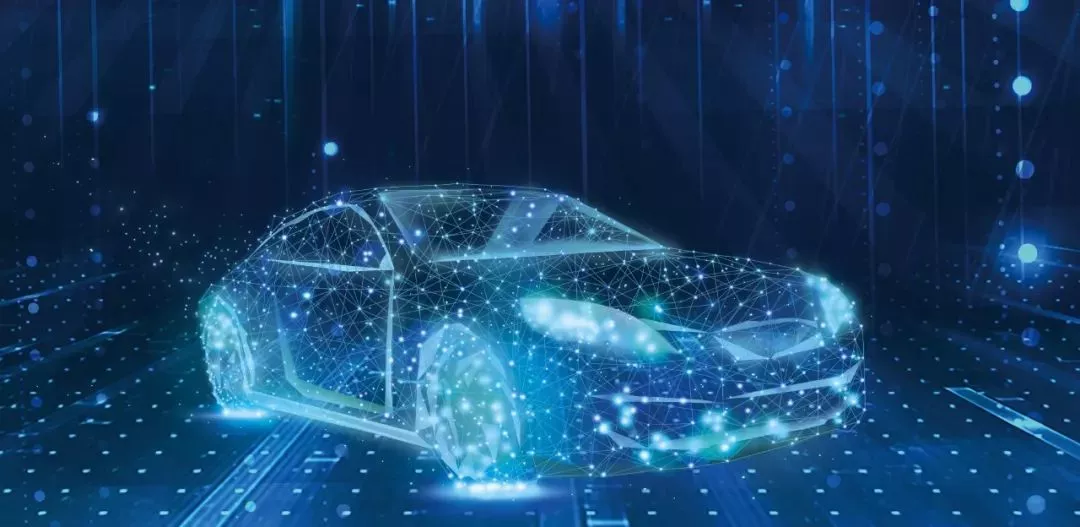
In recent years, I have been exploring industrial opportunities in artificial intelligence and have concluded that in the next 15 years, intelligent driving will be the industry that brings the greatest added value from artificial intelligence, without exception.
First, it will activate, reshape, and create multiple trillion-dollar markets.
Activating the automotive market, new experiences in intelligence, safety, and human-machine co-driving will rekindle people’s demand for car replacement;
Reshaping the travel market, autonomous driving + shared cars will solve the biggest problems troubling consumers and travel service providers today—driver costs and the risk of “bad actors”. If current ride-hailing services only address 2% of travel needs, future autonomous taxis could increase this ratio by dozens of times;
Creating a new consumer economy and productivity market—the passenger economy. Passengers can consume, work, or entertain while on the road, turning every vehicle into mobile commercial real estate.
Secondly, it will solve multiple social problems that humanity has been unable to address since entering the automotive society—traffic congestion (and emissions from idling), frequent accidents, and parking difficulties. Autonomous driving is like a “veteran driver” with billions of kilometers of driving experience and millions of years of driving age, who is not fatigued, does not experience road rage, does not drive under the influence, does not cut in line, and does not worry about parking, fundamentally solving the above problems and truly meeting the people’s aspirations for a better life.
The development of intelligent driving can be divided into four stages:
Before 2004;
2004 – 2009: The first six years—gestation;
2010 – 2015: The second six years—growth;
2016 – 2021: The third six years—blossoming;
2022 – 2027: The fourth six years—bearing fruit.
In August 1921, the first unmanned (actually remote-controlled) car was born in the United States. An electronic engineer from the U.S. Army sat in a car behind it, controlling the steering wheel, clutch, and brakes of the unmanned vehicle using radio.
At the 1939 New York World’s Fair, General Motors predicted that by 1960, highways would have electronic tracks that would work in conjunction with the car’s autonomous driving system, allowing for unmanned driving until exiting the highway, at which point control would switch back to the driver.
Subsequently, General Motors did not treat this prediction lightly; in 1956, it showcased the Firebird II, which for the first time had an automatic navigation system. Two years later, when the Firebird III was unveiled, the BBC broadcasted a demonstration of autonomous driving based on vehicle-road collaboration, where cables embedded in the highway communicated with the car’s receiver through electronic pulse signals, showcasing the future of autonomous driving on highways.
In fact, the first prototype with independent autonomous driving capability—Shakey—emerged in the 1960s at the Stanford Research Institute, which later became known as SRI International, famous for inventing the computer mouse and the voice assistant Siri, and its other significant contribution was robotics.
Shakey was the first robot with complete perception, planning, and control capabilities (which later became the general framework for robots and unmanned vehicles). The father of Shakey was the scientific genius Charles Rosen, who was also the founder of SRI International. The curious media exaggerated Shakey’s actual capabilities, even sensationalizing it, leading to the first stirrings of doomsday theories, which embarrassed scientists and marked the first conflict between the AI community and the media, a pattern that would repeat countless times.
If Shakey was merely a robot moving indoors, then the “Stanford Cart” was the first robot approaching an unmanned vehicle. Hans Moravec, hailed as the “most steadfast supporter of artificial intelligence,” led the Stanford Cart team to significant progress. Moravec’s team developed many new technologies, such as calculating scene depth using a single camera, a technique later adopted by Mobileye. Most of the time, the Stanford Cart needed to be controlled via remote images, and once it lost control and drove directly into busy traffic. When Moravec saw a real vehicle zoom past the Stanford Cart on the monitor, he was shocked, and the pursuit of the “defecting robot” became a humorous episode in the history of unmanned vehicles.
Moravec encountered many setbacks in exploring machine vision and later proposed the famous Moravec’s Paradox—human high-level intelligence, such as reasoning, planning, and chess, can be easily achieved by computers. However, low-level intelligence, such as perception and motor coordination, which a few-month-old infant can master, remains far beyond the reach of computers. During the era when deep learning was still in its infancy, scientists had no clues.
In the 1980s, the KITT autonomous car from the TV series “Knight Rider” became a sensation. Almost simultaneously, automotive powerhouses Japan, Germany, and the United States began serious research into autonomous vehicles. Japan’s Tsukuba Engineering Research Laboratory, Germany’s Munich University of the Armed Forces and Mercedes’ joint team, and the U.S. Defense Advanced Research Projects Agency (DARPA) and Carnegie Mellon University developed different prototypes of autonomous vehicles, primarily using cameras with other sensors as support, demonstrating convincing capabilities in real-world conditions.
In particular, Carnegie Mellon University’s NavLab completed the “No Hands” cross-country trip from Pittsburgh to San Diego in 1995, with 98.2% of the distance covered by autonomous driving. Although the vehicle was not fast, even by today’s standards, such an achievement is still remarkable. This unmanned vehicle, which later entered the “Robot Hall of Fame,” was based on a Pontiac Trans Sport Minivan, primarily because the minivan could accommodate more equipment than a sedan. Later, Waymo also used Fiat Chrysler’s minivan “Pacifica” as the basis for its unmanned vehicle modifications.
Another innovation in the late 1990s came from the VisLab at the University of Parma in Italy, which achieved a 2000-kilometer long-distance test on highways using a stereo vision system composed of dual cameras, with 94% of the distance covered by autonomous driving, and speeds reaching 112 kilometers per hour.
Almost simultaneously, the academic and industrial circles in China also began exploring intelligent driving. At Tsinghua University, Professor Qi Guoguang’s research group began studying autonomous driving in 1978, and in 1986, Professor He Kezhong’s HTMR research group took over, leading to the HTMR-III, which finally produced a prototype close to an autonomous vehicle.
The first autonomous vehicle in China was the ATB-1 (Autonomous Test Bed-1) in the early 1990s, developed jointly by Beijing Institute of Technology, Nanjing University of Science and Technology, National University of Defense Technology, Tsinghua University, and Zhejiang University. The subsequent ATB-2 improved speed by 3-4 times compared to the first generation, and most of these institutions became the cradle of autonomous driving talent in China.
In the same 1990s, Professor Wang Feiyue from the Institute of Automation, Chinese Academy of Sciences, also began research on unmanned vehicles in the United States.
Similar to the U.S., China also began exploring remote-controlled driving early on. In 1980, the state initiated the “Remote-Controlled Nuclear Reconnaissance Vehicle” project, with Harbin Institute of Technology, Shenyang Institute of Automation, and National University of Defense Technology participating in the research. In the year before the second phase arrived (2003), the National University of Defense Technology collaborated with FAW to demonstrate the Hongqi CA7460’s autonomous driving on highways, achieving a peak speed of 170 kilometers per hour and successfully executing automatic overtaking.
The major event in 2004 was the DARPA Grand Challenge for unmanned vehicles. At the time, the “Second Gulf War” had just begun, and the Department of Defense was concerned about soldier casualties in desert operations, hoping to use unmanned driving to address this issue.
The DARPA Challenge is a fine tradition in the U.S., with Congress allocating special funds to discover transformative, high-return scientific research results through the challenge, greatly shortening the gap between basic scientific discoveries and military applications. Three unmanned vehicle challenges, one robotics challenge, and the 2018 space launch challenge made it world-famous.
The challenge required unmanned vehicles to successfully traverse 240 kilometers of desert roads. Unsurprisingly, all teams failed in the desert in 2004. This led to a glorious period for the 2005 challenge.
Carnegie Mellon University’s Red Team was a favorite to win, led by robotics expert Red Whittaker, who was determined to succeed. He believed that unmanned driving could not be achieved merely through hard work, stating, “If you haven’t done everything, you haven’t done a thing.” This means you must be proficient in everything to succeed; knowing only certain aspects is equivalent to zero. This indirectly highlighted the high barriers to unmanned driving.
Among the participating teams, Stanford University’s “Stanley” unmanned vehicle was unremarkable, but its leader, Sebastian Thrun, was determined to win. He was a pioneer in robot SLAM (Simultaneous Localization and Mapping) technology, having previously left Carnegie Mellon University in disappointment, seeking to regain his dignity in this competition. The traditional three powerhouses in unmanned driving were Carnegie Mellon University, Stanford University, and MIT, but among the challengers was a young man from the University of California, Berkeley, Anthony Levandowski, who attracted attention by participating on a motorcycle named “Ghost Rider.”
Carnegie Mellon University’s two vehicles led the way, but inexplicable failures in the second half caused both vehicles to slow down significantly, finishing in second and third place. Although “Stanley” had a few accidents during the race, it was not severely damaged. After deleting some irrelevant code, it surprisingly ran faster and ultimately won the $2 million prize. It was only 12 years later that the reasons for Carnegie Mellon’s defeat came to light: a filter between the engine control module and the nozzle had failed, causing the engine to lose power. “A thousand-mile dike collapses from an ant’s nest”; unmanned driving must be approached with utmost respect. Thrun later remarked that Stanford’s victory was purely a matter of chance.
Many vehicles in this competition used laser radar, high-precision geographic information systems, and inertial navigation systems, which remain standard configurations for many unmanned vehicles today. Of course, the laser radars of that time were quite peculiar; the ones made by the Hall brothers were as large as basins. These brothers were audio shop owners and enthusiasts of “combat robots”. Their journey from studying robots to researching laser radar made them pioneers in the field of laser radar—Velodyne.
My first encounter with unmanned vehicles was in 2005 when Gary Bradski (the father of OpenCV) from Intel Research helped Thrun’s team enhance their visual capabilities. He urged Intel’s marketing department to sponsor the Stanford team. At that time, Intel had already spent $100,000 sponsoring Carnegie Mellon University, so Thrun offered a friendly price of $20,000, and Intel was fortunate to win this bet on the eventual champion. Interestingly, since “Stanley” was already covered in various sponsor logos, Intel’s logo could only be placed on the front windshield, a very conspicuous position, indicating that this was an unmanned vehicle (since there was no driver looking through the rearview mirror).
Fast forward to 2007, DARPA was no longer satisfied with unmanned driving in the wilderness and began the “Urban Challenge.” Carnegie Mellon University made a comeback, this time well-prepared, assembling a 40-person team, including the prominent Chris Urmson. In addition to two participating vehicles, there was a supply vehicle providing ample spare parts. Carnegie Mellon University’s Whittaker finally claimed the crown. It is said that Carnegie Mellon invested heavily in this endeavor, to the extent that even after winning the $2 million prize, they still did not cover their losses. In their equipment inventory, a new type of 64-line laser radar made its debut. To make this equipment operational, Carnegie Mellon’s engineers wrote a large number of drivers. The Hall brothers’ Velodyne provided this super weapon, which had shrunk from basin size to flower pot size, encapsulating much of their hard work. Over the next nearly ten years, 64-line laser radar became a necessary component for the vast majority of unmanned vehicles worldwide.
The two challenges greatly boosted confidence in the scientific community and cultivated a large number of talents. It is said that Google founder Larry Page is a geek who became friends with Thrun due to their mutual interest in robotics. For unmanned driving, Page had new ideas. He brought Thrun to Google, where he initially tested the waters with Google Street View, and by 2009, secretly established the unmanned vehicle project “Chauffeur,” gathering a group of rising stars from the challenges, including Urmson and Levandowski.
Amnon Shashua, a vision expert from MIT, was Thrun’s roommate during his academic sabbatical at Stanford. As a professor at Hebrew University, he founded Mobileye, the first pioneer to attempt to commercialize ADAS (Advanced Driver Assistance Systems) technology. Mobileye was established in 1999, and by 2009, it had traveled the arduous journey from “0 to 1,” with multiple models already equipped with its products. At its inception, no one expected it to go public in 2014, and even more surprising was its acquisition by Intel in 2017, as it had carved out a path few had taken over those 18 years.
DARPA’s unmanned vehicle challenge inspired Chinese counterparts. In 2009, with the support of the National Natural Science Foundation’s major research program on “Cognitive Computing of Audiovisual Information,” the first Chinese “Intelligent Vehicle Future Challenge” was held in Xi’an, marking the beginning of a series of challenges in China.
In 2010, Thrun founded Google X, where countless “moonshot” projects began to unfold.
The projects must meet three criteria:
1. Benefit billions of users
2. Seem a bit sci-fi
3. Can be realized within a few years with today’s technology
Undoubtedly, unmanned driving meets these criteria.
Google’s first unmanned vehicle was a modified hybrid Prius, equipped with a 64-line laser radar to establish a high-resolution three-dimensional environmental model or high-precision map. These test vehicles were disguised as data collection vehicles for Street View, often operating at night to avoid public scrutiny and to collect high-precision maps on empty roads. Even though they were very low-key, they could not escape being stopped by traffic police. James Kuffner, one of the first engineers from Carnegie Mellon’s team to be recruited by Google, who is now the leader of Toyota’s unmanned vehicle division, still recalls being stopped by the police. “A paper cannot cover fire”; eventually, renowned journalist John Markoff uncovered shocking information from a high school classmate of one of the test drivers and revealed it in The New York Times, shocking the “Motor City” of Detroit. Soon, Nevada became the first state in the U.S. to allow unmanned vehicles on the road.
Among the core members of Google’s unmanned vehicle team was Levandowski, the owner of the “Ghost Rider” motorcycle, who was highly regarded by Page but was also a troublemaker who disregarded rules and safety. He led Google to procure technology and components from companies like 510 SYSTEMS, which were later revealed to be operated by Levandowski himself. Page showed great tolerance towards him, not only offering him a high salary but even acquiring 510 SYSTEMS.
Google’s second-generation unmanned vehicle was a more powerful Lexus, also a hybrid. As mentioned earlier, the basic requirement for unmanned vehicle models is to be large enough to accommodate various equipment, and the second requirement is to be electronically controlled, as the underlying control algorithms for engines are much more complex than for electric motors, and most teams prefer to focus their time on higher-level algorithms.
However, what truly caught the world’s attention was the birth of Google’s third-generation unmanned vehicle, “Firefly,” in 2014. This car, resembling a koala, was completely redesigned for unmanned driving, such as removing the windshield wipers since there was no need for a driver to see the road in the rain. According to the design, this vehicle had no steering wheel, but due to California’s legal restrictions, a game joystick was still installed as a steering wheel. This vehicle later won the Red Dot Design Award.
Meanwhile, Mobileye gained the trust of car manufacturers, entering the mainstream market with a low-cost vision-based ADAS solution, with nearly ten million units installed by 2015. Mobileye also secretly began research on autonomous driving. Compared to Google’s approach, Mobileye’s vision-based solution had unique advantages. For example, it used visual maps, with maps extracted from visuals being particularly small (only about 10 KB of data per kilometer, while Google’s was in GB), suitable for real-time uploads and crowd-sourced updates. In fact, vision-based positioning is closer to human driving methods. We assess our approximate location based on road signs and make real-time decisions based on changes in road markings (which lane to choose, whether to enter an on-ramp, etc.). Therefore, we only need to extract those signs and lines from the visuals, crowd-source them to update the map, and during driving, we can obtain positioning through visual matching.
In fact, several significant events occurred in 2015.
First, at the beginning of the year, Mercedes-Benz’s unmanned driving concept car F015 made a stunning debut at CES, bringing unmanned vehicles to the public’s attention.
In early February, news broke that ride-hailing app Uber had poached over 50 scientists and engineers from Carnegie Mellon University and its affiliated National Robotics Engineering Center to establish its own unmanned vehicle research team. It is said that Uber’s founder, Travis Kalanick, was both excited and fearful after riding in Google’s unmanned vehicle (Google was an investor in Uber), believing this was a disruptive technology for the industry, yet it could also “revolutionize his own life,” leading to the aforementioned major moves.
What made people face the “future has arrived” was Tesla’s release of Autopilot in October. Although Autopilot is a Level 2 driver assistance system, many ordinary car owners were misled by this name. Three daring drivers activated Autopilot mode and completed a coast-to-coast trip across the United States, averaging a speed of 84 kilometers per hour. Of course, during this process, there were dangerous situations, and Tesla seemed unconcerned, laying the groundwork for future accidents.
The period from 2010 to 2015 was relatively quiet in China.
In 2010, the aforementioned four autonomous vehicles from VisLab set off from Parma, Italy, traversing nine countries and covering 13,000 kilometers to reach Shanghai, China. The connection between VisLab and China did not end there; later, some young autonomous driving teams in China visited VisLab for learning.
In July 2011, the autonomous driving vehicle HQ3 developed by Professor He Hangen’s team at the National University of Defense Technology successfully completed a 286-kilometer highway autonomous driving test from Changsha to Wuhan, with less than 1% of the distance driven manually, and achieved significant progress in hardware miniaturization, control accuracy, and stability compared to the previous generation CA7460. Based on this, the National University of Defense Technology also won the championship of that year’s “Intelligent Vehicle Future Challenge.” After that, Academician Li Deyi’s team became a frequent champion (except for 2013 when Beijing Institute of Technology won, led by Dr. Jiang Yan, CTO of Yushi Technology).
In the second half of 2015, three memorable events occurred.
-
In August, a bus developed in collaboration between Yutong and Academician Li Deyi’s team completed 33 kilometers of unmanned driving on the Zhengkai Expressway, pioneering unmanned buses worldwide.
-
In November, the 7th “Intelligent Vehicle Future Challenge” was successfully held in Changshu, receiving coverage from CCTV’s news broadcast, making unmanned driving a topic of conversation among the general public.
-
In December, Baidu released an annual blockbuster on unmanned vehicles, with a Baidu-BMW collaboration demonstrating unmanned driving along the G7 route (highway – Fifth Ring Road – Olympic Forest Park), attracting countless eyes. For some people involved in this project, this demonstration marked an end, after which they left Baidu to embark on new journeys. For Baidu, this was a beginning, as the autonomous driving department was officially established, led by Wang Jin, claiming “three years to commercialize, five years to mass production,” and stating, “If the automotive industry does not revolutionize itself, it will be revolutionized by others.”
These three events made the Chinese realize that in the high-tech field of unmanned driving, China was not absent.
2015 was the eve of an explosion.
Wu Xiaobo wrote in “The Turbulent Thirty Years”:
“When this era arrives, it will be unstoppable. Everything grows wildly, dust and dawn rise, rivers converge into streams, nameless hills rise to peaks, the world is vast and open.”
This description perfectly fits the beginning of 2016. 2016 was the “vernal equinox” of unmanned driving.
In February 2016, I resigned to start a business, and many people, including venture capitalists (VCs), were skeptical about the business model. Unexpectedly, in March, several major events occurred: AlphaGo’s five-game victory over Lee Sedol ignited public enthusiasm for artificial intelligence, while General Motors acquired Cruise Automation for $1 billion, which at the time had only a few vehicles and over 40 people, making VCs realize that the era of unmanned driving was approaching. At the Beijing Spring Auto Show in China, several unmanned vehicles developed by Changan in collaboration with Bosch and Tsinghua University completed a “2000-kilometer journey to Beijing,” bringing unmanned driving into the public eye in China.
In April, Intel boldly declared its bet on the intelligent driving field. As a former Intel employee and now an entrepreneur in unmanned driving, I paid close attention to this. In May, a consulting firm hired by Intel approached me, hoping to seek advice on Intel’s strategy. My suggestion was simple: acquire Mobileye. A year later, Intel announced its acquisition of Mobileye for $15.3 billion (which may not have been directly related to my suggestion), marking the entry of this PC giant into the field.
As spring approached, several accidents raised doubts.
In February, Google’s unmanned vehicle collided with a bus, marking its first accident for which it admitted responsibility. However, this minor collision did not attract much criticism, and one of the lessons learned was that the bus driver was not to be trifled with.
In May, Tesla’s first fatal accident made headlines. The deceased was a driver who was a fan of Tesla. At the time, the vehicle was operating in Autopilot mode on the highway, but the driver was watching a video, completely neglecting the responsibility of paying attention to the road. The Autopilot system failed to detect a large truck crossing the road, and the vehicle sped under the truck, resulting in the driver’s death.
Although the accident was partly due to Mobileye’s vision failing to recognize the white truck’s side, the forward radar also missed the target due to its low installation position. The public began to question whether such beta versions of hardware and software should be allowed on the road. Should software upgrades require re-inspection of the vehicle? On the other hand, Autopilot was misleadingly advertised as autonomous driving, while it was still merely driver assistance.
A month later, amid media and industry criticism, Tesla published a blog to defend itself, stating that in the seven months prior to the accident, Autopilot had completed 130 million miles of autonomous driving, while the average human driver in the U.S. experiences a fatal accident every 9.4 million miles. Wasn’t Autopilot already safe enough? However, Tesla did not account for a similar accident that had occurred in China, as that would have reduced Autopilot’s safety data to one fatal accident every 6.5 million miles. Subsequently, the question of how many accident-free miles constitute safety became an unsolvable dilemma for the industry.
This accident also led to Tesla’s “divorce” from Mobileye. Besides the surface responsibility for the accident, a significant reason was Tesla’s ambition to develop its own computer vision, which touched upon Mobileye’s core interests. After several rounds of mutual accusations, Tesla first announced that it would use Bosch’s millimeter-wave radar as the main sensor, and by October, it officially announced that Autopilot hardware version 2.0 (HW2) would adopt its own vision system. Perhaps it was Elon Musk’s “first principles” (humans can drive using vision, so unmanned driving can too), or perhaps it was a promotional tactic; they claimed that HW2 had full autonomous driving capabilities, and new cars equipped with HW2 would only need to spend $3,000 to achieve autonomous driving through software upgrades. Ironically, just two years later, in October 2018, Tesla removed this option from its promotional materials. During these two years, Tesla experienced significant talent loss, and multiple evaluations showed that HW2.x only reached the level of HW1.0 after a year. However, the complete control over the HW2.x software and hardware still allowed Tesla to gather a large amount of data.
In August 2016, Uber spent $680 million to acquire the truck automation company Otto. When Kalanick established the R&D center in Pittsburgh, he had high expectations for the commercialization of unmanned driving, but more than a year of progress did not meet his satisfaction. Acquiring Otto was a way to double down, but he did not expect this would become the last straw that broke the camel’s back. The founder of Otto was Levandowski, who had previously worked at Google and was known for his rebellious nature. Page’s tolerance did not rein him in; the satisfaction brought by Google’s hefty bonuses gradually faded, and he felt “trapped” by the bureaucracy of large companies. Thus, in early 2016, he led a group of people to start a new venture. Silicon Valley is quite forgiving of “betrayal,” but given the scarcity of talent in unmanned driving technology, Google might have signed some informal non-compete agreements with the defectors, and most defectors deliberately avoided direct competition when starting new companies. For example, Zhu Jiajun and Dave Ferguson’s Nuro focused on logistics delivery, while Otto aimed at unmanned trucks. Of course, any agreements have a time limit; the acquisition occurred in August, just as Levandowski received his final compensation from Google.
Google had realized the loss of unmanned driving talent, and it was urgent to change its organizational and incentive mechanisms.
In December 2016, Waymo was spun off as an independent company from Alphabet, and overnight, this new name became the world’s leading expert in unmanned driving. Three months prior, John Krafcik became the new leader of this team. Having previously been the CEO of a car company (former CEO of Hyundai North America) and led an internet company (similar to a used car trading website), this veteran brought a different style and strategy to Waymo, which inevitably led to conflicts. A month before Krafcik joined, Urmson, Thrun’s successor, also left to start his own venture, marking the beginning of a new era for Waymo.
If 2016 was the “vernal equinox,” then 2017 was the “rainwater.”
With abundant rain, everything revived, and many companies made significant strides. Large companies, whether tech giants or automakers, began to invest resources seriously. At the same time, 2017 was a year when startups flooded into the market. Another important sign was the blossoming of unmanned driving, not only in passenger vehicles but also in various commercial and specialized vehicles, with logistics becoming a larger market beyond just passenger transport.
The International Consumer Electronics Show (CES) in January is a barometer. The hottest topic this year was autonomous driving, with almost every company in the North Hall showcasing autonomous driving concepts, while the North Plaza offered real vehicle experiences. The company I work for, Yushi Technology, also introduced the concept vehicle “Urban Mobility Space,” featuring 360-degree sensor coverage and a design for L4-level autonomous driving without a steering wheel, throttle, or brake, particularly highlighting the concept of “a VIP lounge on the road” with its unique circular layout. Many executives, engineers, and designers from established automakers paused in front of the vehicle, with one lamenting that their company had long wanted to do this but lacked the freedom to do so.
Alex Roy, the invited editor-in-chief of Time’s automotive portal, said on a podcast, “When I look at this car, I think this is the car Faraday should have built.” This vehicle won the Red Dot Design Award in 2017, and in the history of Red Dot, three unmanned vehicles have won awards: Google’s “Firefly,” Mercedes’ F015, and BMW’s i-inside from the same year.
In April, Intel acquired Mobileye for $15.3 billion, a move that came late. Over the past year, Intel had been racing ahead, but CEO Brian Krzanich had lost patience in trying to catch up from scratch. Acquiring Mobileye was the best choice to secure a front-row ticket. $15.3 billion, by traditional financial metrics, was a high price, and certainly high for an ADAS company, but when considering the potential of a leading autonomous driving company, it seemed not too high. Just two months later, Morgan Stanley analysts valued Waymo at $70 billion.
The integration of Intel and Mobileye took nearly a year, involving balancing new and old powers in the U.S. and Israel, but “without experiencing wind and rain, how can one see the rainbow?” After 18 years, Intel re-entered the arena as one of the most important players.
Integrating different cultures requires leadership courage and compromise, as well as trust and empowerment. Over the past year, General Motors has also faced undercurrents, with how the new L4-level autonomous driving force of Cruise interacts with the Level 2 SuperCruise product team. The management led by Mary Barra employed the highest political wisdom, allowing Detroit to remain Detroit and San Francisco to remain San Francisco. The Cruise team was granted high autonomy, rapidly expanding while striving to retain Silicon Valley’s entrepreneurial culture; on the other hand, General Motors provided automotive engineering capabilities that Silicon Valley lacked, allowing both sides to complement each other, enabling Cruise to quickly demonstrate its prowess on the busy streets of San Francisco, becoming the fastest progress-maker after Waymo. For Cruise, San Francisco was the best stage to showcase its strength, claiming that compared to Waymo and Uber in several cities in Arizona (of course, Waymo is not limited to Arizona), the complexity in San Francisco increased dozens of times.
The “second-in-command” in the U.S. automotive market, Ford, was also not to be outdone. Ford has never forgotten its former glory (family members still hold high positions), and it was one of the first automakers to engage with Google. However, the arrogance of internet companies led to an unhappy negotiation. In 2016, Ford announced its autonomous driving declaration for 2021—achieving commercial operation of unmanned driving by 2021. In early 2017, it made a significant investment of $1 billion in Argo AI. Argo AI, a startup that had just been established for a few months, boasted experts from Google, Uber, and those who had participated in the challenges.
However, for established giants, the transition from old to new momentum is a struggle. New businesses require long-term and massive investments, while old businesses, once caught in growth difficulties, put leaders under pressure from both sides. Former CEO Mark Fields resigned, but he passed the baton to Jim Hackett, who was responsible for the autonomous driving and mobility department. After Hackett took office, he tempered the “2021” goal, but this could be understood as “managing stakeholder expectations.” For the team, “2021” remained a worthy goal to strive for, with Ford and Argo AI initially targeting Miami. Compared to San Francisco, which General Motors chose, Miami’s traffic conditions were more complex, needing to deal with many tourists, more rain, and even frequent “flooding.”
Many established giants are also grappling with the pains of transitioning from old to new momentum. The parts supplier ZF has undergone significant leadership changes after a series of investments and acquisitions (successfully acquiring laser radar supplier Ibeo to target competitor Valeo). In the automotive circle, “splitting” and “merging” have become the norm. “Splitting” allows for a lighter approach to embrace the new four transformations (electrification, sharing, intelligence, and connectivity), enabling quicker decision-making and easier financing.
A typical case is Delphi splitting off Aptiv to focus entirely on intelligent connected vehicles (almost simultaneously, it also acquired the startup NuTonomy for $450 million). Ford also established Ford Autonomous Vehicles LLC. On the other hand, “merging” to turn enemies into friends, huddling together for warmth, and sharing R&D costs is also a viable strategy.
Thus, in this arena, everyone quickly formed different alliances. For example,
Intel/Mobileye, Aptiv, and BMW formed one circle, later joined by Continental, Fiat Chrysler, and others.
NVIDIA, Bosch, ZF, Volkswagen/Audi, and Volvo formed another circle.
Ride-hailing service provider Uber has partnerships with Daimler, Volvo, and Toyota.
Meanwhile, “second-in-command” Lyft has partners like General Motors, Aptiv, and Jaguar Land Rover.
In terms of the scale of alliance members, Baidu’s Apollo ecosystem can be considered the largest circle: in March 2017, Lu Qi took charge of the intelligent driving division, leading to another wave of core talent departures. It is said that at this time, an engineer from Baidu’s U.S. research institute suggested open-sourcing, and Baidu’s leadership quickly demonstrated great courage, announcing the “Apollo” plan at the Shanghai Auto Show in April, aiming to become the Android of the automotive industry.
The Apollo lunar program symbolizes the journey towards the universe of artificial intelligence, “hoping that in the future, we can liberate our hands and allow everyone to freely gaze at the stars while driving.”
This move sent ripples through the entire industry. At the AI Developer Conference in July, Baidu’s CEO Li Yanhong rode in a Suzhou-licensed car developed in collaboration with Bosch, showcasing autonomous driving technology on the Fifth Ring Road, receiving a traffic ticket, but this did not overshadow the sensation caused by the announcement of Apollo 1.0, as everyone began to realize that Baidu was serious.
The openness of Apollo deserves a thumbs up from the entire industry, as it has made significant contributions to activating the ecosystem, data sharing, and talent cultivation. However, it has also raised many questions:
Was it too early to create an Android without a successful autonomous driving iOS?
Android was Google’s strategic maneuver to enhance its core search and advertising business through mobile, while Apollo’s business model has yet to emerge and has not organically integrated with Baidu’s core business. As a “money-burning” business, can it gain shareholder support and sustain itself in the long run?
The prosperity of the Apollo ecosystem does not depend on Baidu’s generosity, but on whether ecosystem members can fully commit, especially those “old guns” in the automotive industry, whether they agree with the path of “exchanging data for code.”
For startups, is Apollo a blessing or a curse? Especially for those startups affiliated with Baidu?
Undoubtedly, for startups, Apollo lowers the threshold for demonstrations, but it also raises the bar for scaling up; they must achieve differentiated improvements over Apollo’s technology to survive. Many startups’ differentiation lies in verticalization, scenario-based applications, and accelerating commercialization, from truck logistics to last-mile delivery, from passenger transport to cargo transport, and from mining to ports, from parks to airports and the last mile.
In 2017, three notable commercial landing events occurred.
First, in April, Yushi Technology and Baiyun Airport conducted a shuttle service between the terminal and parking lot, marking the first publicly acknowledged unmanned driving operation in China. Although it lasted only a week, it was fundamentally different from demonstrations, as operations are aimed at end-users in an open environment, working full-time.
Second, in June, Yushi Technology and CapitaLand launched a shuttle service in the underground parking lot of Raffles City in Hangzhou, marking the first long-term operation of multiple unmanned vehicles in China, with an open environment for vehicles and people, narrow lanes, and positioning without GPS, all of which were technical highlights.
The third event was the demonstration of four modified buses on a designated bus route in Shenzhen by AlphaGo, showcasing impressive capabilities. This was the result of collaboration between a startup and a university. Unexpectedly, a large number of “shocking” articles flooded the internet, reminiscent of the issues Rosen faced with Shakey decades ago; managing media and public expectations is crucial during the evolution of technology.
Of course, the most significant event of 2017 occurred in the United States.
In mid-October, Waymo announced that its autonomous vehicles without a front-seat safety driver had begun trial operations on public roads.
For a company that places great emphasis on safety, this required immense courage and absolute confidence in technology. Of course, to ensure safety, Waymo still had safety personnel in the back seat as a precaution. In early 2018, California’s vehicle management bureau further announced that “vehicles without safety personnel in the front seat, only requiring remote safety personnel, are allowed,” a significant leap that is believed to be related to the confidence brought by Waymo.
The U.S. has a high consensus on unmanned driving, from the Obama to Trump administrations, from the Senate to the House of Representatives, and from federal to state governments—America aims to be a leader.
Former Transportation Secretaries Anthony Foxx and Elaine Chao continuously promoted the “Federal Policy for Autonomous Vehicles,” “Automated Driving Systems 2.0: A Vision for Safety,” and “Preparing for the Future of Transportation: Automated Vehicles 3.0,” increasing exemptions in the legal space and loosening regulations for the industry.
Almost simultaneously, Germany also introduced its first law related to autonomous vehicles—the “Eighth Amendment to the Road Traffic Act,” allowing autonomous driving systems to replace human drivers under specific conditions, while the world’s first ethical guidelines for autonomous driving also emerged. These legislative activities cleared the way for the world’s first L3-level autonomous product—the 2018 Audi A8’s Traffic Jam Pilot.
China has also been exploring the establishment of legislation and testing systems for unmanned driving. As early as 2016, discussions on road testing standards began at the national level, but the first announcement came from Beijing. In December 2017, the Beijing Municipal Transportation Commission, in conjunction with the Beijing Municipal Public Security Bureau and the Beijing Municipal Economic and Information Technology Commission, issued two documents: “Guiding Opinions on Accelerating the Promotion of Road Testing of Autonomous Vehicles (Trial)” and “Implementation Rules for Road Testing Management of Autonomous Vehicles in Beijing (Trial),” which was like a thunderclap in the industry at the end of the year. Since the first license has been issued, the domino effect will not stop. In the first half of 2018, cities like Shanghai, Chongqing, Shenzhen, and Guangzhou successively introduced local road testing policies and guidelines. On April 11, the Ministry of Industry and Information Technology, the Ministry of Public Security, and the Ministry of Transport jointly launched the “Management Norms for Road Testing of Intelligent Connected Vehicles (Trial),” solidifying the national stance.
Considering the complex road conditions in China, which require higher safety standards, domestic road testing regulations require testing entities to conduct a certain mileage of testing in closed testing areas beforehand. As early as June 2016, the first “National Intelligent Connected Vehicle (Shanghai) Pilot Demonstration Zone” closed testing area was opened in Jiading, approved by the Ministry of Industry and Information Technology. Subsequently, a “5+2” national layout was formed. To this day, various regions are still building or renovating testing grounds for intelligent connected vehicles. Although there are issues of redundant construction in the short term, in the long run, there will be significant demand for unmanned vehicles, whether for market launch or annual inspections.
After the “rainwater” of 2017, 2018 may be the “awakening of insects,” with the rumble of commercialization and the possibility of a late spring chill.
The beginning of 2018 brought joy to some and sorrow to others. Velodyne slashed its prices, cutting them in half. A painful reality for many unmanned driving companies in 2017 was the inability to purchase laser radar, with long wait times. When they finally managed to buy some stock at the end of the year, the market price had already dropped.
At this time, the laser radar arena was no longer dominated by Velodyne alone; Valeo’s Scala achieved the first mass production project on the Audi A8, and traditional automakers and supplier giants were investing and acquiring. Delphi (Aptiv) alone bet on three companies. Almost all companies were betting on solid-state or semi-solid-state laser radar. In addition to the already popular Quanergy and Innoviz, several new startups (such as Luminar, Suoteng, and Innovusion) also showcased better-performing product prototypes. Two years ago, Quanergy was in the limelight but faced some challenges in mass production. Although it still leads in optical phased array technology, solid-state laser radars based on MEMS micro-mirrors, optical two-dimensional mirrors, and Flash technology showed faster progress in industrialization, with Innoviz securing orders from BMW, and Velodyne’s new product Velarray also seemed to be catching up.
In 2017, the California Department of Motor Vehicles (DMV) publicly released data showing that based on a testing mileage of 350,000 miles, Waymo achieved one human intervention every 5,596 miles, followed closely by Cruise, which required one intervention every 1,254 miles. Compared to 2016’s one intervention every 5,000 miles, Waymo’s improvement in 2017 was only 10%, which was somewhat disappointing. A closer look at Waymo’s data reveals a positive factor: the mileage per intervention significantly increased in the last few months of 2017, and whether this trend continues into 2018 remains to be seen.
Waymo’s engineering director remarked during a lecture at MIT:
“When you are 90% done, you still have 90% to go.”
This reflects the arduous and long-term nature of this journey, which Waymo has deeply experienced. However, this company is also adept at “speaking less and acting more.” Waymo’s “Early Rider program” made significant strides. Entering 2018, Waymo began removing safety personnel from some vehicles in Arizona, allowing early passengers to truly “enjoy” the unmanned vehicle experience.
In March 2018, Waymo signed an agreement with Jaguar Land Rover to customize 20,000 unmanned vehicles. Waymo’s rapid progress put immense pressure on Cruise. At this point, General Motors made a significant decision to push Cruise into the capital market, leveraging external capital and resources to accelerate development. On May 31, SoftBank announced a $2.25 billion investment in Cruise. Just a day later, Waymo responded by increasing its order for Fiat Chrysler vehicles to 62,000 units. In August, Morgan Stanley raised Waymo’s valuation to $175 billion, with its robotaxi business valued at $80 billion and its automated logistics service valued at $90 billion. On October 3, Honda further invested $2.75 billion in Cruise, raising its valuation to $14.6 billion. General Motors, which initially acquired Cruise for $1 billion, never imagined that this part of its valuation would reach one-third of General Motors’ total market value just two and a half years later. In light of Intel’s $15.3 billion acquisition of Mobileye, this should not come as a surprise.
In this context, although 2018 was a year of capital winter, news of unmanned driving companies securing funding continued to emerge. Both startups and venture capitalists (VCs) split into two camps.
One camp is the Silicon Valley-style “rocket faction,” whose theoretical basis is that since unmanned driving is like going to the moon, they should strive to build rockets. Since the future direction is mobility, they aim to leap directly into unmanned taxi operations. Some have commented that this is “having the life of Waymo but suffering from Waymo’s disease.” No other company in the world has the wealth of Waymo, which bought 82,000 unmanned vehicles at once, yet there are dozens of companies trying to emulate Waymo’s business model. Without Waymo’s “rich dad,” they can only rely on VCs for funding. Little do they realize that even with Waymo’s 82,000 vehicles, the ability to gather data is limited, and driving in cities with 20 or 30 clean roads does not provide enough rich and diverse data. This means that Waymo’s L4-level commercialization path has scalability issues.
The other camp is the pragmatic path, starting from vertical segmentation, “surrounding the city from the countryside.” In racing terms, to be the first to cross the finish line, you must complete the race, even if starting from the pit stop. However, in the eyes of the “rocket faction,” this is the “ladder faction”; they want to go to the moon but are merely building ladders. Pragmatism is pragmatic, but the future ceiling is too low. There are indeed many vertical segmentation scenarios that do not align with open-road L4-level autonomous driving, and due to limited market size, they cannot gather the vast amounts of data needed for algorithmic enhancement.
It seems that both paths face challenges regarding data availability. So how much data is needed, or how many miles must be driven to prove safety?
In terms of unmanned driving, Waymo has accumulated the most mileage, reaching 10 million miles by October 2018. Even when considering Level 2 autonomous driving, Tesla’s self-defense in 2016, with 130 million miles and two fatal accidents, also indicates that data is insufficient. The renowned think tank RAND Corporation provided a mathematical model indicating that to statistically prove that unmanned driving is 20% safer than human driving, 11 billion miles would be required. This means that with 100 vehicles running 24 hours a day, 365 days a year, it would take 500 years to achieve this.
A lesson from Tesla is to learn to rely on users’ vehicles to gather data and validate algorithms. If there are 10 million vehicles, each needing to drive 1,100 miles, 11 billion miles can be achieved.
Therefore, a more reasonable path is to use rocket technology to build various aircraft, then use the money and data from the aircraft to enhance rocket technology. Specifically, it involves using L4-level technology for open roads (rocket technology) and applying it to well-defined L3-level/L4-level commercial scenarios (various aircraft), deploying these scenarios on a large scale to generate cash flow and abundant data, which in turn feeds back into the evolution of open-road L4-level autonomous driving algorithms. Yushi Technology has adopted this strategy, achieving commercial breakthroughs in L3-level highway driving, L4-level last-mile micro-circulation, autonomous parking, and airport unmanned logistics trailers. Notably, Yushi achieved the world’s first delivery of autonomous parking to end-users in collaboration with SAIC-GM Wuling, enabling one-click long-distance parking and one-click vehicle summons. Similar technologies are also being used in time-sharing leasing with Shouqi Gofun, allowing users to achieve automatic vehicle pickup and return, while the operating party can reduce operational costs through unmanned fleet scheduling between stations. The deployment of these scenarios has generated a wealth of traffic scene data, thus feeding back into the evolution of open-road L4-level autonomous driving algorithms.
The “gray rhino” of 2018 is accidents. As the entire industry enters deep waters, accidents have become a high-probability risk. Waymo, Uber, and Tesla have all experienced multiple accidents, with the latter two involving fatalities.
Since Uber acquired Otto, some changes have quietly occurred. Levandowski’s disregard for safety has mutated the company culture, and in Uber’s San Francisco office, there was a slogan: “Safety third.” Reuters later pointed out that after Uber’s test vehicle was modified to a Volvo XC 90, the new design expanded the sensor’s blind spots, while the towering 64-line laser radar altered the vehicle’s center of gravity. However, a side flip in 2017 did not attract much attention. After Levandowski left Uber, the new CEO’s attitude towards autonomous driving began to blur.
According to Business Insider, the team was concerned about the project’s cancellation and had to please leadership with rapid progress while also catering to leadership’s demands for smoothness, thus neglecting many safety designs. These accumulated factors ultimately led to the world’s first fatal accident caused by an unmanned vehicle on March 18, when an Uber unmanned vehicle struck and killed a pedestrian who was crossing the road with a bicycle. While the pedestrian bore some responsibility, the Uber safety driver also had significant responsibility (similar to Tesla’s first fatal accident, where the driver was watching a video), but Uber’s numerous internal issues could not be ignored, such as disabling the original vehicle’s automatic emergency braking system for smoothness, missing the last-second safety guarantee, and reducing the number of personnel from two to one. After the accident, Uber suspended all testing to reassess safety designs and management, not resuming operations until the end of the year, marking a painful lesson. Another piece of news under the cloud was that Uber shut down its autonomous truck division, rendering the acquisition of Otto even more fruitless.
In unmanned driving, it is essential to have a deep respect for safety and to adhere to the fundamental laws of the industry. Waymo also experienced several accidents, including one caused by a safety driver falling asleep. The Information has exposed that Cruise and Waymo’s unmanned vehicles still perform poorly in real-world conditions, and a Reuters article in October pointed out that Cruise’s path to L4-level mass production remains long. In this field, making light of L4-level mass production and ignoring safety in a leapfrogging manner will inevitably come at a cost.
Waymo adopted a strategy of “two steps forward, one step back.” On October 30, the California DMV issued Waymo a fully autonomous driving testing license, allowing it to legally test unmanned vehicles without safety personnel on public roads in California. However, by the end of November, after careful consideration, Waymo decided to reintroduce safety personnel into the driver’s seat. At the same time, Waymo appointed former National Transportation Safety Board chair Deborah Hersman as chief safety officer.
In early December, Waymo One, an unmanned taxi paid service, officially began operations in the suburbs of Phoenix, Arizona. Before this, Krafcik typically discussed the difficulties, stating that ubiquitous and omnipotent L5-level autonomous driving would still take decades, urging the media and the public to lower their expectations.
Returning to the statement, “When you are 90% done, you still have 90% to go,” if today’s technology and cost requirements cannot quickly resolve the last 10% of issues, is it possible to solve them through a holistic approach involving people, vehicles, and the environment? This is the concept of vehicle-road collaboration.
In 2018, China was nurturing a brand new infrastructure, with companies like Alibaba and Baidu proposing the concept of “vehicle-road collaboration,” leveraging the ultra-long-range perception capabilities and high-reliability, low-latency links brought by LTE-V2X and 5G to place some perception and decision-making capabilities at the roadside, using edge cloud concepts to address environmental and infrastructure issues.
Vehicle-side computing is another important element in the value chain, especially chips. The main chips used in high-level unmanned driving come from either NVIDIA or Intel/Mobileye. Since the ZTE ban incident, the U.S. has again implemented a business control list, necessitating that the Chinese industry prepare for contingencies. Domestic chip manufacturers like Huawei, Cambricon, and Horizon are accelerating the development of AI acceleration chips suitable for unmanned driving. As unmanned driving algorithms gradually stabilize, dedicated acceleration chips will play an increasingly important role, and Tesla has also adopted this strategy.
Another crucial element in the value chain is data. For unmanned vehicles to become increasingly intelligent, they need data. The EU has always been at the forefront of data legislation, with the General Data Protection Regulation (GDPR) being touted as the strictest ever, leaving countless internet companies in a bind. Data is both a resource and a hot potato. While this is true for internet companies, it is quite lenient towards automakers. In the most recent EU vote on the registration of autonomous vehicles, Clause 7A determined that “data generated by autonomous vehicles is automatically generated and inherently lacks creativity, thus not subject to copyright protection or database rights.” This means that automakers can collect data generated by autonomous vehicles (including remote sensing information such as GPS trajectory information) without the owner’s consent and can sell it to third parties. This can be seen as the best assist for automakers.

In China, the Cybersecurity Law of the People’s Republic of China requires that important data cannot be exported, making it imperative for foreign and joint venture automakers to establish R&D teams and supply chains domestically. This presents an excellent opportunity for domestic tech companies and emerging supply chain players.
As 2018 draws to a close, with three years remaining until 2021, the industry’s goal is to achieve large-scale application of L4-level autonomous driving in defined areas (such as a city area). From the current perspective, we can remain cautiously optimistic.
If the goals of the third six years are successfully achieved, the fourth six years will be a time of great prosperity for open-road Level 4 autonomous driving.
The changes brought about by unmanned driving extend far beyond the automotive industry; it will fundamentally alter transportation and logistics, changing the movement of the world’s atoms.
By the fifth six years (2028 – 2033), the majority of vehicles on the road will be unmanned shared cars, with the number of cars reduced by more than half, but their utilization rate greatly increased. Traffic jams will become a thing of the past, the sky will return to blue, parking spaces will be transformed into parks, activity spaces, and residences, and accidents will be nearly zero.
Traffic flow, information flow, and energy flow will converge, and all transportation related to people or goods will be redefined. The insurance industry will need to undergo a rebirth, while the service industry will find new points of explosion—the aforementioned unmanned taxis will become the third space besides home and office, serving as mobile commercial real estate, mobile cinemas, mobile office spaces, and mobile cafes.
Intelligent driving is an innovative product of the combination of artificial intelligence and traditional automobiles, representing the future of the automotive industry. As a transformative technology, intelligent driving is both a technological innovation and a social innovation. Whether in terms of laws, regulations, and policies, or ethical debates, we must have the courage and patience to nurture and guide its healthy development.
We eagerly anticipate the day when roads are not congested, the sky is blue, and free travel is a reality.

Source: Internet Technology Frontier
Editor: Yang Ning
Reviewed by: Tang Ya