Source: Shuo Xin Yu
In the 1930s, Zhang Xilun, a student from Hebei, graduated from the first mining university in China, Jiaozuo Institute of Technology. As a rare talent specialized in metallurgy, he was hired by a steel plant in Shanghai. After the outbreak of the War of Resistance Against Japan, Shanghai’s industry relocated en masse to the west, and Zhang Xilun moved to the wartime capital, Chongqing. The steel plant where he worked was incorporated into the military industrial system of the National Government, becoming the 21st Arsenal under the Military Bureau.
After the victory in 1945, the Military Bureau sent a large number of personnel across the country to take over the armament factories left by the Japanese invaders. Zhang Xilun, along with his colleagues, went to Nanjing to take over the Japanese field ordnance factory located near Yuhuatai, establishing the 60th Arsenal of the Military Bureau. By this time, Zhang Xilun had become a well-known steel expert in the industry. He settled down and married his long-time girlfriend in Nanjing, and in 1948, their second child was born, named Zhang Rujing.
After the end of the Huaihai Campaign, the People’s Liberation Army advanced towards the Yangtze River. The Eighth Corps of the Third Field Army, led by Su Yu, was stationed across the river in Nanjing. The 60th Arsenal began an urgent relocation to Taiwan. Knowing he could not stay on the mainland, Zhang Xilun, now a colonel in the National Army, took his family, including the infant Zhang Rujing, and followed the factory’s relocation team. On a leaden morning in early 1949, they boarded a ship in Nanjing and set sail for Kaohsiung, Taiwan.
In addition to his family, Zhang Xilun also took over more than 200 young metallurgy apprentices from the arsenal. Before departing, many apprentices’ parents implored Zhang Xilun to take care of their children as if entrusting them with their lives. For the following decades, Zhang Xilun served as a senior executive in the arsenal, looking after these young people like a patriarch, helping them with education, marriage, and starting families. As these young children grew up and married, Zhang Xilun was always the witness at their weddings.
Zhang Rujing, who was taken to Taiwan before he was one year old, excelled in his studies, eventually enrolling at National Taiwan University before going to the United States for further studies, obtaining a master’s degree in engineering and a doctorate in electronics. In 1977, at the age of 29, Zhang Rujing joined the American semiconductor giant Texas Instruments and became part of the team of Jack Kilby, the Nobel laureate and inventor of the integrated circuit. At Texas Instruments, Zhang Rujing started as a research and design engineer and worked there for twenty years.
Since the 1960s, Chinese individuals have begun to shine in the American semiconductor industry, with talented engineers and outstanding entrepreneurs emerging continuously. Zhang Rujing’s immediate superior at Texas Instruments, Dr. Shao Zifan, is a globally recognized expert in building top-tier chip manufacturing plants. Under Shao Zifan’s mentorship, Zhang Rujing quickly grew and participated in the construction of nine large chip factories across the United States, Japan, Singapore, Italy, and beyond, becoming known as an expert in factory construction within the industry.
As Zhang Rujing’s career focus shifted to the United States, Zhang Xilun and his wife Liu Peijin moved to the U.S. after retirement. Like many older generations who relocated from the mainland to Taiwan, the couple had a strong sense of national identity and constantly worried about their homeland. After Zhang Rujing’s career flourished and he became a well-known expert in chip factory construction globally, Zhang Xilun asked his son, “When will you go to the mainland to build a factory?”
His father’s question found an opportunity for an answer at the end of the 1990s. In 1997, after working at Texas Instruments for twenty years, Zhang Rujing retired early. Following a brief trip to the mainland (which will be mentioned later), with the support of old friends, he returned to Taiwan to co-found World Semiconductor, quickly achieving mass production and profitability. During this time, Zhang Rujing had already made detailed plans for building chip factories in the mainland: the first and second factories would be in Taiwan, while the third through tenth factories would all be located on the mainland.
However, the rapidly rising World Semiconductor caught the attention of industry leader TSMC. Just as Zhang Rujing was preparing to make a significant move, the major shareholder of World Semiconductor secretly negotiated with TSMC without Zhang Rujing’s knowledge, selling the company for $5 billion in January 2000. Zhang Rujing learned of this only afterward, realizing that he would have little chance of standing in the newly merged company. Without hesitation, he resigned the day after the acquisition was completed and decided to head north to the mainland to start anew.
With his industry reputation and the successful experience from World Semiconductor, Zhang Rujing quickly gathered a team of talent and funds and began to choose a factory site. Back in 2000, the chip industry was far from the hot market it is today. However, in Shanghai, they received a warm welcome; then-mayor Xu Kuangdi personally took them to the vast land planned for factory construction in the rural areas of Pudong.
In April 2001, in a place called Zhangjiang Hi-Tech, Zhang Rujing’s new factory SMIC was established. For a long time afterward, these two names held significant weight in China’s semiconductor industry.
In 1949, Zhang Xilun took 200 metallurgy apprentices from Nanjing to Kaohsiung and established the large Kaohsiung 60th Arsenal; in 2000, Zhang Rujing led 300 chip engineers from Taipei to Shanghai to establish the most advanced chip manufacturing base in the mainland.
History completed a cycle between the two generations of the Zhang family, but the arduous journey of Zhang Rujing and SMIC, along with the bittersweet history of China’s semiconductor industry, was just beginning.

Before Zhang Rujing returned to the mainland to establish SMIC, China’s semiconductor industry had been struggling for nearly half a century. A large number of figures, including professors from research institutions, government officials, overseas returnees, and capital brokers, successively took the stage in history. To clarify these complex histories, I will divide the timeline according to the dominant forces in the industry into four stages:
Strong Budding: Expert Dominance in the Planned Economy (1956-1978)
Chaotic Years: External Shocks Leading to Industry Disorder (1978-2000)
Western Wild Geese Flying East: The Wave of Overseas Returnees and the Rise of Private Enterprises (2000-2015)
Full Confrontation: State-Owned Enterprises Entering the Chip War (2015-2018)
The first group to enter the history of China’s chip development were experts from the Soviet-style military industrial and research system. They began to build China’s semiconductor technology and industrial system from the 1950s, which can be summarized in one sentence: Using the Soviet system and Chinese talent to chase the shadow of the United States.
It is not an exaggeration to say that they were chasing the shadow of the United States. The integrated circuit industry itself was born in the United States in the 1950s. On September 12, 1958, Jack Kilby, Zhang Rujing’s future boss, developed the world’s first integrated circuit at Texas Instruments, successfully realizing the concept of integrating electronic components on a semiconductor material. In July 1959, Robert Noyce at Fairchild Semiconductor broke through the planar manufacturing process of integrated circuits, laying the foundation for large-scale industrial production.
Kilby and Noyce became known as the inventors of integrated circuits. While they shone in their era, the Chinese people were experiencing the Great Leap Forward and the Three Years of Natural Disasters. Meanwhile, Silicon Valley across the ocean was taking shape, with a large number of companies such as Fairchild, Intel, and AMD being established in the 50s and 60s. In contrast, China established a large number of research institutions represented by the Institute of Semiconductor of the Chinese Academy of Sciences in 1960, building dozens of electronic factories nationwide, initially forming a “R&D + production” system for China’s semiconductor industry.
This system was initially able to closely follow the United States thanks to a group of semiconductor talents who returned to the new China, such as Huang Kun, Xie Xide, Wang Shouwu, Gao Ding San, Wu Xijiu, Lin Lanying, and Huang Chang. Under their leadership, the fledgling Chinese semiconductor industry made two significant contributions: ensuring the electronic and computing support for major military projects such as the “Two Bombs and One Satellite” and establishing a cross-institutional and university talent training system for semiconductors in China.
However, in terms of industrialization, the achievements were minimal. In July 1977, Deng Xiaoping invited 30 representatives from the science and technology community to hold a symposium at the Great Hall of the People. Wang Shouwu, the soul of the semiconductor community, stated, “There are more than 600 semiconductor production factories in the country, and the total number of integrated circuits produced in a year is only one-tenth of the monthly output of a large factory in Japan.” This statement summarizes the achievements and foundation of China’s semiconductor industry before the reform and opening up.
However, achieving such results was already remarkable. Wang Shouwu was a high-achieving student who graduated from Purdue University in the United States, but during the Cultural Revolution, he was suspended from his position and persecuted; Xie Xide, the founder of semiconductor physics in China, was labeled as a capitalist roader and forced to clean toilets every day; Lin Lanying, who produced the first silicon single crystal rod in China, had her father beaten to death by rebels on a train because he had been a county party secretary for the Kuomintang, and Lin Lanying herself also suffered humiliation.
Looking back at this history decades later, some people always try to summarize their experiences with the phrase “selfless dedication” and like to loudly question chip industry practitioners: “Why don’t you emulate the spirit of selfless dedication of your predecessors?”

After the reform and opening up, the Chinese people, who opened the country, suddenly discovered that the semiconductor industries of the United States and Japan had already left China far behind, with a gap of more than 10 years, and South Korea and Taiwan were also quickly surpassing China. However, except for a few experts, both high-ranking officials and ordinary citizens generally lacked awareness of this gap and the difficulty of catching up. For instance, in 1977, the chief designer asked Wang Shouwu, “You must get large-scale integrated circuits up and running within a year, is that feasible?”
The leaders’ earnest concern gave rise to China’s unique model of production, education, and research: to break through a certain technology through concentrated efforts. This method was effective in the military industry, where costs and yield were not considered, such as in the “Two Bombs and One Satellite,” but it was essentially a dead end in terms of industrialization and civilianization. To this day, many achievements in China’s integrated circuit academic community that have reached “international standards” only serve the purpose of “demonstration and acceptance”: once passed by expert review meetings, they are left to gather dust and rust, rarely making it to the market.
After the reform and opening up, including semiconductors, China’s electronics industry began to face fierce external shocks. Due to the difficulties faced by many state-owned electronics enterprises, they could not generate enough profits to support R&D, and most of the production lines imported from abroad were outdated and eliminated second-hand goods. Therefore, in the 1980s, China’s semiconductor industry not only lagged far behind the United States and Japan but was also gradually surpassed by South Korea and Taiwan. To address this situation, the national ministries and commissions organized three major “campaigns”:
1986’s “531 Strategy“
1990’s “908 Project“
1995’s “909 Project“
The 531 Strategy was proposed in 1986 for the “Seventh Five-Year Plan”, namely “to popularize 5-micron technology, develop 3-micron technology, and tackle 1-micron technology”, and to build integrated circuit manufacturing bases nationwide. From 1986 to 1995, five companies emerged, including Wuxi Huajing, Shaoxing Huayue, Shanghai Bell, Shanghai Philips, and Shougang NEC. Among them, the most representative is the birth and failure of Shougang NEC.
Shougang entered the chip manufacturing industry in 1991, at which time Shougang was a powerful unit in Beijing, with abundant financial resources. The leader Zhou Guanyu was even dismissive of central leaders. In December 1991, Shougang proclaimed, “Shougang’s future will not be named after steel,” and crossed over into chips, forming a joint venture with NEC, with all technology sourced from NEC, and the factory produced according to Japanese blueprints. Although the technology provided by NEC was not advanced, the industry was booming, and sales reached over 900 million in 1995.
Encouraged by this, Shougang planned to continue its efforts. In December 2000, Shougang partnered with an American company AOS to establish “Huaxia Semiconductor,” investing $1.3 billion to produce 8-inch chips, with technology sourced from AOS. However, in 2001, the IT bubble caused a global downturn in the chip industry, and AOS fled faster than a rabbit, resulting in Huaxia Semiconductor losing its technology source and quickly folding, while the joint venture with NEC also fell into losses. By 2004, Shougang had basically exited the chip industry.
This was the first case of a large enterprise being “encouraged” by local governments to cross over into chip manufacturing, a pattern that would be repeated in the future. It is said that the transformation direction planned by Shougang at that time only did well in real estate, and the stark contrast implied lessons that would take a long time to ponder and reflect upon.
Faced with an ever-widening gap, in September 1990, the Ministry of Electronics Industry decided to launch the “908 Project” to make breakthroughs in ultra-large-scale integrated circuits, with the goal of establishing a 6-inch chip production line with a process of 0.8 to 1.2 microns. The project was undertaken by Wuxi Huajing, and the chip technology was purchased from Lucent in the United States, but the final result was: administrative approvals took 2 years, technology introduction took 3 years, and factory construction took 2 years; in total, it took 7 years, and the production was already lagging behind, with a monthly output of only 800 wafers.
Huajing, which was severely unprofitable, had to seek external assistance. Chen Zhengyu, who had previously founded Maosi Electronics and was looking to enter the mainland, negotiated with Huajing and took over management contracts. To transform Huajing, Chen Zhengyu sought help from his old friend Zhang Rujing. After retiring from Texas Instruments, Zhang Rujing came to Wuxi and completed the transformation task in just six months (from February to August 1998), with the reformed Huajing reaching breakeven in May 1999, allowing the project to be accepted.
The “908 Project” did not achieve the expected results, wasting another five precious years for China’s semiconductors. While Wuxi Huajing was still stuck at the 0.8-micron level without mass production, the mainstream overseas processes had already reached 0.18 microns, and the gap was becoming increasingly pronounced. In 1995, the Ministry of Electronics Industry proposed implementing the “909 Project,” investing 10 billion RMB, with Shanghai Huahong taking the lead in cooperation with NEC, with the Minister of Electronics Industry, Hu Qili, personally overseeing it. Under the spotlight, the largest electronic industrial project since the founding of the country was launched in 1996.
Young people who are accustomed to a strong national context in recent years may find it hard to imagine the despair faced by Chinese people in the 1990s when confronted with the terrifying gap with developed countries. The 909 Project was launched with the personal approval of national leaders, facing enormous pressure to achieve a breakthrough, overcoming the tragedy of Huajing’s seven-year factory construction, and began construction in July 1997, completing in February 1999, achieving trial production in less than two years, and generating 3 billion in sales and 516 million in profit in 2000.
By 2001, Huahong NEC also encountered a downturn in the chip industry, losing 1.384 billion for the year, leading to an influx of criticism, with countless media outlets accusing them of saying, “You can’t just rely on money to make chips.” At this time, almost no one in China knew about Samsung’s counter-cyclical investment strategy, let alone Zhang Rujing’s theory of “building factories during industry downturns”. Therefore, despite Huahong returning to stable performance after 2004, it did not receive any state funding support for expansion and upgrades in the following decade.
Summarizing the history from 1978 to 2000: the early period lacked unified planning, and there was a rush to introduce outdated foreign production lines, but these devices quickly turned into scrap metal under the drive of Moore’s Law; the later period saw the state organizing three major campaigns, repeatedly fighting but ultimately leaving behind a barely qualified Shanghai Huahong through the “909 Project”. Frankly speaking, the gap between China and overseas levels did not significantly narrow during this phase.
These projects did not achieve the anticipated success due to two deep-seated reasons: first, the chip industry updates too rapidly, and the process upgrades at an astonishing speed, making it inevitable for domestic investments in the 1980s and 1990s to fall into a vicious cycle of “introducing – building factories – production – lagging – reintroducing,” leading to poor outcomes; second, semiconductor-related talent was extremely weak, unable to fully grasp the introduced technologies, let alone engage in independent research and development.
Additionally, Western countries have successively used the “Bureau of Export Administration” and the “Wassenaar Arrangement” to restrict the export of the most advanced high-tech equipment to China, with the technologies approved for export usually lagging two generations behind the most advanced, and with delays in implementation and digestion, the technologies China received were roughly three generations behind. This restriction was fully reflected in the aforementioned major projects.
Talent issues began to see a turning point around 2000, with a large number of semiconductor talents with overseas study experience and years of work in top chip companies returning to China during this period.
In the tide of returning overseas talents, Deng Zhonghan from Zhongxingwei returned to China in 1999, Zhang Rujing from SMIC returned in 2000, Wu Ping and Chen Datong from Spreadtrum returned in 2001, Dai Weimin from Chipone returned in 2002, and Zhu Yiming from Zhaoyi Innovation returned in 2004. They brought with them rich experience and precious knowledge, entering the historical process of China’s semiconductor industry.
After 2000, China’s chip industry entered an era of overseas returnees’ entrepreneurship and the rise of private enterprises.

Before discussing the era of overseas returnees and private enterprises, let me share an interesting myth about the Chinese chip industry with readers: Most of the excellent Chinese chip companies were established in the years after 2000. This includes:
SMIC was established in 2000;
Zhuhai Jushi was established in 2001;
Spreadtrum was established in 2001;
Fujian Ruixin was established in 2001;
Goodix Technology was established in 2002;
RDA Microelectronics was established in 2002;
ZTE Microelectronics was established in 2003;
Huawei HiSilicon was established in 2004;
Lanqi Technology was established in 2004;
Zhaoyi Innovation was established in 2004.
The background behind this is that the electronic/computer/communication engineering students cultivated in the early years of China’s reform and opening up were the first to study abroad during the wave of overseas study in the 1980s, and after graduation, they remained in the American semiconductor industry, gaining experience and skills. After 2000, this group began to return to China and start their own businesses.
The semiconductor industry has a unique characteristic: the talent training cycle is long, often referred to as “one must sit on the bench for ten years”, as most top talents need to obtain a doctorate. This is in stark contrast to the internet industry, where a few young people can gather to create a website or app and secure funding, which is almost nonexistent in the chip industry, where opportunities for quick profits are also rare.
Therefore, the engineering talents cultivated after the reform and opening up first made their mark in the computer, communication, and internet industries, promoting the emergence of companies like Tencent and Huawei, but for the chip industry, more time was needed. The university graduates of the 80s and 90s were not yet able to shoulder the burden of semiconductor R&D they needed more learning and training, especially in the global integrated circuit technology hub—Silicon Valley in the United States.
This indirectly answers another question: Why did China struggle to grasp the introduced chip production lines and technologies in the 80s and 90s? The reason is simple: the individuals responsible for semiconductor R&D during the 80s and 90s were primarily mid-career technical backbones who graduated in the 60s and 70s, but during the 60s and 70s, semiconductor professors were busy cleaning toilets in the cow shed, making it almost impossible to cultivate students.
Thus, many issues that seem current in China are essentially historical debts that need to be repaid.
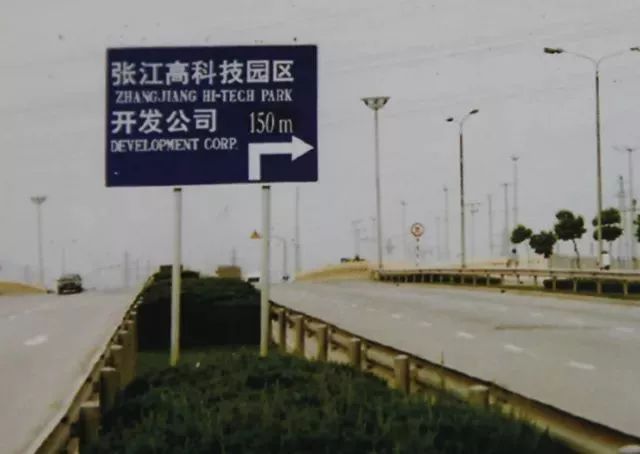
After 2000, the return of overseas talents to start businesses represented a delayed dividend from the normalization of college enrollment after the reform and opening up. A typical example of this is the entrepreneurial process of Spreadtrum: the four core founders Wu Ping, Chen Datong, Fan Renyong, and Ji Jin were all admitted to university in 1977-1978 (three from Tsinghua and one from Nanjing University), all holding doctoral degrees, and all studied abroad in the United States, working in the Silicon Valley semiconductor circle after graduation. In 2001, they chose to return to Shanghai Zhangjiang to start their business.
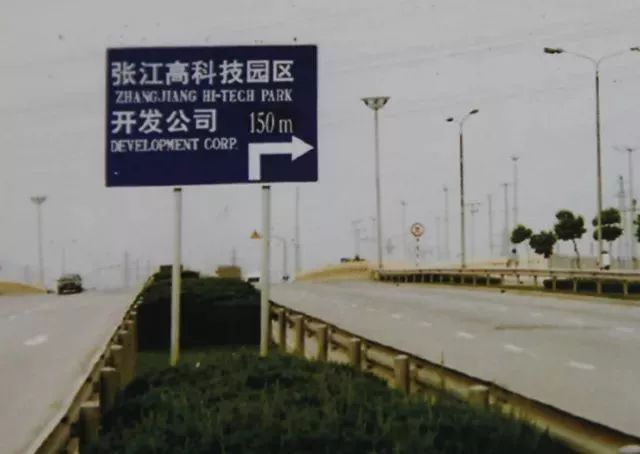
Zhangjiang Hi-Tech, Shanghai, 2002
Two schools stand out in China’s semiconductor talent training: Tsinghua University and the University of California, Berkeley. These two institutions, one domestic and one foreign, have produced a large number of top engineers, entrepreneurs, and investors for China’s chip industry, far exceeding other universities, and through alumni networks, they have incubated a batch of chip enterprises.
This alumni relationship is vividly reflected in the entrepreneurial process of Zhu Yiming from Tsinghua University: in 2004, the 1989 Physics Department graduate Zhu Yiming and the 1985 Electronics Department graduate Shu Qingming prepared to start a chip company, they sought help from the 1985 Automation Department graduate Li Jun, who helped them secure venture capital and introduced them to the 1983 Economics Department graduate Xue Jun, who connected them with the 1980 Engineering Physics Department graduate Luo Zhuo, who managed a fund that invested 2 million RMB, and they finally gathered 920,000 USD to start up.
12 years later, this company called Zhaoyi Innovation went public, with a market value exceeding 35 billion RMB, becoming a hot star in A-shares.
Of course, alumni relationships are not always harmonious. Zhao Weiguo, who controls the Unigroup, after acquiring Spreadtrum founded by his senior Wu Ping and Chen Datong, soon encountered a joint attack from Qualcomm and Datang against Spreadtrum, where he publicly denounced “traitors” in his friend circle, targeting Li Bin, the actual controller of Jianguang Assets, who was also a Tsinghua alumnus.
In fact, today, the entire Chinese semiconductor circle is dominated by Tsinghua alumni, but considering that the national industry fund worth hundreds of billions was approved and promoted by an alumnus of the 1975 Chemical Engineering Department, the remaining half of the industry also relies on Tsinghua.
After 2000, the return of overseas talents injected new blood and vitality into China’s semiconductor industry, with many flexible private semiconductor companies being established, especially in the three major areas of chip design and chip packaging, where this flexible mechanism began to enter a virtuous cycle, prompting companies like HiSilicon and Changdian Technology to enter the first tier of their respective fields.
In the chip manufacturing sector, Zhang Rujing, who brought back over 300 Taiwanese engineers to the mainland, also took the first shot in Zhangjiang. The over 50-year-old Zhang Rujing not only persuaded his American wife to move the entire family back to Shanghai but also brought his 90-year-old mother Liu Peijin to Pudong (at this time, his father Zhang Xilun had passed away). In front of the construction site in the northern district of Zhangjiang, with the sound of pile drivers ringing, Zhang Rujing held his mother’s arm, witnessing the rise of China’s most advanced chip manufacturing plant together.
However, from 2000 to 2015, SMIC faced a glorious, arduous, and bloody path filled with thorns, during which many of China’s semiconductor industry’s strange and hidden stories were buried.

Zhang Rujing fully utilized his accumulated resources and advantages during the establishment of SMIC, showcasing to the world what it means to be a top-tier “factory-building master”.
First, Zhang Rujing, who had a high reputation in the industry, had strong resource integration capabilities, especially in terms of talent and funding. After confirming his return to the mainland to start a business, a large number of talents from Taiwan and Singapore responded to his call and returned with him. In terms of fundraising, he attracted investments from companies such as Shanghai Industrial, Goldman Sachs, Huadeng (the best investment company in the chip field), Handing, and Xiangfeng, raising 1 billion USD, and in 2003, he raised another 630 million USD, which was almost equivalent to a “909 Project” by himself.
Additionally, it is said that Zhang Rujing found five American church organizations to guarantee him to break through the equipment embargo, assuring that SMIC’s chip technology would not be used for military purposes, which eventually allowed him to obtain export licenses, but this is unverified, and even SMIC’s internal employees found it incredible, so it is treated as a joke.
Secondly, Zhang Rujing understood semiconductor factory construction experience well. According to his theory, “building factories during downturns is best,” and the construction of SMIC from 2000 to 2002 coincided with the semiconductor downturn after the collapse of the internet bubble in 2001. SMIC took the opportunity to purchase a large number of low-priced second-hand equipment and acquired the entire Motorola factory in Tianjin at a low price through a stock swap. Based on this, Zhang Rujing established four 8-inch production lines and one 12-inch production line in just three years, a speed unprecedented globally.
On August 24, 2000, SMIC officially laid the first pile in Zhangjiang, and just over a year later, on September 25, 2001, it began trial production. By 2003, SMIC had risen to become the fourth-largest foundry in the world, with a staggering growth rate.
SMIC, Shanghai, 2012
Once, a Taiwanese friend visited Zhang Rujing in the mainland and later commented to Taiwanese media, “Richard (Zhang Rujing’s English name) didn’t even wear a suit, just a work shirt and an old gray sweater, looking like a missionary. He said he had a grand dream for China’s semiconductors, and he was willing to dedicate everything to this dream, as if he could sacrifice his life for it. This person is not doing this for money, which is the most terrifying part.”
In 2000, the Democratic Progressive Party came to power, and cross-strait relations began to tighten. In this context, Taiwan’s restrictions on technology to the mainland became increasingly crazy, strictly prohibiting Taiwanese high-tech companies from entering the mainland, and the “national treasure-level” integrated circuit industry was heavily blocked. Zhang Rujing, who held Taiwanese citizenship, naturally became a target for Chen Shui-bian’s administration, which fined him $155,000 as a warning and demanded he withdraw his investment within six months. Zhang Rujing, however, did not back down, directly announcing his renunciation of Taiwanese citizenship and severing ties with Taiwan.
After all, the Taiwanese authorities did not have the ability to arrest people across the sea, so their punishment did not stop SMIC’s rapid development. The real threat came from Zhang Rujing’s old rival, TSMC. During the initial construction phase, Zhang Rujing hired over 100 engineers from his former employer, World Semiconductor (which had already merged into TSMC) and TSMC itself, raising alarms at TSMC, which began to quietly gather evidence of SMIC’s alleged theft of TSMC’s technology, waiting for the right moment to strike SMIC a fatal blow.
At the end of 2000, a woman named Liu Yunqian at TSMC received an invitation to join SMIC and prepared to leave TSMC for the mainland. At the age of 53, Liu Yunqian held the position of “Quality and Reliability Project Manager” at TSMC. While processing her resignation, she received an email from Marco Mora, the Chief Operating Officer of SMIC, requesting detailed process flows for a product.
This incident was later discovered by TSMC, which immediately reported it to the Taiwanese police. The police acted quickly, searching Liu Yunqian’s home in Hsinchu and seizing her computer. On her hard drive, they found the email from Marco Mora to Liu Yunqian and some internal TSMC documents, as well as records of her sending these materials to SMIC.
In August 2003, just as SMIC was about to go public in Hong Kong, TSMC struck. Fourteen years before the U.S. sanctions against ZTE, the most brutal battle in the history of China’s semiconductor industry began.

At almost the same time that Zhang Rujing was taken by his parents to board a ship towards Taiwan, 17-year-old Zhang Zhongmou from Ningbo, Zhejiang, also boarded a ship in Shanghai, squeezing with his family in a cramped cabin, setting off for Hong Kong.
Zhang Zhongmou stayed in Hong Kong for a few months before applying to Harvard University in the United States, becoming the only Chinese among over 1,000 freshmen, and later transferred to the Massachusetts Institute of Technology, where he obtained a master’s degree. In 1958, Zhang Zhongmou joined Texas Instruments, eventually rising to the company’s third-highest position, while Zhang Rujing, who joined Texas Instruments in 1977, nominally had an “eight-year colleague” relationship with Zhang Zhongmou, but contrary to media speculation, they had almost no interaction during this period.
In 1985, Zhang Zhongmou resigned from his high-paying position at Texas Instruments and returned to Taiwan to serve as the president of the Taiwan Institute of Industrial Technology. Prior to this, Zhang Zhongmou had never lived in Taiwan for a long time. In 1987, he founded TSMC and received strong support from the government. By the time Zhang Rujing also resigned from Texas Instruments to return to Taiwan, Zhang Zhongmou had already become a national hero in Taiwan’s industry, akin to Japan’s Akio Morita.
In 2000, Zhang Rujing’s World Semiconductor was unexpectedly acquired by TSMC; this was his first direct confrontation with Zhang Zhongmou. To eliminate the threat posed by the rapidly rising competitor, TSMC acquired World Semiconductor for $5 billion, effectively extinguishing the threat in its infancy. By 2003, when it came to Zhang Rujing’s second startup, TSMC’s approach was less cordial, especially since this company was located in the mainland, which had huge demand.
In 2003, after gathering sufficient evidence, TSMC suddenly attacked SMIC, filing a lawsuit in a carefully chosen location in California, demanding $1 billion in damages. Given that SMIC’s revenue in 2003 was only $360 million, this was effectively a death blow.
The lawsuit dragged on until 2005, by which time SMIC was exhausted and chose to settle with TSMC, implicitly admitting to “improper use of TSMC’s trade secrets” and paying $175 million in compensation. In the settlement agreement, TSMC’s legal team exercised great authority, setting up a “third-party custody account” where SMIC had to deposit all technology for TSMC’s “free inspection,” fundamentally restricting SMIC’s development.
However, the matter was far from over. A year and a half later, in 2006, on the eve of SMIC’s planned financing, TSMC struck again, accusing SMIC’s latest 0.13-micron process of using TSMC technology and violating the “settlement agreement.” SMIC strongly denied the infringement and prepared a large amount of evidence to prove its innocence. However, since TSMC initiated the lawsuit in California, Zhang Rujing chose to counter-sue TSMC in Beijing High Court.
This arrangement was very clever and caught TSMC off guard. Since the trial time in mainland courts was earlier than in California, if TSMC chose to actively respond, it would have to disclose its evidence, giving SMIC time to respond and counter the evidence in California. SMIC’s lawyers were confident, believing that fighting on their home turf, while not guaranteed to win, would at least provide some room and time for maneuver.
Unfortunately, in June 2009, the Beijing High Court dismissed all of SMIC’s claims, and the case never entered the trial phase. Three months later, the California court held a hearing, and TSMC once again won the case, forcing SMIC to pay an even greater price: in addition to the $175 million, an additional $200 million and 10% of its shares. Afterwards, Taiwanese media gleefully proclaimed: “We have since controlled half of the mainland’s chip industry!”
At the moment Zhang Rujing received the lawyer’s notice, he broke down in tears over the phone, and three days later, he resigned, leaving SMIC, where he had fought for nine years.
Objectively speaking, SMIC indeed infringed on TSMC’s intellectual property during its creation process, and Zhang Rujing later admitted, “We made mistakes.” However, the price SMIC paid was excessively painful: the compensation severely weakened the company’s vitality, leaving it almost unable to invest or expand, and the management often fell into internal strife. This situation did not begin to change until 2016, by which time TSMC had already far surpassed SMIC, with the gap widening.
In 2006, when SMIC first admitted defeat and paid compensation, the infamous Hanxin incident broke out in the mainland chip industry, while the three major domestic CPU projects organized by the state—”Ark, Zhongzhi, Longxin”—basically ended in failure, leading to a wave of indiscriminate criticism of the semiconductor industry in public opinion, and negative evaluations flooded in, plunging China’s chips into another dark moment.
As Bob Dylan sang in his famous song “Blowin’ in the Wind”:
How many roads must a man walk down
一个人要走过多少路
Before you call him a man
才能称为真正的男子汉
Once again, the wounded Chinese chip industry asked itself, “How many more roads must we walk, and how much suffering must we endure to achieve catch-up and surpass?”
In 2008, when SMIC was exhausted from being tormented by TSMC, Wu Ping, who founded Spreadtrum, also looked haggard: the company spent hundreds of millions on R&D for TD chips but was “ghosted” by China Mobile, delaying commercialization; meanwhile, in the domestic smartphone market, Taiwanese MediaTek seized over 90% of the market share with cheap imitation solutions, causing Spreadtrum’s stock price to plummet. At its lowest point, Spreadtrum could be controlled for just $100 million.
During the financial crisis, CIC invested heavily in stocks of companies like Morgan Stanley and Blackstone in the U.S., which made Wu Ping envious. He sought to persuade them to buy back control of Spreadtrum. “The financial crisis gives us a once-in-a-century opportunity; we can spend big money to save other countries’ companies, but we should also spend a little money to buy back our own high-tech startups.”
But reality was stark: Looking south for support for an entire year, no one came to our aid.
Spreadtrum faced the same issues that plagued the entire semiconductor industry during that period: from 2000 to 2015, the support from the national forces that had always backed the semiconductor sector suddenly weakened significantly.
For instance, during the six-year lawsuit, SMIC received almost no official support, which stands in stark contrast to the later “high-level intervention and media encouragement” during the ZTE incident (both companies are major state-owned shareholders). Furthermore, many production lines constructed under the “909 Project” did not receive subsequent investments for upgrades and expansions. As SMIC was constrained by TSMC, companies like Huahong and Huaren saw their production lines aging year by year, and the gap with world-class levels continued to widen.
During this period, the state’s support for semiconductors was mainly reflected in several policy areas: encouraging software and integrated circuit development through Document No. 18, various 863, 973, nuclear high-tech initiatives, and 01 and 02 initiatives. However, these policies were merely a drop in the bucket for the capital-intensive semiconductor industry, especially in chip manufacturing, only serving to prolong life, making it difficult to keep pace with foreign giants, let alone surpass them.
Meanwhile, the wind and solar industries received substantial subsidies for several consecutive years.
The industrial policies in China, due to the involvement of enormous interests, are governed by many hidden rules, which are not as straightforward as they appear. If you spread out a map, you will find that many leading chip companies in China are concentrated in Shanghai, such as SMIC, Huahong Hongli, Spreadtrum, RDA, Lanqi, and Chipone. Therefore, some have vaguely perceived a connection: the changes in China’s integrated circuit industry policy seem to correlate with Shanghai’s national positioning as an industrial hub.
In recent years, discussions about “why Shanghai lost the internet” have been rampant. In addition to various reasons summarized by netizens, there is another little-known reason: after 2000, Shanghai poured all its resources into supporting integrated circuits, filling Zhangjiang Hi-Tech with various chip design, manufacturing, and service companies, which once accounted for half of the national output. However, this path is undoubtedly the most challenging and the least likely to yield results, yet it is the path that must be persevered.
Of course, whether it is the media’s hot debate on “why Shanghai lost the internet” or the outcry that “burning money to deliver takeaway will never produce chips,” few remember Shanghai’s persistence over the years.
By 2015, the former wind power star—Goldwind—had fallen into fraud and huge losses; the former solar power star—Wuxi Suntech and Jiangxi Saiwei—had gone bankrupt and restructured. Suddenly, the Chinese people looked up and found that the chips imported each year amounted to $200 billion, exceeding even the cost of crude oil.
Even more deadly problems lay ahead: which industry is the lifeblood of manufacturing, which industry is most easily subjected to others’ control? Is it wind power? Is it solar energy? Or is it chips?
One thing to be thankful for is that some chip companies established after 2000 gradually bore fruit after more than a decade of development. Chip design companies represented by Huawei HiSilicon and chip packaging companies represented by Changdian Technology have gradually developed with market-oriented mechanisms, global perspectives, and high-salary treatments. They have demonstrated a truth:
Industrialization of chips relies on top engineers with millions in annual salaries, rather than depending on the selfless dedication of old experts who earn a few thousand dollars and ride bicycles to work.
If this issue is not properly recognized, the Chinese will only reminisce about the labor models and Lei Feng of the past amid repeated setbacks in the industry.

In 2014, the once-silent Chinese semiconductor industry suddenly became heated, and those well-versed in current affairs quickly spread the news in small circles: big money is coming.
Before this, in 2013, more than a dozen academicians jointly wrote to the government, urging the country to resume support for semiconductors. This proposal received a positive response from the highest leadership. By September 2014, the National Integrated Circuit Industry Fund, worth hundreds of billions, was officially established, funded by the Ministry of Finance and the National Development Bank, among other powerful entities, which would completely change the ecology of China’s and even the global semiconductor industry in the next three years.
To avoid the various problems that arose in previous projects like the “909 Project,” the national fund adopted a different investment approach: 1. Focus on supporting good companies in the industry, especially the top three leaders, all of whom have the opportunity to receive national funding. 2. The investment method is equity investment, which generally does not interfere with production and operations, ensuring the independent development of enterprises.
This “broad net” style of equity investment has not yet reached the final stage of verifying results. However, after so many years, China’s semiconductor industry has numerous successful experiences and even more failures, which can be summarized in one sentence: How to reconcile the relationship between funding, talent, and mechanisms. At present, there seems to be no better method than this “broad net equity investment” approach, although it may also have shortcomings, such as failing to consider small companies and potentially leading to overcapacity.
At the end of 2016, I left the private equity firm I had worked at for many years and joined the national team for semiconductor investment. During the research and investment process, I deeply felt that the Chinese chip industry already possesses numerous factors for success: countless top talents returning from overseas (like Liang Mengsong), a growing domestic engineering team, and exemplary mechanisms established by outstanding private enterprises, along with abundant and continuous national funding support.
In Chongqing, we saw many gray-haired Japanese experts following young Chinese entrepreneurs in remote development zones to pull silicon rods; in Beijing, we saw locally trained scientists confidently presenting at AI chip launch events; in Zhangjiang, a group of middle-aged engineers returning from the U.S. meticulously dissecting every parameter of chip solutions; in Jiangyin, a senior executive who had worked in the mainland for nearly ten years from Taiwan demonstrating exclusive mid-process technologies with a Taiwanese accent.
In August 2017, my colleagues and I drove more than two hours from downtown Shanghai to Lingang New City, the southernmost part of Shanghai, where Zhang Rujing’s third entrepreneurial factory, which produces large silicon wafers, is located: Shanghai Xinsheng. In fact, by the time I arrived at Xinsheng, Zhang Rujing had already left the management position there (the reasons are complex and not discussed here).
This factory, which is blown by sea breezes, is another valuable asset left by Zhang Rujing for Shanghai. From 2014 to 2017, he worked here for three years. Lingang is extremely remote, with inadequate supporting facilities, and the journey to and from the city is long. It is hard to imagine that a man in his 70s would work here like a monk, enduring hardship for three years.
This reminds me of Zhang Rujing’s parents’ years in Chongqing. Looking back 80 years, in the wartime capital, Zhang Xilun directed workers in steelmaking, while Liu Peijin researched explosives. They worked at the 21st Arsenal of the Military Bureau, which once produced 90% of China’s heavy machine guns. In that turbulent time, the beliefs held by Zhang Xilun and his wife were simply twofold: first, Chinese people cannot lose; second, let the next generation live better.
Despite various shortcomings, our nation still possesses a certain resilience, having overcome even the most difficult circumstances. I hope that many years from now, the bittersweet history of China’s semiconductor industry can become a distant memory rather than a recurring reality.
This article is dedicated to all those who have contributed to China’s semiconductor cause.