DRAM memory is an essential component of products such as computers and smartphones, and it is an indispensable “part” of digital infrastructure. This article provides a detailed overview of the development history of memory chips over the years.
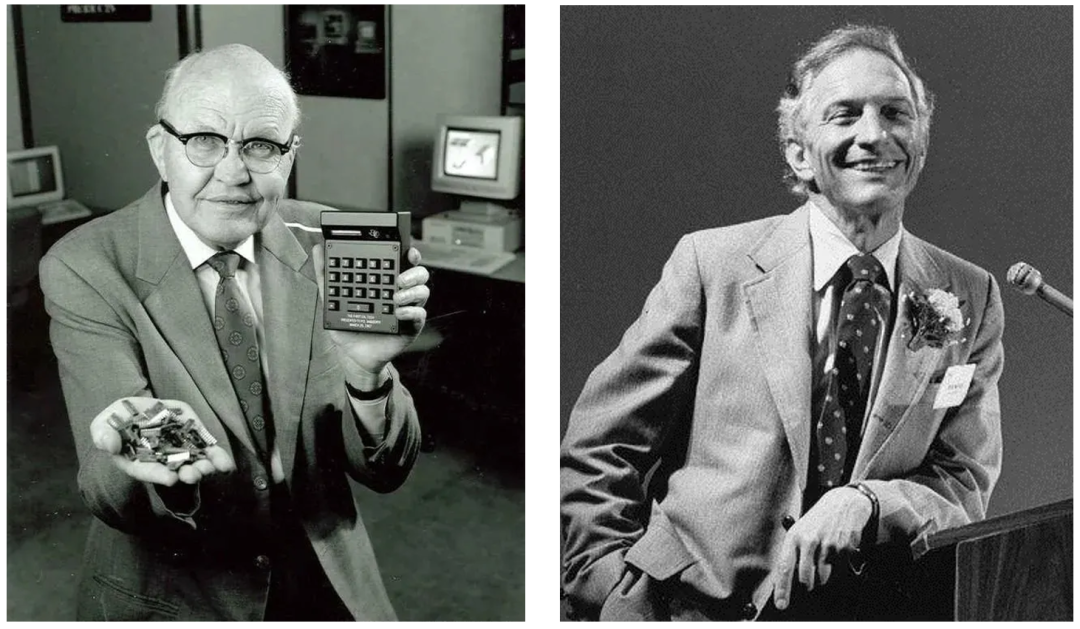
On September 12, 1958, Jack Kilby from Texas Instruments successfully integrated five components, including germanium transistors, to create the world’s first germanium integrated circuit.
The following year, in July, Robert Noyce from Fairchild Semiconductor invented the world’s first silicon integrated circuit based on the silicon planar process.
Jack Kilby (left) and Robert Noyce (right)
As everyone knows now, the inventions of these two pioneers are of great significance. The advent of integrated circuits strongly promoted the miniaturization of electronic devices and laid the foundation for the comprehensive arrival of the chip era.
In the 1960s, with the development of computer technology, the electronics industry began to attempt to apply integrated circuit technology in the field of computer storage.
At that time, semiconductor storage technology was divided into two directions: ROM and RAM. ROM is read-only memory, where data is not lost when power is off, also known as external storage. RAM is random access memory, used for storing operational data, which is lost when power is off, also known as internal memory.
Today, we will focus on the RAM field.
In 1966, Robert H. Dennard from IBM’s Thomas J. Watson Research Center first invented DRAM (Dynamic Random Access Memory).
This type of memory is based on the “MOS transistor + capacitor structure,” characterized by low energy consumption, fast read/write speeds, and high integration. Even today, our computer memory, smartphone memory, graphics card memory, etc., are all based on DRAM technology.
In June 1968, IBM registered a patent for transistor DRAM. However, just as they were preparing for the industrialization of DRAM, the U.S. Department of Justice initiated an antitrust investigation against them.
These investigations delayed IBM’s DRAM industrialization progress, giving other companies an opportunity.
Shortly after, in 1969, Advanced Memory System in California successfully produced the world’s first DRAM chip (with a capacity of only 1KB) and sold it to Honeywell.
After receiving this batch of DRAM chips, Honeywell discovered some issues with the process. So, they approached a newly established company for help.
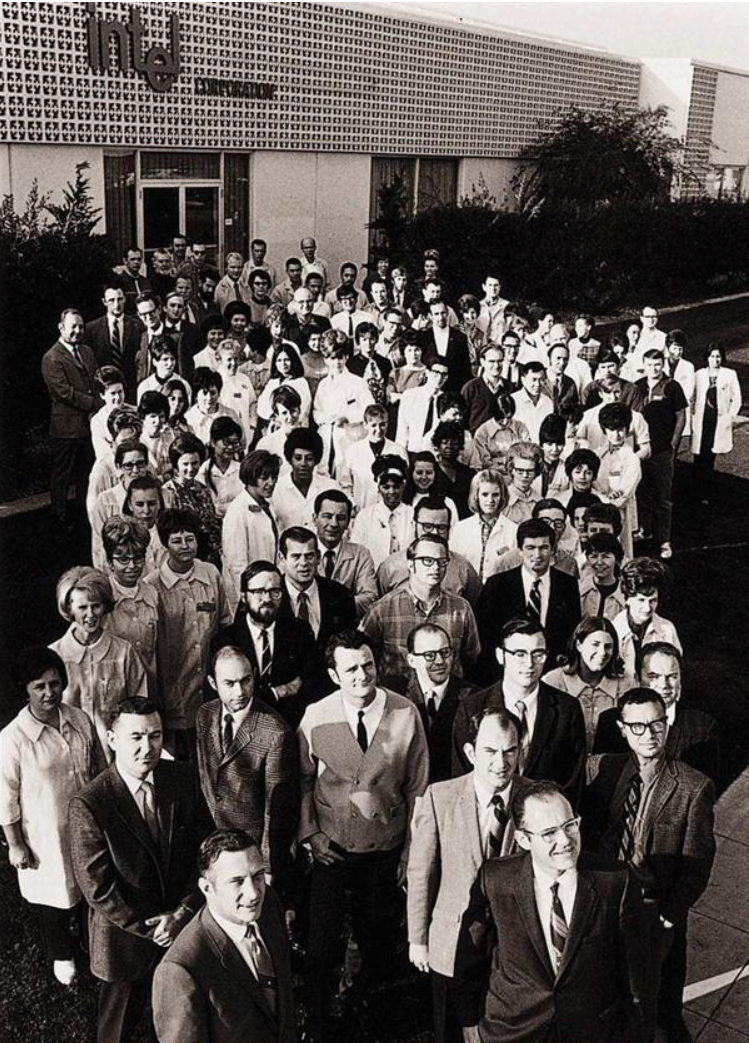
This company was Intel, founded in 1968 by Robert Noyce (the inventor of silicon integrated circuits mentioned earlier) and Gordon Moore (the proposer of Moore’s Law).
Robert Noyce (left) and Gordon Moore (right)
After Intel was established, its main business was to develop transistor semiconductor storage chips.
At that time, semiconductor processes mainly had two research directions: bipolar transistors and field-effect (MOS) transistors. Intel was unsure which direction was correct, so it established two research teams to follow both technology directions.
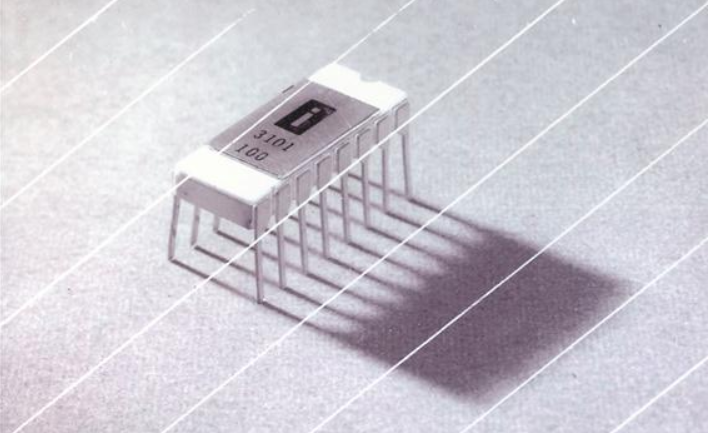
In April 1969, the bipolar team made a breakthrough first, launching a 64-bit static random access memory (SRAM) chip—C3101. This chip was Intel’s first product, with Honeywell as its main customer.
The field-effect transistor team also made strides, and in July 1969, they launched a 256-bit static random access memory chip—C1101. This was the world’s first large-capacity SRAM memory.
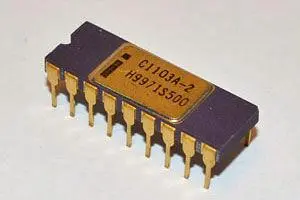
In October 1970, the field-effect transistor team successfully launched its first DRAM chip (also considered the world’s first commercially mature DRAM chip)—C1103.
Intel C1103, with 18 pins, a capacity of 1Kbit, priced at $10.
After the launch of C1103, it achieved great success, quickly becoming the best-selling semiconductor memory globally, serving important customers such as HP and DEC.
With the help of C1103, Intel also rapidly grew. By 1972, Intel’s number of employees exceeded 1,000, with annual revenue exceeding $23 million. In 1974, Intel’s global market share of DRAM products reached an astonishing 82.9%.
While Intel was making a fortune in the DRAM field, its competitors were also rising rapidly.
In 1973, American companies Texas Instruments (TI) and Mostek entered the DRAM market one after another.
Texas Instruments disassembled and imitated Intel’s C1103 through reverse engineering, studying the architecture and process of DRAM. Later, in 1971 and 1973, they launched 2K and 4K DRAMs, becoming strong competitors to Intel.
Texas Instruments, Intel’s old rival
Mostek was founded by L.J. Sevin, a former chief engineer at Texas Instruments Semiconductor Center (1969), and its technical strength was also impressive.
In 1973, they launched a 16-pin DRAM product—MK4096, which posed a challenge to Intel’s market position (other companies used 22 pins; fewer pins meant lower manufacturing costs).
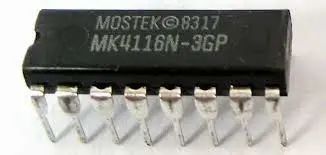
In 1976, Mostek launched MK4116, which adopted POLY-II (dual-layer polysilicon gate) technology, with a capacity of 16K. This product achieved great success, reversing the market competition pattern and raising its DRAM market share to 75%.
Unfortunately, not long after, due to malicious acquisitions from the capital market, Mostek’s equity structure underwent significant changes, leading to severe management turmoil and rapid loss of technical personnel, and the company quickly fell into decline.
In 1979, the company was acquired by United Technologies Corporation (UTC) and later sold to STMicroelectronics.
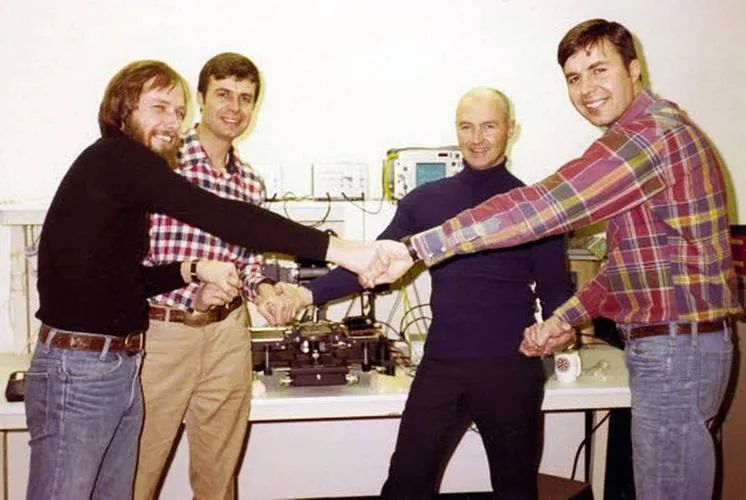
In October 1978, four engineers from Mostek left and founded a new storage technology company in the basement of a dental clinic in Idaho.
This company later became the storage giant—Micron.
The Rise and Fall of Japanese Semiconductors
In addition to domestic competitors, Intel faced a greater threat from abroad, specifically from Japan.
In the 1970s, Japan’s economy rapidly rose. To secure a favorable position in the global technology industry chain, they carefully laid out in the semiconductor technology field.
In 1976, Japan established the VLSI (Very Large Scale Integrated) joint research body through a national system.
The joint research body had six laboratories dedicated to research in high-precision processing technology, silicon crystallization technology, process handling technology, monitoring and evaluation technology, and device design technology.
Shortly after, this joint research body successfully conquered key semiconductor processing equipment such as electron beam lithography machines and dry etching devices, as well as advanced process technology and semiconductor design capabilities, laying the foundation for the rise of Japan’s semiconductor industry.
In 1977, with the help of the VLSI project, Japan successfully developed the 64K DRAM, catching up with the R&D progress of American companies.
By the 1980s, Japanese manufacturers (Fujitsu, Hitachi, Mitsubishi, NEC, Toshiba, etc.) continued to strengthen their efforts, leveraging quality and price advantages to surpass American companies.
In 1986, Japan’s market share of memory products globally rose to 65%, while the U.S. dropped to 30%.
In the fierce market competition, American Intel announced its withdrawal from the DRAM market (in 1985). The only company that could survive in the cracks between Japanese manufacturers was Motorola.
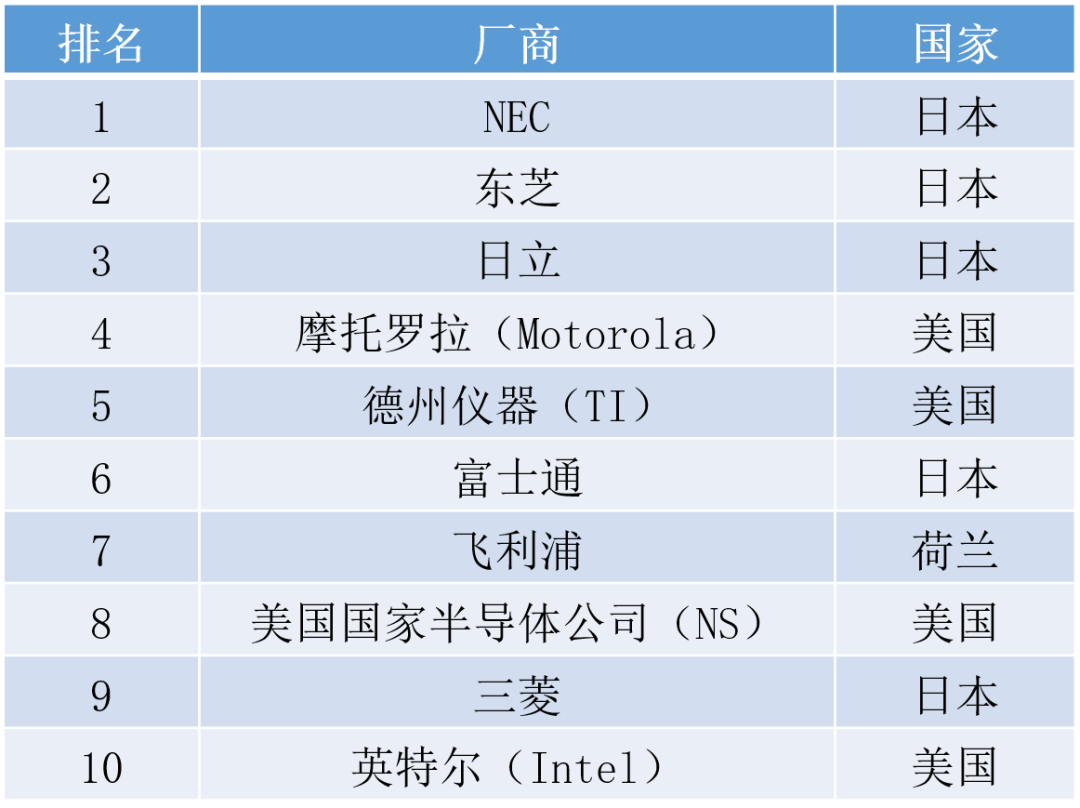
Global Semiconductor Company Rankings (1987)
Just when Japanese semiconductor manufacturers seemed poised to dominate the market, subtle changes began to occur in the external political environment.
In 1985, as the atmosphere of the Cold War between the U.S. and the Soviet Union continued to weaken, trade frictions between the U.S. and Japan increased. Under immense fiscal deficit pressure, the Reagan administration began to focus on suppressing the Japanese economy.
That year, the U.S. led the famous Plaza Accord, forcing the yen to appreciate. Meanwhile, the American Semiconductor Association initiated anti-dumping lawsuits against Japanese semiconductor products. Later, the two countries reached an agreement on price supervision of Japanese semiconductor products.
Under successive blows, the market share of Japanese semiconductor products plummeted, and they quickly lost their dominance.
The Rise of Korean Semiconductors
So, did the market share that Japanese manufacturers relinquished go to American manufacturers?
As the saying goes, “While the mantis stalks the cicada, the oriole is behind.” As Japanese manufacturers quickly fell from grace, another competitor from the U.S. emerged—South Korea.
Back when Japan initiated the VLSI project, the South Korean government was also not idle. They established the Korea Electronics Technology Institute (KIET) in the Gumi Industrial District, investing heavily to attract American semiconductor talent and focusing on developing key technologies for integrated circuits.
In addition to KIET, South Korean conglomerates such as Samsung, LG, Hyundai, and Daewoo also recognized the market potential of semiconductor technology. They acquired and introduced technology patents and processing equipment, digesting and absorbing them to build technical strength.
In 1984, Samsung Semiconductor established its first memory factory, mass-producing 64K DRAM. No one expected that this little-known South Korean company would become the industry’s “giant” in the future.
From the 1980s to the present, the DRAM industry has undergone nearly forty years of development. If one word could describe these forty years, it would be—”blood and gore.”
The reason is simple: the DRAM semiconductor industry is characterized by its cyclical nature. Industry insiders have summarized: DRAM semiconductor storage earns money for one year and loses money for two years, hence the term “earn one, lose two.”
Under such intense cyclical patterns, it is very difficult to survive in the long term. DRAM manufacturers need strong cash flow and financing capabilities to maintain high levels of R&D spending and keep their teams stable.
During loss cycles, DRAM manufacturers need more money to stay alive. During prosperous cycles, they cannot be complacent either. When choosing to expand production capacity, manufacturers need to be very cautious. Otherwise, it could lead to oversupply and turn profits into losses.
Forty years ago, there were approximately 40-50 DRAM manufacturers globally. Today, only three remain, illustrating the fierce competition.
In these forty years, one company not only survived but also eliminated countless competitors, maintaining a dominant position. That company is Samsung.
Many may have heard of Samsung’s story. They adopted a strategy of “counter-cyclical investment,” which has been written into textbooks by countless business schools.
In simple terms, counter-cyclical investment means utilizing the cyclical nature of the industry. When the industry enters a downturn and competitors scale back, Samsung does the opposite by increasing investment and expanding capacity, further driving down prices, thereby exacerbating competitors’ losses and even causing them to go bankrupt.
In other words, while everyone else is facing destruction, Samsung, having more financial resources, can outlast them.
Samsung relied on the nation’s strength to repeatedly implement the “counter-cyclical investment” strategy, eliminating numerous competitors and becoming the leader in semiconductor storage.
Next, let’s take a detailed look at what has happened over the decades.
Samsung’s first “counter-cyclical investment” occurred in the mid-1980s.
At that time, the battle between Japan and the U.S. was fierce, and the DRAM market was generally sluggish, with prices plummeting. The price of DRAM chips dropped from $4 per chip (in 1984) to $0.3 per chip (in 1985).
When Samsung built its factory and launched 64K DRAM, its production cost was $1.3 per chip. Faced with the industry’s winter, Samsung not only did not reduce investment but began to invest counter-cyclically, expanding capacity.
By the end of 1986, Samsung Semiconductor had accumulated losses of $300 million, and its equity capital was completely depleted, nearing bankruptcy.
At this critical moment, the South Korean government intervened to stabilize the market, investing nearly $350 million in total and backing Samsung to raise $2 billion in private funding.
Later, as Japanese semiconductors were defeated by the U.S. and the boom brought by the popularity of PCs, Samsung successfully turned around and experienced growth.
Shortly after, Korean DRAM manufacturers represented by Samsung gradually seized the market share relinquished by Japanese semiconductor companies, occupying a dominant market position.
In 1992, an explosion occurred at the Sumitomo Chemical plant in Japan, causing a shortage of raw materials and a surge in memory prices. That year, Samsung was the first to launch the world’s first 64M DRAM.
In 1993, the global semiconductor market began to weaken again. At this point, Samsung employed the second “counter-cyclical investment” strategy. They invested in building an 8-inch wafer production line for DRAM production.
In 1995, Microsoft released the Windows 95 operating system, greatly stimulating the demand for memory and driving memory prices up significantly, rewarding Samsung’s investments. Major manufacturers later followed suit, investing to expand capacity.
However, the good times did not last long. By the end of 1995, as manufacturers’ 8-inch wafer factories came online, capacity surged, resulting in oversupply and turning the seller’s market into a buyer’s market, leading to a drop in prices again.
In this situation, manufacturers were forced to cut production and reduce investment levels.
Samsung continued to expand its investments. In 1996, Samsung launched the world’s first 1GB DRAM, solidifying its industry-leading position.
From 1996 to 1998, the DRAM market remained in a downturn.
In 1999, the downward trend in DRAM prices began to ease. Due to the emergence of the internet bubble, the DRAM industry entered a brief period of prosperity.
That year, amid fierce competition, several significant changes occurred in the memory industry:
In the Korean sector, Hyundai Memory merged with LG Semiconductor to form Hyundai Semiconductor, which later split from the Hyundai Group (in 2001) and was renamed Hynix.
In the American sector, Micron acquired Texas Instruments’ memory division.
In the Japanese sector, Hitachi, NEC, and Mitsubishi Electric’s DRAM businesses consolidated to form Elpida.
In the European sector, Siemens Group’s semiconductor division became independent, forming Infineon. A few years later, in 2002, Infineon Technologies’ memory division split off and became Qimonda.
By 2000, among the top five global DRAM market share holders, two were Korean manufacturers, Samsung (23.00%) and Hyundai (19.36%).
Shortly after, the internet bubble burst, leading to a global economic crisis. The PC market suffered heavy losses, and DRAM market demand rapidly declined, causing prices to plummet again.
In 2001, the DRAM market size halved from $28.8 billion to $11 billion.
From 2002 to 2006, the DRAM market gradually recovered from its low point, showing good overall growth.
In 2006, Samsung developed the world’s first 1GB DRAM using a 50nm process. Hynix developed the world’s fastest 200MHz 512MB Mobile DRAM at that time.
During that period, the DRAM market gradually formed a stronghold of five companies: Samsung (Korea), SK Hynix (Korea), Qimonda (Germany), Micron (USA), and Elpida (Japan).
In 2007, Microsoft launched the Vista system. This system consumed a lot of memory, and DRAM manufacturers expected a significant increase in memory demand, prompting them to increase production capacity.
However, in reality, Vista sold poorly and did not boost the memory market, leading to further oversupply.
Even worse, in 2008, the financial crisis broke out, exacerbating the challenges for the DRAM market. Memory prices plummeted, even falling below material costs.
During this critical period, Samsung implemented its third “counter-cyclical investment,” further expanding capacity and deepening industry losses.
In the spring of 2009, the third-ranked German company Qimonda announced bankruptcy, marking the official exit of European manufacturers from the DRAM market.
In 2011, DRAM supply once again exceeded actual demand, causing prices to plummet. This time, Elpida could not hold on and declared bankruptcy, marking the complete exit of Japanese manufacturers from the DRAM industry.
Thus, the stronghold changed from five to three, with only Samsung (Korea), Micron (USA), and Hynix (Korea) remaining in the DRAM field. The combined market share of these three companies exceeds 93%.
The Current State of DRAM Technology
Since 2011, there have been no major changes in the market structure of DRAM memory. However, user demand and market environment for DRAM have changed significantly.
In addition to traditional PCs, with the rapid development of mobile internet and the Internet of Things, smartphones, wearable devices, and IoT devices (such as cameras) have rapidly risen, greatly boosting the demand for DRAM.
The development of cloud computing, big data, and AI has also driven the number of data centers to increase, leading to a surge in servers and networking devices, thus stimulating DRAM sales growth.
These demands have gradually segmented DRAM into standard DRAM, mobile DRAM, graphics DRAM, and niche DRAM categories.
Standard DRAM is mainly used in PCs and servers. Mobile DRAM is primarily LPDDR, used in smartphones and tablets. Graphics DDR is used in graphics cards. Niche DRAM is mainly applied in LCD TVs, digital set-top boxes, network players, etc.
The strong demand across multiple product scenarios has driven DRAM prices up. Around 2018, the surge in demand for digital currencies like Bitcoin brought a rare “golden period” for the DRAM market.
After 2019, due to previous capacity expansion and destocking factors, memory prices dropped significantly. The price collapse of the cryptocurrency market and the maturation of the smartphone market led to weak market demand, and DRAM once again entered a low point.
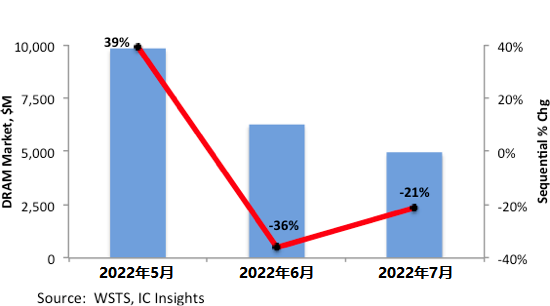
According to data released by relevant institutions, the period from the second half of 2020 to May 2022 belonged to a recovery phase for the DRAM market.
Starting in June of this year, the DRAM market crashed. Sales in June fell by 36%, and in July dropped by another 21%, indicating a comprehensive collapse, which is quite disheartening. Institutions predict that the decline will further expand in the fourth quarter.
Next, let’s examine the developments in DRAM technology over the years.
Historically, DRAM chips have been improved by shrinking process technology to increase storage density.
Each update of the DRAM process requires substantial investment.
For example, going from 30nm to 20nm requires a 30% increase in the number of photomasks and a doubling of non-photolithography process steps. The requirements for cleanroom space increase by over 80% as the number of devices rises.
Previously, these costs could be offset by producing more chips per wafer and the premium brought by performance. However, as process technology continues to shrink, the gap between increased costs and revenues has gradually narrowed.
Around 2013, as the process technology entered the 20nm stage, manufacturing difficulty increased significantly. After 18/16nm, continuing to reduce size in two dimensions no longer provided cost and performance advantages.
As a result, DRAM manufacturers began to explore new avenues, focusing on the expansion capabilities in the Z direction, which means advancing 3D packaging.
As an industry leader, Samsung was the first to achieve 3D DRAM from a packaging perspective. They used TSV packaging technology to stack multiple DRAM chips, significantly increasing the capacity and performance of individual memory sticks. Subsequently, various manufacturers followed suit, and 3D DRAM became mainstream.
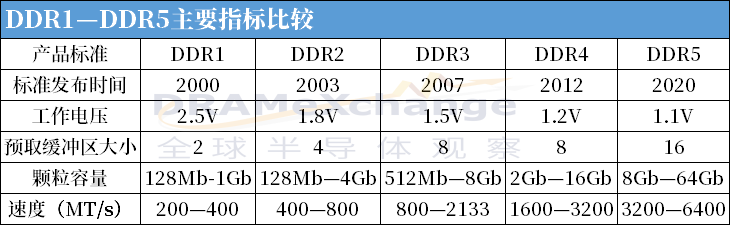
In terms of product standards, the industry generally adopts product standards set by the JEDEC (Joint Electron Device Engineering Council), which are familiar to everyone as DDR1-DDR5.
Image Source: Global Semiconductor Observation
All three DRAM giants have achieved mass production capabilities for DDR5/LPDDR5. Samsung is reportedly working on DDR6, with design completion expected in 2024.
In terms of chip process technology, the terminology for DRAM has changed compared to before. Previously, it was simply referred to as 40nm, 20nm, etc. Now, because the circuit structure is three-dimensional, linear measurement methods are no longer applicable, resulting in terms like 1X, 1Y, 1Z, 1α, 1β, and 1γ to express processes.
Industry experts believe that the 10nm~20nm series processes include at least six generations, with 1X roughly equivalent to 19nm, 1Y about 18nm, 1Z approximately 16-17nm, and 1α, 1β, and 1γ corresponding to 12—14nm (below 15nm).
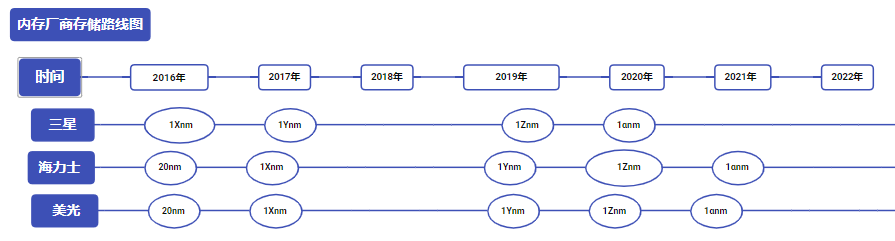
Image Source: Global Semiconductor Observation
Samsung, SK Hynix, and Micron entered the 1Xnm stage between 2016 and 2017, the 1Ynm stage in 2018-2019, and the 1Znm stage after 2020.
Currently, major manufacturers continue to approach 10nm. The latest 1αnm is still in the 10+nm stage.
The Past and Present of China’s DRAM Industry
Finally, let’s take a look at the development of the domestic DRAM industry.
China is one of the important markets for global semiconductor memory and a “battleground” for global semiconductor manufacturers.
However, to be realistic, the development of our own DRAM industry lags far behind that of competitors.
The domestic DRAM industry can be traced back to the 1990s.
At that time, Japan’s NEC established two joint ventures in mainland China to engage in DRAM production.
The first was Shougang NEC, established in 1991 through a joint venture between NEC and Shougang.
Shougang NEC began producing 4M DRAM using a 6-inch 1.2-micron process starting in 1995 (later upgraded to 16M). However, in 1997, with the global price crash of DRAM, Shougang NEC suffered significant losses and never recovered. It later became a contract manufacturing base for NEC overseas, exiting the DRAM industry.
The second was Huahong NEC, established in 1997 through a joint venture between NEC and Huahong Group.
Huahong NEC began producing mainstream 64M DRAM chips using 8-inch 0.35-micron process technology in September 1999. After 2001, with NEC exiting the DRAM market, Huahong also withdrew from the DRAM industry.
In 2004, China made a second attempt at the DRAM industry.
This time, SMIC was the active party.
At that time, SMIC invested in building the first 12-inch wafer factory (Fab4) in mainland China in Beijing, achieving mass production with 80nm technology in 2006, manufacturing DRAM for Qimonda and Elpida.
Unfortunately, shortly after, in 2008, due to business adjustments, SMIC exited the DRAM business. This second attempt also failed.
In 2015, China’s DRAM procurement amount was about $12 billion, accounting for 21.6% of global DRAM supply. The serious reliance on imports prompted the domestic sector to make a third attempt at the DRAM business.
The most representative of this attempt are the three major memory bases in Wuhan, Hefei, and Xiamen. These bases have invested substantial capital (over 250 billion RMB) in semiconductor storage technology, supported by national and local industrial policies, to develop and cultivate talent.
Currently, the more representative companies in the domestic DRAM field include Hefei Changxin, Fujian Jin Hua, Unisoc, GigaDevice, Beijing Xi Cheng, Dongxin Semiconductor, Nanya Technology (Taiwan), Winbond Electronics (Taiwan), and others.
Hefei Changxin is the leading company in domestic DRAM storage chips. Their DRAM technology mainly comes from the now-defunct German DRAM manufacturer Qimonda and the Japanese manufacturer Elpida.
On September 20, 2019, Hefei Changxin announced the production of the first 12-inch DRAM factory in mainland China, releasing the first 8G DDR4 manufactured with 19nm technology, marking a historic breakthrough.
According to estimates, Hefei Changxin’s production capacity is expected to reach 125,000 wafers by 2022-2023.
Fujian Jin Hua may sound familiar. A few years ago, they were sanctioned by the U.S. government, which made headlines.
In May 2016, Fujian Jin Hua cooperated with UMC to produce niche DRAM. In December 2017, Micron accused Fujian Jin Hua and UMC of stealing its memory chip technology. In January 2018, Fujian Jin Hua also filed a lawsuit against Micron for patent infringement. In October 2018, Fujian Jin Hua was added to the export control entity list. In November 2018, the U.S. Department of Justice sued UMC and Fujian Jin Hua for stealing Micron’s trade secrets.
After a series of upheavals, UMC could no longer bear it. At the end of January 2019, UMC announced its withdrawal from the Fujian Jin Hua DRAM project. In November 2021, UMC and Micron reached a settlement. Currently, the review of Fujian Jin Hua’s situation has not yet reached a conclusive outcome.
Well, having written so much, those who have read this far are true fans.
In summary, DRAM memory is an essential component of products such as computers and smartphones, and it is an indispensable “part” of digital infrastructure.
Currently, the domestic DRAM memory has basically resolved the issue of existence. The next step is to address the issues of yield improvement and capacity ramp-up. In terms of financing ability, industrial chain support, and talent development, we need to continuously strengthen and proceed cautiously.
We look forward to breaking the “three strong” pattern in the DRAM field and occupying a more important position.
1. “Who Will Break This DRAM Technology Dilemma?” Wang Kaiqi, Global Semiconductor Observation;
2. “The American Drama of DRAM,” Chip Light Society;
3. “History of Storage Technology Development,” Xie Changsheng;
4. “The Road to Domestic DRAM Replacement is Tortuous but Bright,” Xiangcai Securities, Wang Pan, Wang Wenrui;
5. “Storage Giants Take Another Gamble,” Semiconductor Industry Observation;
6. “Storage Chip Industry Research Report,” Guo Xin Securities;
7. “Domestic Storage Awaits a Revolution,” Fu Bin, Guo Ke;
8. “There is No More Comprehensive Article on Semiconductor Storage than This,” Chip Master;
9. “Technology Brief 035 – Semiconductor Storage Flash Memory,” Wu Mijin, Zhihu;
10. Baidu Encyclopedia, Wikipedia related entries.
More Exciting:
Yan Shi │ Thoughts and Suggestions on the “Difficulties” of Young Teachers in Colleges and Universities
【Directory】”Computer Education” 2022 No. 9
【Directory】”Computer Education” 2022 No. 8
【Directory】”Computer Education” 2022 No. 7
【Directory】”Computer Education” 2022 No. 6
【Directory】”Computer Education” 2022 No. 5
【Editorial Board Message】Professor Li Xiaoming from Peking University: Reflections on the “Year of Improvement in Classroom Teaching”…
Professor Chen Daoxu from Nanjing University: Which is more important, teaching students to ask questions or teaching students to answer questions?
【Yan Shi Series】: Trends in Computer Discipline Development and Their Impact on Computer Education
Professor Li Xiaoming from Peking University: From Interesting Mathematics to Interesting Algorithms to Interesting Programming—A Path for Non-Professional Learners to Experience Computational Thinking?
Several Thoughts on Building a First-Class Computer Discipline
New Engineering and Big Data Major Construction
Lessons from Others Can Be Used to Attack the Jade—A Compilation of Chinese and Foreign Computer Education Research Articles