
Click the blue text to follow us
“We heavily rely on manufacturing facilities in China!”
If this statement had been made two years ago, even Texas Instruments might not have dared to say it. However, during the recent earnings conference, CEO Haviv Ilan made a surprising declaration.
Interestingly, the CEO also emphasized: “I believe there will be greater opportunities in the Chinese market in the future.”
Wait a minute, as the largest analog chip manufacturer in the United States, what does this move by TI mean? Are they really betting heavily on the Chinese market amidst the current tensions in the global semiconductor industry?
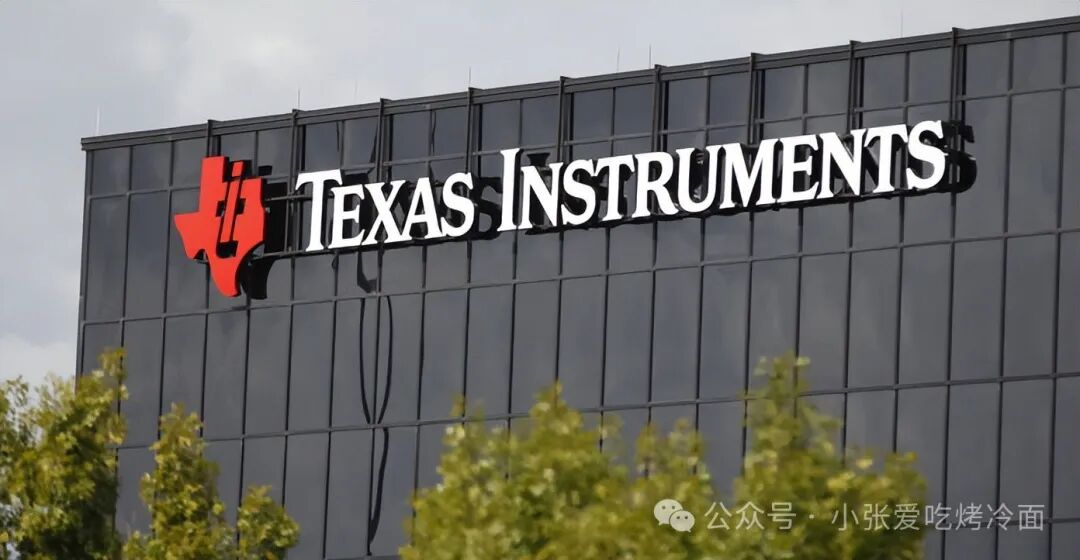
To understand TI’s bold move, we need to look at the current tumultuous state of the semiconductor industry.
As a veteran in the semiconductor industry, Texas Instruments is not new to this game. Founded in 1930, the company started with analog chips and has now become a top player in the global analog chip market, holding a market share of 20%.
However, recent times have not been easy. On one hand, TI’s stock price has plummeted 17% this year, resulting in a staggering $30 billion loss in market value. On the other hand, the ongoing tensions in US-China relations have led to fluctuating semiconductor trade policies. Just last month, the China Semiconductor Industry Association made a significant move: “Wafer fabrication is recognized as the country of origin”, a policy that has left many American companies uneasy.
What’s more surprising is that TI has not followed the trend of hostility; instead, they made a high-profile gesture of goodwill during their latest earnings call. Look at their report card: Q1 revenue was $4.07 billion, an 11% year-on-year increase; net profit was $1.18 billion, a 6.7% year-on-year increase. Behind these numbers, the Chinese market contributed a full fifth of the total.
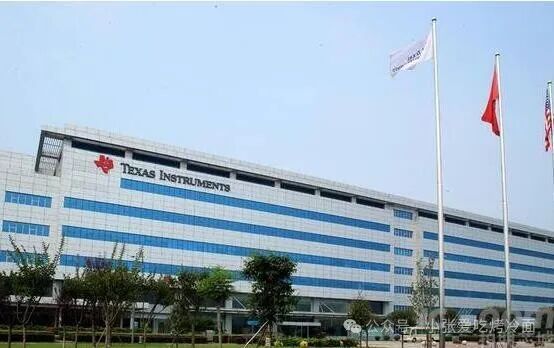
What exactly makes TI so committed to betting on the Chinese market? The answer lies in their manufacturing base in Chengdu.
The Chengdu factory is not just an ordinary “workshop”. It not only has a complete wafer manufacturing production line but also possesses industry-leading bump processing technology. In simple terms, it’s like building a “super chip factory” in China. TI has invested heavily, and naturally, they are reluctant to let it go easily.
But things are far from simple. While TI is making gestures of goodwill, the semiconductor industry is undergoing severe turbulence:
-
1. The US government has made bold moves: The new semiconductor tariff policy introduced this year has left many chip companies in distress. Many analysts predict that this policy could raise chip costs by 15%-20%.
-
2. The Chinese market is gaining momentum: Domestic chip manufacturers are rapidly increasing their production capacity, especially in the mature process field. According to the latest data, China’s market share in the global 40nm and above process has surpassed 30%.
-
3. Customers are stockpiling: Under the expectation of supply chain restructuring, downstream companies are starting to stock up in advance. Statistics show that recent orders for analog chips have increased by over 25% month-on-month.
In this context, TI’s “declaration” becomes particularly intriguing. Even more interesting is that they released a more explosive forecast: Q2 revenue is expected to reach $4.17-4.53 billion. This figure is a full 10% higher than market expectations!
“We are confident about the future of the Chinese market,” the TI CEO repeatedly emphasized this statement during the earnings call. However, the outside world is speculating: is this a true declaration of love, or a reluctant move forced by circumstances?
On the surface, it appears to be a commercial goodwill gesture, but it actually conceals the undercurrents of industrial change. TI’s move reflects three key signals:
【Signal 1: Supply chain localization is imperative】 American companies have finally realized that to make money in China, they must build factories in China. TI is not the first to “wake up” – Intel, Qualcomm, NVIDIA, and other chip giants are accelerating supply chain localization. Why? Because localization not only reduces costs but, more importantly, helps to bypass increasingly stringent trade barriers.
【Signal 2: The importance of the Chinese market is irreplaceable】 TI’s financial report clearly states: Revenue from the Chinese region accounts for 21%. This is not a figure that can be easily given up. Not to mention that China is now the largest semiconductor consumer market in the world, accounting for over 40% of the global share. Abandoning the Chinese market? Sorry, business logic does not allow it.
【Signal 3: The industrial landscape is quietly being restructured】 Interestingly, the timing of TI’s “declaration” coincides with the moment when the Chinese semiconductor industry is starting to make strides in the mature process field; they chose to make a high-profile gesture of goodwill. Does this suggest that the global semiconductor industry may be forming a new pattern of “China leading in mature processes, the US leading in advanced processes”?
TI’s “declaration” seems to be a business choice of a single company, but it actually reflects the deep changes in the global semiconductor industry. Under the dual influence of geopolitical and market forces, the global landscape of the chip industry is being redrawn.
For American companies, rather than being caught in policy dilemmas, it is better to make a significant investment in core markets. After all, business interests are the best “lubricant”. As for how this chess game will ultimately play out? We will have to wait and see how the market landscape evolves by 2026.