
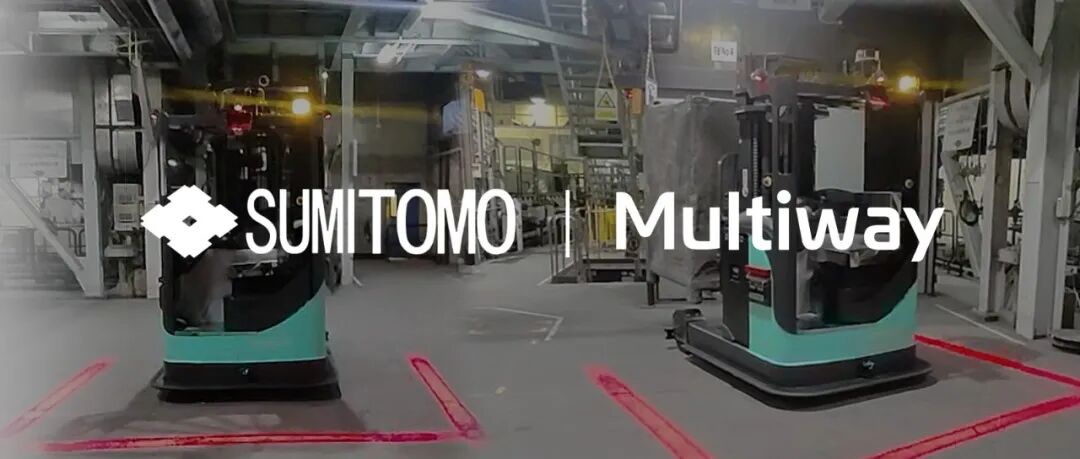
In an era of rapid digitalization and intelligence, companies are seeking transformation and upgrades to enhance competitiveness and efficiency. Multiway Robotics, with its leading unmanned forklift and intelligent logistics solutions,has partnered with the Fortune Global 500 company Sumitomo to successfully achieve the automation upgrade of production line logistics..
MW
Project Background and Objectives
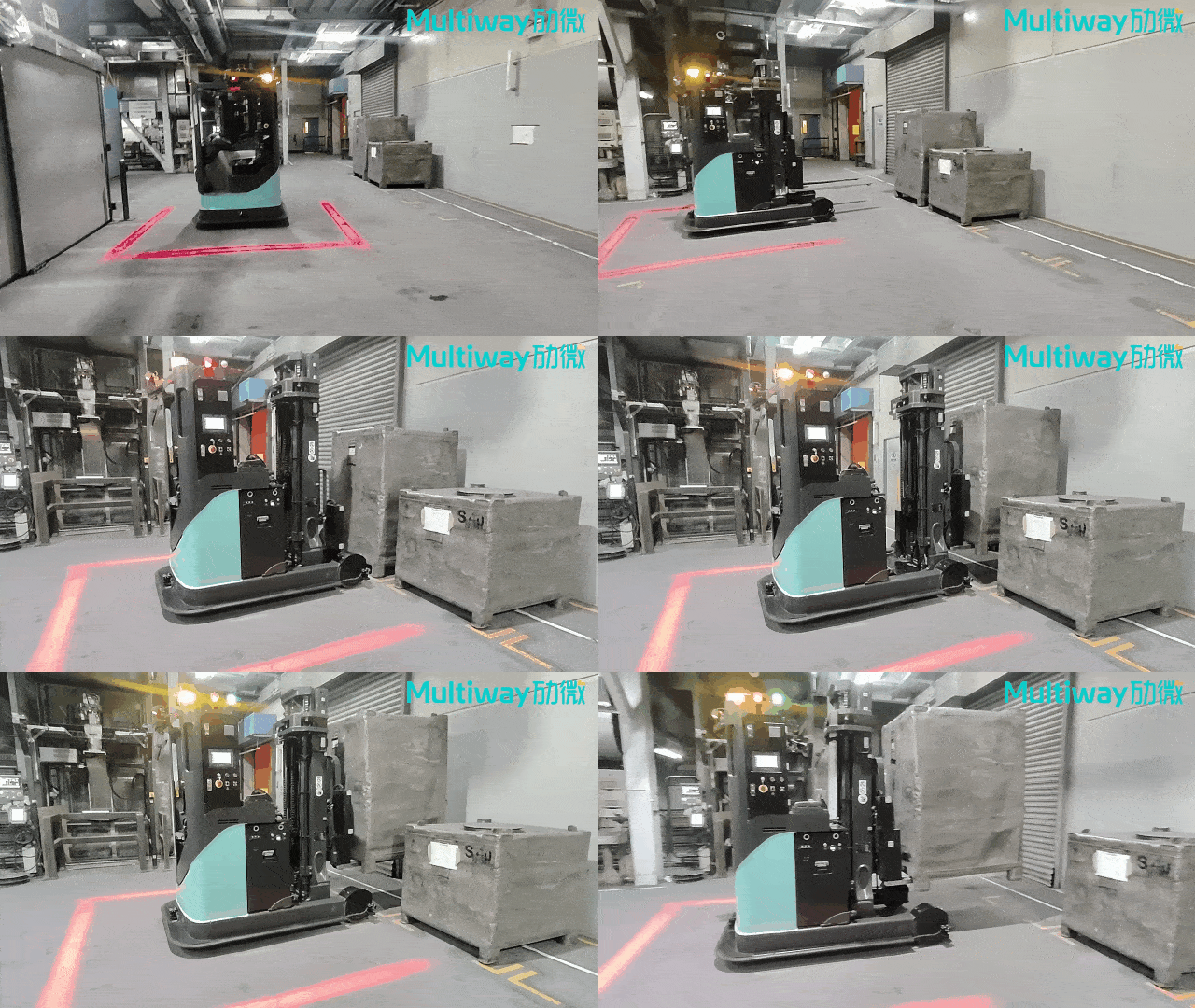
Sumitomo aims to introduce a robotic system consisting of unmanned forklifts and robotic arms to automate the loading and unloading of barrels on the production line on the first floor of the workshop, as well as the handling of empty pallets. This initiative is not only toimprove production efficiency, but also toreduce labor costs, minimize errors and risks associated with manual operations, while enhancing the intelligence level of the overall logistics process, creating a more efficient, precise, and safe production environment.
MW
Project Plan and Implementation
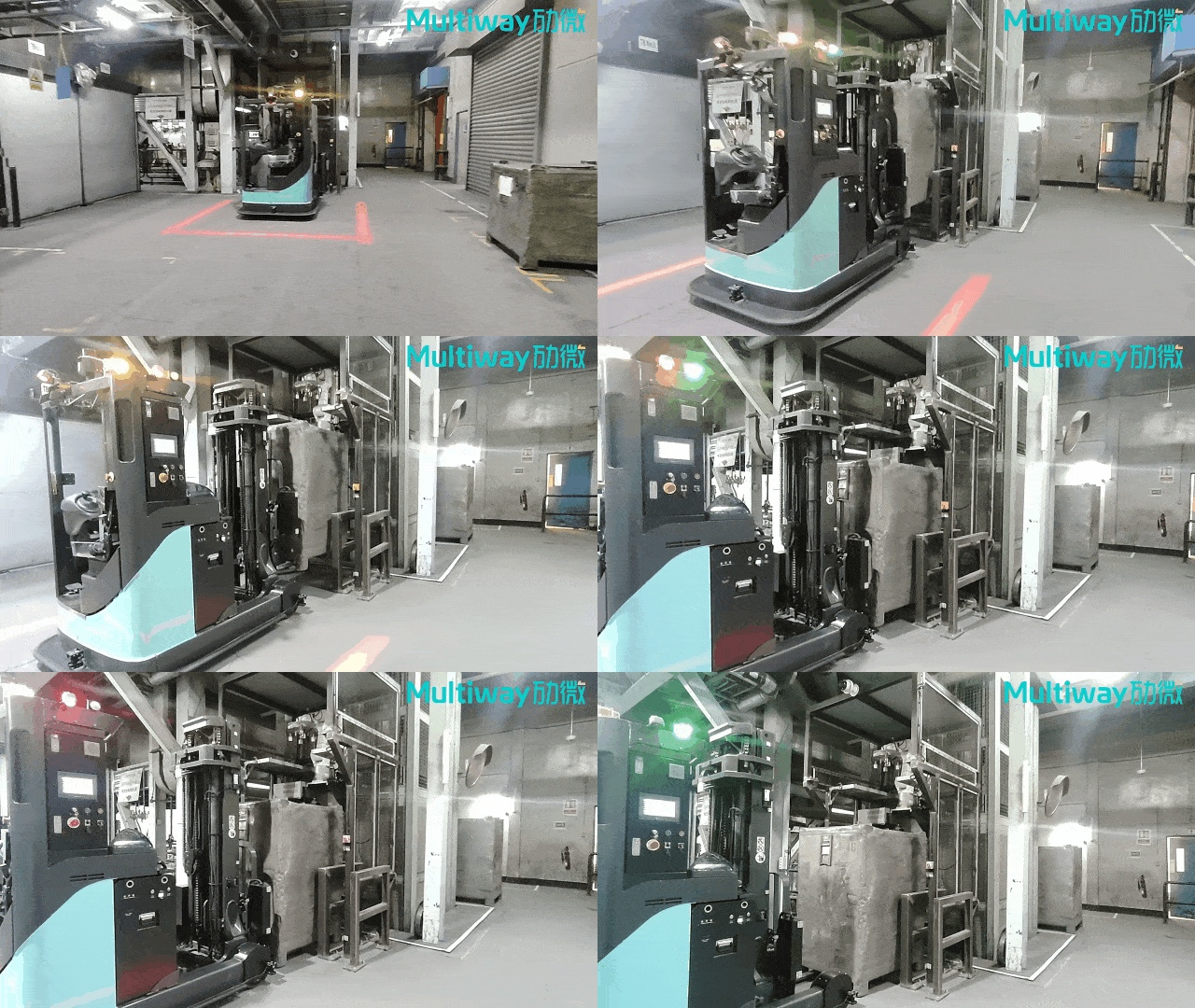
Based on project requirements, Multiway Robotics developed a detailed and comprehensive plan, covering various aspects such as special environmental requirements, area layout and traffic flow planning, handling processes and equipment quantity, and descriptions of each area. Additionally, clear specifications and detailed arrangements were made for equipment selection, system descriptions, acceptance standards, and quality warranty services, ensuring that every step of the project implementation process is orderly and follows established guidelines.
MW
Equipment Selection and System Configuration
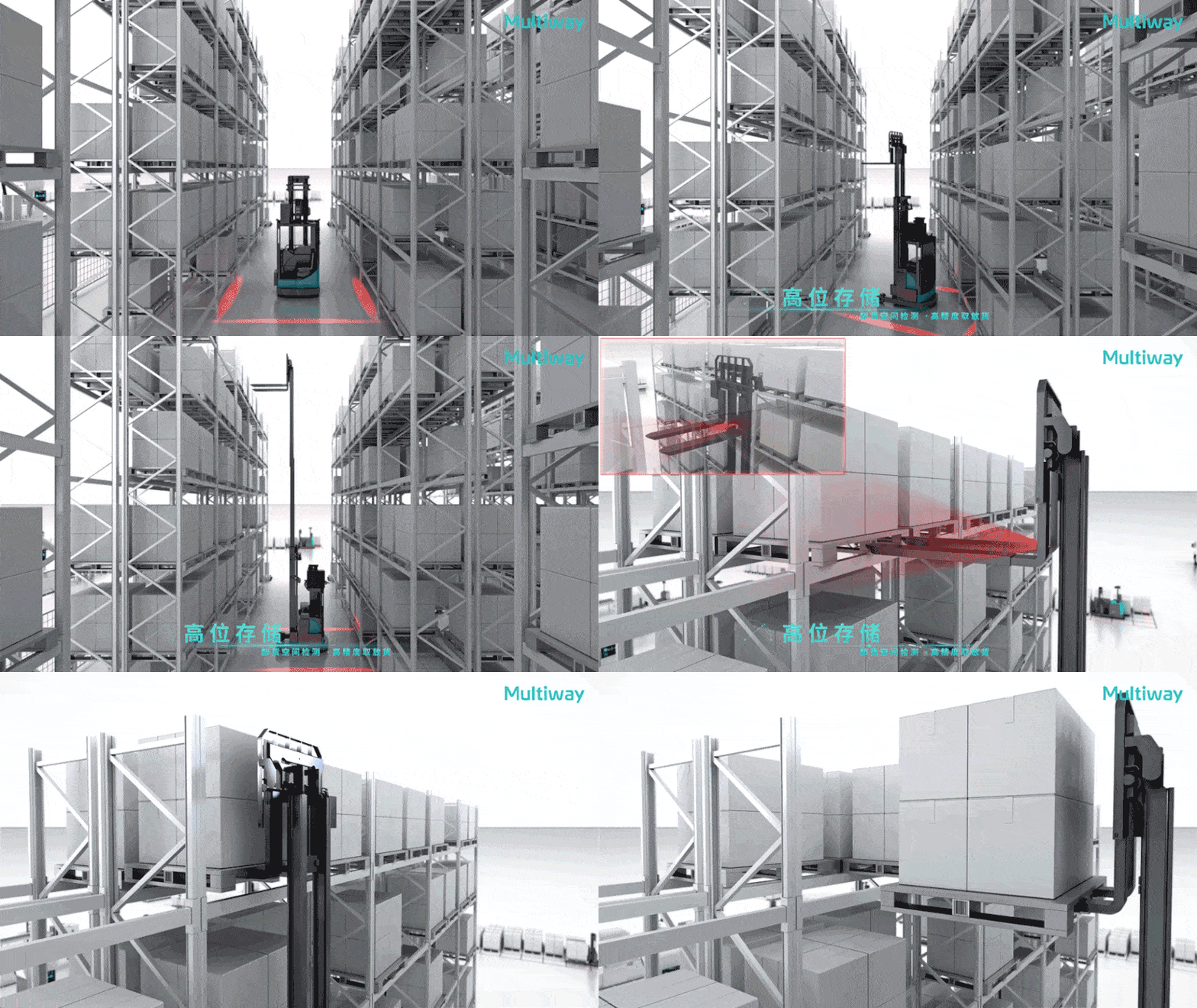
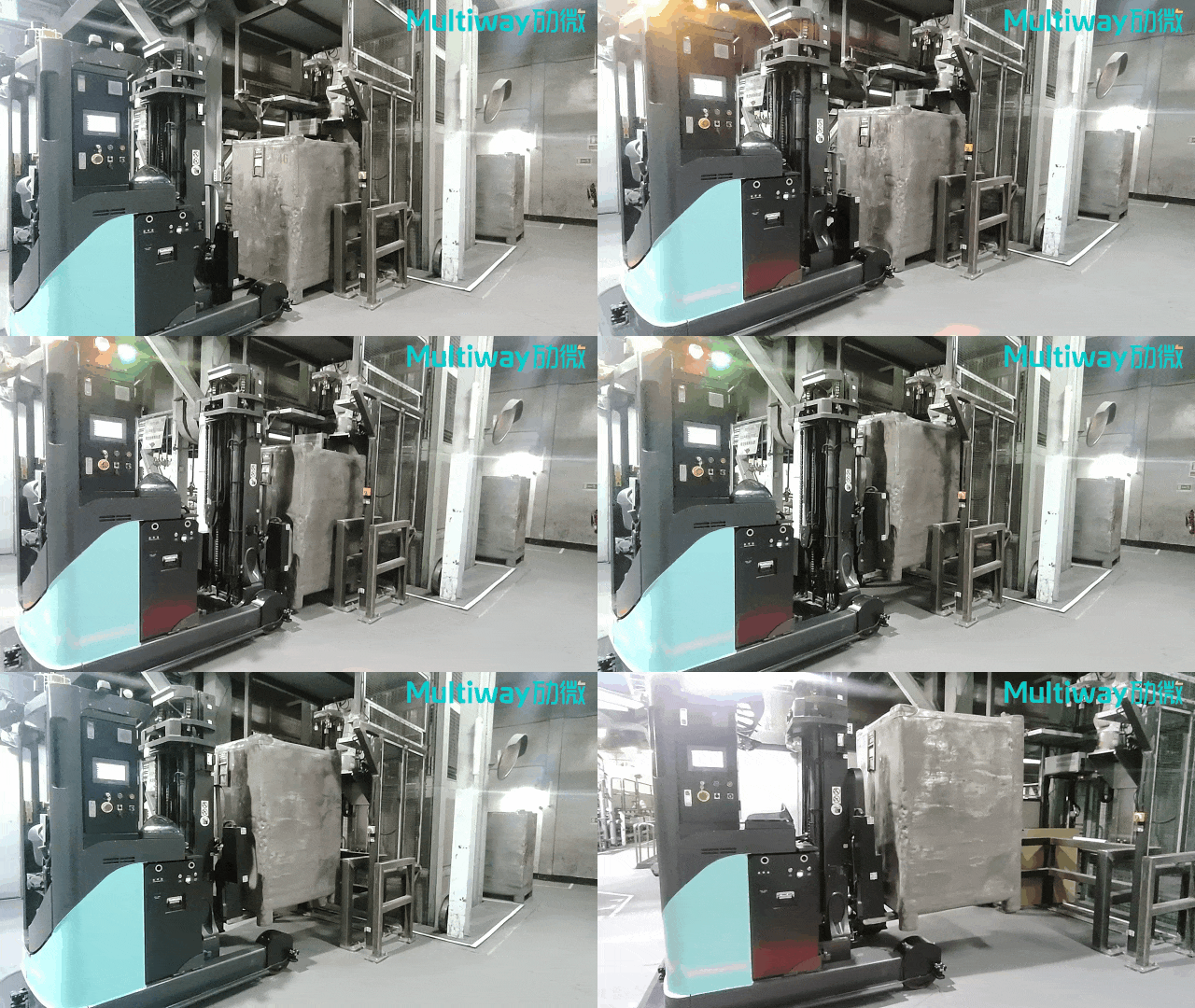
In terms of equipment selection, the projectadopted the forward-moving unmanned forklift MW-R20 as the main handling equipment. This model has excellent performance parameters, with load capacity meeting the handling needs of different specifications of barrels, capable of accurately and efficiently completing various handling tasks. Additionally, the project is equipped with a comprehensive system, includingWarehouse Management System (WMS), Dispatch Management System (RCS), Equipment Management System (WCS), and Vision System (Horizons), which work together to achieve full-chain intelligent management from task allocation, equipment scheduling, inventory management to goods identification and monitoring, greatly enhancing the efficiency and accuracy of logistics operations.
MW
Business Process Description
Process 1: Manual Delivery Process
Before manual delivery, a task application must be issued using a PDA.
Process 2: Elevator Conveyor Line → Area E
Empty barrels/pallets coming out of the elevator flow to the end of the conveyor line, where the Vision System automatically identifies the goods (after fully positioned), distinguishes different types of carriers, and triggers different handling tasks.
Process 3: Area E → Filling Area/Conveyor Line Position
Manually issue a task for empty barrels using the PDA, specifying the robot to reach filling room 1 or 2. After the robot retrieves the empty barrel and reaches the designated point, the robotic arm removes the lid from the empty barrel.
Process 4: Filling Room → Area F
After the material filling is completed in the filling room, manually scan and input the material information using the PDA and bind it to the barrel number, issuing a task for transporting full barrels, specifying the filling room position 1/2; or the MES system issues material information and full barrel offline transport tasks.
Process 5: Sampling Position C → Elevator Conveyor Line
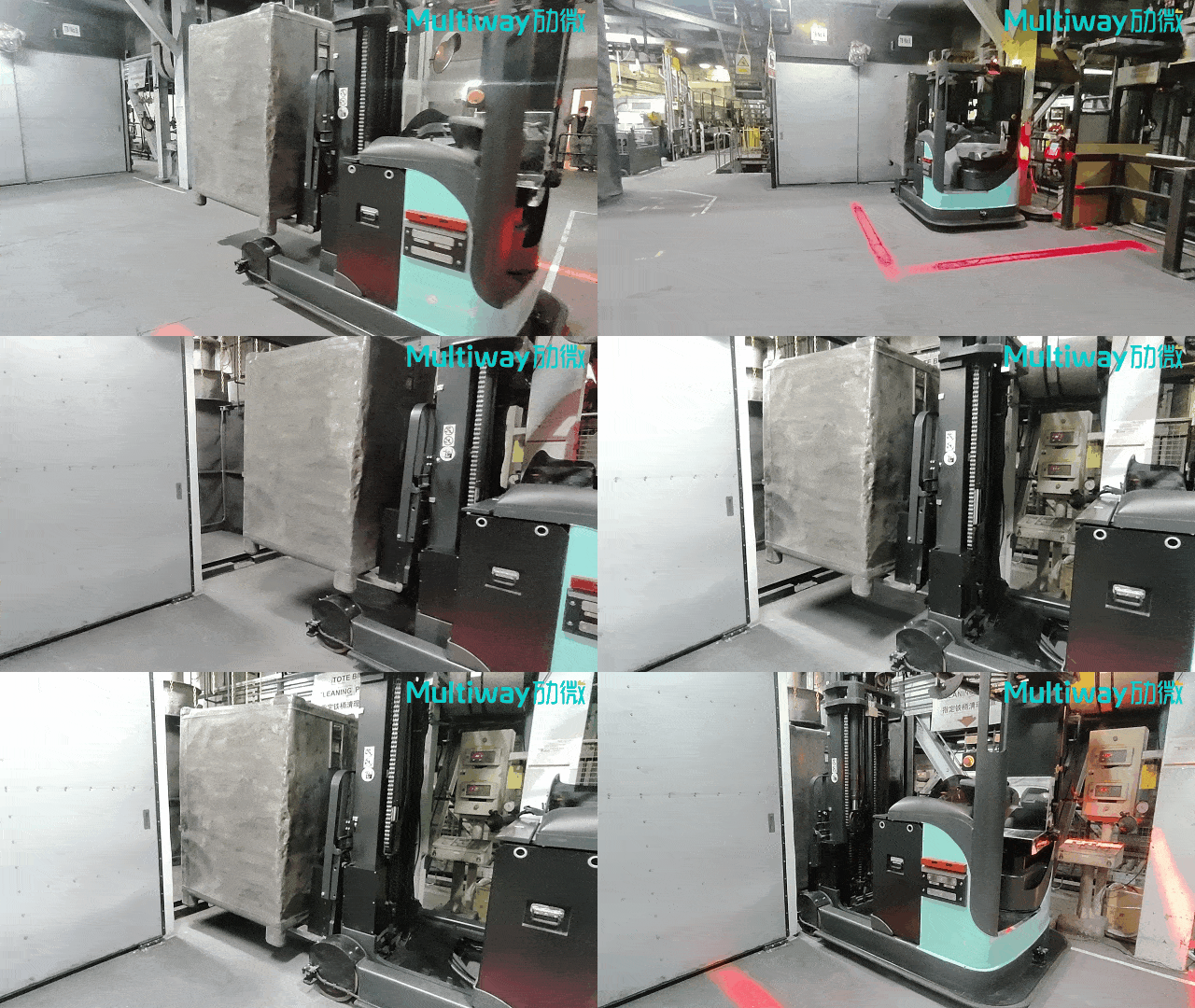
The flipping mechanism mixes the powder, and the operator removes the barrel for sampling. After sampling is completed, the operator presses the release button, and the robot transports the barrel to the elevator entrance conveyor line.
Process 6: Empty Pallet: Empty Pallet Storage Position W → Empty Pallet Conveyor Line
When an empty pallet is needed, the operator uses the PDA to issue a task for empty pallet retrieval, and the robot removes the top pallet from the empty pallet storage position and places it on the adjacent conveyor line platform.
Project Outcomes and Value1Improved Production Efficiency
By introducing unmanned forklifts and their intelligent logistics solutions, the Sumitomo project achieved efficient transportation of barrels between different areas. The unmanned forklifts can accurately complete a series of operations such as picking, transporting, and delivering according to preset programs and paths,significantly reducing handling time and increasing the speed of material flow, thus making the operation of the production line smoother and significantly enhancing overall production efficiency.
2Reduced Labor Costs
In traditional logistics models, handling work often requires a large amount of manpower, and manual operations have certain limitations, such as work efficiency being easily affected by fatigue and difficulty in ensuring operational accuracy. With the introduction of robotic automation, handling tasks that previously required multiple personnel can now be efficiently and stably executed by robots, reducing reliance on human labor, lowering labor costs, and avoiding potential risks associated with manual operation errors.
3Increased Workplace Safety
The special environment at the project site, such as ground dust issues, may adversely affect personnel health and equipment operation. Multiway Robotics’ solution fully considers these factors and proposes corresponding rectification and protective measures. Additionally, during automated operations,robots can effectively reduce personnel contact with potential hazards, lowering the probability of safety incidents and creating a safer working environment for employees..
4Innovative Labor Model Development
The introduction of robots and automation systems is not merely a replacement for human labor, but ratheroptimizes work processes and integrates resources to achieve collaborative work between humans and machines. In this model, employees can be liberated from heavy and repetitive physical labor, allowing them to participate more in equipment monitoring, maintenance management, and process optimization, enhancing employee job satisfaction and career development opportunities, while also creating a more diverse and efficient talent pool for the enterprise.
Sumitomo’s achievement in upgrading production line logistics automation marks a key step in its journey towards intelligent transformation. The success of this project not only brings significant economic benefits and improved work efficiency to Sumitomo but also provides valuable practical experience and a reference example for the industry.
 Follow“New Creative Media”Video Account
【Statement】This article is sourced from Multiway.Logistics Brand NetworkThe purpose of reprinting this article is to convey information and does not represent agreement with its views or responsibility for its authenticity,Logistics Brand Network advocates respect and protection of intellectual property rights.If copyright issues are found in the article and images, please contact the editor at:010-82387008, and we will handle it promptly.
What Everyone is Watching
【Original】Countdown to the Completion of Asia’s Largest Single Logistics Project, the Capital’s Smart Supply Chain Welcomes a New Landmark【Original】Comau Completes Strategic Acquisition of Euroguidance for 5 Billion Yuan【Original】Analysis of Global Mobile Robot Market Leaders (As of 2025)【Original】After the Tariff War, Which Logistics Equipment Technologies Became Hot Topics?【Original】Analysis of AGV/AMR Financing Situation in Q1 2025Overview of the PROMAT 2025 Exhibition: A Barometer of Global Logistics and Supply Chain InnovationThe 14th Logistics Famous Brand Voting Activity of 2025 is in Full SwingWho is the Optimal Solution for Narrow Aisle Applications?Interview | Collaborative Integration, Intelligent Future—Interview with Lai Qingwen, President of New Creative Media/Chairman of Xinhua Innovation IoT Technology (Beijing) Co., Ltd.“Logistics Technology and Equipment” is Launching with Heavyweight Content | 21 Years of Industry Accumulation, Access to Massive Articles, Videos, and AudioResearch Report on Intelligent Driving Interest GroupsWhat is an Unmanned WarehouseUnderstanding the “Digital Intelligence” Revolution in the Chemical Industry in One PictureTechnology Empowering Publishing Logistics, A New Model of Intelligent Warehouse TransformationHow to Select Core Components for Low-Cost, High-Efficiency Autonomous Forklifts?The “Automotive and New Energy Enterprise Logistics Procurement Guide (2024 Edition)” is About to be ReleasedDense Storage, Pallet Shuttle Systems Assist Efficient Intelligent WarehousingBehind the Olympics, China’s Express Logistics Industry is Strategizing for Internationalization!Breaking Pain Points: How Circular Packaging Aids Operational OptimizationWho Has Filled the “Bucket Short Board” of Multi-Channel Applications? Perhaps This is the Answer!