👆If you wish to see more often, feel free to star🌟 and bookmark it~
Since the release of the STM32F103 series in 2007, STMicroelectronics’ STM32 series has gone through nearly two decades, and its MCU/MPU series products have long become benchmarks in multiple markets. To date, the STM32 MCU has developed five major categories and over twenty series of MCU products. These products have gained high recognition from customers in the consumer and industrial markets due to their high performance, low power consumption, high integration, and ease of development.
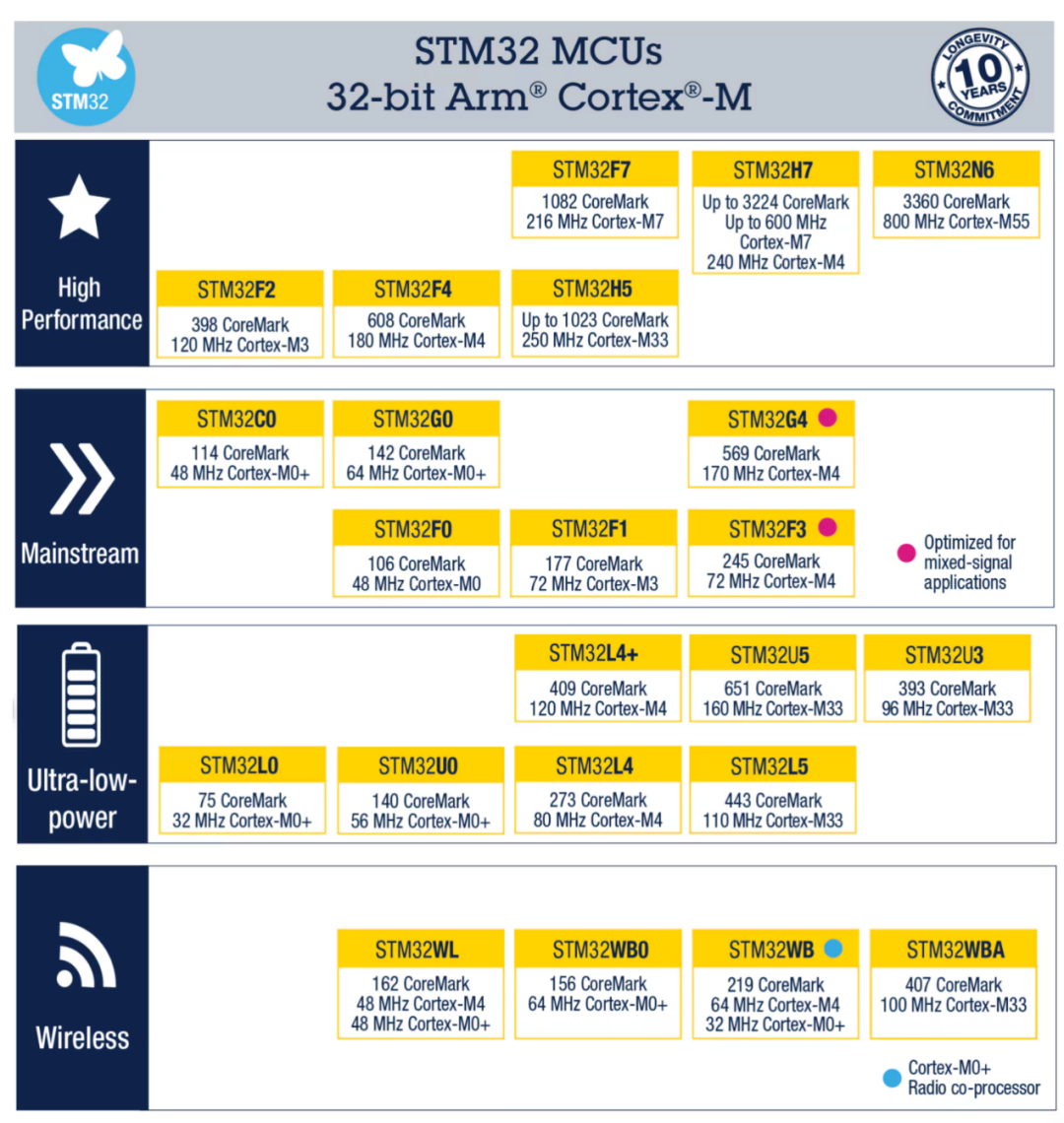
STMicroelectronics CEO Jean-Marc Chery revealed in a previous presentation that in the embedded processing field, STM32 continues to solidify its position as the number one in the general microcontroller market, with market share continuing to grow since the second quarter of 2024. However, ST has not stopped its progress. According to Jean-Marc Chery, ST plans to launch 18 new product lines using embedded non-volatile memory technology at 40nm and below between 2025 and 2026; during the period from 2025 to 2027, the proportion of products in the STM32 product line from advanced process nodes of 40nm and below will double.
At the recent STM32 China Summit, STMicroelectronics experts also brought us the latest updates on STM32 MCUs.
In China, For China
In recent years, in response to global development trends, almost all companies have been adjusting their production layouts. The semiconductor industry, as a core area of global competition, has attracted particular attention. As a leading global enterprise, STMicroelectronics is also taking action. For example, in response to the demands of the Chinese market, ST has formulated a strategy of “In China, For China.”
Mr. Cao Zhiping, Executive Vice President and President of STMicroelectronics China, stated in his speech that as a global company, ST always adheres to a localized thinking and behavior model, insisting on executing a localized strategy of innovating, designing, and manufacturing in China, and has been committed to building an efficient and resilient supply chain in China to complement and improve the global supply chain.
Furthermore, he pointed out that two years ago, ST established a joint venture with Sanan Optoelectronics in Chongqing to produce SiC front-end manufacturing, becoming the first global semiconductor company to produce silicon carbide locally in China. This is an important embodiment of ST’s “In China, For China” strategy. In the MCU sector, ST is collaborating with Huahong Semiconductor to develop front-end manufacturing business in China. Additionally, ST is expanding its existing backend facilities in Shenzhen to provide better services to Chinese customers.
Julien Arnaud, Vice President of the IoT/AI Technology Innovation Center and Digital Marketing at STMicroelectronics China, also stated that the collaboration between ST and Huahong is a significant project that began two to three years ago. ST had already sent over a hundred factory experts to Huahong to teach local engineers how to use ST’s equipment and production materials to produce ST’s processes and MCUs.
Julien reiterated that STM32 not only has innovative products, good ecosystems, and solutions; the company also guarantees sufficient capacity and supply chain resilience for its customers. This ensures that regardless of any events occurring anywhere, STMicroelectronics can still provide sufficient capacity and a resilient supply chain to its customers. The first product of the collaboration is the STM32 40nm process MCU, which is expected to enter mass production by the end of 2025. As the first attempt at a dual supply chain, this product will have two options for wafer manufacturing: “ST + partner” outside of China, and Huahong as the foundry partner within China.
According to Julien at the STM32 media communication meeting at the end of last year, Huahong’s Wuxi plant will have a dedicated production line to meet STMicroelectronics’ STM32 demand, with equipment identical to STMicroelectronics’ own wafer fab to ensure product quality consistency; in the EWS electrical testing phase, the same “ST + partner” approach will be used abroad, while domestically, testing will be conducted at ST’s backend packaging factory in Shenzhen (STS). As for the packaging phase, the same approach will be used, with “ST + outsourced packaging (OSAT)” abroad and “ST Shenzhen + outsourced packaging (OSAT)” domestically.
“The core of this collaboration is that whether domestically or abroad, STMicroelectronics will produce STM32 chips with completely consistent quality, including specifications, electrical characteristics, product quality, reliability, and the same part numbers,” Julien emphasized.
Mainstream Microcontrollers, Continuous Updates of C0
Turning the clock back to January 2023, STMicroelectronics launched the brand new STM32C0 microcontroller (MCU) series. According to ST, the STM32C0 series sets the lowest price point for STM32 to date, uncompromising on design quality, and offers performance far exceeding existing 8-bit architectures.
In ST’s view, the next generation of smart appliances and industrial controllers must be easy to use, competitively priced, and ensure supply. The new STM32C0 general-purpose entry-level MCU meets these requirements, providing exciting options for 8/16-bit application fields and benefiting from the extensive and powerful STM32 ecosystem.
“The ultimate goal of STM32C0 is to replace the current mid-to-high-end 8-bit platforms on the market,” said Yan Tao, Technical Marketing Manager of the Microcontroller, Digital IC, and RF Products Division (MDRF) at STMicroelectronics China, when introducing this series of products.
It is reported that the STM32C0 is a legendary continuation of the STM32G0. Like the STM32G0, this series uses a 90nm process. Additionally, due to the use of the Cortex M0+ core, the series chips have a maximum frequency of 48MHz, a computing power of 44 DMIPS, and a CoreMark score of 114. “STM32C0 and STM32G0 are pin-compatible, using the same IP and the same process platform. Like all STM32 products, we have a 10-year long-term supply guarantee, and we will update our website annually,” Yan said.
Currently, the STM32C0 is available in up to 12 package types to meet different application needs. Specifically, these packages can be roughly divided into three categories: first, small and thin QFPN and BGA; second, SO8N and TSSOP20, as well as the most commonly used LQFP; third, the thinner and smaller WLCSP12 package, which is only 1.42×2.08 mm. Since this product can actually be embedded in wires, it is very popular in many applications.
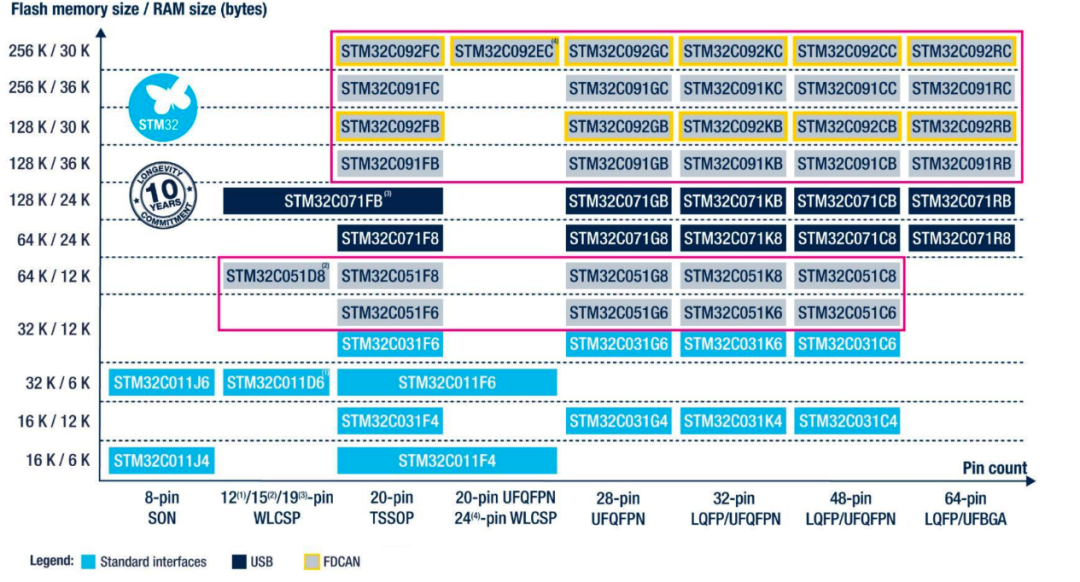
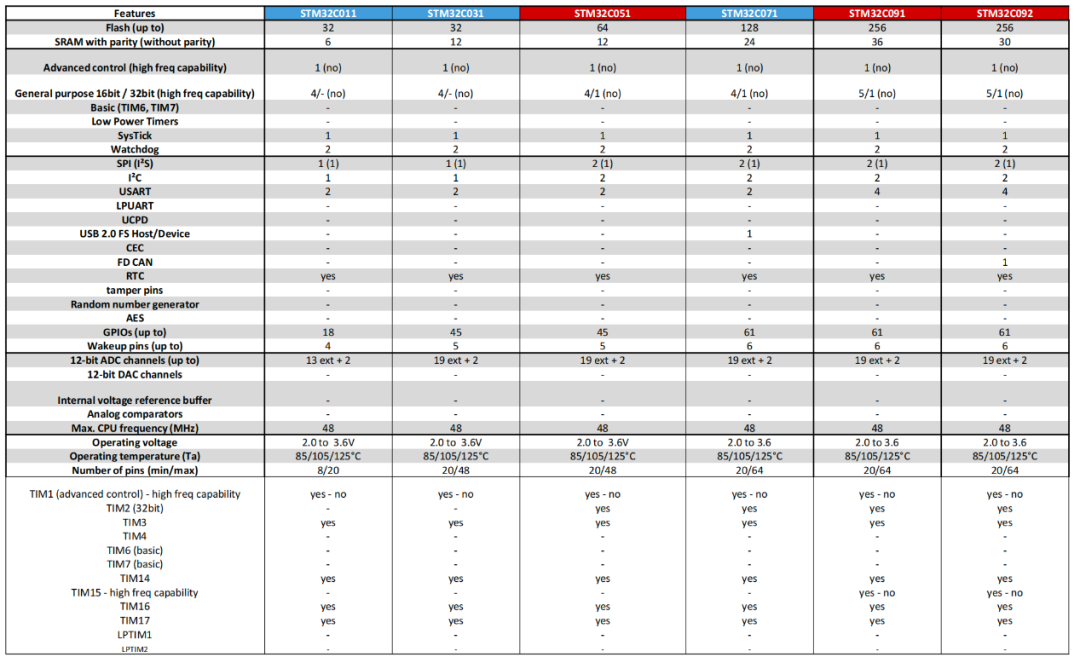
As shown in the figure above, the STM32C0 can be divided into six series: C011, C031, C051, C071, C091, and C092, with the main differences between the different series being the Flash and RAM sizes. C071 has USB; C092 has FDCAN.
Yan Tao stated that with the launch of the STM32C0 in the mass market, the company has introduced the C0 Nucleo board, which features ST morpho and Arduino interfaces, effectively exposing all the pins of the STM32C0.
“In theory, customers can use this board for testing, and they can also use it as a breadboard to build their own systems for rapid prototyping. Moreover, this board is very affordable, costing only a few dozen RMB. Additionally, STM32CubeMX has a graphical interface that allows customers to select models, configure peripherals, and generate projects with just a click of the mouse. This makes it very easy for beginners to get started without having to read data sheets and documentation to run the project,” Yan continued.
He pointed out that developing this series is similar to other series, using STM32CubeIDE or STM32CubeMX for model selection, configuration, and file generation, followed by debugging and development. In addition to these development tools, major international software tool companies like KEIL and IAR have also updated their firmware to support C051, C091, and C092 immediately after we released the new products.
“In the future, simplified development will become a major trend in embedded development, and the ecosystem will be the most valuable asset of STM32,” Yan emphasized.
Low-Power MCU, Breakthrough of U3
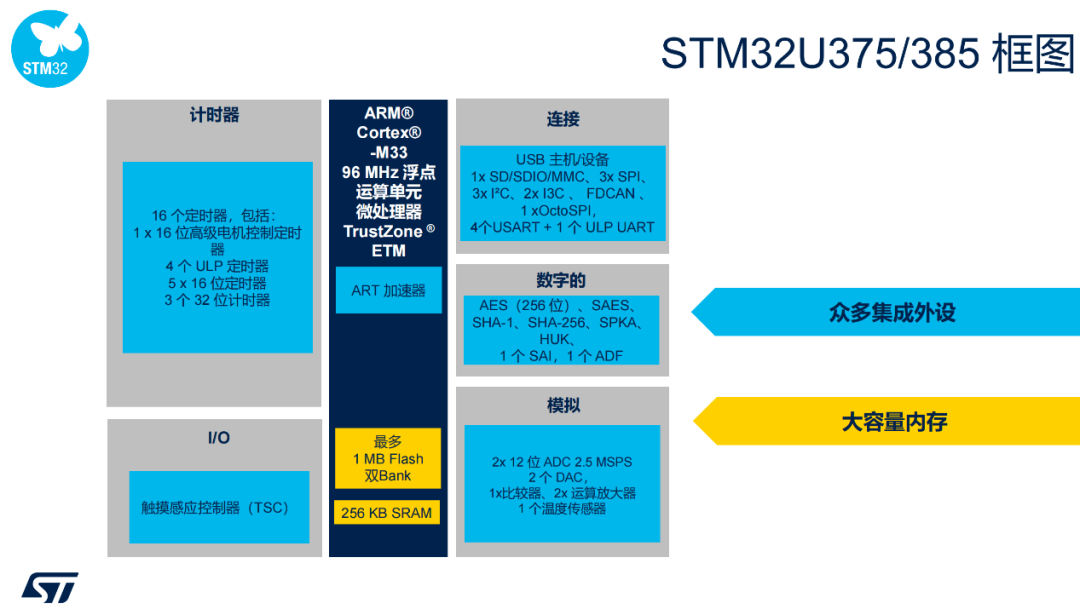
Within the STM32 MCU product line, there is also a low-power series. This platform is based on proprietary ultra-low leakage current technology and optimized design, providing a balance between performance, power, safety, and cost-effectiveness for designers of energy-efficient embedded systems and applications.
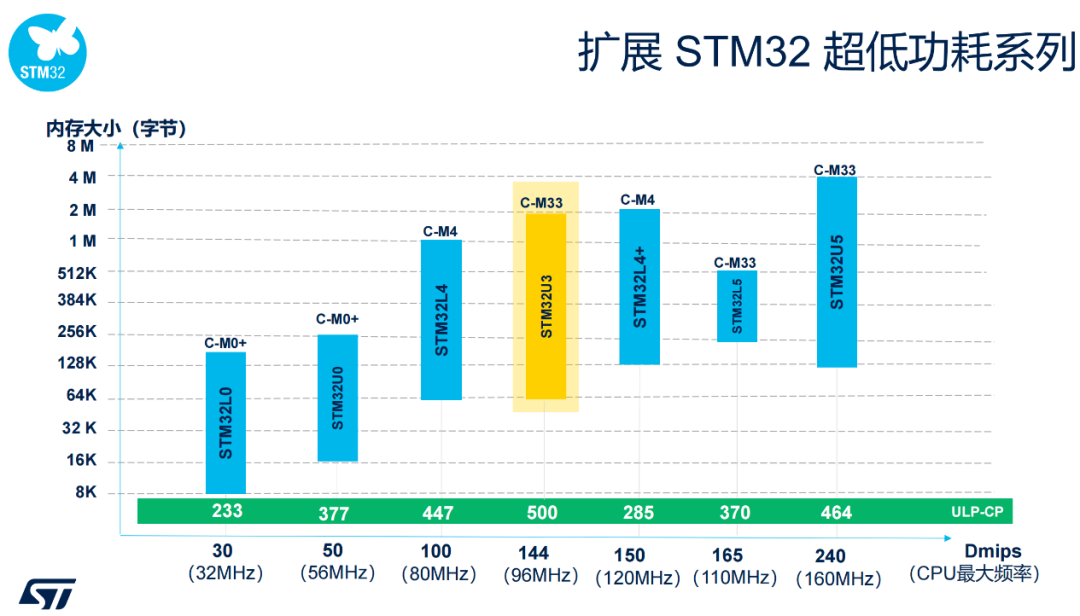
According to Zhang Ming, Technical Marketing Manager of the Microcontroller, Digital IC, and RF Products Division (MDRF) in China, as shown in the figure above, this series of MCUs covers all applications from low-end to high-end, and from low-cost to high-performance. Previously, the low-power product line was iterated using the L series, such as L0, L4, L4+, and L5. Now, ST has added the U series to the low-power product category, launching the entry-level STM32U0 and flagship STM32U5. With the addition of the new generation STM32U3, ST has significantly enhanced the breadth and depth of the entire low-power product line.
“As the most energy-efficient MCU on the market, STM32U3 can greatly extend battery life, thereby reducing power consumption. Compared to the previous generation STM32L4, the STM32U3 has significantly improved security features while adding new peripherals without increasing costs,” Zhang said.
He stated that as the company’s first MCU using near-threshold voltage design, the STM32U3’s near-threshold voltage design can significantly reduce dynamic power consumption (the power consumption when the MCU is running). To understand what near-threshold voltage design is, one must first have a certain understanding of the MCU’s operating voltage. Under traditional power supply voltage conditions, the MCU core voltage is now generally 1.2V to 0.9V, while the STM32 U3’s core logic can be reduced to 0.65V, which can greatly reduce dynamic power consumption and thus significantly lower system power consumption. Although power consumption has been reduced, the chip does not compromise on temperature ratings and voltage ranges, still supporting high temperatures of 105 degrees Celsius.
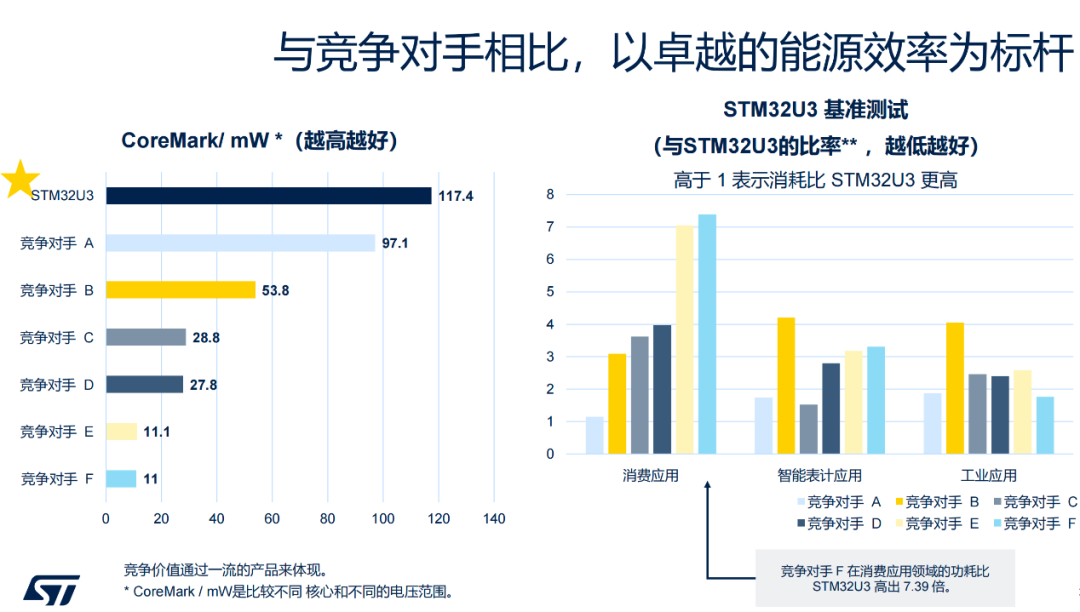
It is reported that with advanced energy-saving chip design, fine-tuning of AI-enhanced tools, and the latest Arm Cortex-M33 core running at up to 96MHz, the new MCU achieves market-leading performance of 117 Coremark/mW. This is almost twice the energy efficiency of STMicroelectronics’ previous generation STM32U5 series and five times that of the STM32L4 series.
In addition to near-threshold voltage design, ST also provides adaptive voltage scaling (AVS) technology for the STM32U3. By using a patented technology developed by the company, each chip is calibrated during production to achieve optimal threshold voltage levels. For customers, this is a solution that does not involve API participation, which can greatly improve overall efficiency.
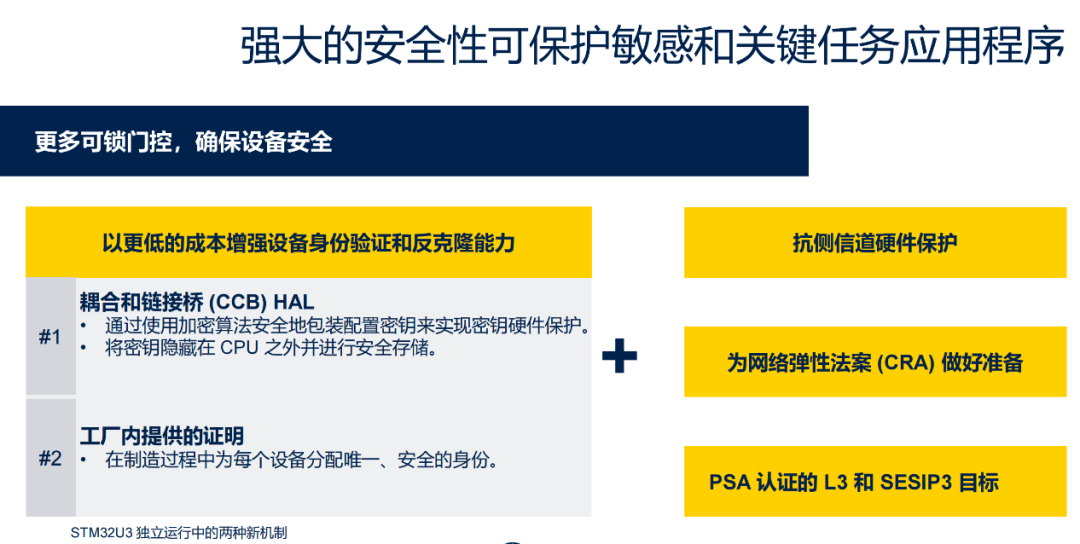
Moreover, security is another point that cannot be overlooked for the STM32U3. Especially in enhancing device identity verification and anti-cloning capabilities, this series of chips performs excellently.
Of course, like other STM32 MCUs, the ecosystem is also an advantage of the U3 series. ST not only provides the Nucleo U385RG-Q development board for initial evaluations, but the company’s software ecosystem supports include our CubeMX, Cube IDE, Cube Programmer, and Cube Monitor, all fully supporting U3, further lowering the entry barrier for developers.
High Cost-Performance 64-bit MPU with NPU
In the STM32 product line, in addition to the well-known MCUs, there are also MPUs. ST has previously written an article analyzing the differences between the two. According to them, both are the brains of embedded systems. A few years ago, the differences between the two were very clear, as they provided vastly different functionalities and required different engineering skills.
“Today, these two terms still exist, but innovation is constantly blurring the lines between them,” ST emphasizes. It is precisely because the boundary between high-performance MCUs and entry-level MPUs is gradually blurring that the STM32MP series MPU devices have become a favorite among embedded system developers.
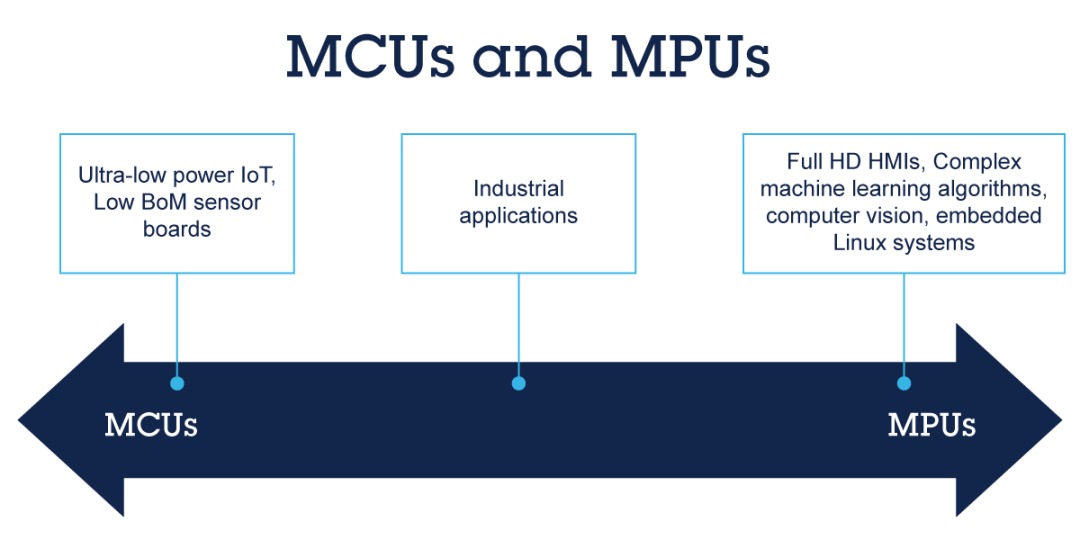
According to previous news from ST, this series of MPU products not only fills the gap between embedded MCUs and application processors but also leverages the powerful MCU ecosystem to provide developers with various tools. To meet the needs of different terminals, ST announced its MPU roadmap last year. As shown in the figure, this series includes the MP1 and MP2 series. Among them, the MP25 released last year is based on a dual-core or single-core 1.5G Cortex-A35 and a 400MHz M33 heterogeneous CPU, along with a 1.35 TOPS NPU and rich peripheral interfaces.
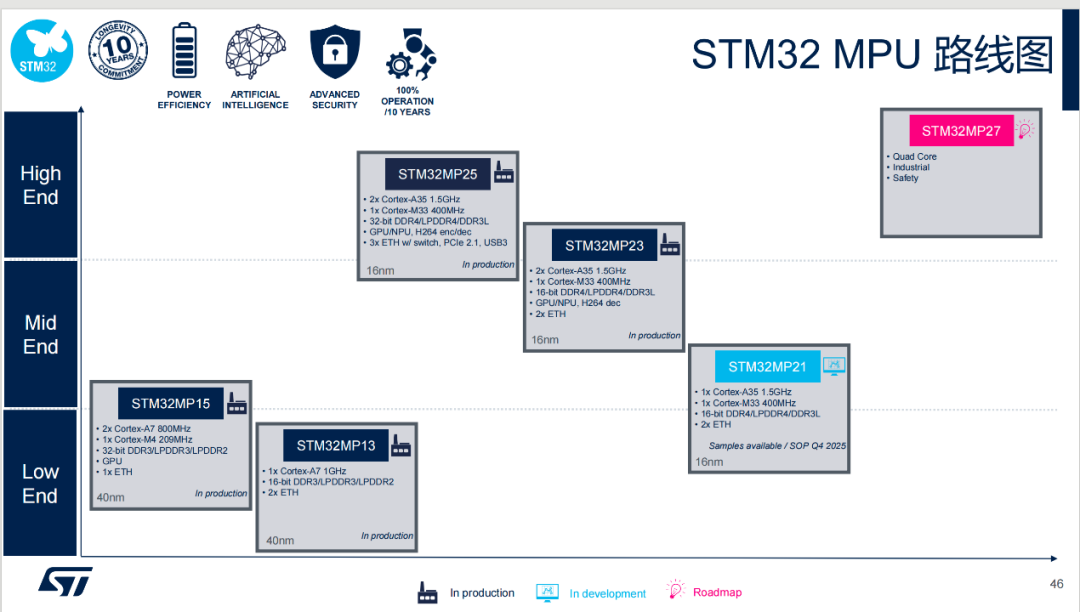
To meet customer needs, ST previously released a cost-optimized product from the MP25— the STM32MP23 series.
According to Huo Sun, Market Manager for Microprocessor Products in the Microcontroller, Digital IC, and RF Products Division (MDRF) at STMicroelectronics China, as an extension of the MP25, the STM32MP23 series first enriches the company’s MPU product line; compared to the already high cost-performance MP25, the MP23 is even more cost-optimized; compared to the MP1 series, its performance is stronger, and memory DDR support has expanded from DDR3 to DDR4, a more commonly used DDR; in addition, the MP2 series also has rich AI, graphics, and video acceleration capabilities.
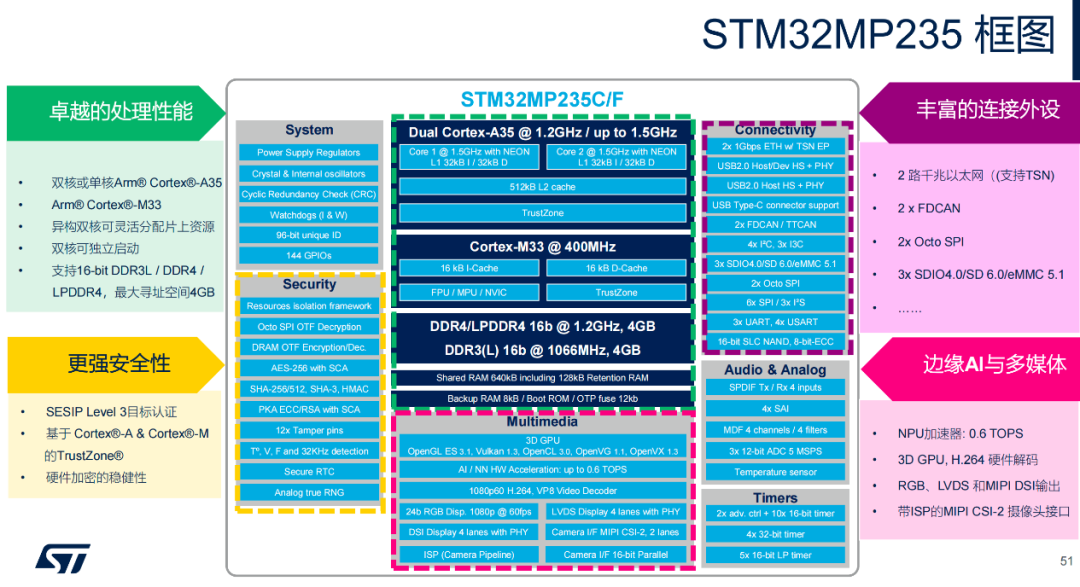
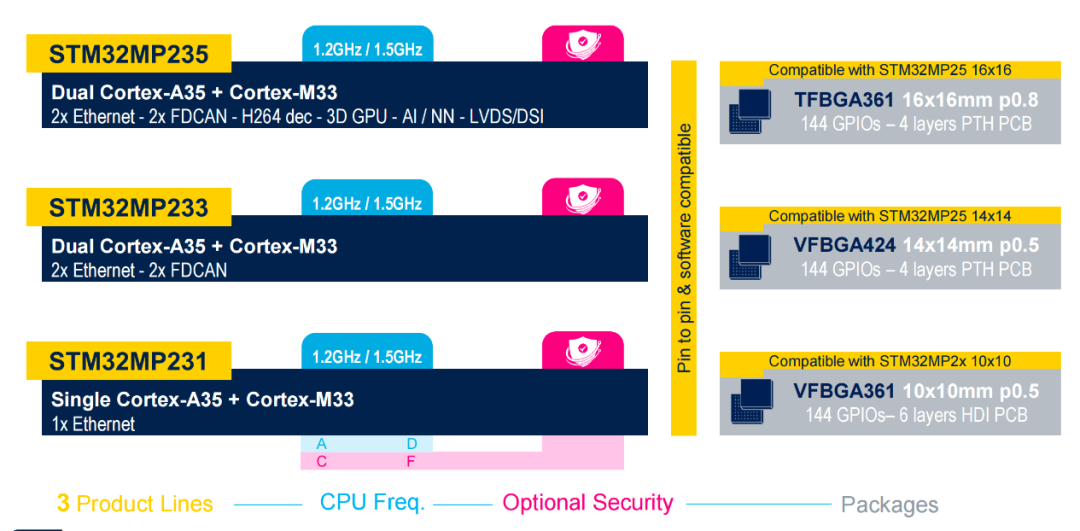
According to the different peripherals such as multimedia, AI, and communication, ST has divided the STM32MP23 series into three sub-series: 235, 233, and 231. All three sub-series support three types of packages. Since all sub-series products support these three packages, it means that developers can easily achieve P2P compatibility in product replacements. “As shown in the figure, even with a 0.5 ball pitch, we can achieve a 4-layer through-hole PCB design, allowing users to further optimize costs in hardware design,” Huo Sun explained.
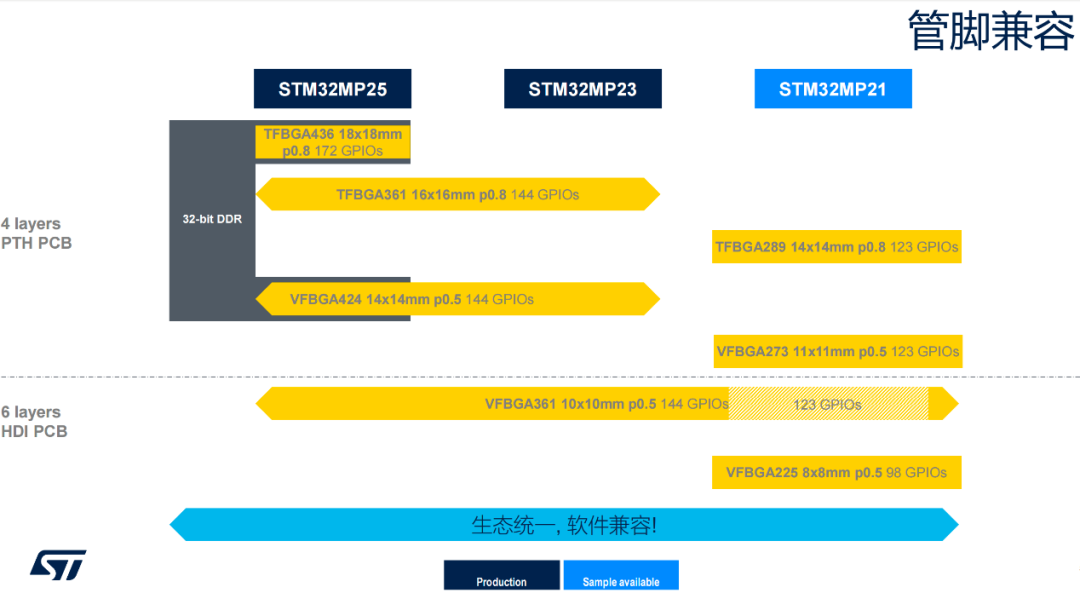
Huo Sun summarized that from STM32MP25 to STM32MP23 and STM32MP21, ST has optimized product costs while meeting different application needs by trimming cores and peripherals. At the same time, the company has also made multiple package compatibilities for these designs, allowing developers to be more flexible in chip selection and easily achieve simple migration of hardware between different product lines. More importantly, since all software uses OpenSTLinux, this further simplifies developers’ work.
To further accelerate product development for developers, ST provides reference designs for each package of the chip that have undergone signal integrity and power integrity checks, allowing users to use them directly to shorten development cycles. ST has also paired the MP2 series with the power management chip STPMIC2, making the overall design more efficient and streamlined. Additionally, evaluation boards and exploration versions, including display boards and camera modules, are important deployments by ST to lower the development threshold and improve development efficiency for this series of products.
Of course, as mentioned earlier, the STM32 ecosystem support is also inherited in this series of products. For the characteristics of the NPU, as shown in the figure below, ST also provides comprehensive support for this series of products. Additionally, ST offers the X Linux AI extension package— a one-stop AI solution that supports commonly used selected AI routines and neural network frameworks, directly supporting customers’ preferred Python and OpenCV. This allows users to use it right away, saving development time.
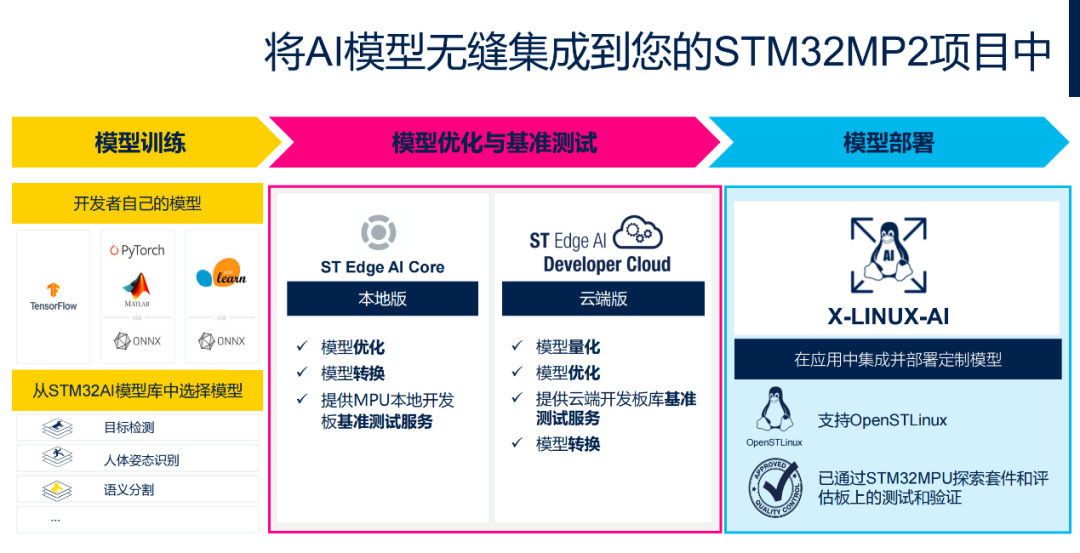
Huo Sun revealed that by the end of this year, ST plans to launch a more cost-optimized MP21, and a more powerful MP27 is also in the planning stage. Combined with the already widely used MP1 series, ST will build a product matrix covering low, mid, and high-end STM32MPU products to meet differentiated needs in various scenarios.
“Our MPU is designed for industrial applications, providing high reliability industrial-grade products that currently cover 90% of user application needs in industrial and general industrial application scenarios,” said Huo Sun, Market Manager for Microprocessor Products in the Microcontroller, Digital IC, and RF Products Division (MDRF) at STMicroelectronics China.
Wireless MCU, Comprehensive Coverage
Another recent hotspot in the MCU industry is wireless MCUs. In response, ST has introduced the STM32Wx microcontroller that supports wireless connectivity. It provides support for wireless applications in the Sub-GHz and 2.4 GHz frequency bands. “For RF designers seeking more than just simple radio devices, this is an ideal choice,” ST states. They further point out that these MCUs are highly integrated and reliable, suitable for various industrial and consumer applications.
At the STM32 Summit, Chen Deyong, Director of Wireless Products in the Microcontroller, Digital IC, and RF Products Division (MDRF) at STMicroelectronics China, also shared the latest on the STM32WBA6.
According to the introduction, in addition to low-power Bluetooth, the WBA6 also supports Matter, Thread, and Zigbee protocol stacks. Application scenarios include wireless-connected wearable devices, smart homes, or industrial sensors. From the above introduction, it can be seen that the product positioning of WBA6 is to comprehensively support wireless microcontrollers with different protocol stacks, and multi-protocol stack support is one of the features of WBA6.
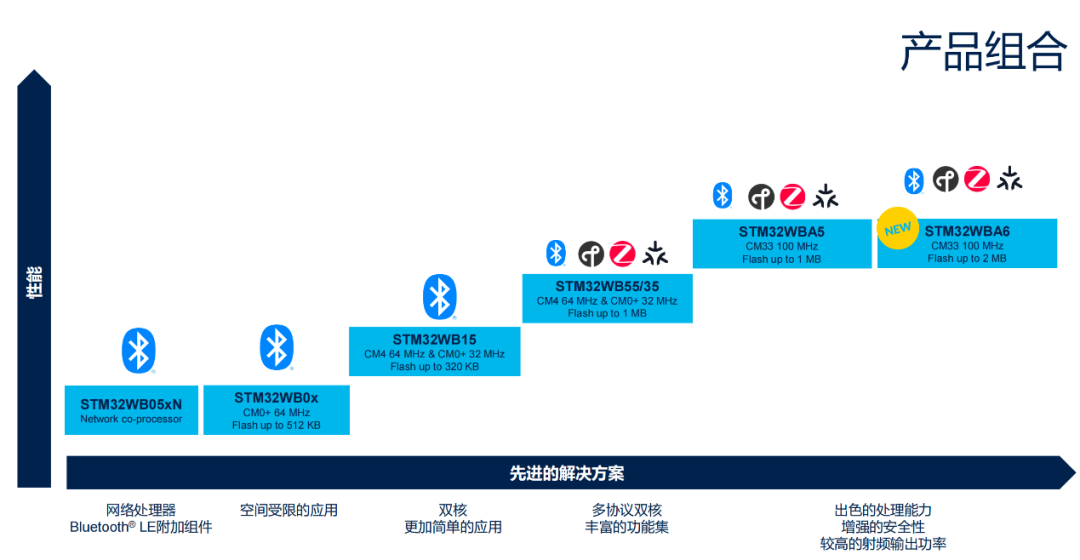
When sharing the advantages of the WBA series, Chen Deyong emphasized that this mainly reflects how the company improves user experience by enhancing wireless performance. He stated that in addition to multi-protocol stack support, the WBA series also achieves high transmission power with relatively low power consumption, with its 10+dBm output power being quite excellent in the industry. Of course, while enhancing wireless performance, ST has not forgotten to bring security regulations and STM32 ecosystem support.
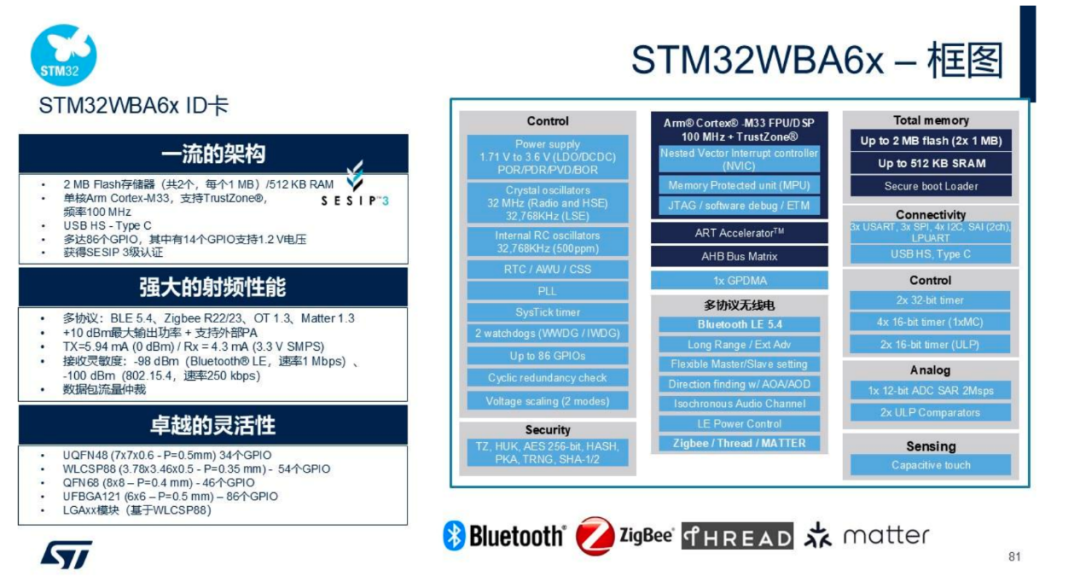
Thanks to its use of 40nm manufacturing technology, the WBA6 can achieve excellent configurations. For example, it supports up to 2MB of flash memory and 512KB of RAM. Additionally, this series can support up to 86 GPIOs and high-speed USB. Notably, the WBA6 is the industry’s first wireless product capable of this GPIO count.
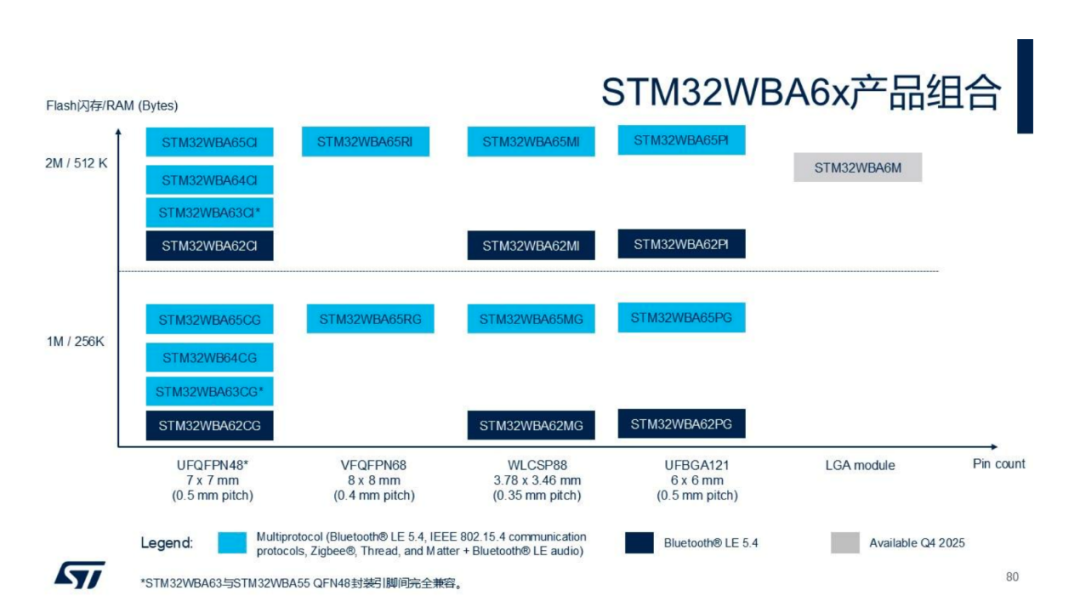
To meet the diverse needs of terminals, ST also provides different product combinations for the WBA6, with varying flash memory capacities and different packaging structures. Additionally, thanks to the company’s research in power consumption technology, this series can achieve the industry’s lowest power consumption of 5 microamps in stop mode 2.
In terms of ecosystem, in addition to the regular STM32 ecosystem support mentioned above, this series also includes a special Cube Monitor RF for wireless configurations. In other words, during the overall development process, if it involves wireless communication, a special Cube Monitor RF GUI can be used to evaluate RF energy consumption. The Cube Monitor also adds an RF performance testing record function. Additionally, Cube MX has also proposed support for wireless protocol stacks, which distinguishes it from general MCUs in terms of protocol stack support.
For Bluetooth applications, ST has also launched a low-power Bluetooth smartphone application BLE toolbox. With this tool, developers can conduct various tests more easily during the development phase.
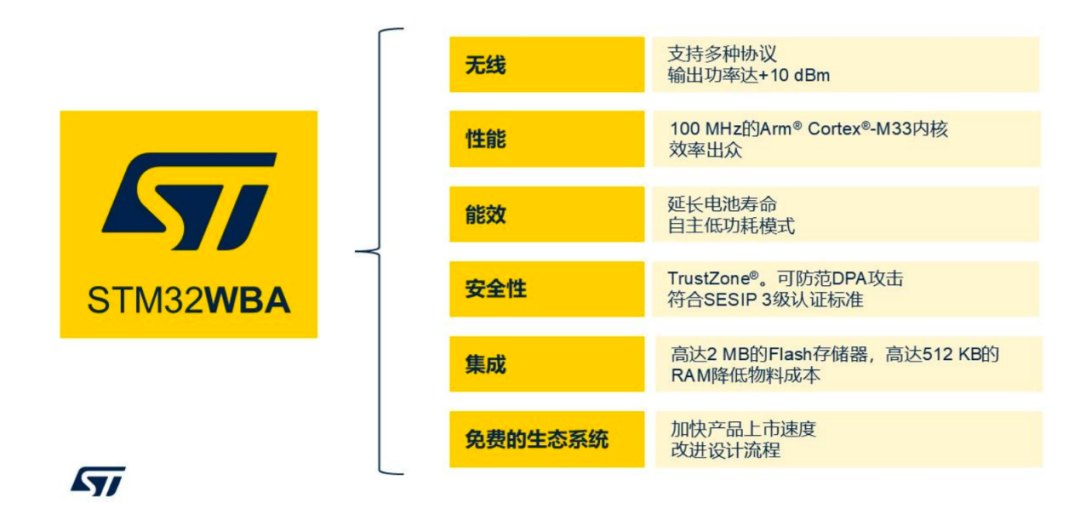
Chen Deyong summarized that, as shown in the figure above, the STM32WBA has six major features. It is precisely because of these leading configurations that it can support applications such as smart locks, smart homes, and smart medical devices (e.g., continuous glucose monitoring).
In Conclusion
In addition to the products mentioned above, ST also brought the edge chip STM32N6 with powerful NPU, excellent graphics processing capabilities, reliable security, and a complete ecosystem to this summit; the STM32H5/H7, which offers high performance and high security, providing Ethernet, FD-CAN, and various communication interfaces, was another highlight MCU at this summit.
Additionally, the latest version of the free graphical framework TouchGFX for STM32, TouchGFX 4.25, and the announcement of two new strategic directions for STM32Cube were also key points of this year’s STM32 summit.
ST pointed out that in terms of STM32Cube, the company will return to using FreeRTOS as the main kernel, while deeply integrating USBX, FileX, and LWIP to build a comprehensive middleware solution. At the same time, the third version of the STM32Cube plugin for Visual Studio Code has been officially released. It is reported that the new architecture adopts a modular design, greatly increasing user selection flexibility, more refined update management, easier operation, and lower risks.
In summary, ST is doing its utmost to bring better products and supply chain guarantees to the Chinese and global markets.
Click here👆 to follow for more original content
*Disclaimer: The content of this article reflects the author’s personal views. Semiconductor Insights reprints it solely to convey a different perspective and does not represent Semiconductor Insights’ endorsement or support of this view. If there are any objections, please feel free to contact us.
Recommended Reading
10 trillion invested in semiconductors
Chip giants see market value plummet
Jensen Huang: HBM is a technological miracle
Jim Keller: RISC-V will definitely prevail
The 10 highest-valued chip companies globally


If you like our content, please click“Looking”” to share with your friends~