
—–Teardown Report by I Love Audio No.731—–
The release of Sony’s next-generation gaming console, the PS5, in mainland China in 2020 attracted a lot of attention from gamers. Alongside the upgraded hardware, the corresponding game controller, the “Sony PS5 DualSense Wireless Controller,” has also undergone significant improvements in vibration, button feedback, linear vibration feedback, and microphone capabilities. The addition of adaptive triggers has made the gaming experience even more realistic.
I Love Audio recently obtained the Sony PS5 DualSense Wireless Controller and conducted a teardown. Let’s explore the secrets of this controller together!
1. Appearance of the Sony PS5 DualSense Wireless Controller
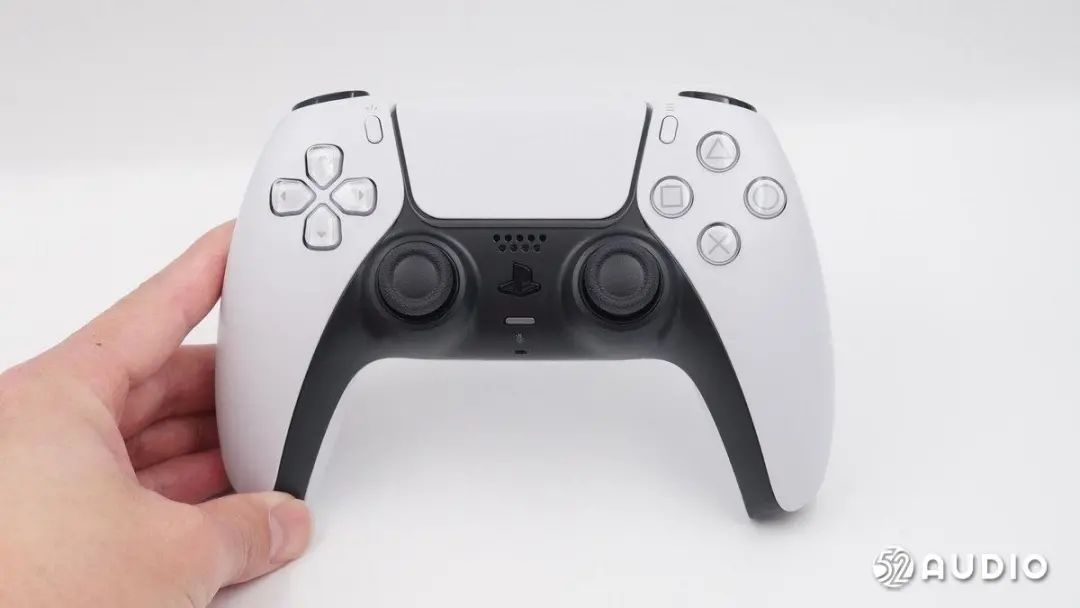
Overview of the front appearance of the Sony PS5 DualSense Wireless Controller. The design features a black and white color scheme. Compared to the PS4 controller, the PS5 DualSense Wireless Controller has a larger grip area, making it look sturdier, and its curves are more elegant, better conforming to ergonomic standards.
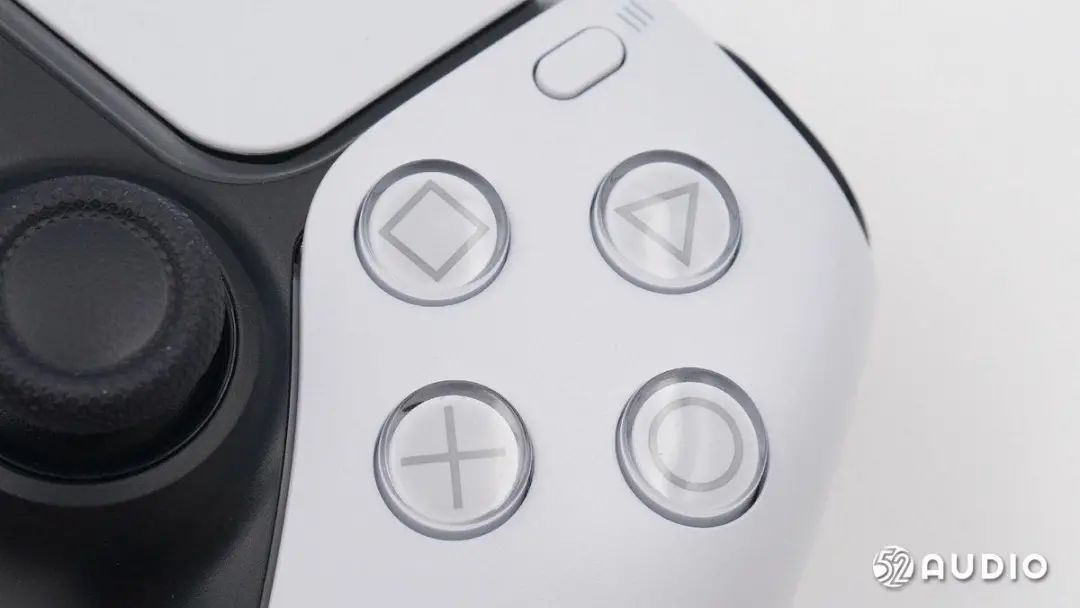
Overview of the buttons on the Sony PS5 DualSense Wireless Controller, which feature transparent buttons reminiscent of the former PSP.
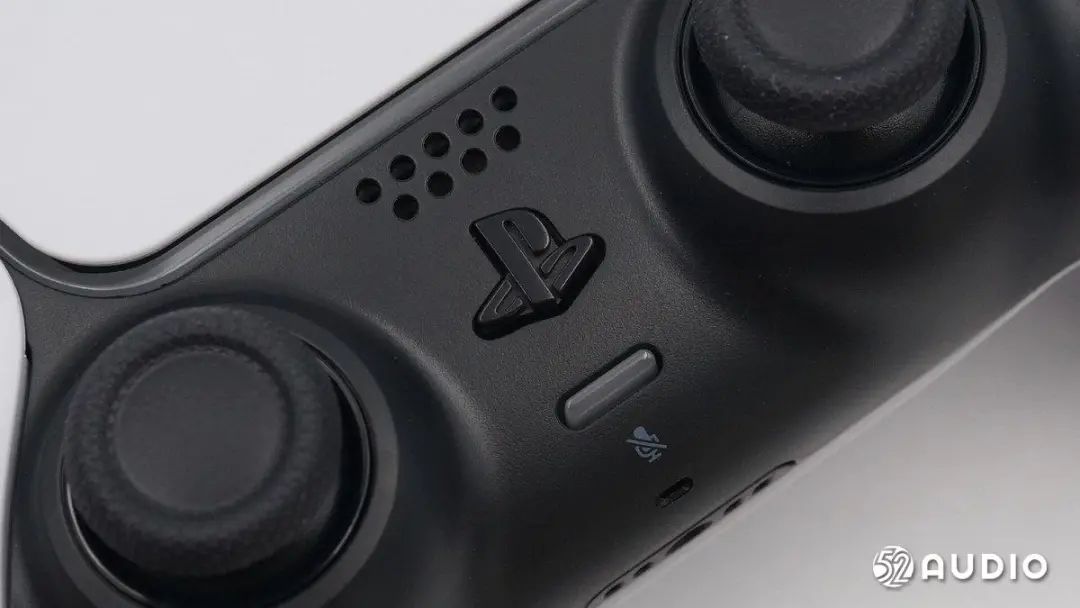
The bottom of the controller features a speaker opening, a logo-shaped PS button, and a microphone mute button.
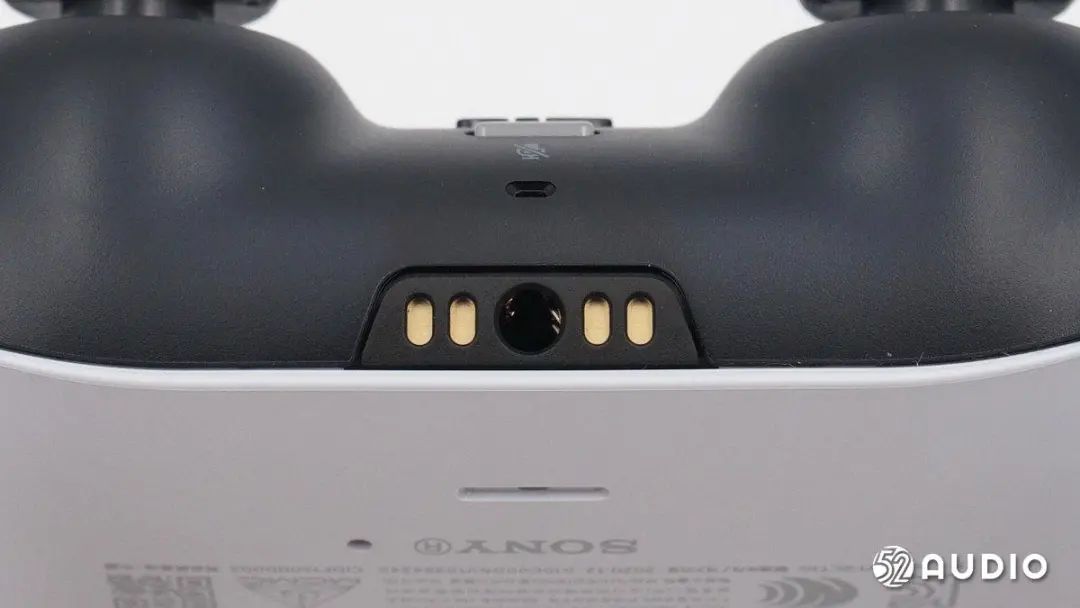
The bottom of the Sony PS5 DualSense Wireless Controller is designed with copper contact points for charging/expansion and a 3.5mm headphone jack.
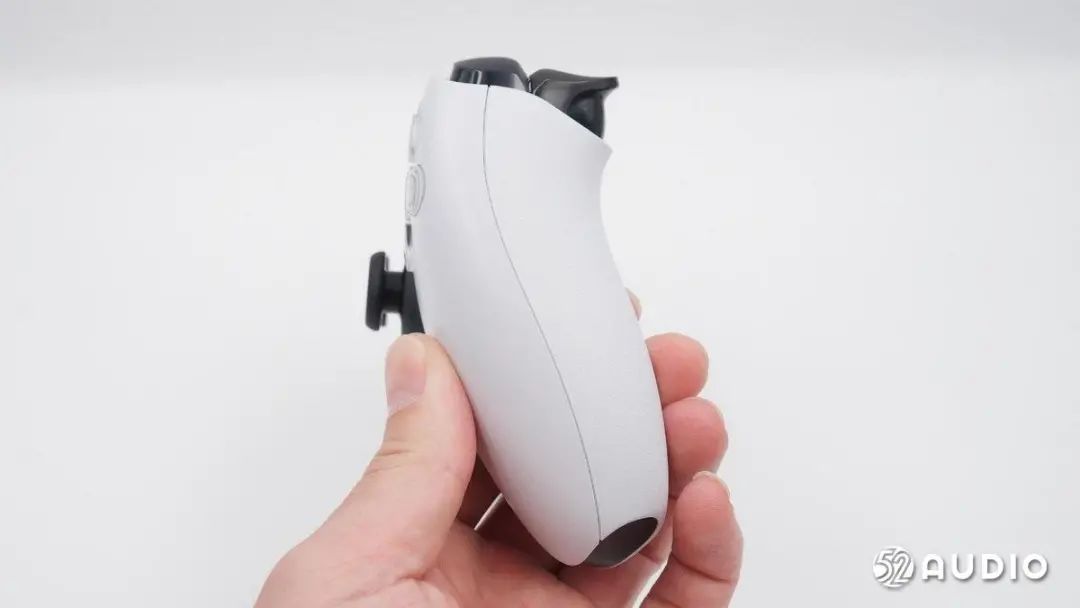
Side view of the Sony PS5 DualSense Wireless Controller, showing that the overall curves are smoother than those of the PS4 controller.
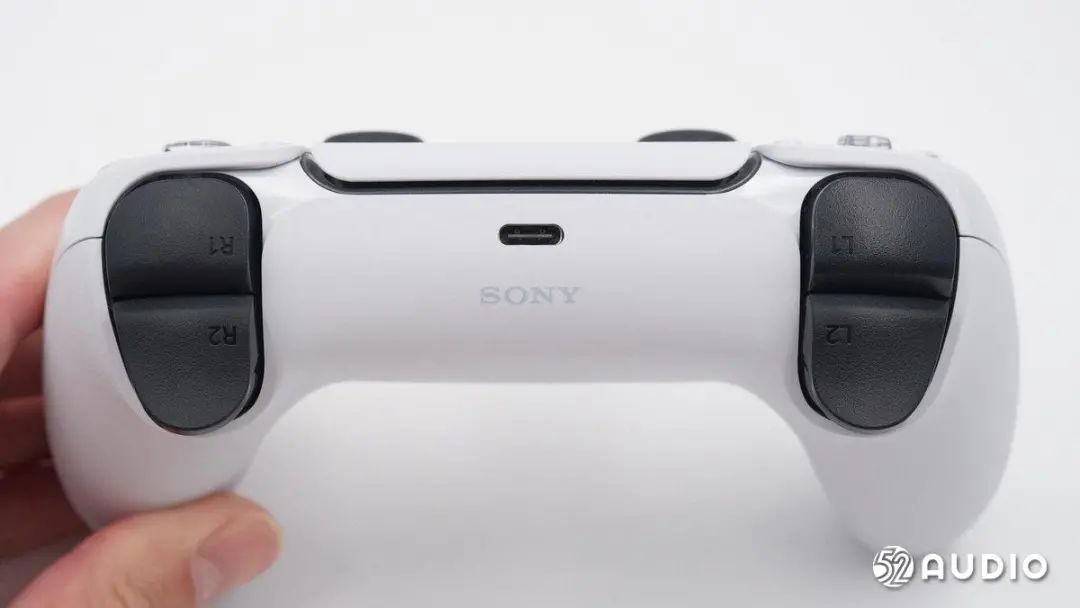
Top view of the Sony PS5 DualSense Wireless Controller, which features four shoulder buttons and a Type-C charging port. From this angle, it is clear that the design of the controller is more ergonomic.
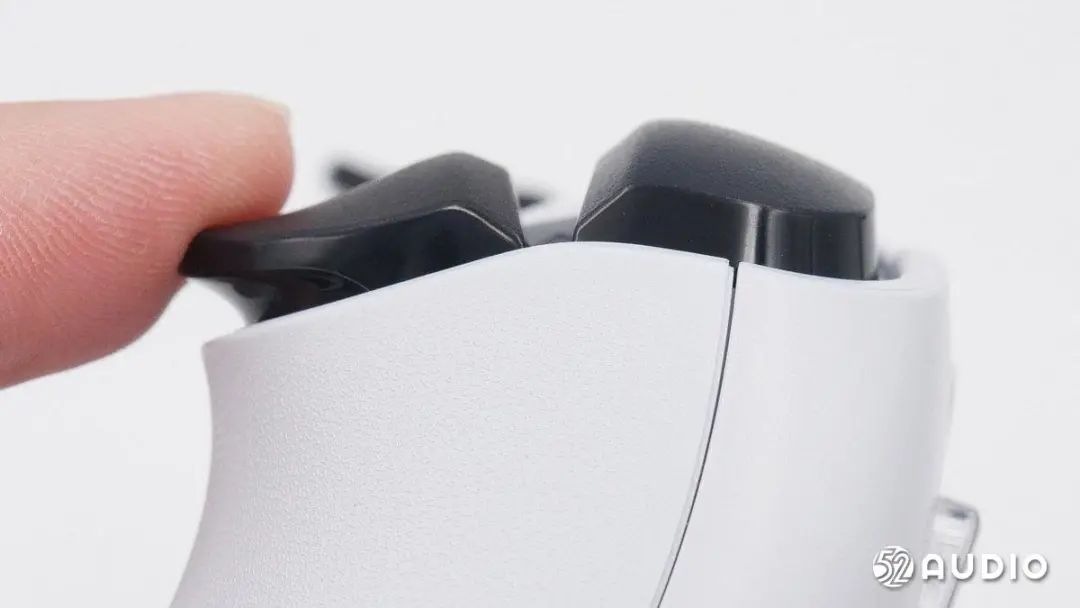
The Sony PS5 DualSense Wireless Controller features adaptive triggers. Pressing the L2 button provides a longer travel distance compared to the PS4 controller, offering better feedback and user experience.

The grip of the controller is designed with a non-slip texture, which, when viewed up close, reveals the iconic button icons of the game controller, showcasing attention to detail.
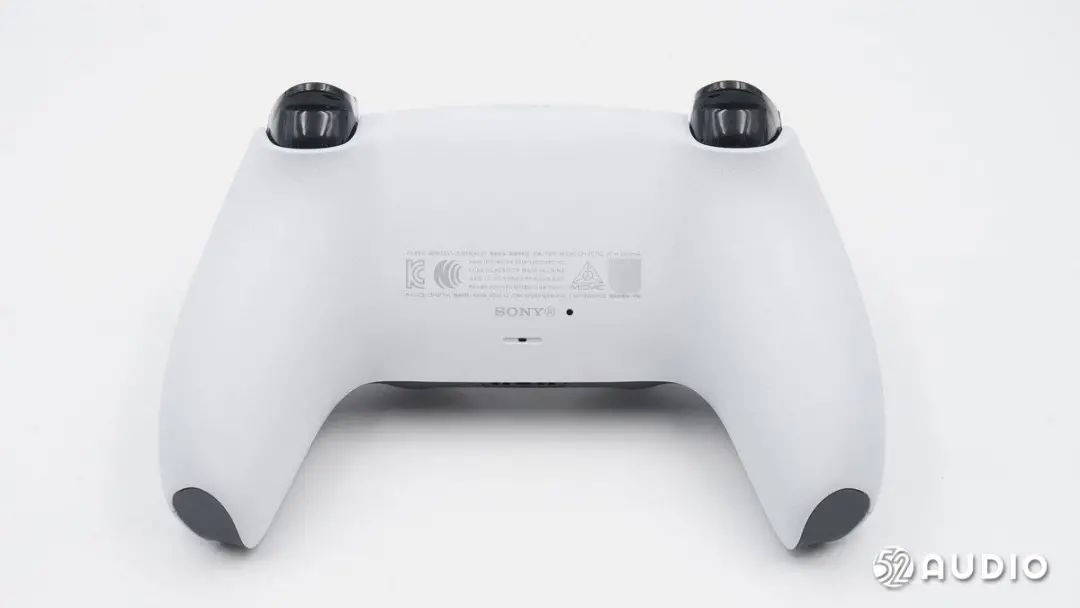
Back view of the Sony PS5 DualSense Wireless Controller, with a larger white area on the back, giving it a cleaner overall appearance.
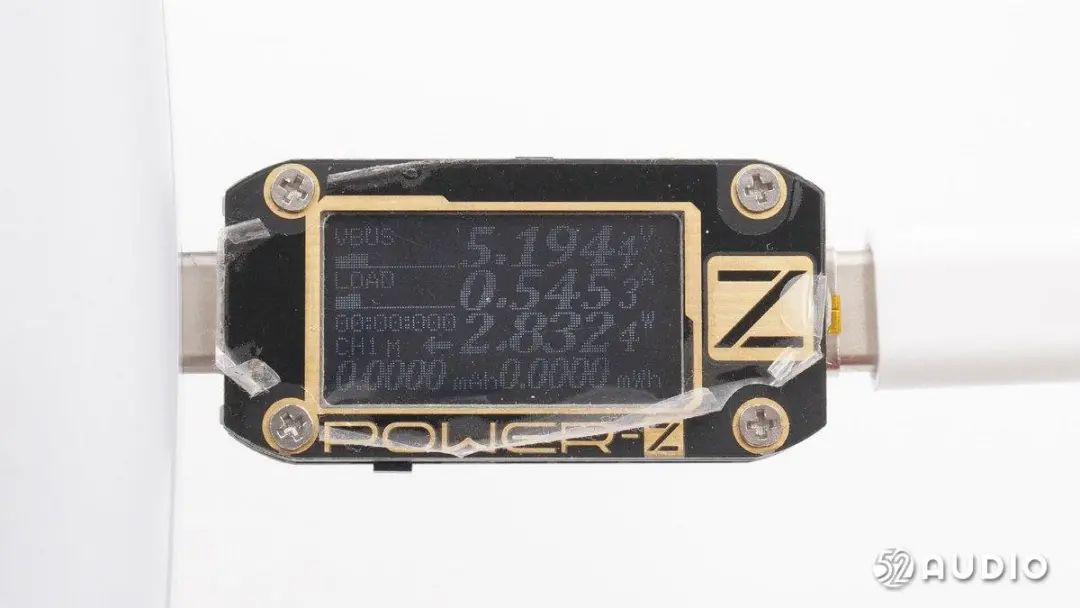
I Love Audio used the ChargerLAB POWER-Z KM001C portable power tester to conduct a wired charging test on the Sony PS5 DualSense Wireless Controller. The charging voltage was approximately 5.20V, with a charging current of about 0.55A, resulting in a charging power of approximately 2.83W.
2. Teardown of the Sony PS5 DualSense Wireless Controller
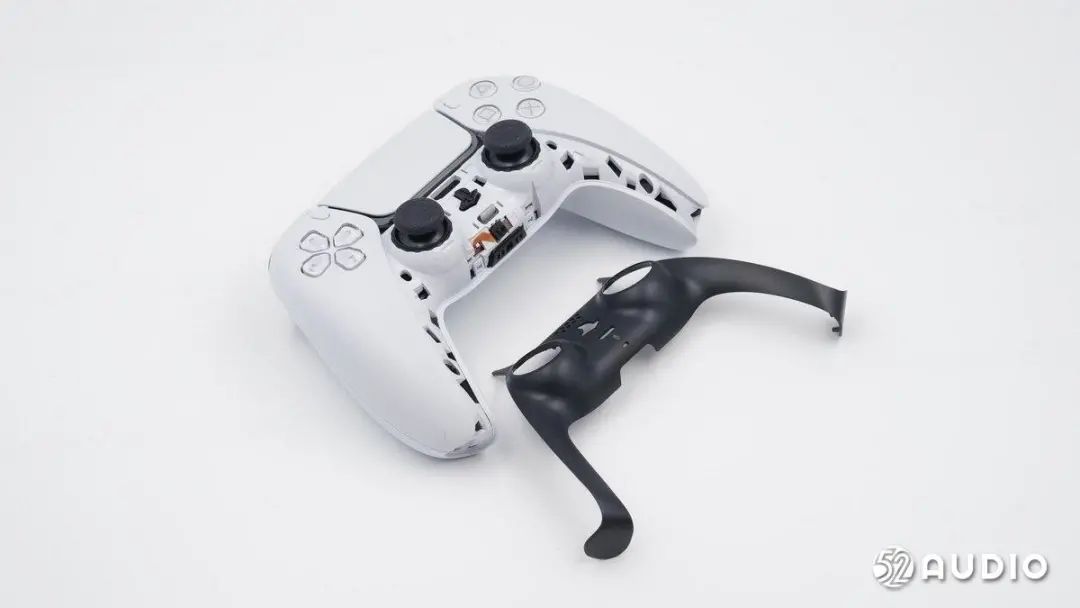
First, remove the black joystick cover, which is assembled onto the controller casing with clips.
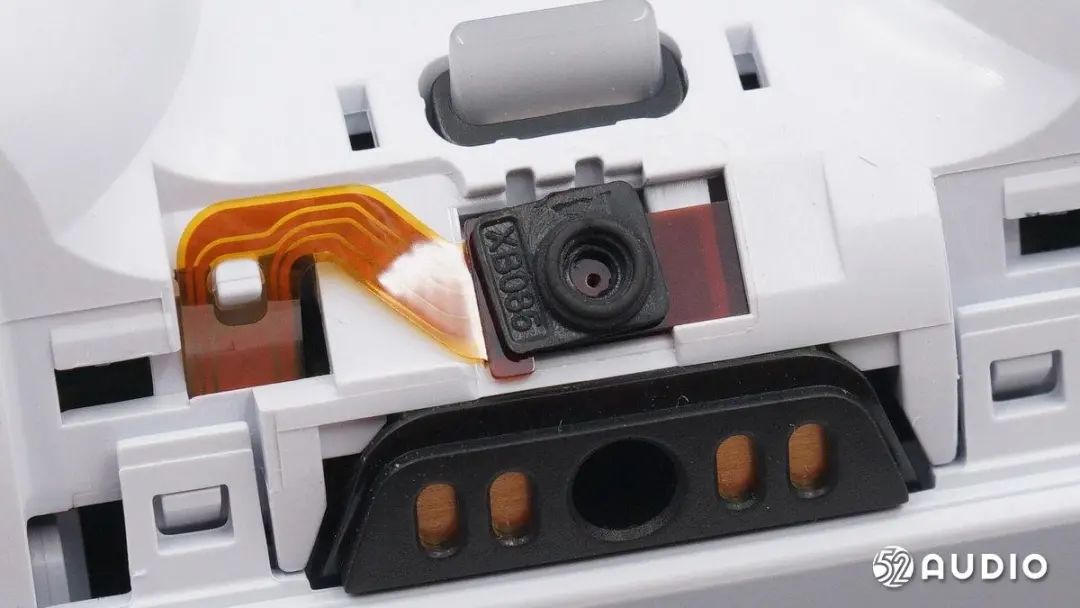
Under the joystick cover, there is a microphone for the controller’s voice function.
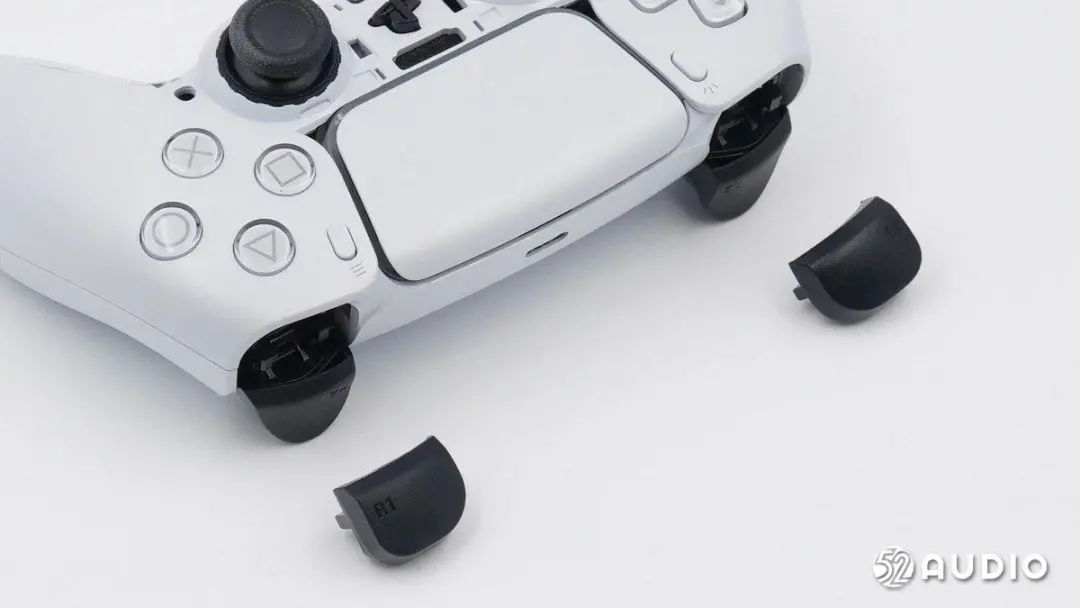
Remove the “L1 R1” shoulder buttons.
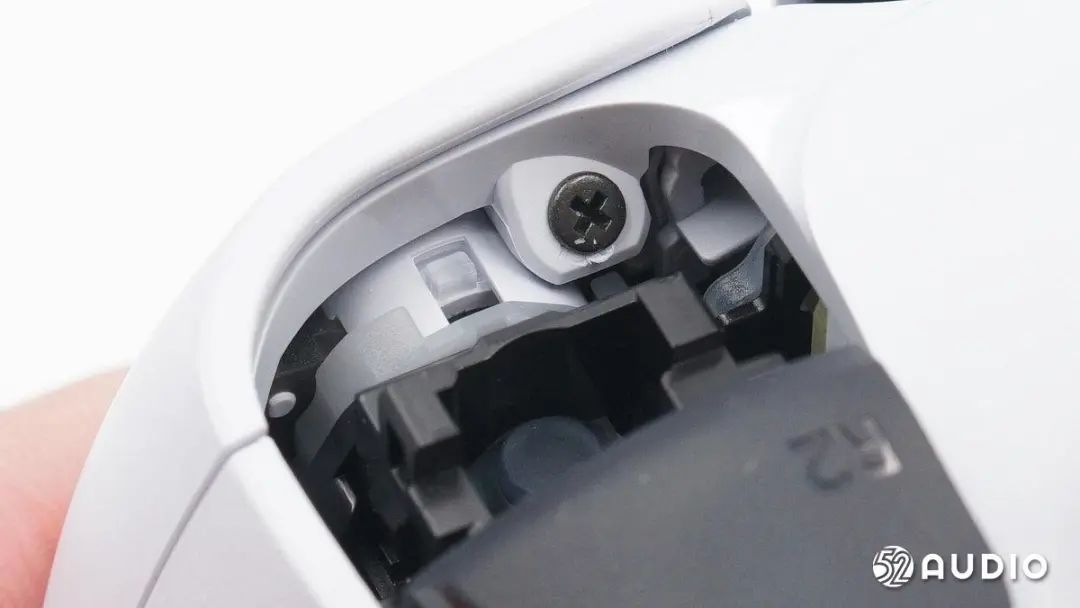
Fixed screws inside the shoulder buttons.
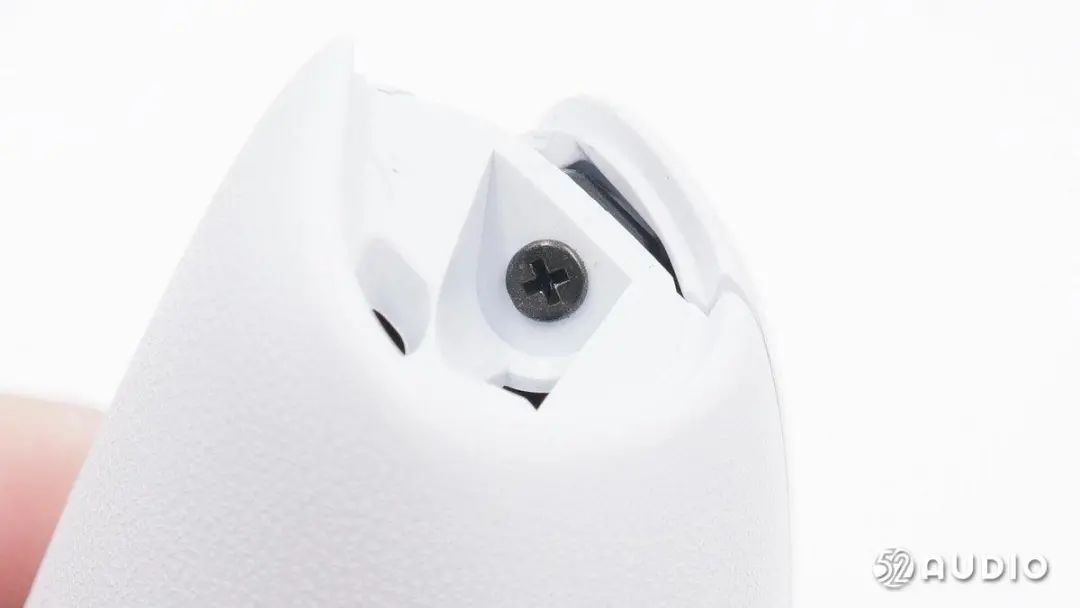
Below the cover are screws that fix the front and back shells of the controller.
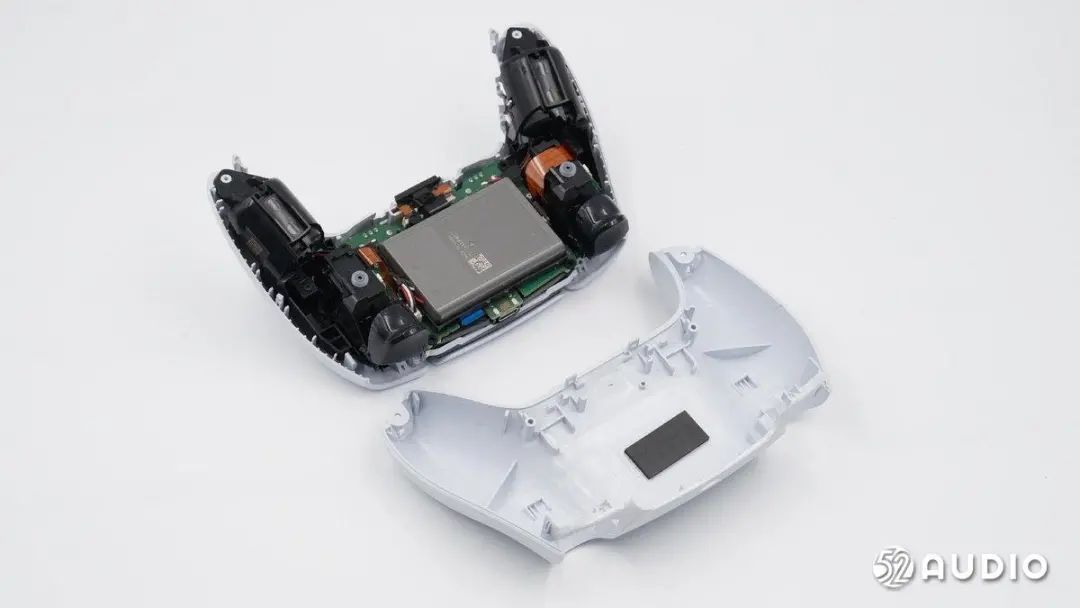
Remove the screws to separate the front and back shells of the controller.
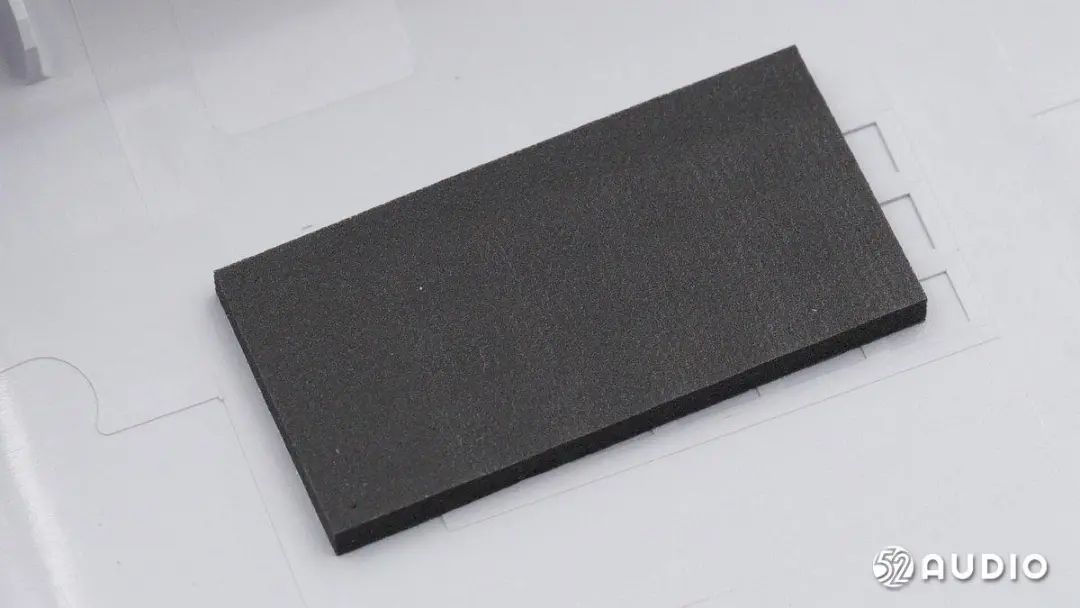
The back shell of the controller features a cushioning pad to secure the battery.
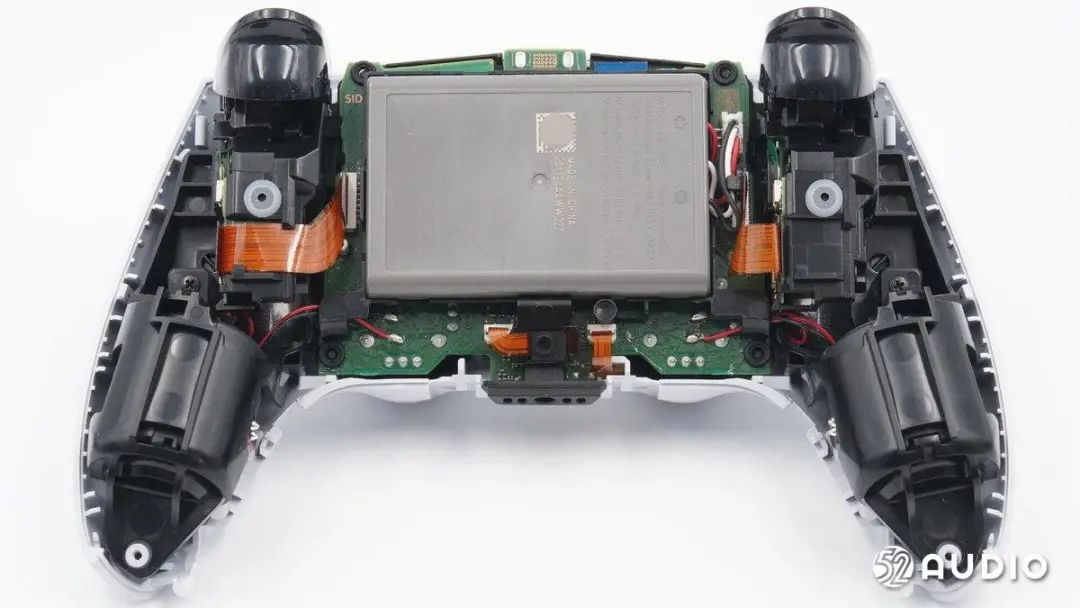
Overview of the internal structure of the controller.
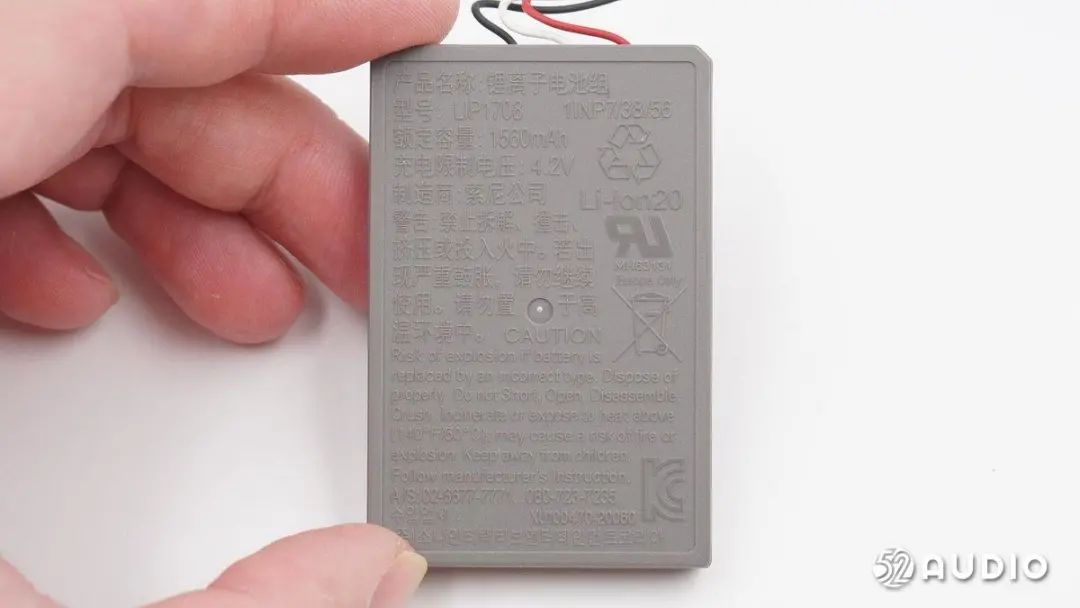
Sony LIP1708 lithium-ion battery pack, rated capacity 1560mAh, charging limit voltage 4.2V.
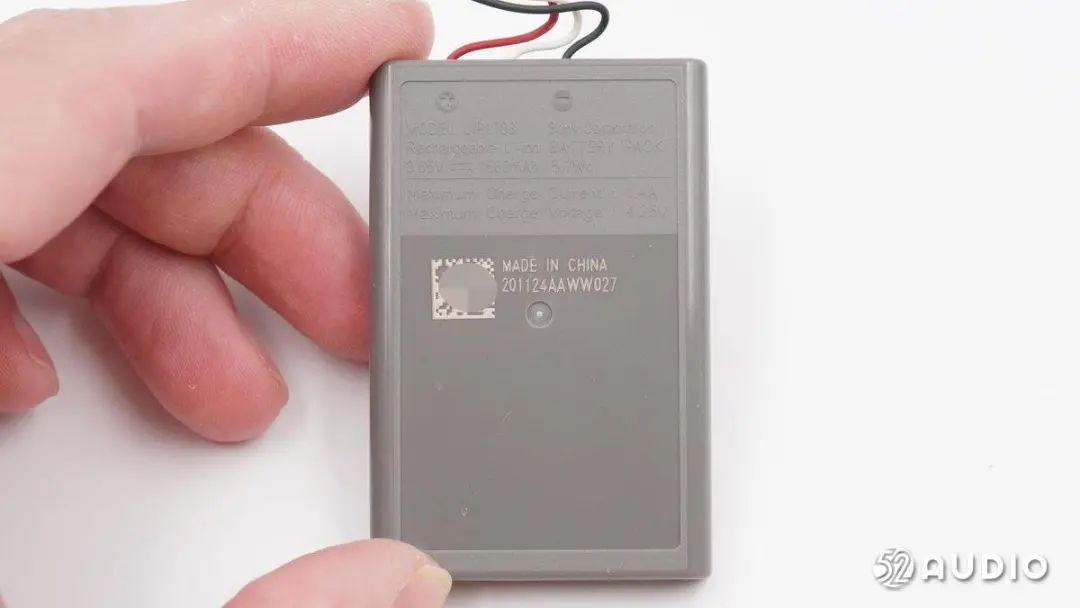
The back of the battery casing is printed with “Max charging current 1.4A, Max charging voltage 4.25V” and information indicating it was made in China.
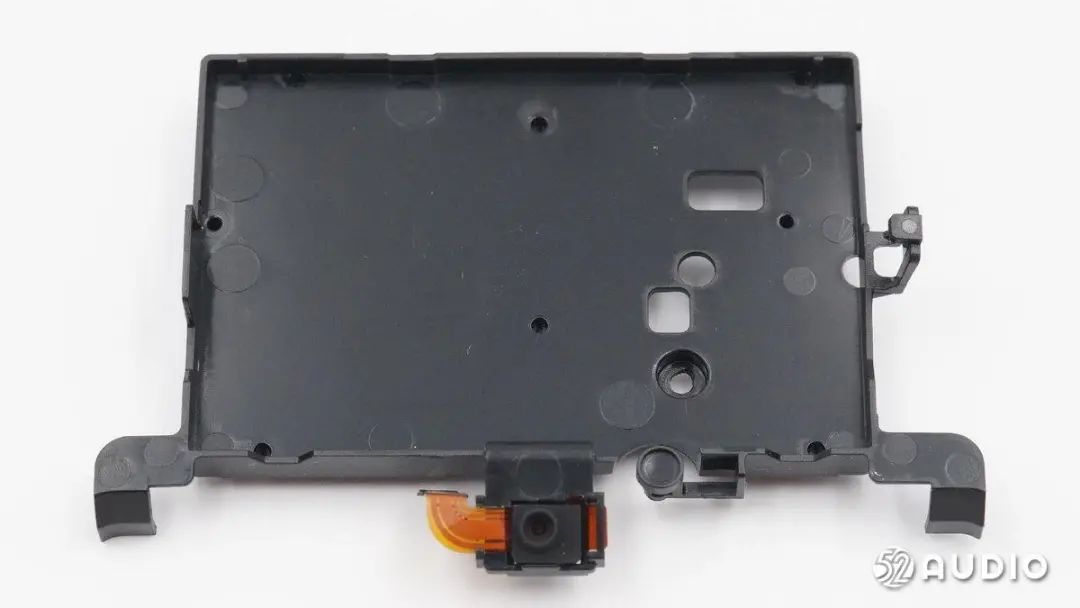
Below the battery is a plastic plate secured with screws to the mainboard, which also serves to isolate vibrations.
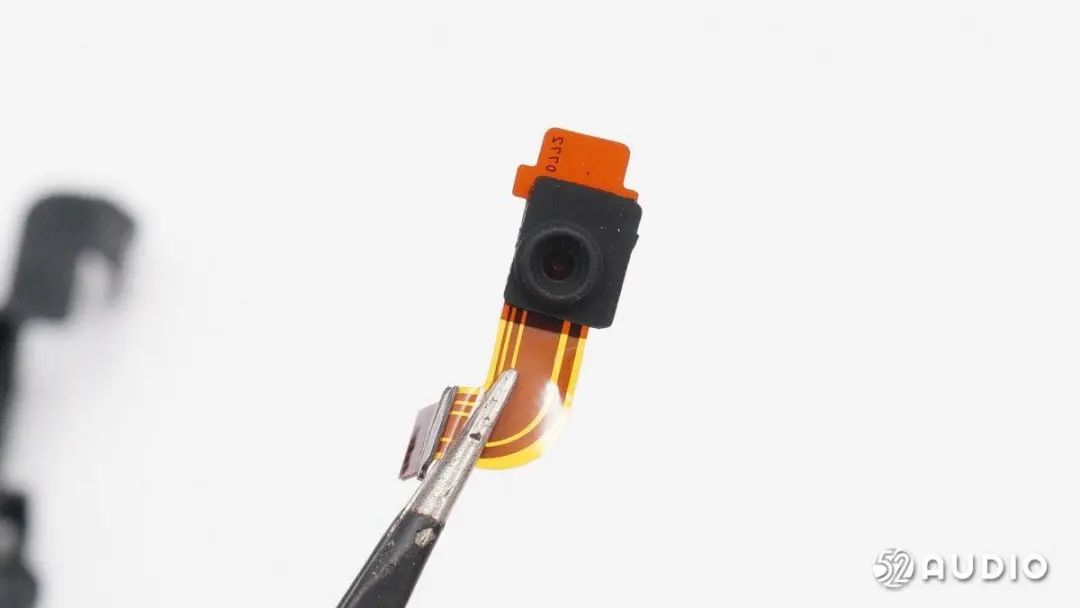
Another microphone is fixed on the plastic plate.
The microphone features an acoustic sealing structure to enhance sound pickup details.
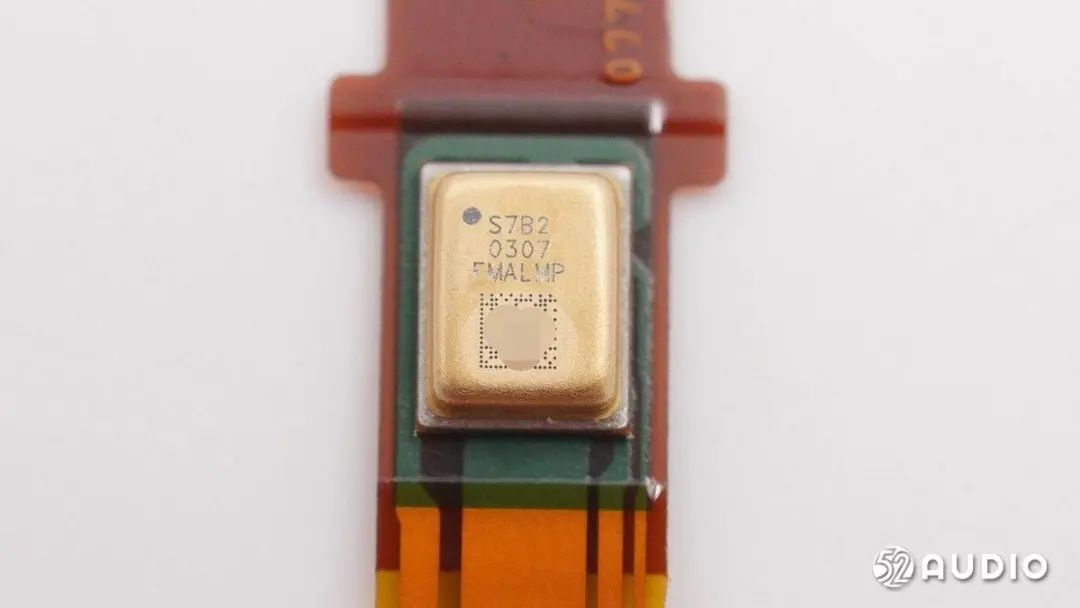
The laser-engraved microphone marked “S7B2 0307 FMALMP” is used for the controller’s voice functionality.
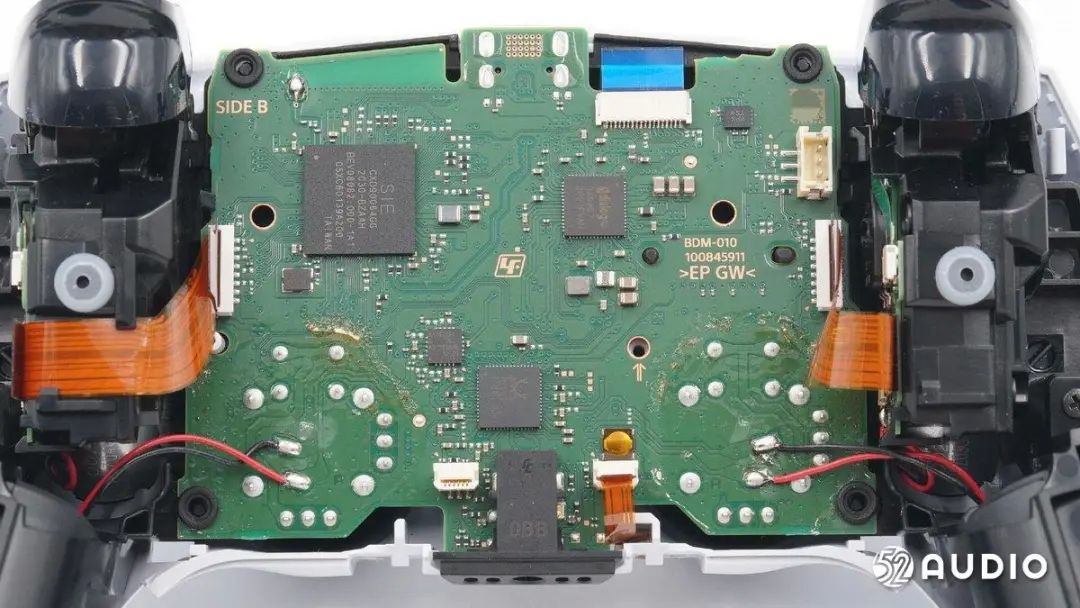
Overview of the front of the controller’s mainboard, where the vibration motors on the grips are soldered to the mainboard.
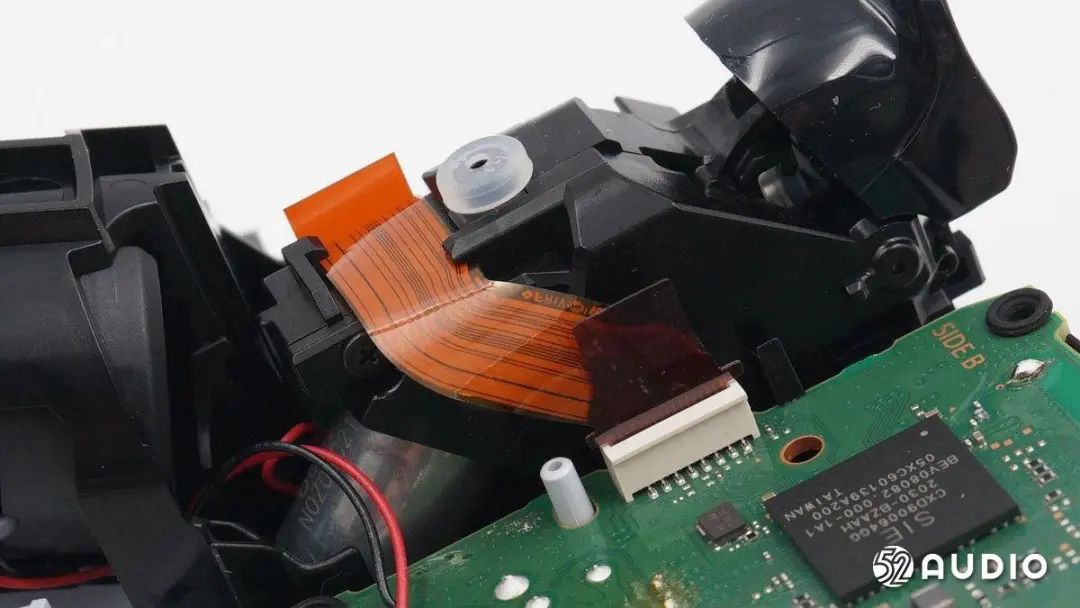
The trigger buttons are connected to the mainboard via a ZiF connector. A translucent silicone cushion is placed between the back shell and the adaptive trigger.
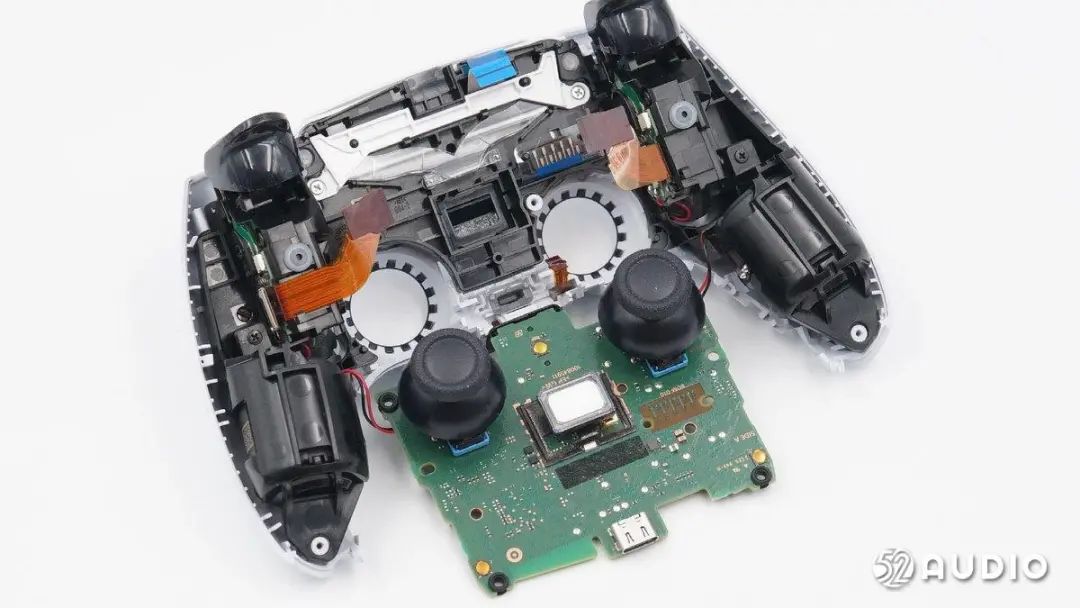
Separate the joystick mainboard from the controller casing.
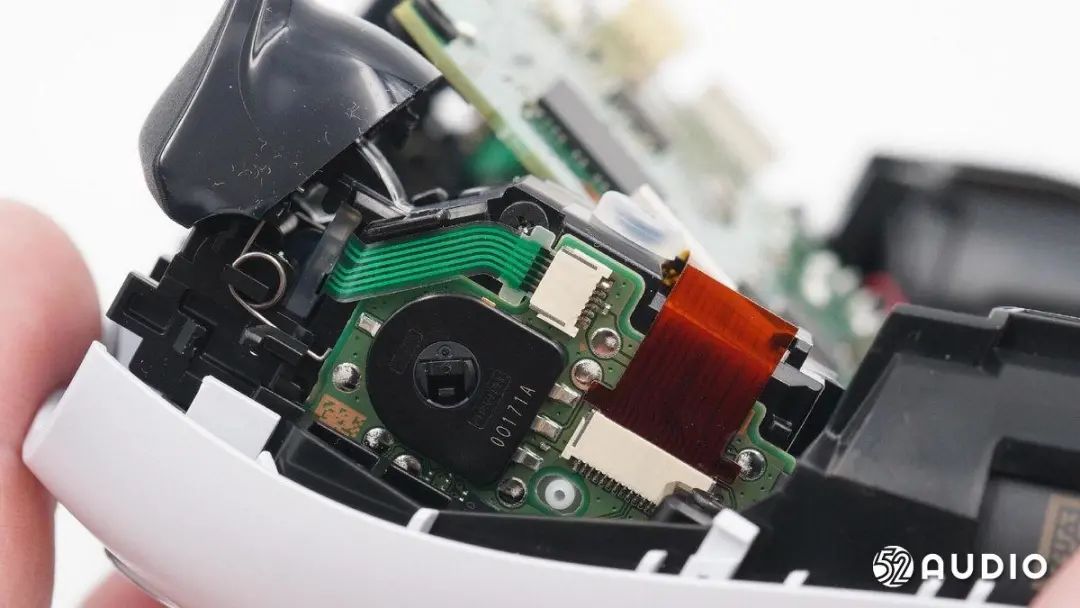
Side view of the controller, featuring a switch button for the trigger.
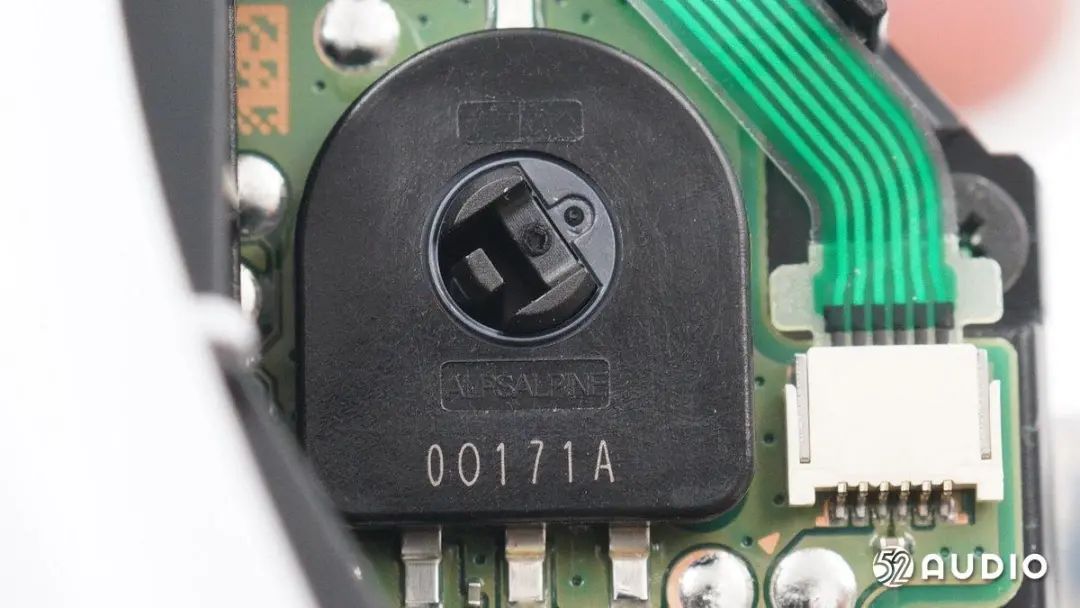
Japanese ALPSALPINE rotary potentiometer, used to detect the angle of the shoulder buttons.
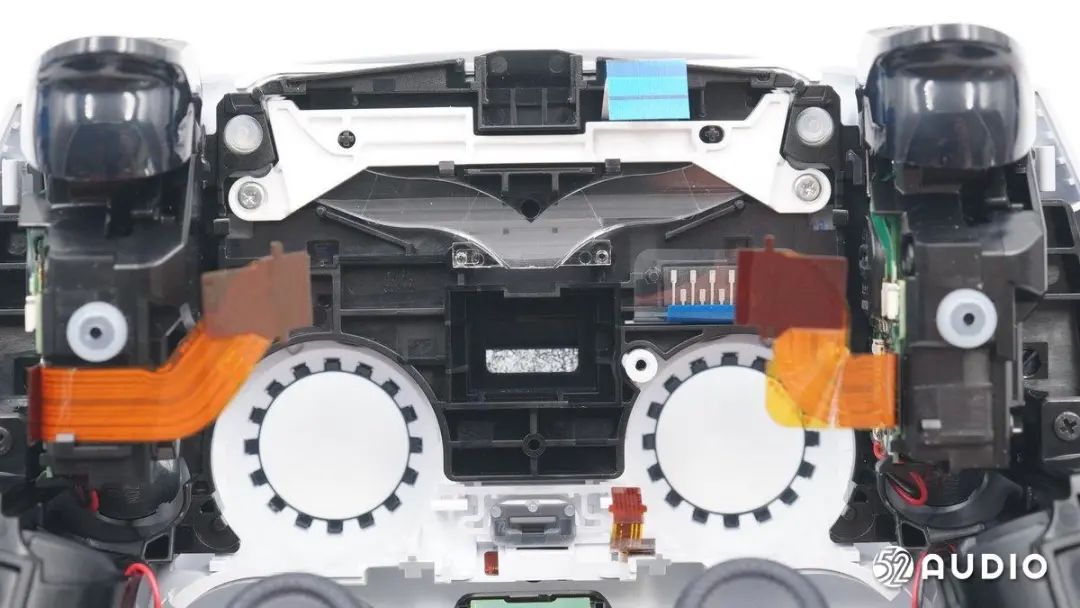
Internal structure of the Sony PS5 DualSense Wireless Controller, with the trigger module connected to the mainboard via ribbon cable. The internal components are neatly stacked.
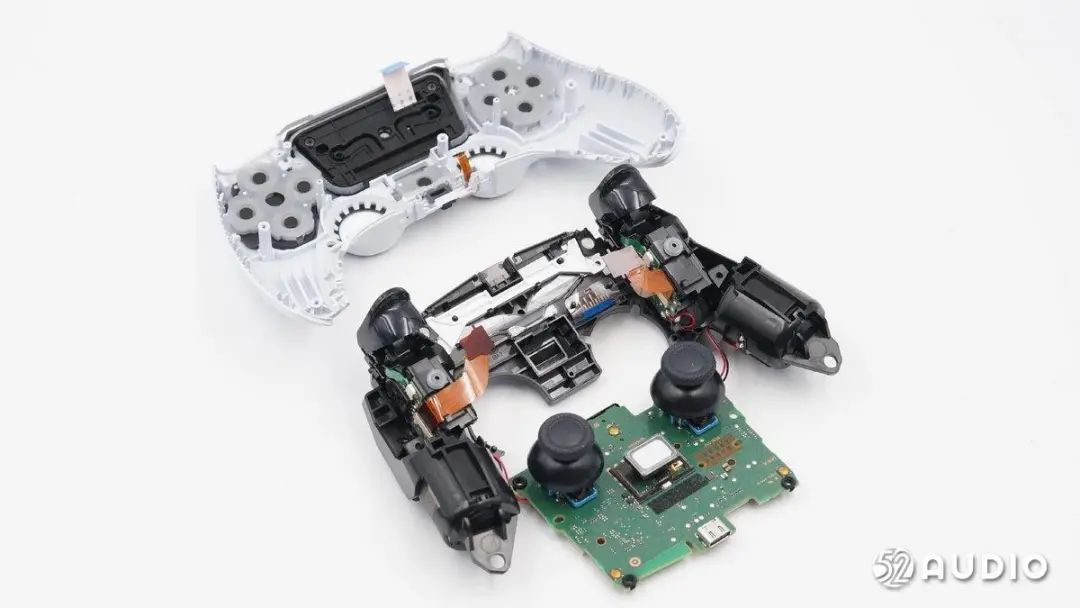
Separate the controller casing from the midframe. The mainboard, adaptive trigger, and other important components are fixed to the midframe.
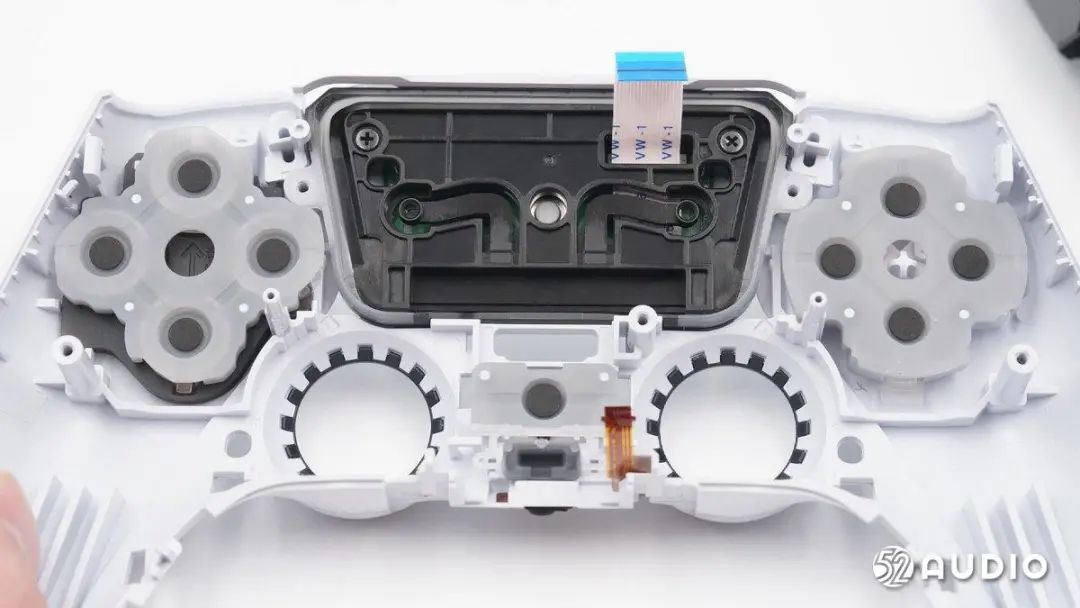
The internal structure of the controller casing features positioning through columns. The joystick positions are designed with two sets of structures, and the wear-resistant components of the black sunflowers are replaceable. The button positions are set with silicone pads, which utilize the damping changes when the silicone pads are pressed to create a tactile feel for the buttons. Additionally, there is a black silicone pad between the buttons and the casing to absorb button rebound noise.
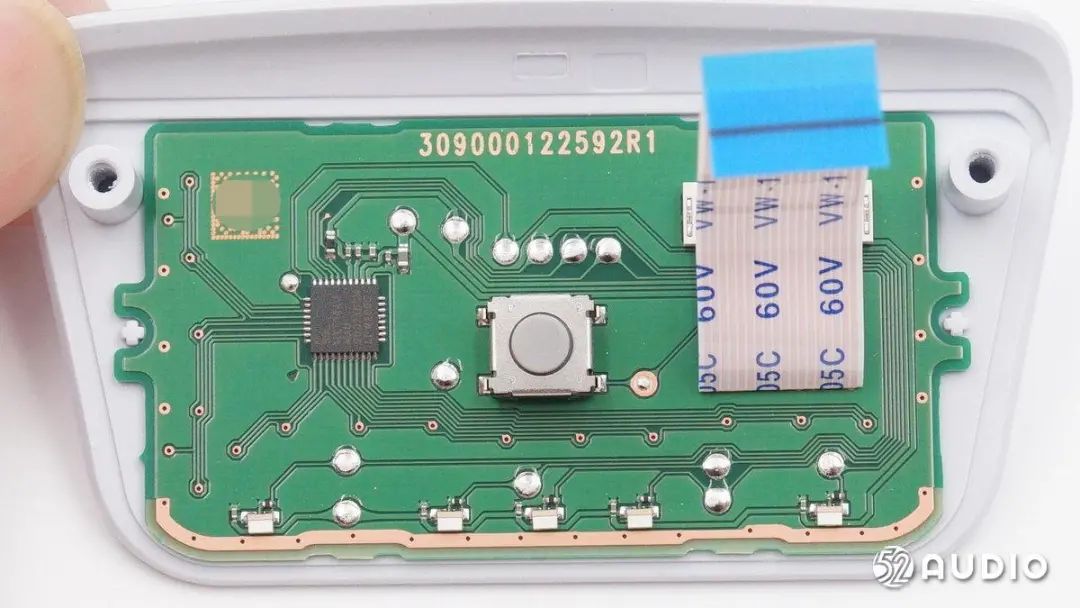
Overview of the touchpad mainboard, connected to the mainboard via ribbon cable.
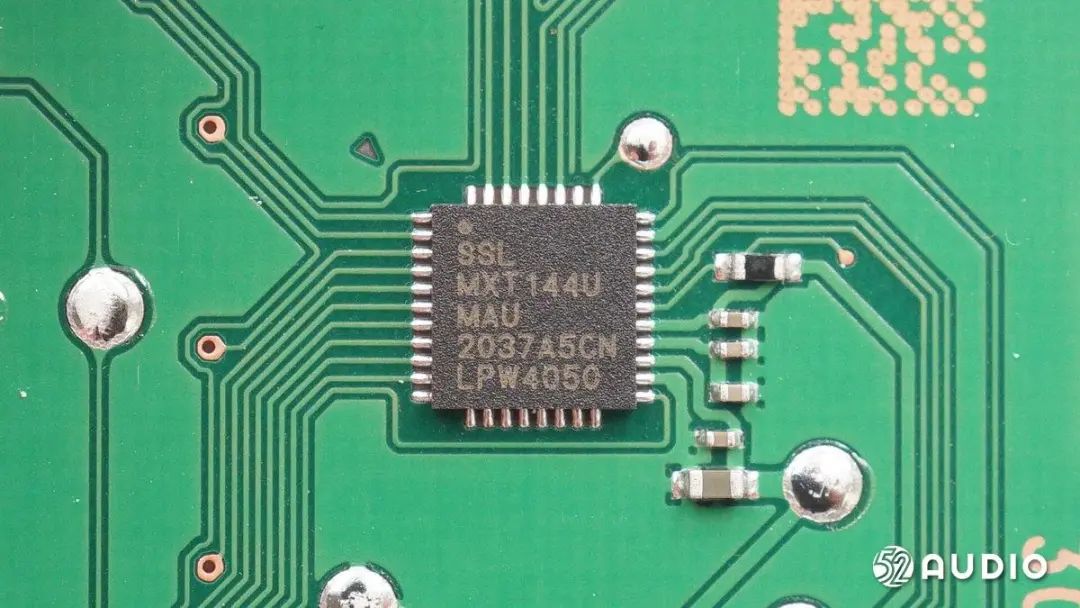
Microchip Technology MXT144U maXTouch On-Cell and Out-Cell touch IC. The mXT144U 1.0 uses a unique charge transfer acquisition engine to implement Microchip’s patented capacitive sensing method, combined with the most advanced CPU, allowing the entire touch screen sensing solution to measure, classify, and track digits with the shortest response time and high precision for single-finger touches.
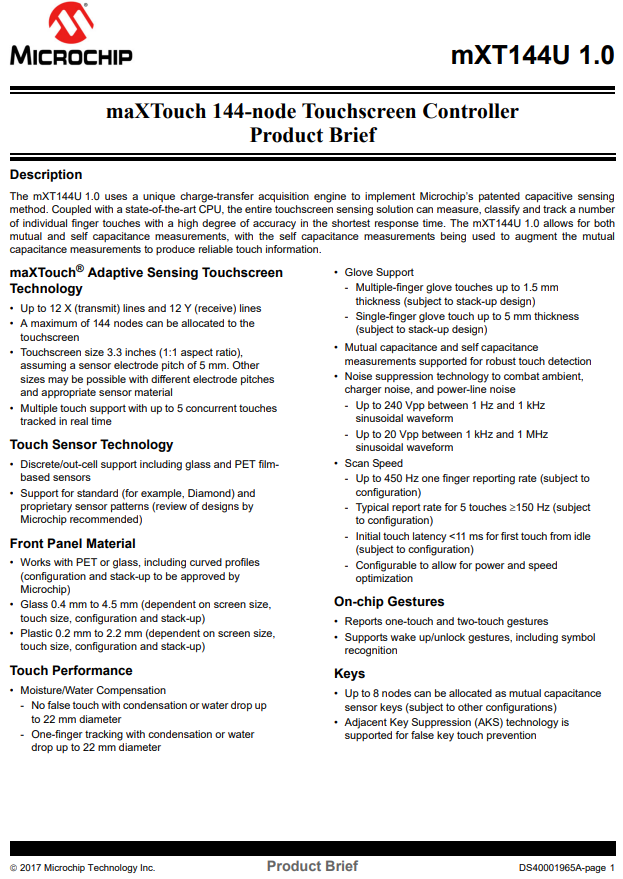
Detailed information on the Microchip Technology MXT144U chip.
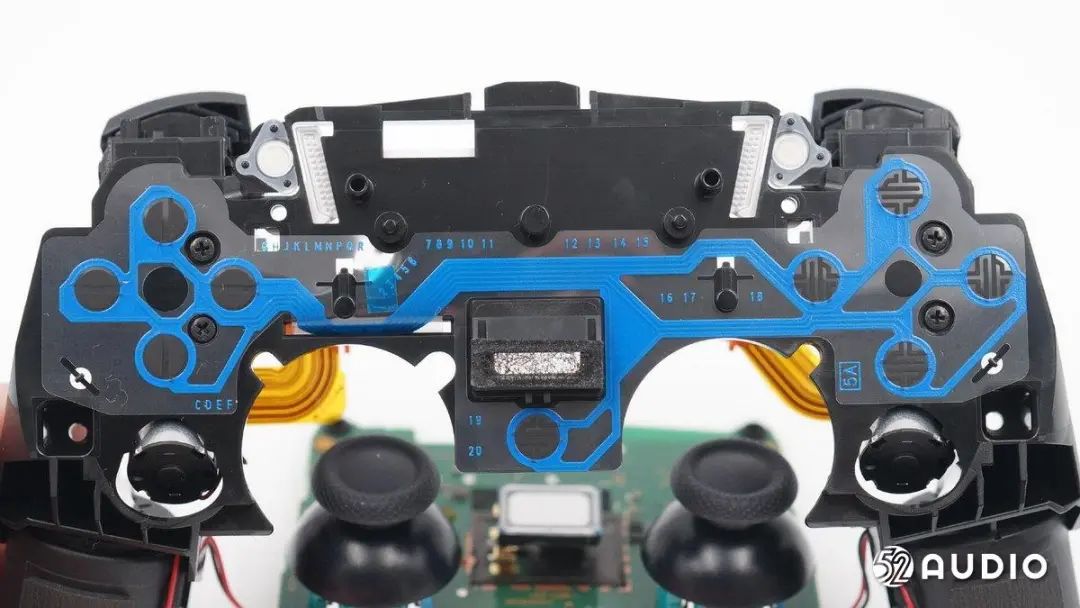
Overview of the sensing button mainboard, with easily worn and consumable button membranes using a replaceable structure.
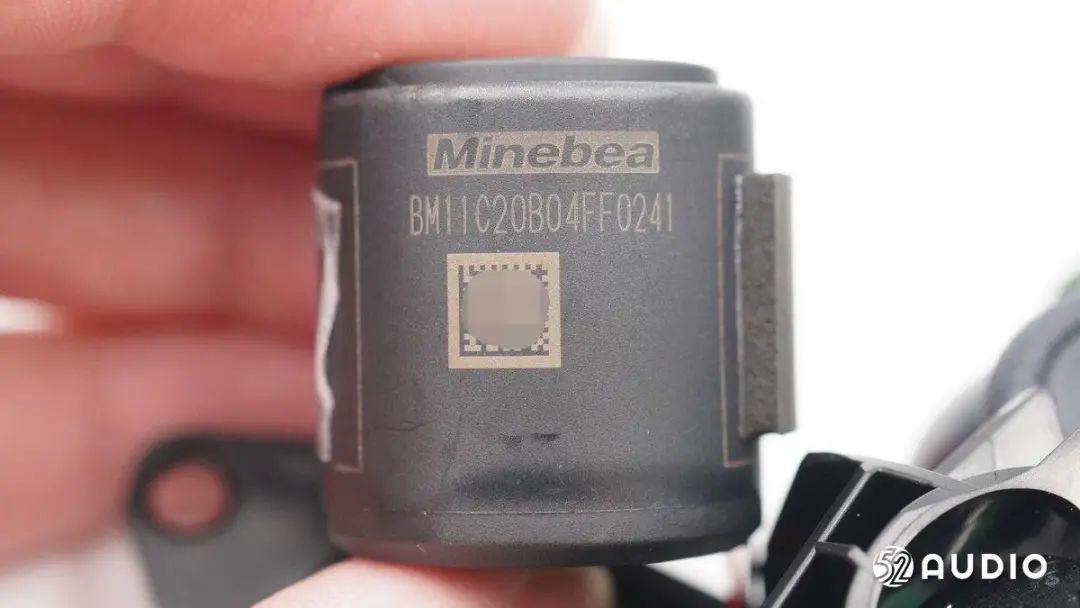
The Minebea brand voice coil actuator driving the haptic system can be understood as a linear motor similar to those in mobile phones.
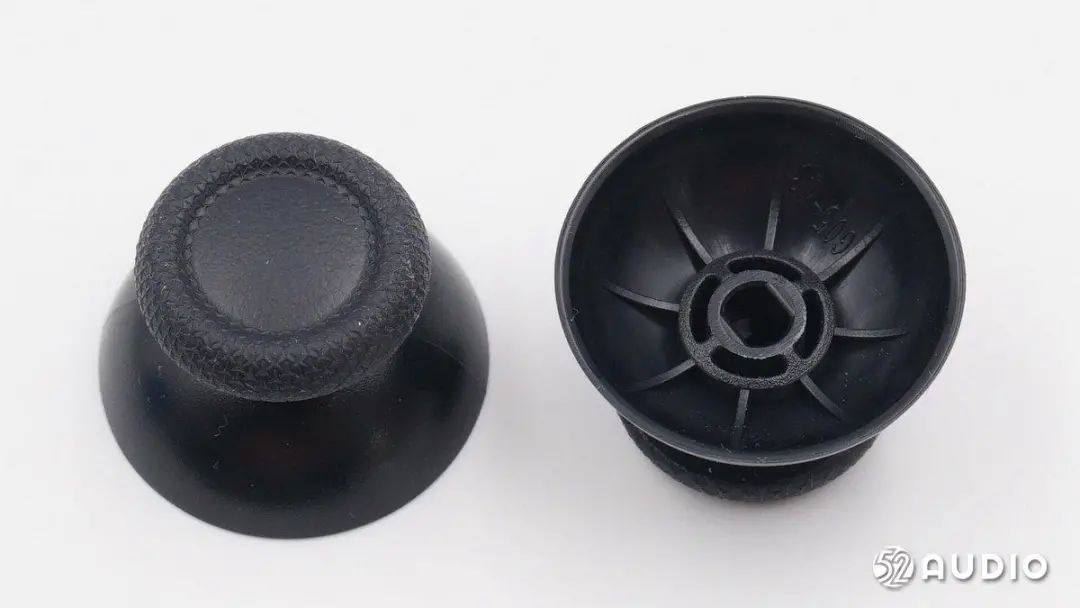
Disassembling the Sony PS5 DualSense Wireless Controller, the joystick caps are made of a rubber-like material, and the areas where the joystick contacts the fingers feature a textured design to increase friction and enhance the user experience.
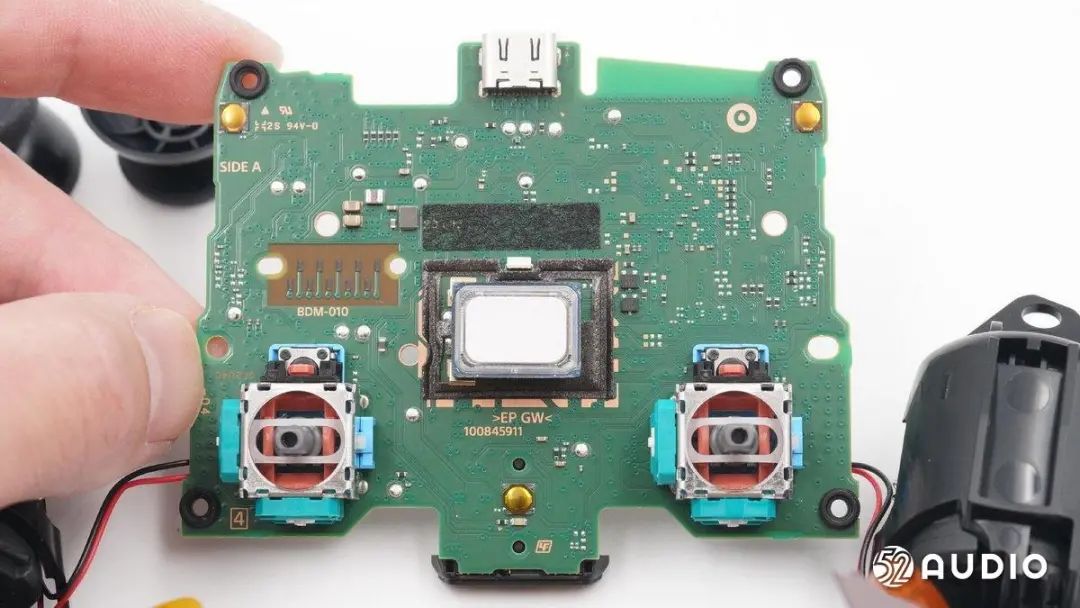
Overview of the front of the controller’s mainboard.
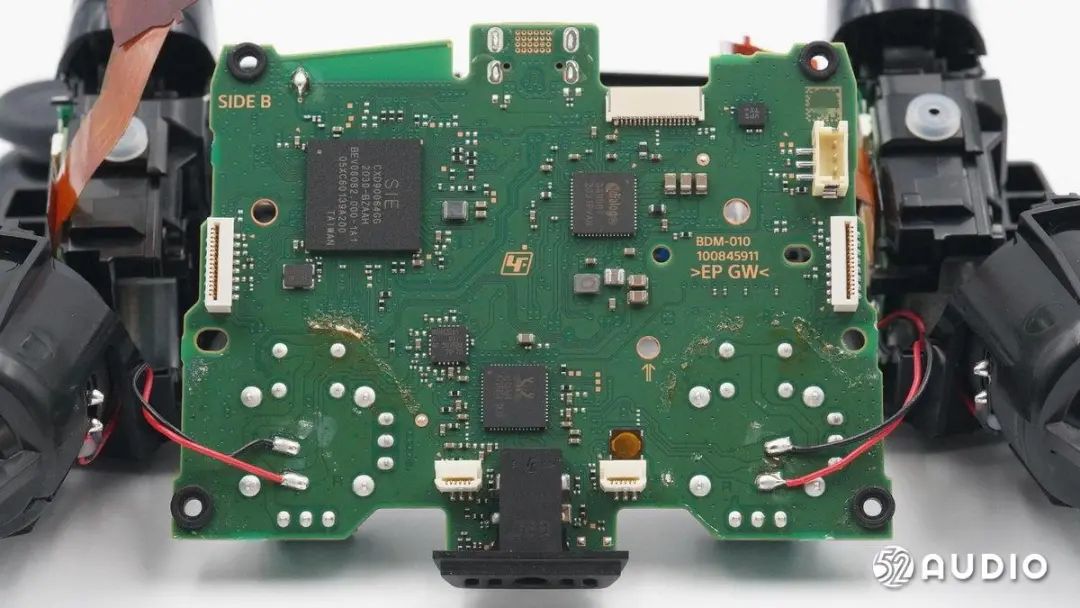
Overview of the back of the controller’s mainboard, where the wires of the vibration motors on the grips are soldered to the back of the mainboard, and the solder points of the joystick can also be seen on the back.
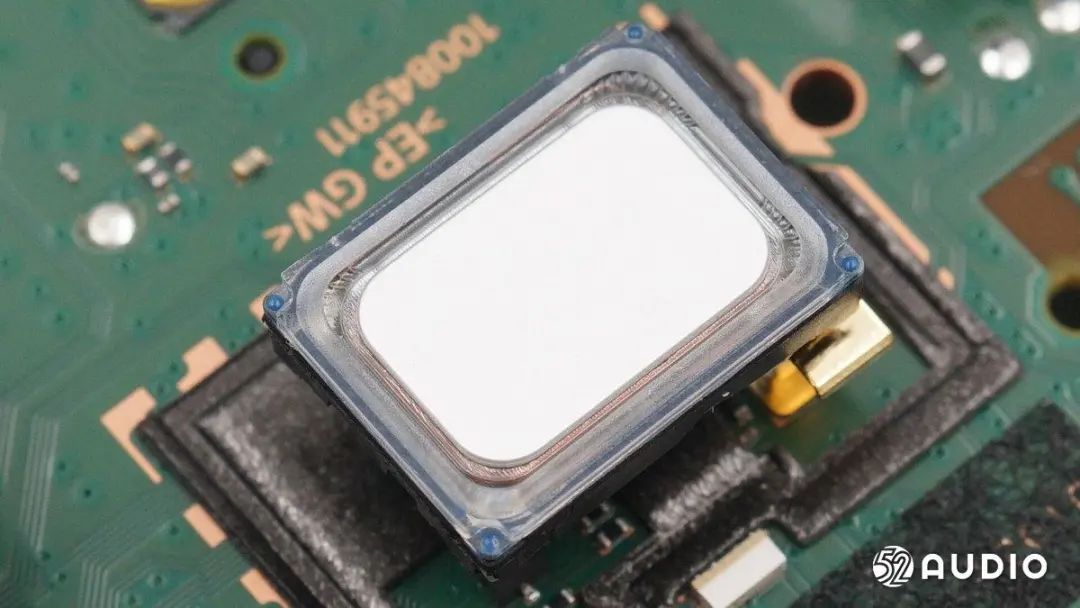
Overview of the speaker on the mainboard, which is used to play corresponding sound effects in conjunction with the relevant games.
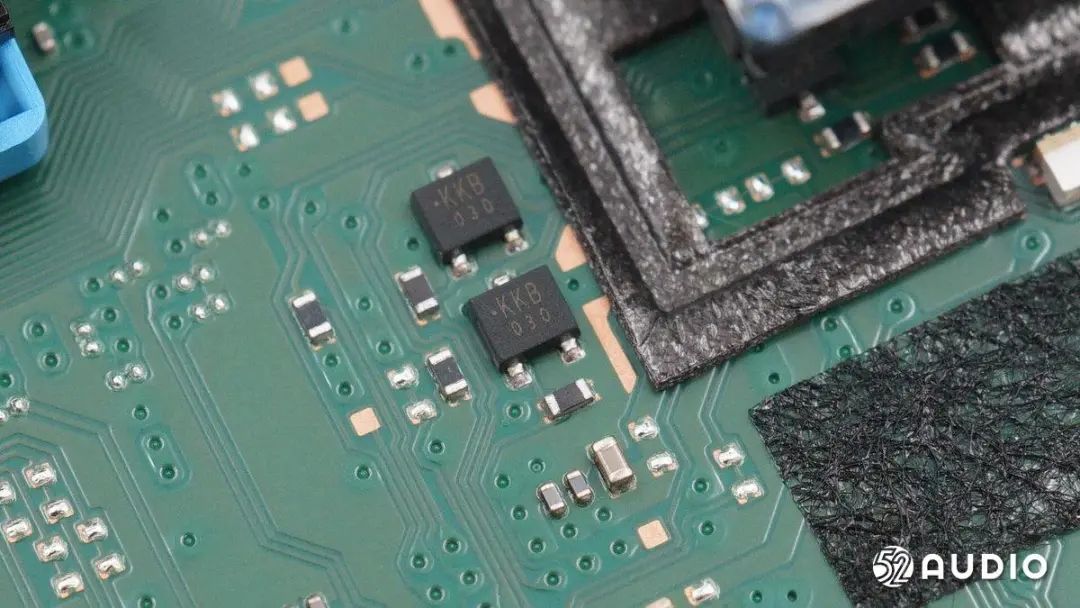
Two ICs marked “KKB 030”.
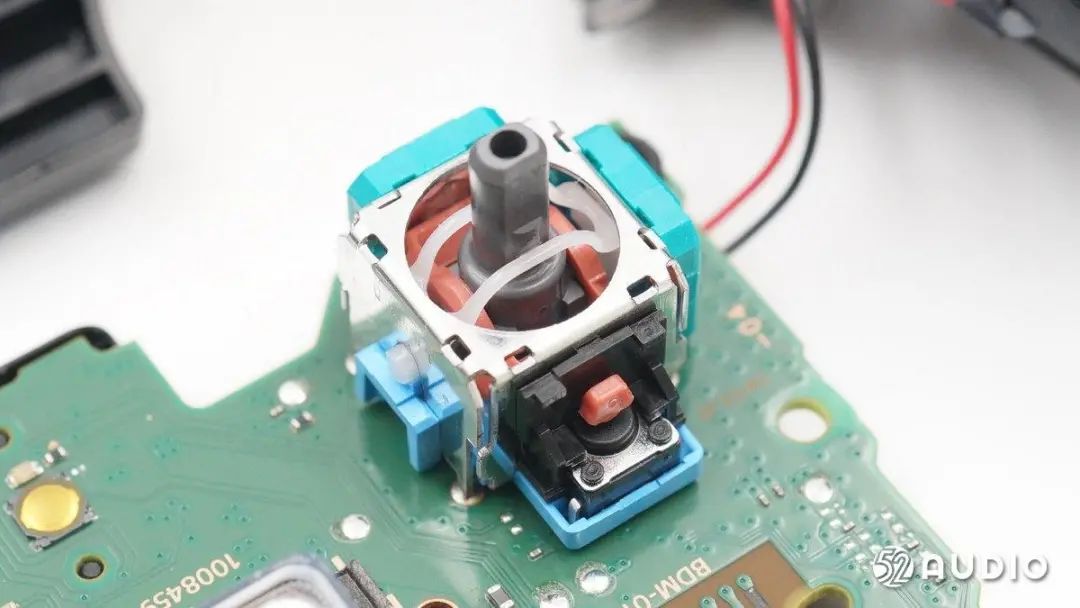
Overview of the joystick module, which supports pressing functionality and is fixed to the mainboard via soldering.
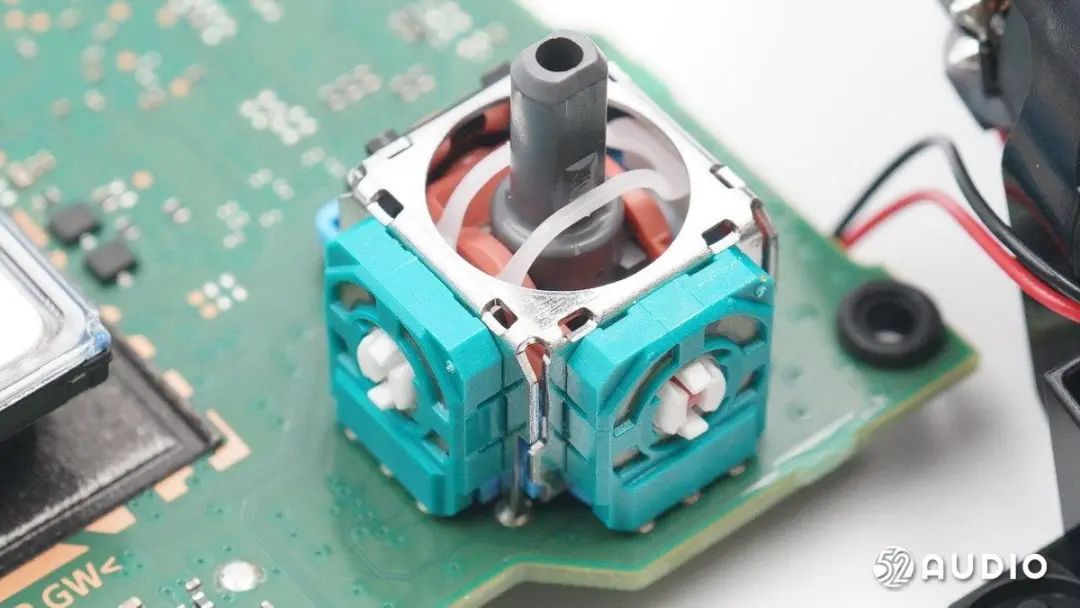
Overview of the joystick socket, where each module contains potentiometers for the X and Y axes, which detect the angle of rotation through slight voltage differences, allowing corresponding actions in the game.
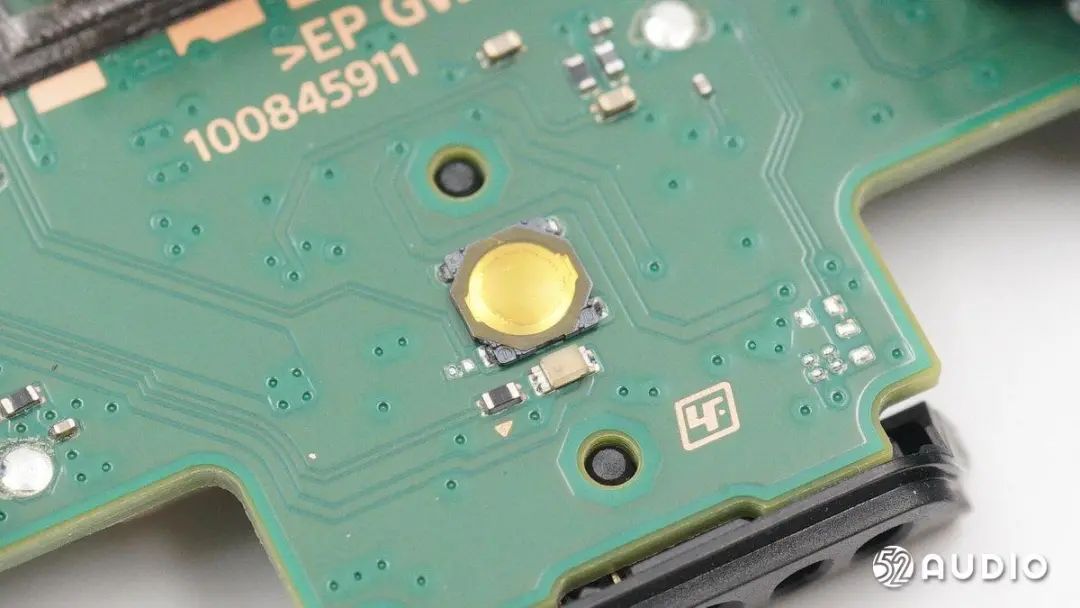
Overview of the micro-switches on the mainboard.
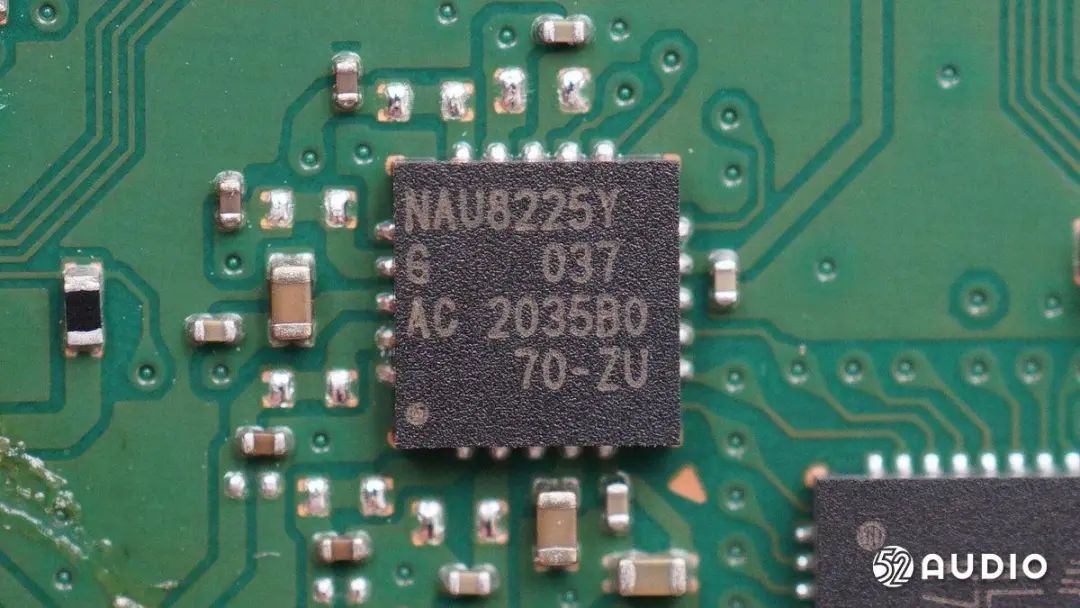
Nuvoton NAU8225 3.0W D-class audio amplifier, NAU8325 is a stereo efficient filterless D-class audio amplifier capable of driving up to 3.0W output power into a 4Ω load. This device provides I2C control and I2S audio input, featuring low standby current and fast start-up time. NAU8325 is ideal for battery-powered portable applications due to its advanced features such as 80dB PSRR, 90% efficiency, ultra-low static current (2.1mA at 3.7V for two channels), and excellent EMI performance, with a micro QFN-20 package.
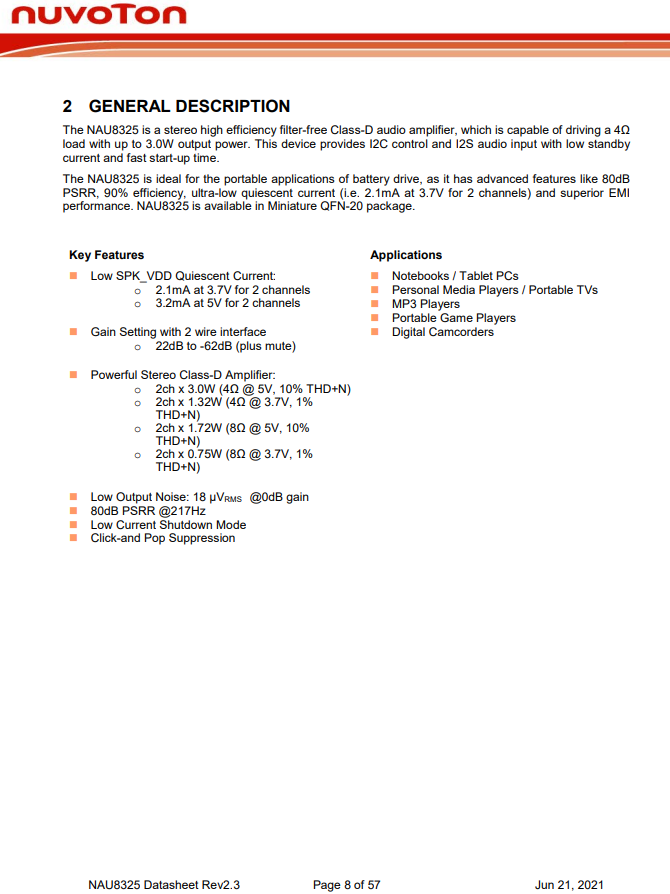
Detailed information on the Nuvoton NAU8225 3.0W D-class audio amplifier.
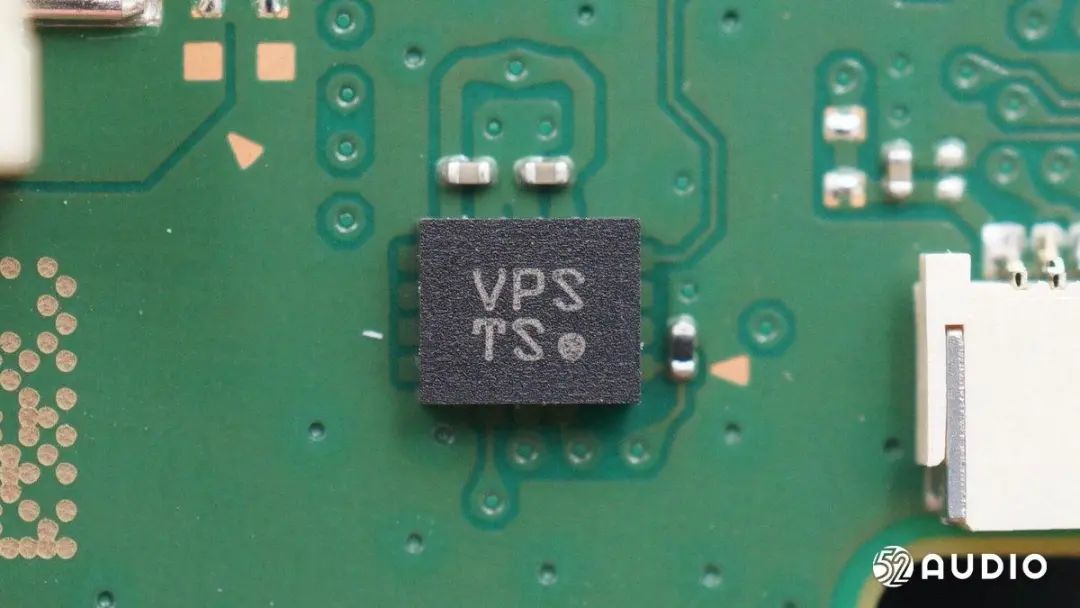
VPS TS is an accelerometer BMI160 from Bosch.
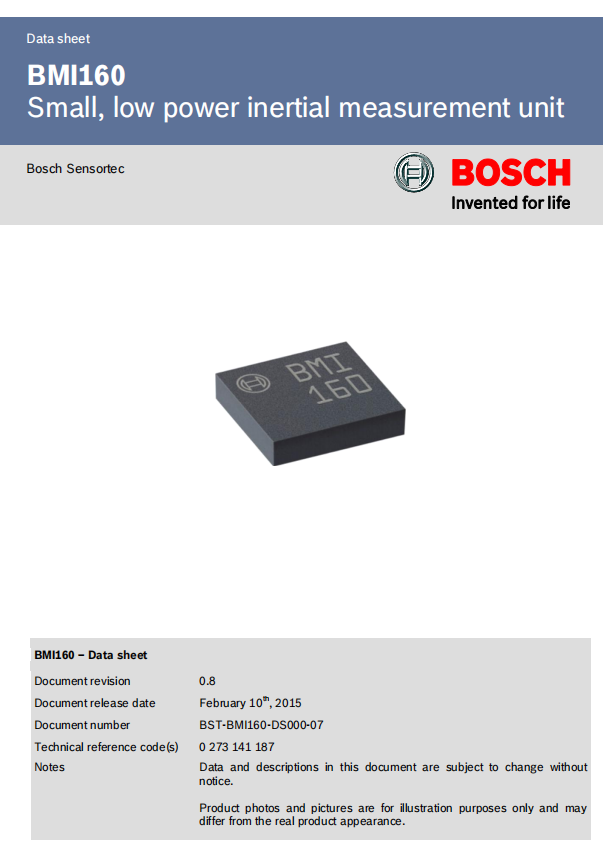
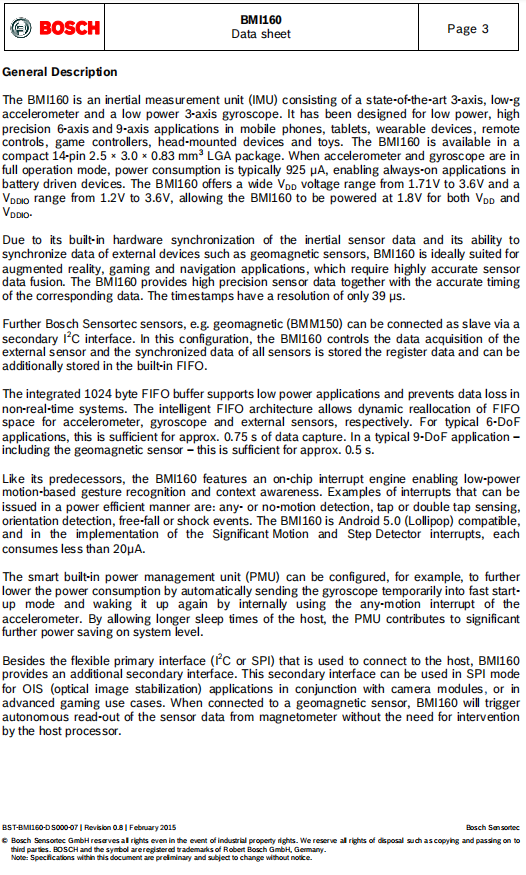
Detailed information on Bosch BMI160.
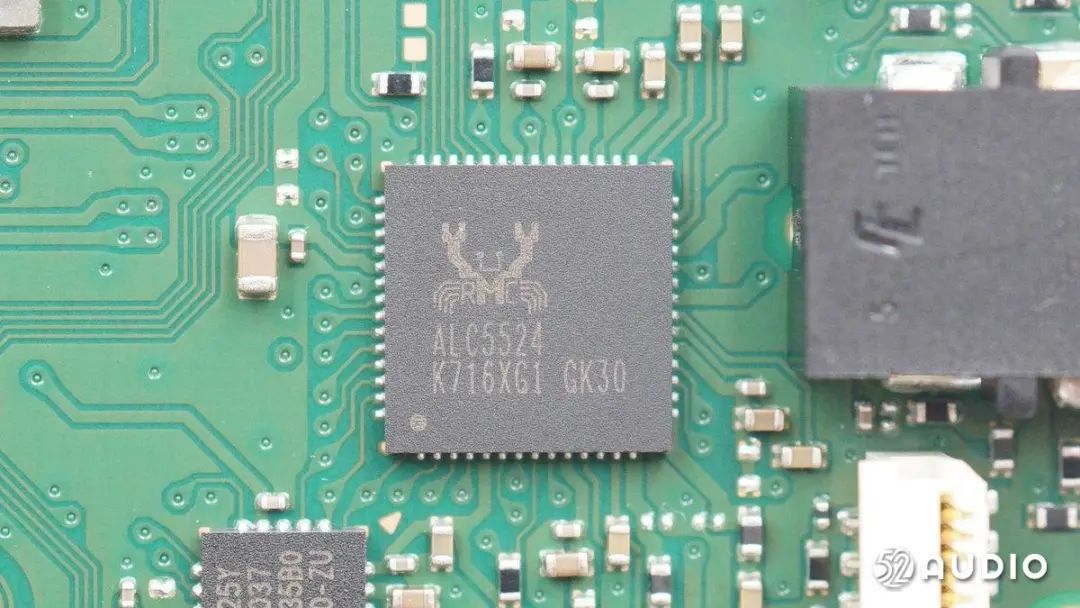
Realtek ALC5524 audio codec.
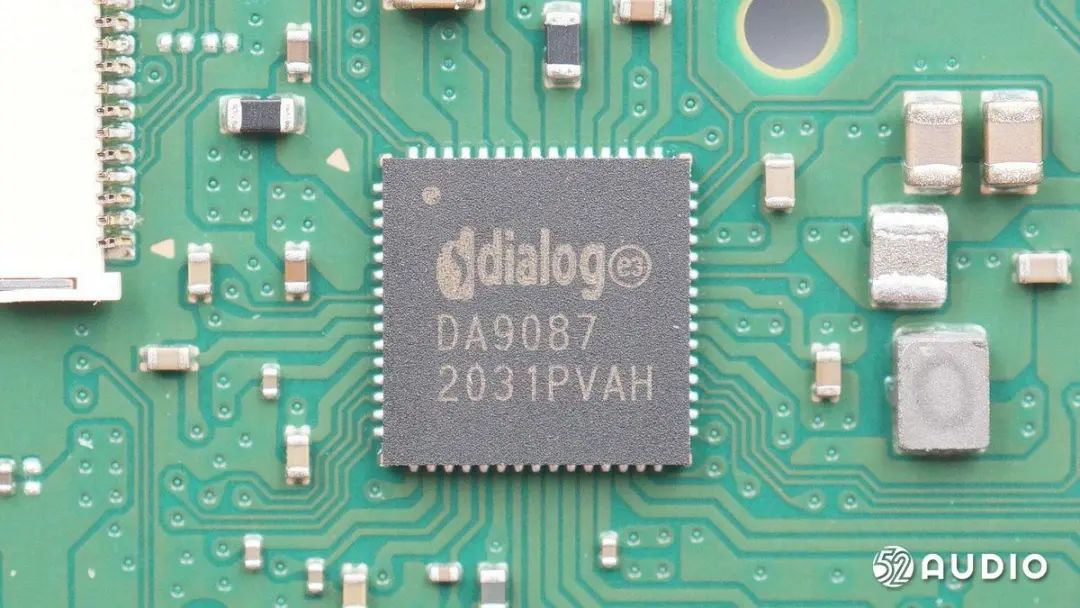
Dialog DA9087 PMIC for power management. DA9070 is a highly integrated, configurable, low-quiescent-current PMIC that meets the common needs of wearable devices, home automation, and low-power battery applications. The PMIC includes a linear charger with power path management, ultra-low quiescent current (Iq) buck regulator and LDO/load switch, wide output voltage boost I2C configurable compact regulators, analog battery monitor, watchdog, and protection features in a WLCSP package.
DA9070 has several power-saving modes to extend battery life.
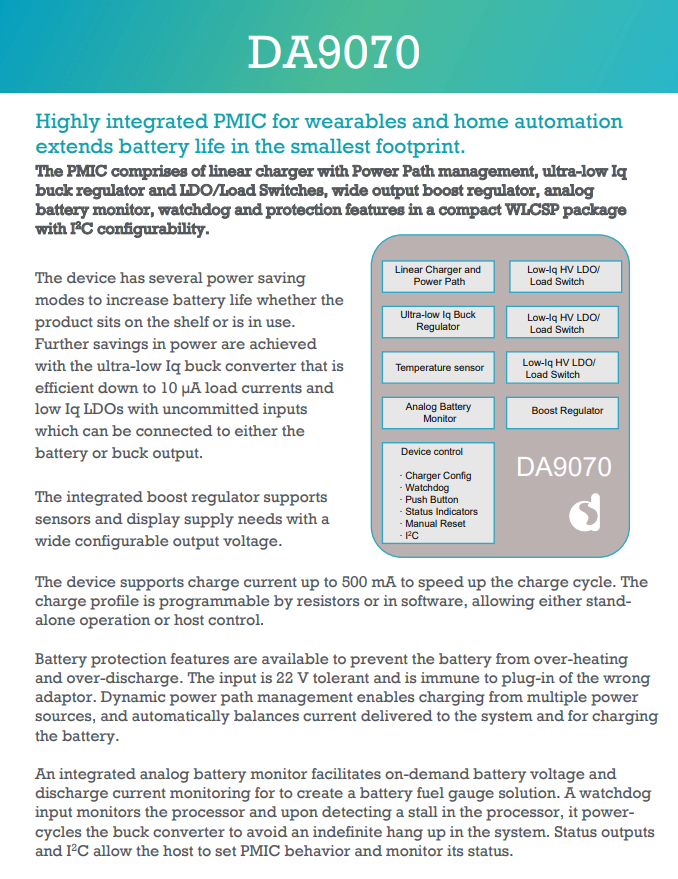
Detailed information on Dialog DA9087 PMIC.
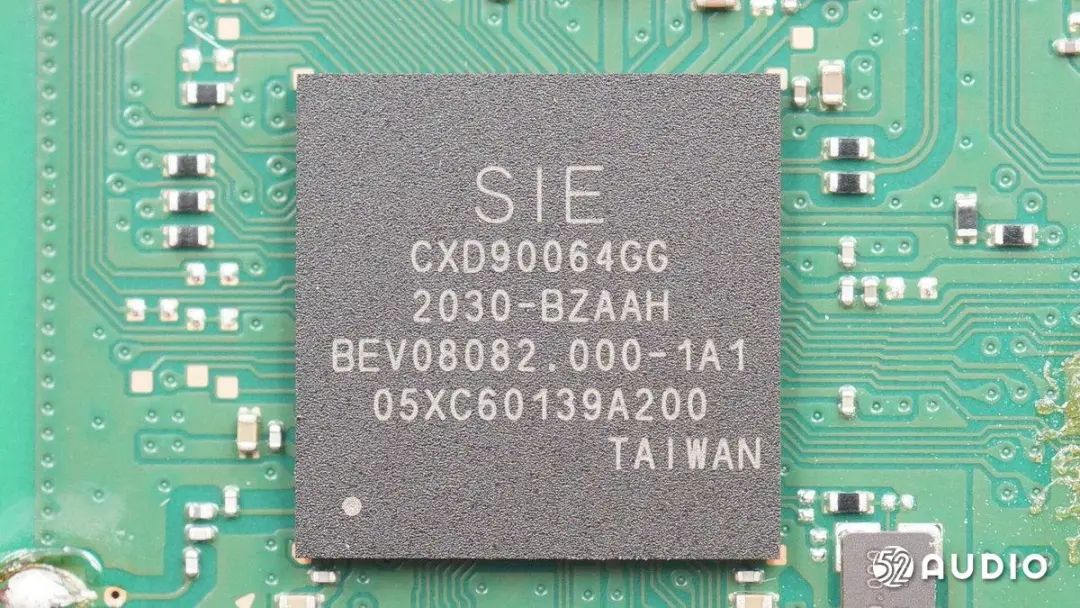
Sony CXD90064GG SOC, integrated wireless Bluetooth module.
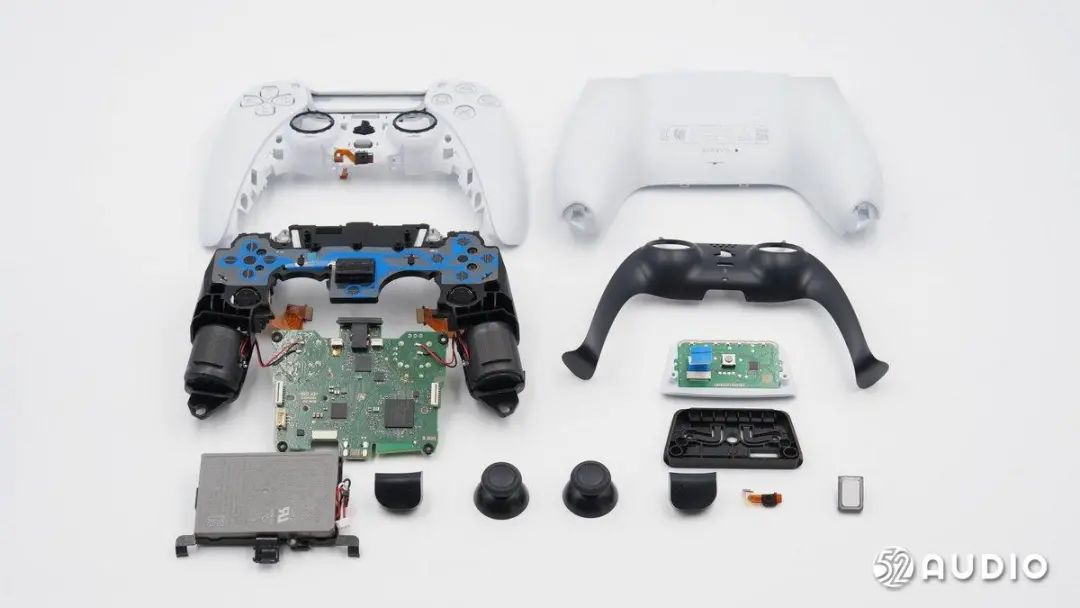
Family photo of the components of the Sony PS5 DualSense Wireless Controller.
3. Summary by I Love Audio
The Sony PS5 DualSense Wireless Controller features a black and white color scheme. Compared to the PS4 controller, the PS5 DualSense Wireless Controller has a larger grip area, making it feel fuller in the hand, and its curves are more elegant and ergonomic.
In terms of battery life, the Sony PS5 DualSense Wireless Controller adopts a built-in rechargeable lithium battery design, equipped with Dialog DA9087 PMIC for power management, extending battery life. Due to the addition of new features such as adaptive triggers, the battery life of the PS5 controller is shorter than that of the PS4 controller.
Regarding internal structure, the Sony PS5 DualSense Wireless Controller is equipped with a speaker and microphone to support voice communication and audio functions during gameplay; to reduce button noise, the button areas have been upgraded with a two-layer silicone pad design; in terms of performance, Sony uses its self-developed CXD90064GG processor and Minebea brand voice coil actuators to drive the haptic system, providing better feedback and enhancing the human-machine interaction between the console and the player.
[Summit Registration]
Registration for popular summits during the 2022 (Spring) Asia Smart Wearable Expo is now open.
2022 (Spring) Asia Bluetooth Headset Conference
2022 (Spring) Asia Smart Wearable Conference2022 (Spring) Asia Wireless Connectivity Technology Conference
The annual audio industry report is continuously updated. If you want to learn about the latest trends in the consumer audio industry, please followI Love Audio 😀
Quality audio suppliers can click the blue text to learn more
“Chip Manufacturer”
Qualcomm、Rockchip、Chipsea
Yutai、SY Siyuan、Ingenic、LPS Micro
Shengsheng Micro、Chuangxin Micro、Wenxian Micro
“Battery Manufacturers”
Varta、Penghui、Haopeng、Nuowei、Hengtai
“Supply Chain Manufacturers”
Yachi Technology、Shengjia Technology、SanTi Micro
More quality manufacturers are being updated
For business cooperation, contact: [email protected]


Be brave, and share your thoughts on the message board!