Today, the three major indices rose in the green. Market sentiment indicators show that the All A Index increased by 1.26%, with an 80% rate of positive performance; short-term sentiment indicators show a 28% continuation rate and a 37% breakout rate. Although the overall market sentiment indicators performed strongly today, the short-term sentiment indicators were relatively average, especially with a high breakout rate. The rise in the three major indices today, with the All A Index reaching a multi-year high, was primarily driven by macro incremental information before the market opened. Notably, the sectors benefiting from this pre-market increment, such as CRO and technology (CPO, NVIDIA), were the main contributors to the All A Index’s breakthrough.
Today, the market rotation was quite evident: in the morning, sectors such as pharmaceuticals, technology (CPO/NVIDIA supply chain/edge AI), internet finance, solid-state batteries, and sports rotated in succession. In the afternoon, funds rotated into nuclear power and chemicals, while sports and stablecoin sectors also saw a return of funds. Although the overall performance of each sector was average, the core companies within each sector performed strongly. Additionally, a new round of high-profile stocks under regulatory scrutiny opened high and hit the limit up, providing a strong boost for these high-profile stocks.
Overall, the market is currently in a state of thematic rotation. Although there is a lack of a clear leading sector in the market, the high-profile stocks across various lines remain strong, providing directional support for continued short-term rotation.
Regarding the rare earth sector, external news has once again highlighted the strategic significance of rare earths. Due to China’s strong control over rare earth resources, this gives China a bargaining chip when dealing with restrictions on AI chips and EDA software. However, domestically, it may be a situation of “nominally agreeing to export while actually imposing strict controls,” so the core issue for rare earths is not whether they can be exported, but the future price trend. The state is likely to strictly control production capacity and avoid selling rare earths at low prices. Therefore, the rare earth sector is worth paying attention to.
Recently, I mentioned on my personal Weibo that SoC chips are indeed in a somewhat weak yet resilient situation; it remains to be seen how long this trend can last. Today, Leixun reached a maximum price of 155.15, and I sold part of my holdings at 154.99, which I had previously increased at 138.19, securing a profit of over 10 points.

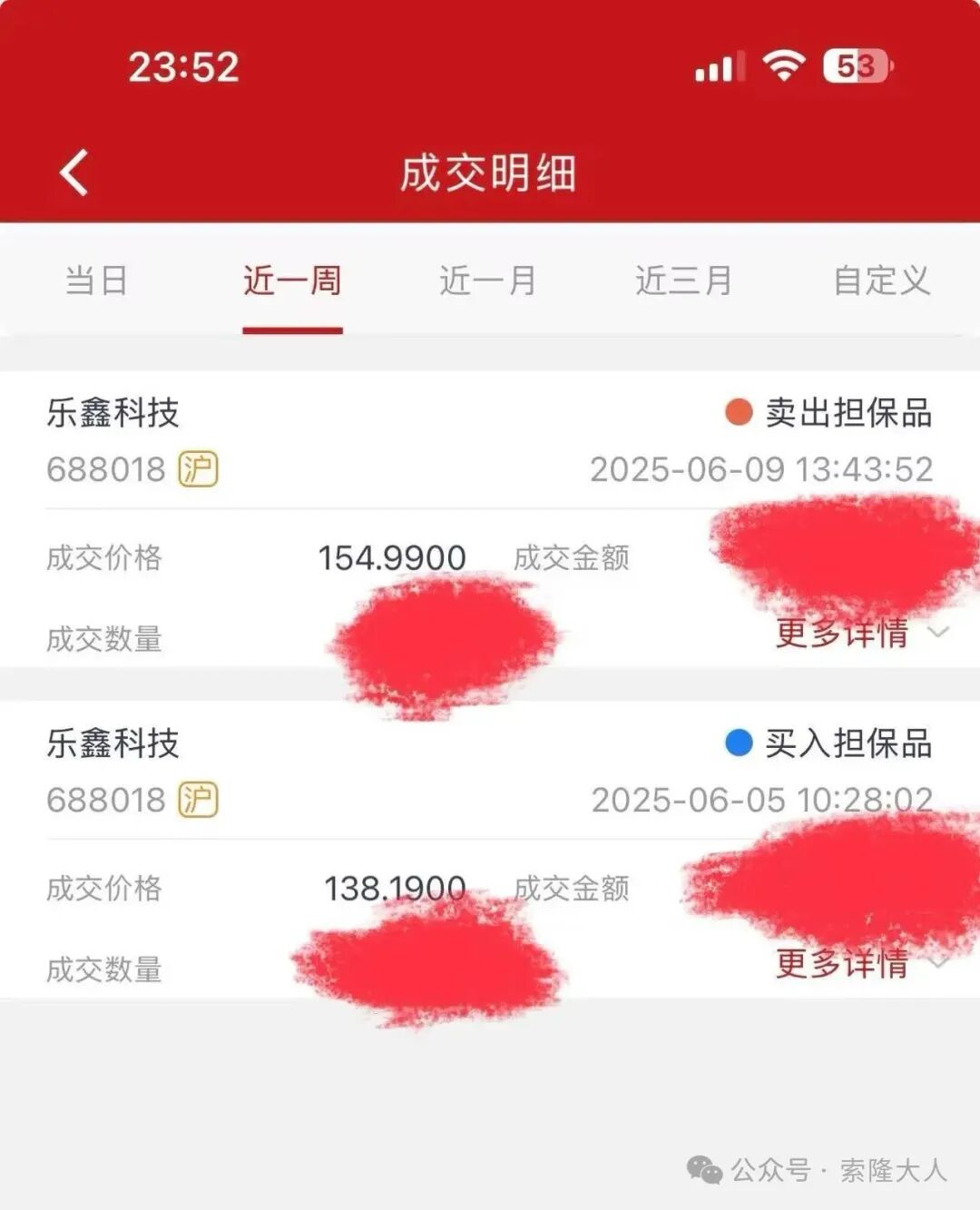 This significant price difference is quite good; I’ve learned that price differences can yield great results. It completely follows the essence of my previous paid article “A Comprehensive Analysis of Mechanical Day Trading.” Transitioning from day trading to larger price differences. Applying what I’ve learned and integrating it, price differences are that simple.This wave of stocks moving together has been spectacular, giving a strong sense of a bull market. Although the indices haven’t risen significantly, the stocks that are moving together are emerging one after another. While there are many market directions, one cannot pursue everything. Continue to hold onto the stocks in hand, such as robotics, computing power, AI, etc. Tonight, a major financial magazine will reveal the background of the stablecoin’s introduction: the US stablecoin poses challenges for cross-border payments with the RMB, and former Deputy Governor of the Bank of China Wang Yongli and others suggest launching a stablecoin in Hong Kong. The stablecoin sector is still worth mid-term attention, with Hong Kong stocks being the first choice.
The major buyers of innovative drugs in Hong Kong stocks are primarily southbound funds. Roughly estimated, since the beginning of the year, southbound funds have flowed into biomedicine about 40 billion HKD. The shareholding ratio of southbound funds in leading companies like CanSino Biologics, 3SBio, and Innovent Biologics has exceeded 30%. For example, southbound funds hold 40% of CanSino Biologics’ shares and have been increasing their holdings throughout the year. Especially during several significant declines in innovative drugs, southbound funds have seized the opportunity to bottom-fish.
For instance, on April 7, CanSino Biologics plummeted due to tariff frictions, and on that day, southbound funds had a net inflow of 800 million. Similarly, on April 11, CanSino Biologics experienced a pullback due to rumors of a placement, and on that day, southbound funds also had a net inflow of 780 million. In addition, many institutional investors are increasing their allocation in the innovative drug sector through ETFs. The fund shares of the Hang Seng Medical ETF have been continuously increasing in recent years, and from the weekly changes in fund circulation, ETFs have been primarily inflowing over the past few years. The circulation scale has surged from 156 million HKD in June 2022 to the current 4.26 billion HKD, with shares skyrocketing several dozen times, which is unlikely to be solely due to individual investors.
The 80/20 principle of trading has two aspects: one is that 20% of people make money while 80% lose money. The other is that 20% of trading time is effective, while 80% is just boring waiting. Therefore, do not become anxious just because the market isn’t rising. One should have a farming mindset, planting seeds and patiently waiting for the harvest.