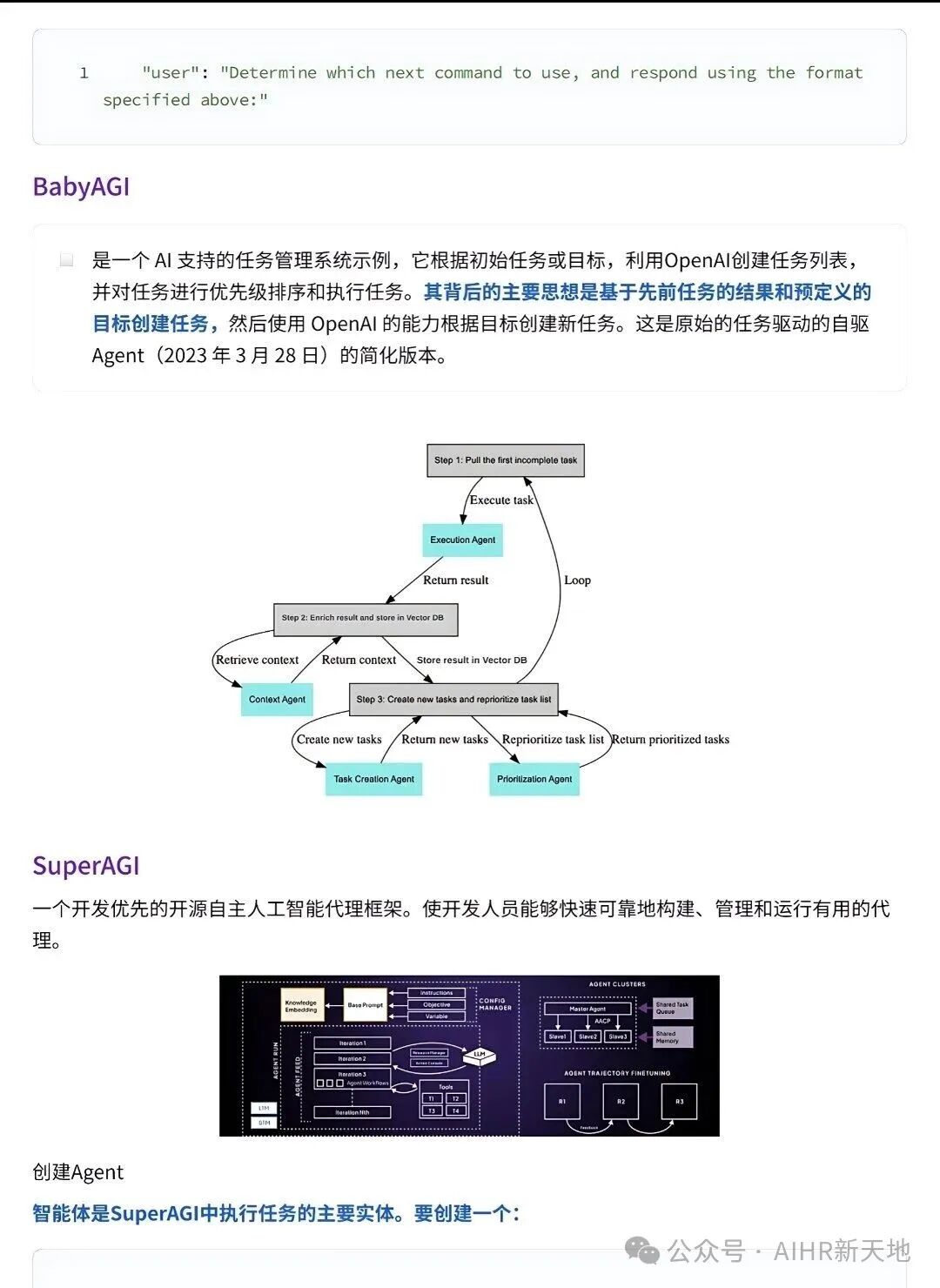
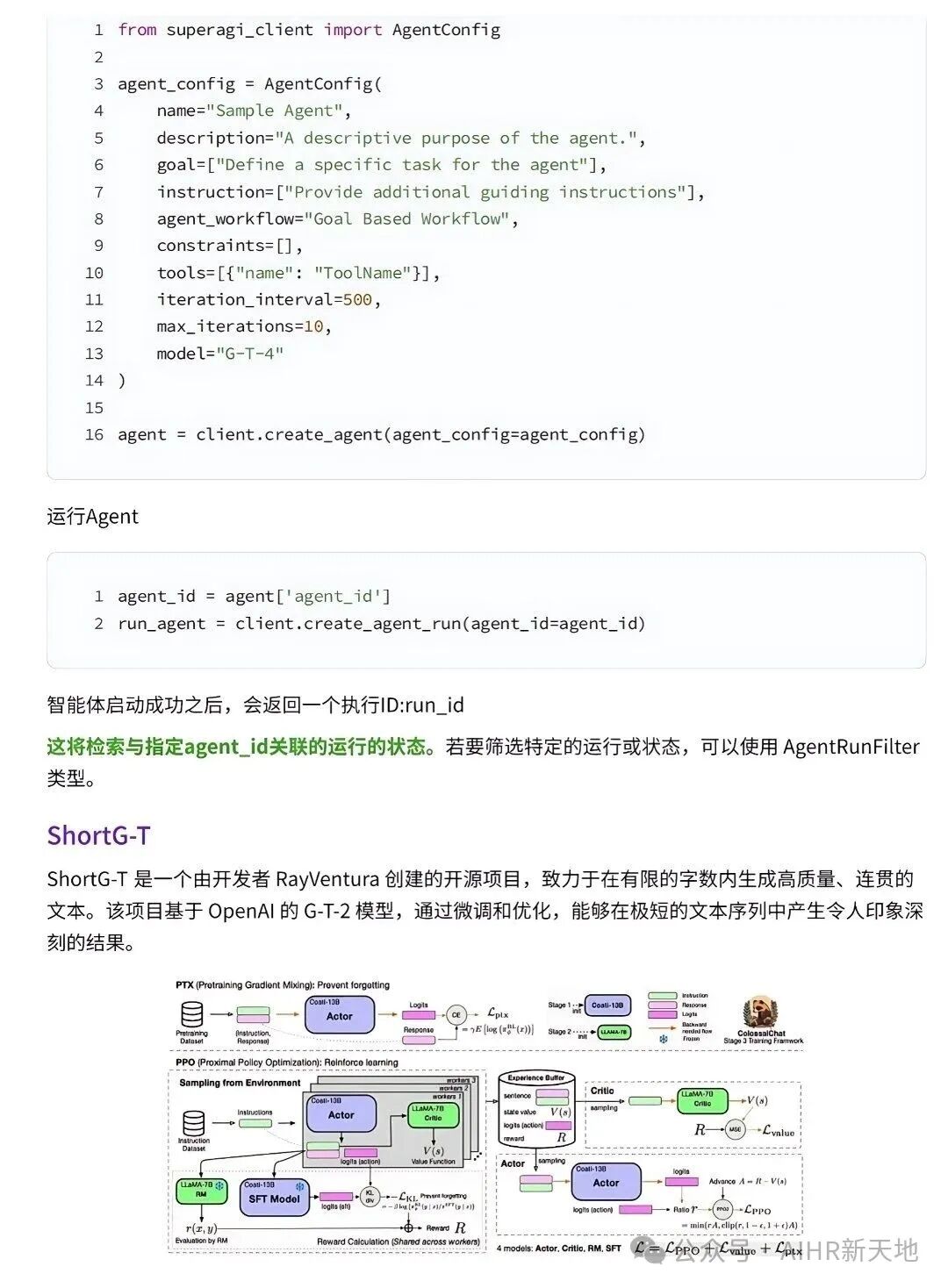
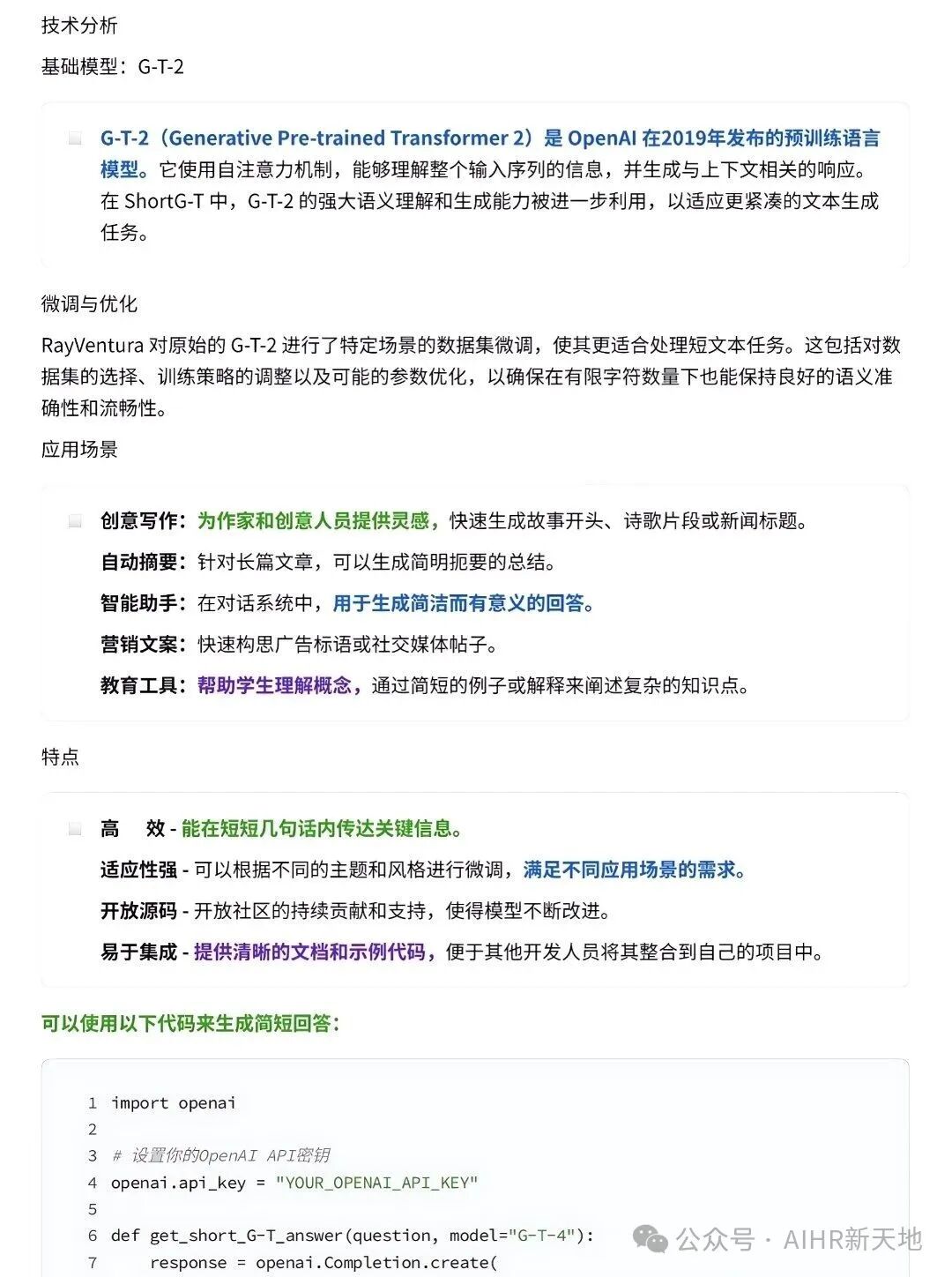
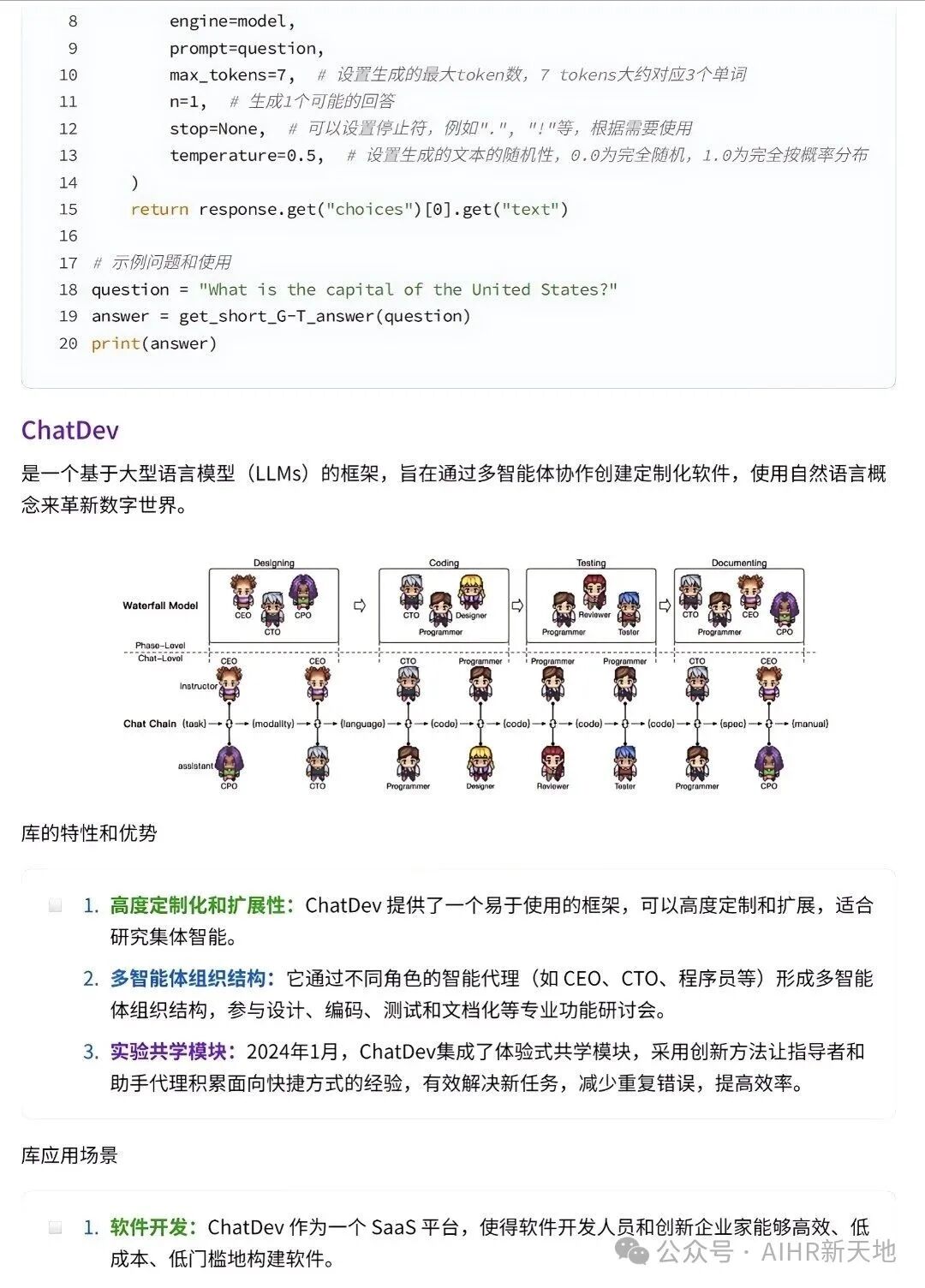
 The Temporal Relationship Between Management and the Industrial RevolutionThe first industrial revolution produced factories, which are specialized places centered around machines, equipment, and labor, transforming raw materials into finished or semi-finished products through systematic production processes. These factories constitute the core carrier of the industrial revolution and are also the basic unit of the modern economic system. For centuries, where factories are concentrated, what they produce, and how they produce has been a living map of global economic changes. Production is a physical process that integrates locations, equipment, technology, and labor resources to transform raw materials into value-added products, forming the hard power foundation of factories; management, on the other hand, optimizes resource allocation and organizational collaboration to solve the core contradiction of “limited input – maximum value,” representing more of a soft power. The relationship between production, management, and the technological evolution of the industrial revolution is a dynamic adaptation of “productive forces – production relations,” with the three mutually promoting and spiraling upwards. Each industrial revolution reconstructs production models through technological breakthroughs, which in turn drives management innovation, ultimately forming a new economic paradigm.
- Technology is the engine: driving the leap in productivity and laying the foundation for the industrial revolution
- Production is the carrier: transforming technology into deliverable products and services, forming the explicit main line of the industrial revolution
- Management is the operating system: continuously releasing technological potential through organizational innovation, which is an implicit theme of the industrial revolution
Thus, alongside the industrial revolution, there has been not only a revolution in production but also adaptive changes in management, with the two interlinked, together constituting the evolution logic of the industrial system.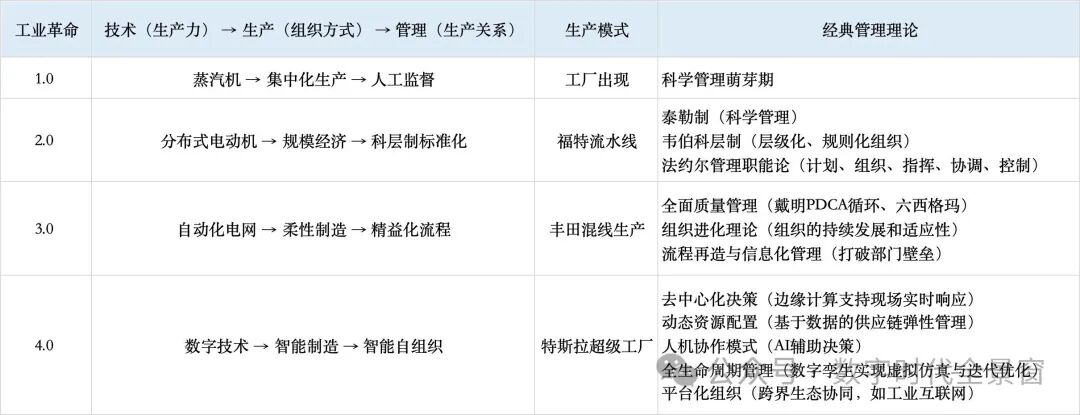 Of course, this is the ideal process of the industrial revolution in theory. The reality is that many factories are still in the 2.0 era. The phenomenon of “technology being ahead, management lagging behind” is prevalent, especially in some enterprises that have taken the lead in intelligent transformation. This “digital limping” phenomenon has become a key bottleneck restricting the upgrade of Chinese manufacturing. It is thought-provoking that not only traditional manufacturing but also internet giants, as pioneers of the digital economy, have not been spared (“From the lengthy letter of Alibaba executives, we see the common problems of bureaucratic systems under ineffective incentives”).Generational Leap in Management ParadigmsDue to the asynchronous evolution of “technology-management” and the diversification of management theory disciplines, there can be a thousand answers to what management is. I am accustomed to breaking down management objects into three interwoven elements: people (human resources), money (capital assets), and tasks (task processes). The core logic is: using “tasks” as the value pivot to drive the dynamic allocation of “people” and “money”; the output of “tasks” feeds back into the appreciation of capital or assets, thereby supporting the continuous expansion of human resources.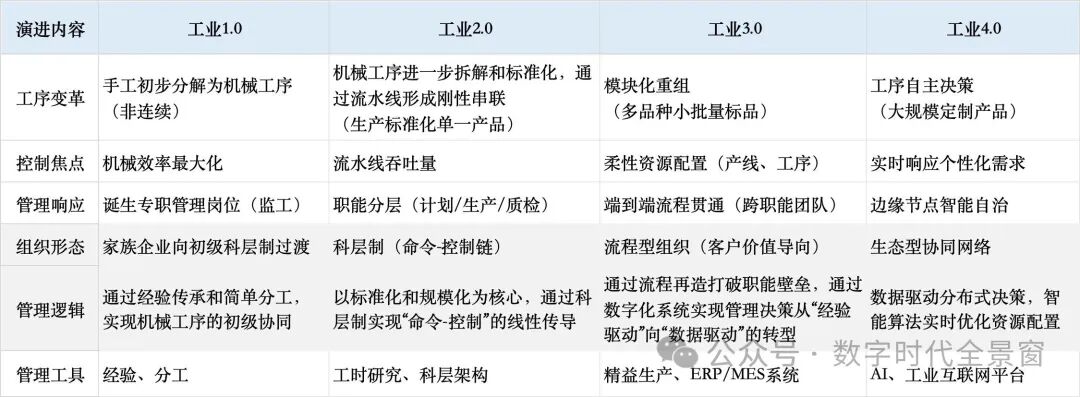
- Industrial 1.0
Process Reform: Manual processes are initially decomposed into mechanical processes (non-continuous)Focus of Production Control: Maximizing mechanical efficiencyManagement Response: Birth of dedicated management positions (foremen)Management Logic: Achieving initial collaboration of mechanical processes through experience inheritance and simple division of laborManagement Tools: Experience and division of labor
- Industrial 2.0
Process Reform: Further decomposition and standardization of mechanical processes, forming rigid connections through assembly lines (standardized production of single products)Focus of Production Control: Throughput of assembly linesManagement Response: Functional stratification (planning/production/quality inspection)Organizational Form: Bureaucratic system (command-control chain)Management Logic: Centered on standardization and scale, achieving linear transmission of “command-control” through bureaucratic systemsManagement Tools: Time studies, bureaucratic structure
- Industrial 3.0
Process Reform: Modular reorganization (variety of small batch standard products)Production Control Logic: Flexible resource allocation (production lines, processes)Management Response: End-to-end process integration (cross-functional teams)Organizational Form: Process-oriented organization (customer value-oriented)Management Logic: Breaking down functional barriers through process reengineering, transforming management decision-making from “experience-driven” to “data-driven” through digital systemsManagement Tools: Lean production, ERP/OA systems
- Industrial 4.0
Process Reform: Autonomous decision-making of processes (mass customization products)Production Control Logic: Real-time response to personalized demandsManagement Response: Intelligent autonomy at edge nodesOrganizational Form: Ecological collaborative networkManagement Logic: Data-driven distributed decision-making, intelligent algorithms optimizing resource allocation in real-timeManagement Tools: Industrial Internet, AI platformIn summary,as production evolves from “manual control of mechanical processes (non-continuous) → linear automated control (rigid assembly line) → matrix flexible control (reconfigurable production lines) → intelligent collaboration (autonomous decision units), management is also undergoing transformation from “experience management (foreman system + apprenticeship) → linear bureaucratic management (functional stratification + command chain) → process-oriented management (cross-functional teams + project matrix) → ecological management (platform organization + algorithm collaboration).”
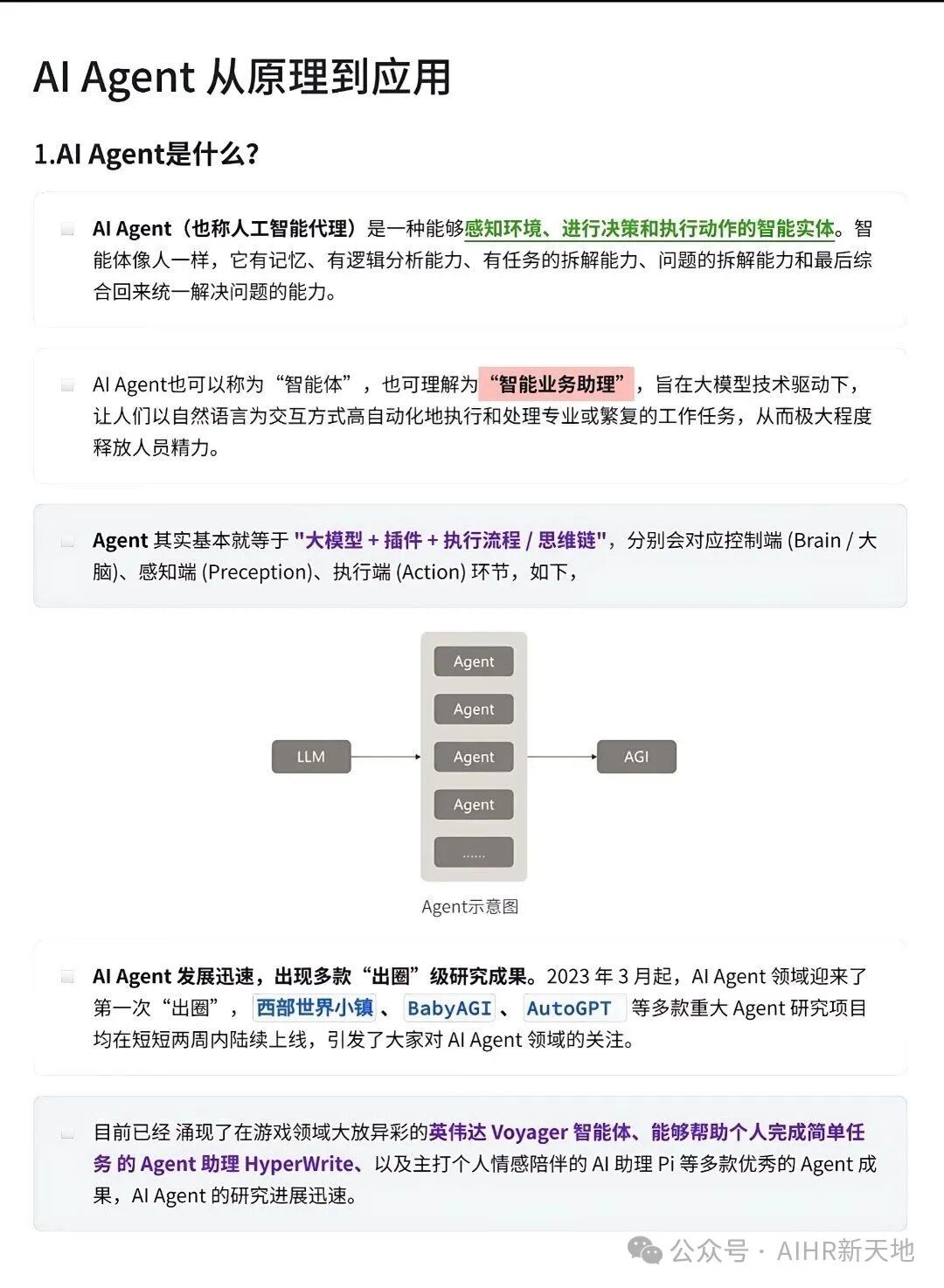
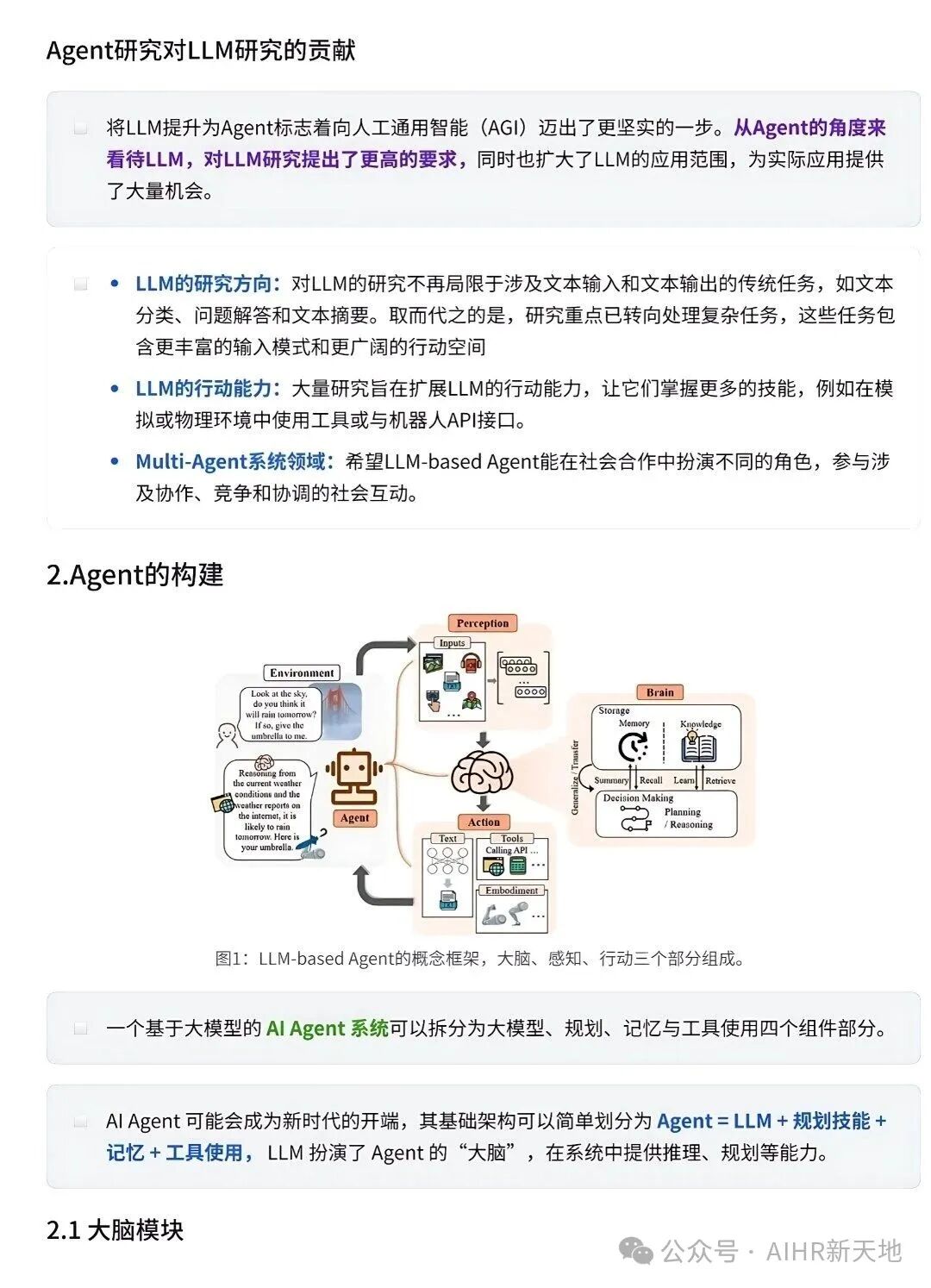
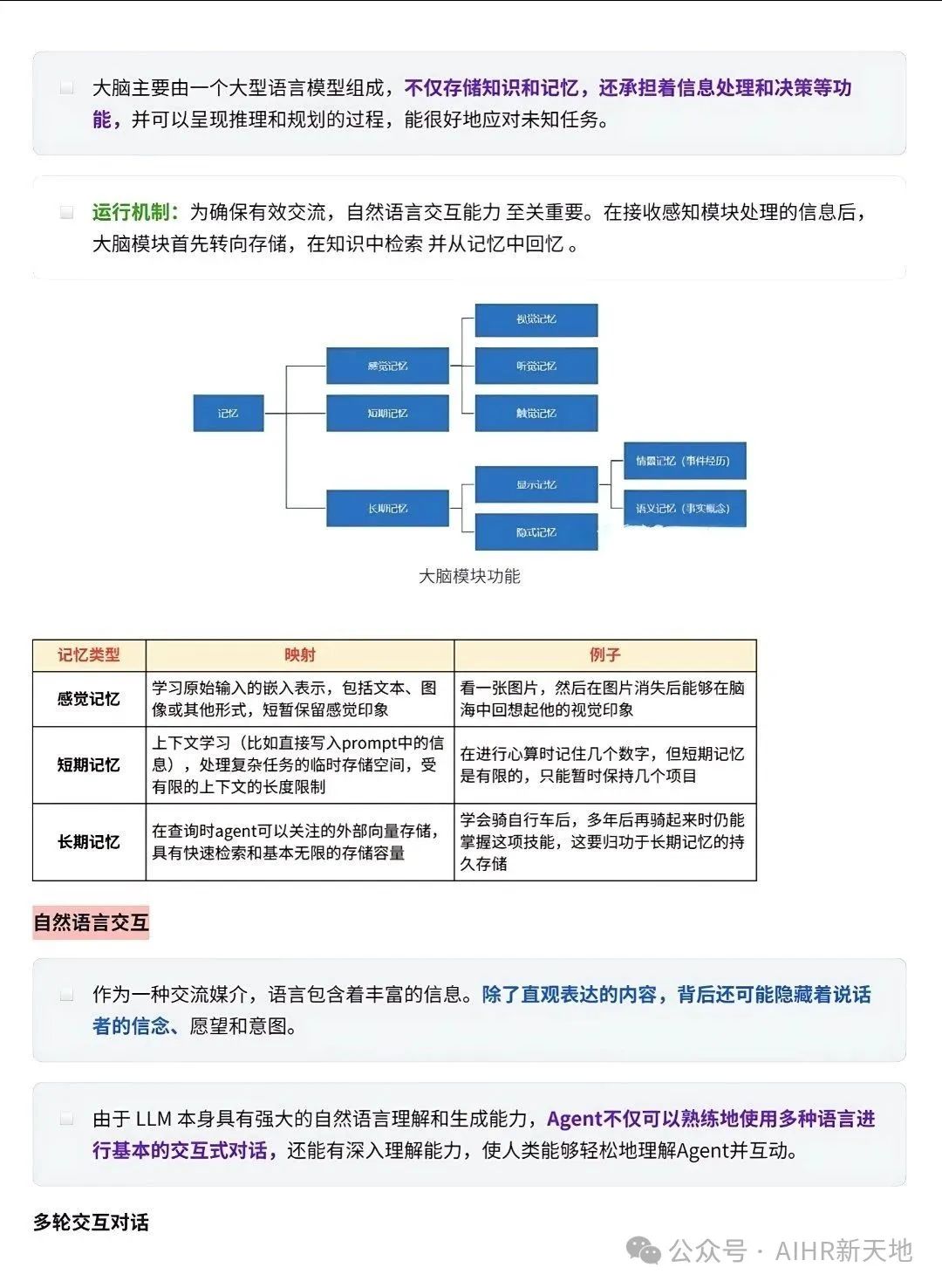
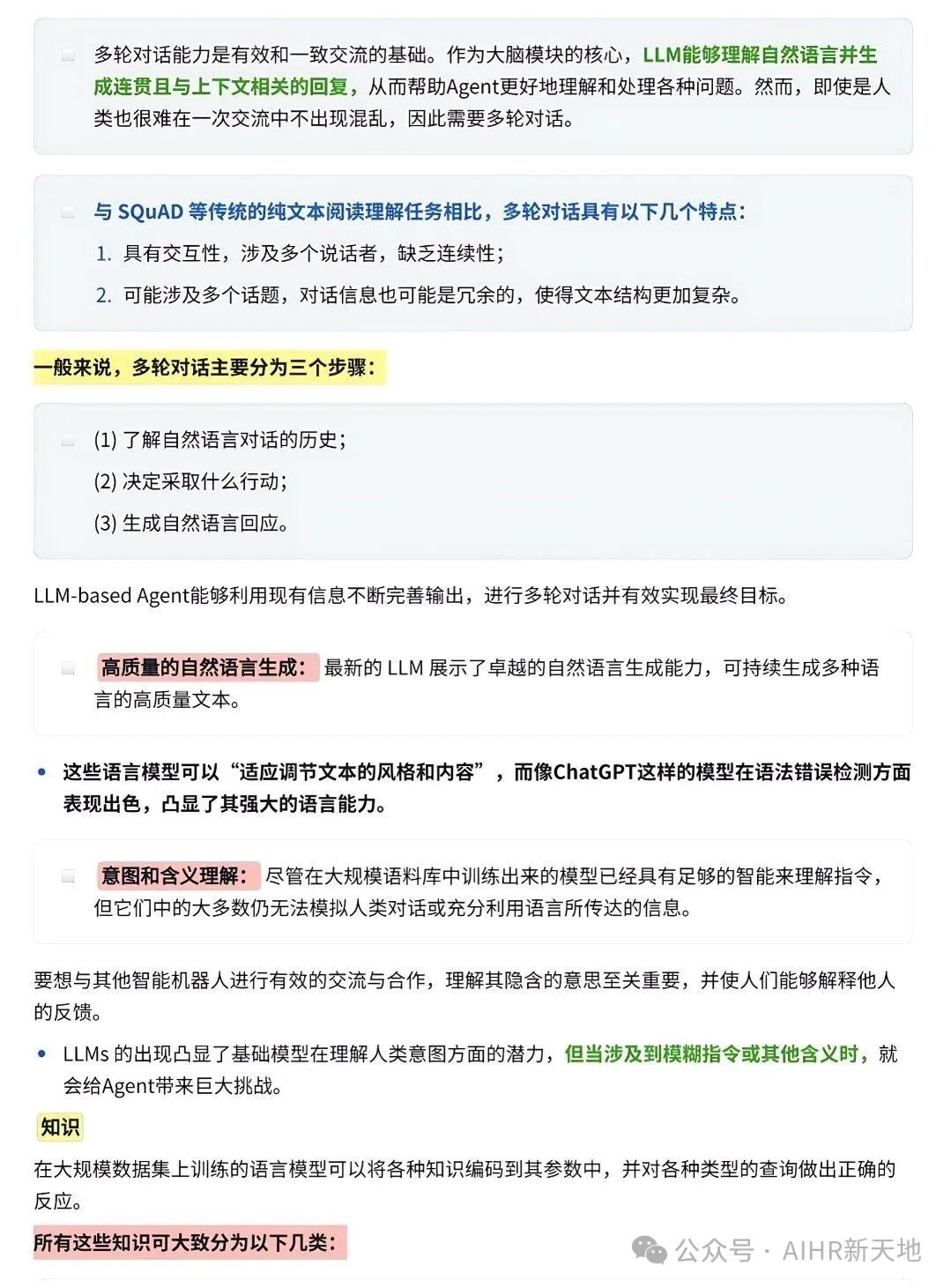
AI Agents: From Principles to Applications
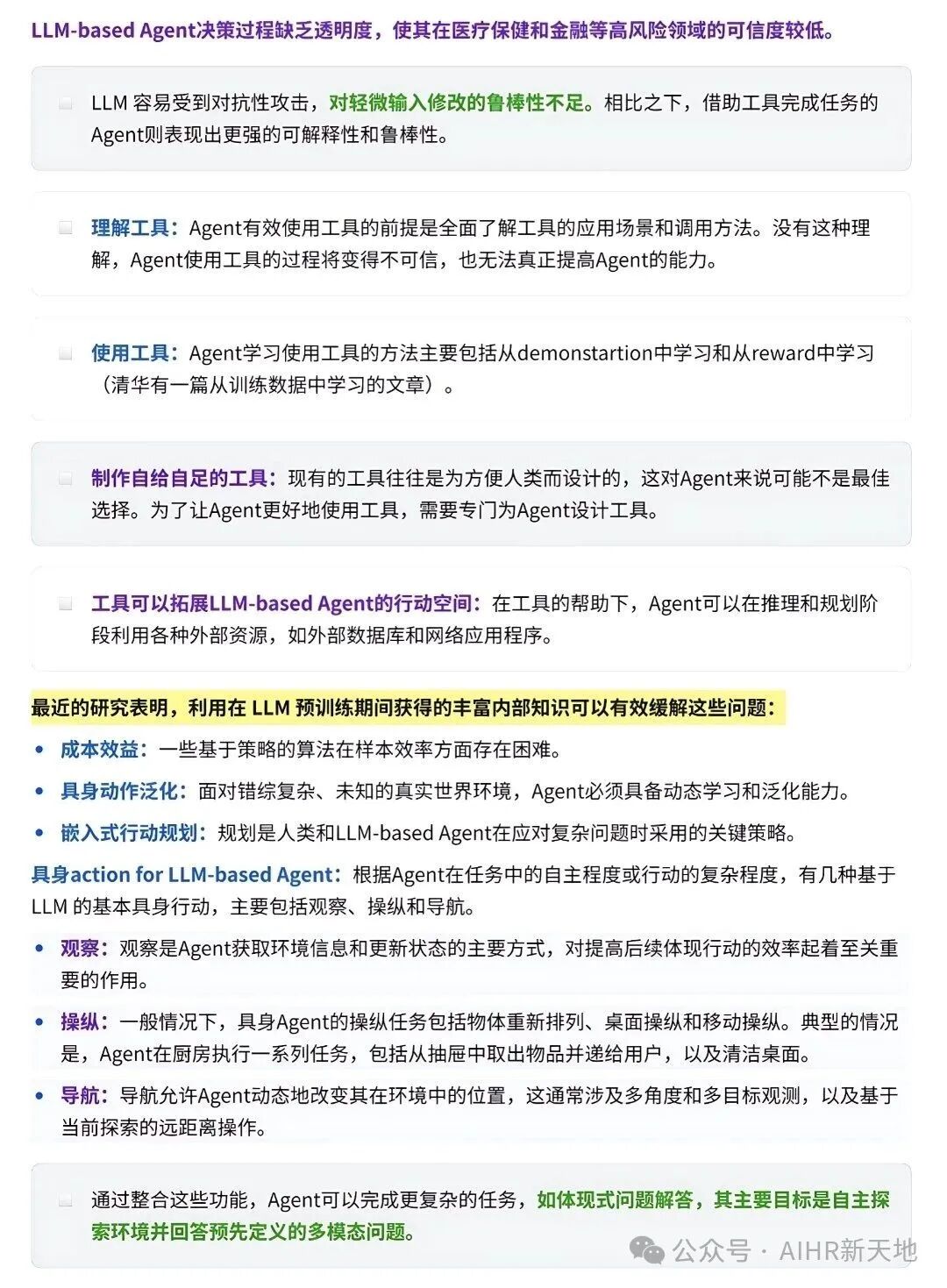
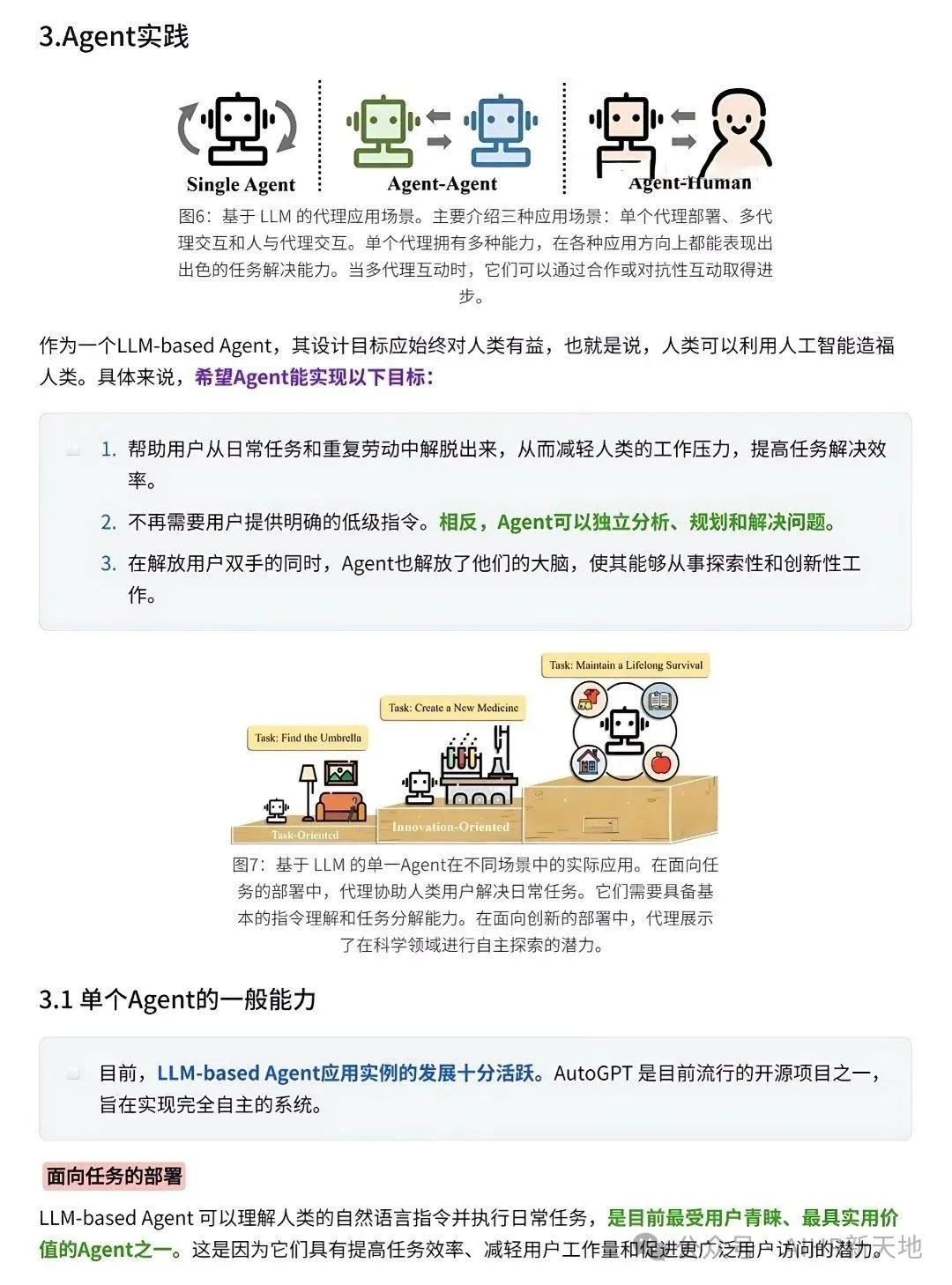
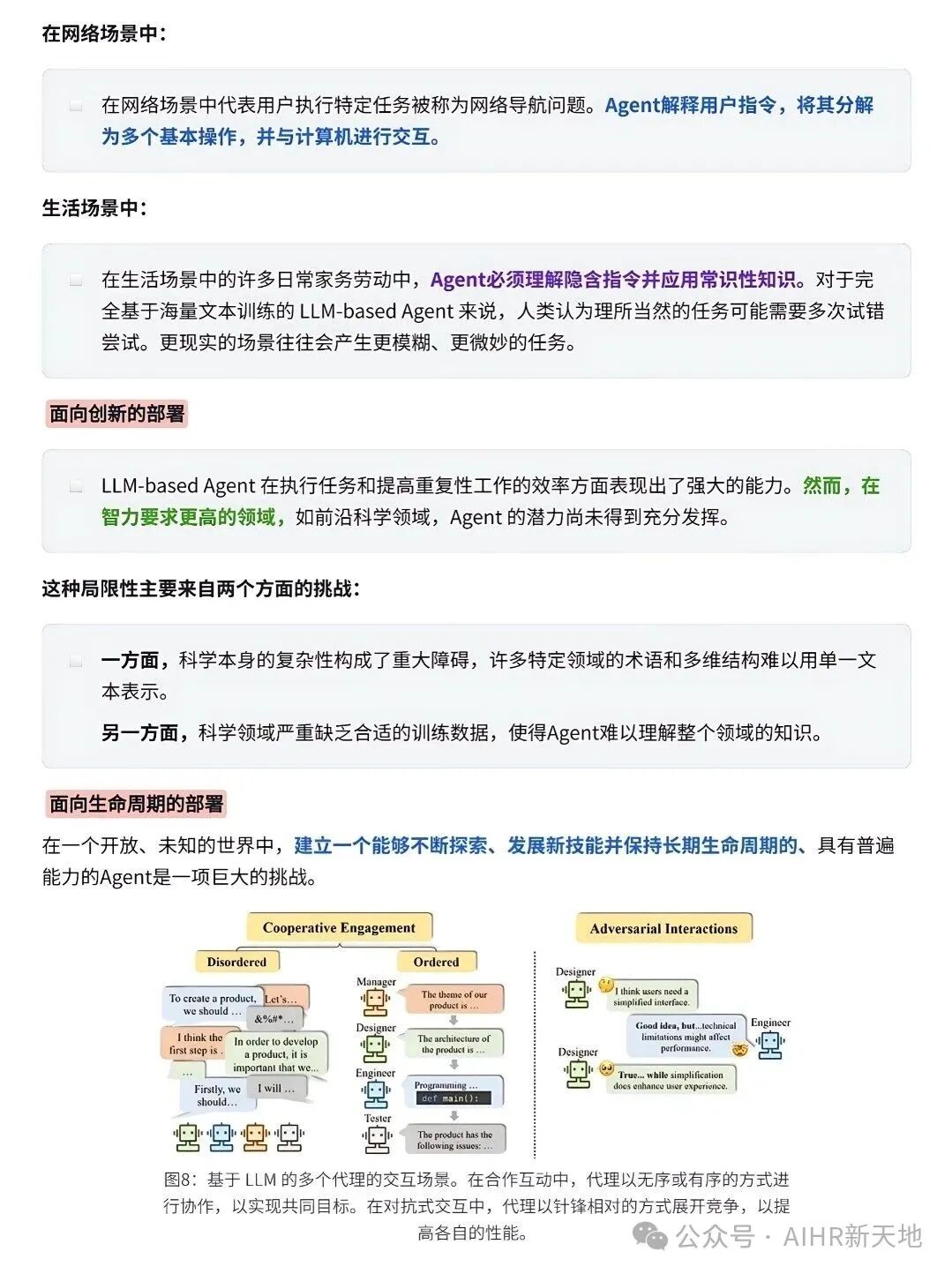
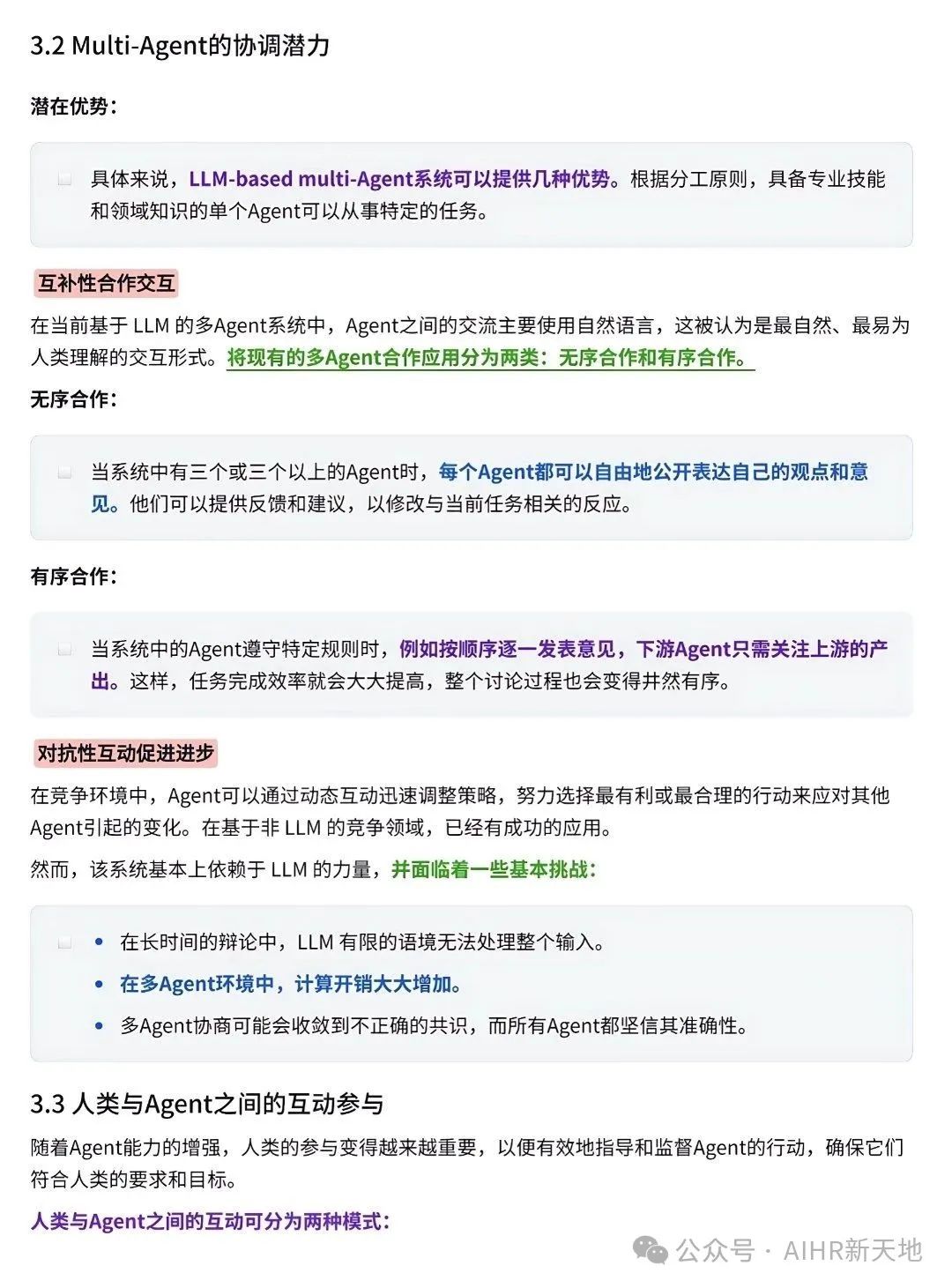
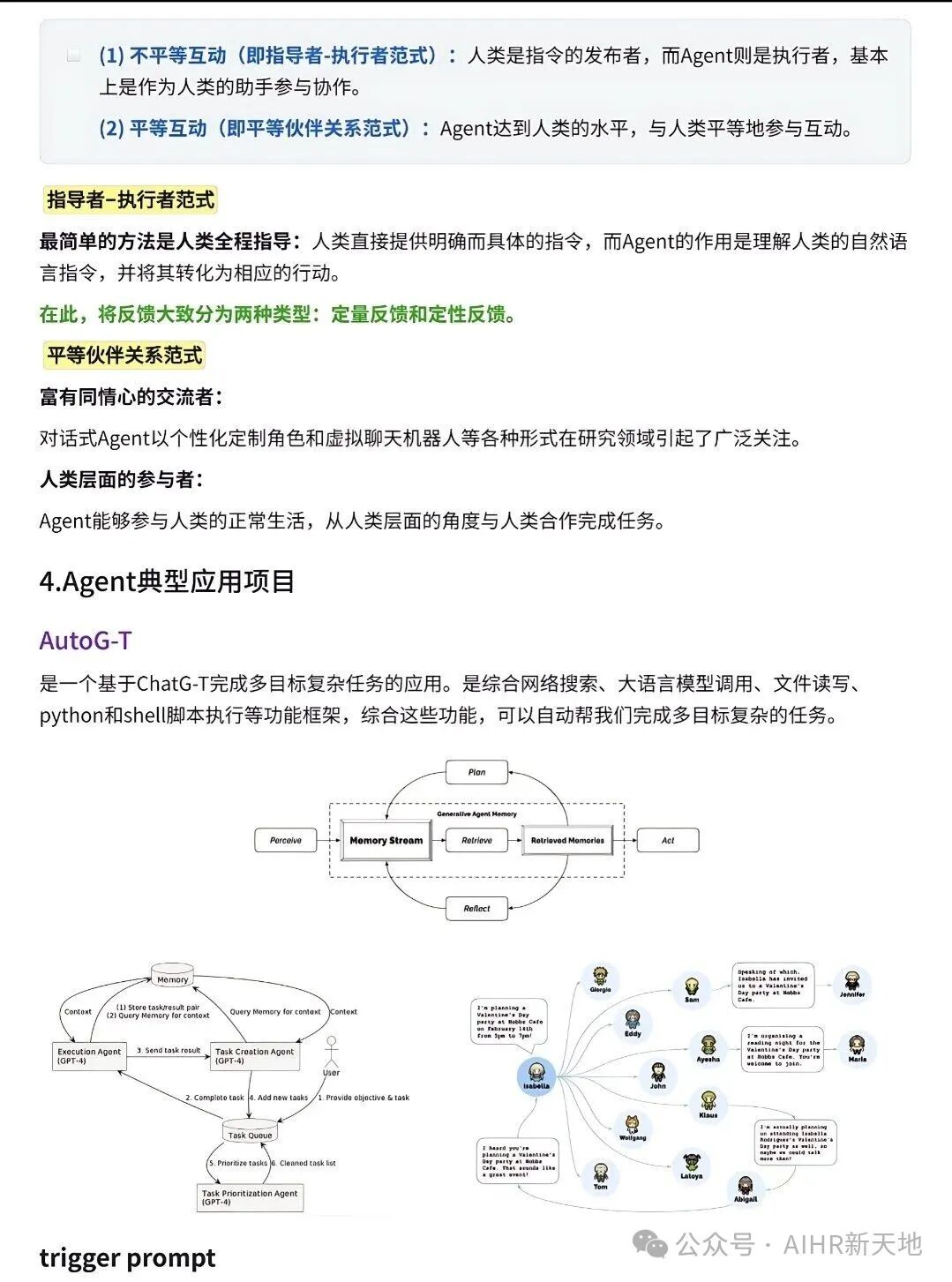
AI agents are mentioned in various contexts, but what exactly are AI agents? This article provides a simple and accessible interpretation for reference. An AI agent is an artificial intelligence system capable of autonomously executing tasks, typically possessing learning, reasoning, and decision-making abilities. These agents can operate in various fields, such as customer service, data analysis, and autonomous driving. They respond by analyzing data from their environment and continuously learn to improve efficiency and accuracy. With technological advancements, AI agents will play an increasingly important role in future work and life.