Abstract:With the continuous development of science and technology in China, maker education has always been a hot research area for many scholars and teachers. In the revision of the compulsory education curriculum plan and standards launched in 2019, labor education has also been a core topic of concern for experts. In labor technology teaching, teachers need to explore the significance of integrating maker education into labor technology courses from the perspective of maker education, the intrinsic connection between maker education and junior high labor technology courses, and the basic paths for integrating maker education into junior high labor technology teaching. This approach aims to leverage the advantages of maker teaching, gradually infusing concepts such as creation, practice, and sharing into junior high labor technology teaching, laying a foundation for students’ comprehensive development.
Keywords: Labor technology courses; Maker education; Teaching practice
Author’s Introduction: Xu Fei, teacher at Yuelong Middle School, Nantong City, Jiangsu Province.
With the rise of the maker movement, a new teaching method has emerged, known as maker education. The main characteristic of maker education is to immerse students in a real-life context, allowing them to solve practical problems through their own genuine experiences. The junior high labor and technology (hereinafter referred to as labor technology) course is an important type of course for enhancing students’ practical abilities and cultivating their core competencies. Maker education can help teachers improve the efficiency of innovative education and reform teaching methods.
The organic integration of maker teaching methods and labor technology teaching can enhance students’ innovative capabilities, thereby laying a foundation for their learning in other subjects and future development. This article starts from the extended value of applying maker education concepts in labor technology courses and proposes basic paths for the integration of maker education and labor technology teaching, aiming to provide theoretical and practical references for labor technology teaching.
1. The Connotation of Maker Education
“Creation” refers to creating, while “maker” refers to a person engaged in a certain activity. A “maker” originally refers to someone who dares to innovate and strives to turn their ideas into reality, specifically someone with innovative concepts and entrepreneurial spirit. With the continuous deepening and popularization of information culture, the development of information technology has given rise to maker culture. Once maker culture emerged, it received praise and advocacy from all sectors of society, not merely due to the simple act of creation, but because it embodies the spirit of innovation and hands-on practice.
The organic combination of maker spirit and education is what constitutes maker education. The purpose of maker education is to fully implement and embody the maker spirit, creating a real environment for students where they can solve practical problems through personal experiences, further cultivating them into imaginative and creative innovative talents.
For the labor technology course at the junior high level, although it is not part of the core subjects, its implementation can help students develop practical skills. Applying the practical knowledge they have mastered to theoretical learning can help students cultivate good habits of independently solving problems.
Since the implementation of the new curriculum reform, labor technology courses have received widespread attention from various schools, emphasizing the cultivation of students’ subject literacy, innovative spirit, and practical hands-on skills. Maker education advocates for cultivating students’ spirit of innovation and practice, aligning perfectly with the principles promoted by labor technology courses. Therefore, how to integrate maker education into junior high labor technology courses to cultivate outstanding students with a maker spirit is the main focus of this article.
2. The Significance of Integrating Maker Education into Labor Technology Courses
(1) Responding to National Educational Policies on Labor Education
The junior high labor course standards clearly outline the goals of labor course learning, emphasizing that the fundamental purpose of conducting labor courses is to stimulate students’ innovative awareness, broaden their imagination, and strengthen the cultivation of their subject literacy, thereby ensuring students’ enthusiasm and interest in learning. Today, vigorously promoting maker education and maker culture in junior high labor technology courses reflects the progress of human science and technology and serves as a major means of cultural expression. The organic integration of junior high labor technology courses and maker education can comprehensively enhance the overall quality of junior high students while responding to the national labor education policy.
(2) Implementing the Goals of Building an Innovative Country
Since the implementation of the reform and opening-up policy in China, both economic and scientific technological development have made rapid progress. Especially in information technology, it has now reached a certain height. At this height, a new innovative product has emerged, namely maker culture. The emergence of maker culture marks a new stage in the development of information technology, making international competition increasingly fierce. However, whether in international competition or competition among enterprises, to gain an advantageous position, it is essential to develop technologies and products that meet the needs of the people.
The development of these technologies and products relies on innovation. Only products infused with innovation can enhance comprehensive competitive capabilities. Therefore, we find that cultivating the innovative spirit of the populace and stimulating national awareness of innovation is an important component of China’s national development strategy. In the previous phase, due to the proliferation of counterfeit products and technologies, the cultivation of innovation in China faced certain obstacles. Thus, transitioning to an innovative country is an inevitable choice for China’s future development. At the same time, cultivating a group of Chinese makers with innovative spirit and practical hands-on skills is also a demand put forward by the development of China’s spiritual civilization. Therefore, as the future pillars of the nation, students need to cultivate their maker spirit in education, so that they can contribute to the realization of a prosperous and strong country in the future.
3. The Intrinsic Connection Between Maker Education and Labor Technology Courses
(1) Similar Course Concepts
The junior high labor technology course advocates cultivating students’ design literacy and practical skills through thematic activities. Students are the builders of future society, and cultivating their technical literacy from a young age is of paramount importance. Good technical literacy benefits students in enhancing their problem-solving abilities, achieving lifelong learning, and adapting to societal development. Under the perspective of maker education, junior high labor technology courses can allow students to play with interest, focus, and excitement; play with guidance, achieving smooth success; play cooperatively, fostering teamwork; play methodically, achieving scientific outcomes; and play with problems, fostering creativity and true skill.
(2) Similar Teaching Tools
In the seventh-grade labor technology course, tools such as carving knives, round chisels, cone tools, scissors, bent tweezers, needle-nose pliers, and rolling pins are used to create crafts; in the eighth-grade labor technology course, tools such as hand saws, jigsaws, files, adjustable angle rulers, sandpaper, and hand drills are used to create wooden products; in the ninth-grade labor technology course, tools such as wire strippers, screwdrivers, soldering irons, solder suckers, multimeters, bench vices, drill presses, and various sensors are used to complete electrical and metalworking studies. These tools are also required for maker education.
The emergence of maker education has brought tremendous opportunities for the reform of labor technology courses in China. The implementation and development of maker education in some cities in China also fully demonstrate its significant role in the field of innovation. The organic combination of maker spirit and labor technology courses can meet the demands of cultivating students’ core competencies as proposed in the new curriculum reform, ensuring students’ central position and allowing them to truly integrate theory and practice, thus promoting their progress towards the cultivation of core competencies.
4. Basic Paths for Integrating Maker Education into Labor Technology Teaching
(1) Implementing a “Two-Step” Strategy to Enhance Classroom Humanistic Value
To cultivate junior high students’ creativity, in addition to providing specialized maker courses, integrating maker spirit into labor technology courses is also a feasible strategy. For labor technology courses, the subject itself emphasizes cultivating students’ practical skills and techniques, highlighting the importance of experimentation and practice. The junior high labor technology course originates from students’ real-life experiences, cultivating their love for life through the production, display, and exchange of various handicrafts; utilizing real-life resources to expand teaching content, fostering students’ love for design. The continuous development of modern society demands higher expectations and desires for human innovative spirit, and the implementation of the new curriculum reform is an inevitable choice for China’s educational endeavors.
In recent years, one educational approach to strengthen the cultivation of creativity among middle school students is maker education. Maker education advocates the slogan “Everyone can be a maker,” which fully demonstrates the trend of integrating maker education with classroom teaching. Any curriculum reform is a gradual process and cannot be rushed. Maker education, by integrating with junior high labor technology teaching, can ensure that the content of the new curriculum standards is concretely implemented, ultimately achieving the goals of the new curriculum reform. This gradual model can not only train labor technology teachers but also help schools accumulate educational experience to explore a feasible and reasonable educational model for conducting labor technology courses. Therefore, this article proposes a “two-step” educational method to achieve the integration of maker education and junior high labor technology teaching.
1. Initial Integration of Maker Education and Labor Technology Teaching
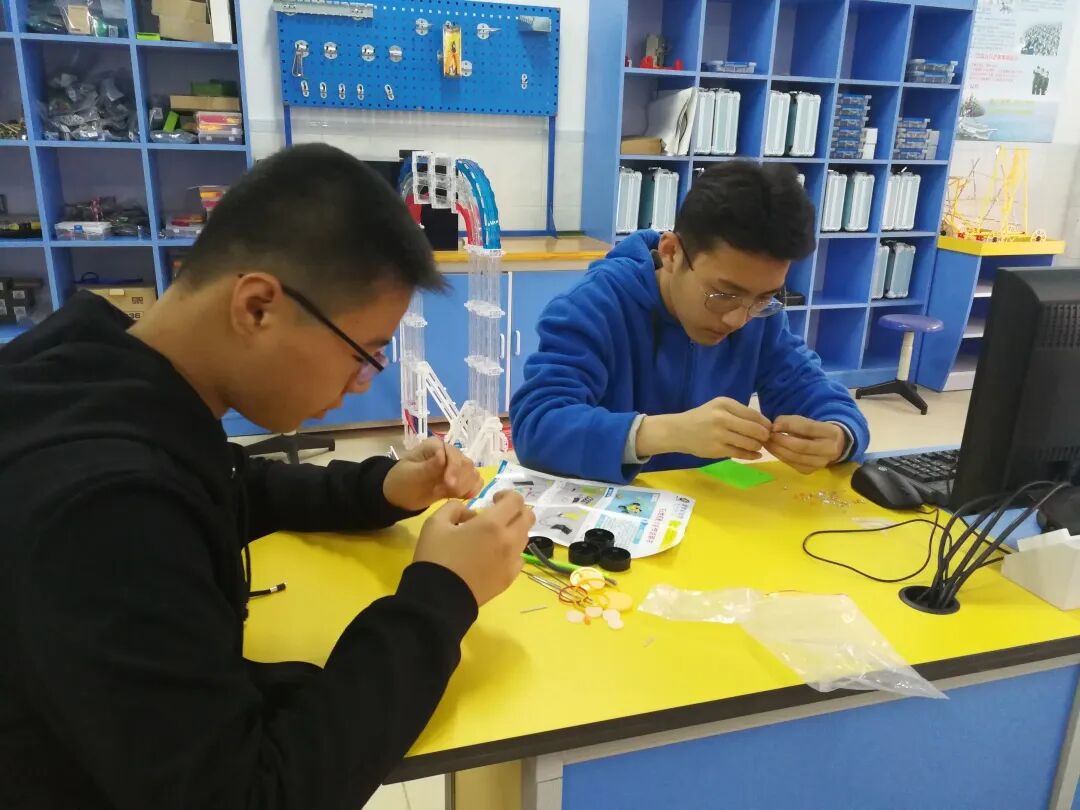
When offering labor technology courses in middle schools, teachers need to provide comprehensive labor and technology education, guiding students to engage in production and labor with patience and creativity. In this initial stage, teachers can present already completed maker products (such as wooden combs, robots, IoT doorbells, 3D printed models, etc.) as teaching aids during the teaching process. Compared to traditional self-made teaching aids, teaching aids made using maker tools and software are not only aesthetically pleasing but also scientifically sound. When teachers bring maker products into the classroom, they often stimulate students’ strong curiosity, allowing them to become “enchanted” by this “democratized” technology, fully showcasing the charm of maker teaching aids.
2. Deep Integration of Maker Education and Labor Technology Teaching
In this stage, teachers can collaboratively conduct maker-style labor technology classroom teaching with students. In traditional labor technology classroom teaching, teachers focus on students’ mastery of operational skills for the lesson, while in maker classrooms, teachers do not set clear standards for students’ skills but instead provide positive guidance on the problems students need to solve through heuristic questioning and divergent topics, stimulating students’ innovative and creative abilities. Through the inspiration and guidance provided by teachers, students can complete independent design and practice from the questioning phase to the final problem-solving phase. Students can also utilize brainstorming and teamwork to complete the practical tasks assigned by teachers. Throughout this process, both students’ comprehensive qualities are cultivated, and their innovative abilities are enhanced. Long-term exposure to this environment will lead to qualitative leaps in students’ thinking, enabling them to apply learned knowledge to practice and truly develop their potential value.
(2) Constructing a “Learn-Create-Share” Model to Develop Students’ Skill Literacy
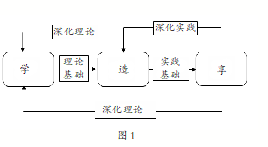
Through practical investigations, we find that maker education, with creation as its fundamental starting point, helps students learn to share during the process of creation. Chris Anderson once said, “The main characteristic of makers is the ability to showcase their works through online platforms, achieving self-sharing of their creations and further receiving feedback from others to improve their works, and these suggestions are permanently free.” In other words, while cultivating students’ innovative spirit, maker education also emphasizes the spirit of sharing, encouraging students to showcase their ideas and works to others. Meanwhile, promoting the organic integration of labor technology courses with maker spirit involves guiding students to achieve true creation and sharing based on their learning of labor technology knowledge. Therefore, we have constructed a “Learn-Create-Share” teaching model (see Figure 1).
1. “Learn” under the New Curriculum Standards
“Learn” under the new curriculum standards involves guiding students to learn the theoretical knowledge required by the curriculum standards. The junior high labor technology course emphasizes practical and hands-on skills, making it a subject that students love, and they have strong expectations and desires to learn this subject; however, practical operations cannot be separated from the support of theoretical knowledge. Mastering theoretical knowledge from textbooks is an important step in exercising practical abilities. Only by strengthening their learning of textbook knowledge can students apply knowledge to practice, promoting the mutual reinforcement of knowledge and practice.
Contemporary society is referred to as a “technological society,” and the essence of technology lies in creation. The “Learn” under the new curriculum should allow students to feel the impact of the “technological society” on our real lives, adapt to the changes in the new curriculum, and align with the development of the times. Labor technology teachers should focus on students’ adaptation to the “technological society,” emphasizing the unity of labor skill formation, mastery of thinking methods, and understanding of scientific culture.
In the maker-style labor technology classroom teaching process, teachers should also appropriately incorporate knowledge of maker education, such as 3D printing software and operations, Arduino, and other open-source hardware, allowing maker education to subtly permeate the labor technology classroom.
2. “Create” under Improved Strategies
Sukhomlinsky once said, “The more children labor, the more the mysteries of nature are revealed before their consciousness; they encounter new things and things they do not understand; and the more they do not understand, the more active their thinking becomes. Confusion and misunderstanding are the most reliable ‘fuses’ for thinking.” Therefore, in maker-style labor technology classrooms, teachers should be adept at discovering students’ sparks of thought, seizing the “fuse” of students’ thinking sparks, and guiding students to formulate improved creation strategies. For maker-style labor technology classrooms, it is not about aimlessly creating without purpose, as the physical resources for makers are limited and precious. To avoid resource waste, teachers must establish a comprehensive “debt strategy” before students begin their creations.
First, teachers should divide students into different groups and guide them in discussions to formulate creation strategies. The themes of group discussions should be related to creation strategies and not deviate from the topic. When formulating creation strategies, students need to clarify the reasons for their designs and the relevant knowledge applied, while also recording constructive suggestions made by group members.
Second, group members should collaborate through discussion and communication to draft a creation plan and sketch the design of the items to be created. During the sketching process, group members will discover defects and shortcomings in the design. When preparing the necessary materials, group members should cooperate, taking what is needed, greatly reducing resource waste and occupation.
Finally, group members should work together to efficiently complete the creation tasks. Each member of the group has their strengths, and teachers should guide students to fully leverage their advantages, collaborate, and ensure mutual independence during work time, avoiding interference. When problems arise, group members should discuss solutions together to efficiently complete the creation tasks.
3. “Share” in a Pleasant Atmosphere
For maker education, sharing and communication after the maker course is an important component. The purpose of conducting sharing classes is to provide students with a platform to share and communicate their feelings after creation. Group members are filled with anticipation about whether their finished products can enter the display case; they inherently possess a sharing quality, hoping that their completed works receive encouragement and recognition from everyone. Therefore, when evaluating students in sharing classes, teachers should select positive and encouraging evaluative language as much as possible, fully tapping into students’ sharing spirit. Meanwhile, teachers should also guide students within each group to conduct peer evaluations, requiring them to identify at least one advantage of other groups’ works that their own group’s work does not possess and to propose reasonable improvement suggestions.
(3) Leveraging Maker Teaching Aids to Expand Course Practice Implications
1. Arduino Development Platform
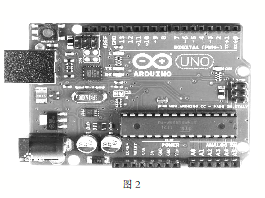
Arduino is an open-source development platform (an open-source development platform refers to a platform where the programming code is fully open, allowing for real-time changes to programming data). The Arduino circuit board (see Figure 2) is the hardware that makes up the platform, allowing computer code to be programmed onto the Arduino circuit board, enabling the program to control the Arduino circuit board and execute commands. When learning the ninth-grade “Electronics and Electrical” chapter, we can use the Arduino circuit board to complete studies on light-controlled alarms, sound sensors, and infrared sensors.
2. 3D Printer
The 3D printer (see Figure 3) is a magical invention created by scientist Enrico DiNi, making it possible to transform flat objects into three-dimensional ones; almost anything can be printed. 3D printing is characterized by rapid prototyping, based on digital model files, using special adhesive material ink to layer print three-dimensional objects into physical forms. As long as the data and materials are placed into the printer, the machine will manufacture the product layer by layer according to the settings.
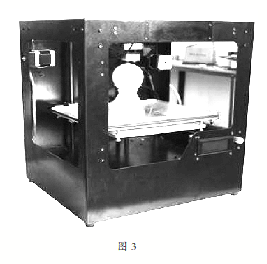
To create what one envisions using a 3D printer, one must first model it using 3D software on a computer, then transfer the constructed model to the 3D printer via USB or SD card, and after setting it up, printing can commence. In labor technology classrooms, 3D printers are among the most popular machines; students experience unprecedented satisfaction when they see their designed works gradually transformed into tangible entities by the 3D printer.
3. Maker Products
Maker products can be used as teaching aids in labor technology classroom teaching. Teaching aids refer to the physical objects or models related to the textbook content that labor technology teachers present to students during teaching; self-made teaching aids refer to the teaching tools created by teachers and students in class, providing students with tangible cognitive experiences; while maker teaching aids refer to the teaching tools made by teachers and students using maker space resources to stimulate students’ interest in learning. Teachers can present their completed maker products in the form of teaching aids in the classroom, leveraging the advantages of maker teaching aids to expand the implications of labor technology classroom practice.
Compared to traditional self-made teaching aids, teaching aids created by teachers using maker space are not only aesthetically pleasing but also more scientifically sound. For the Arduino open-source platform, it can produce many smart products, which students often believe can only be obtained by purchasing them in the market, such as magic cube robots; however, for 3D printers, the various models they print are more refined and superior than those made by hand. By incorporating maker teaching aids into labor technology classroom teaching, teachers can allow students to experience the changes brought about by technology while mastering more technological knowledge.
One of the ways to improve the effectiveness of junior high labor technology classroom teaching is to adopt effective teaching methods. By strengthening the integration of maker education and labor teaching, students’ innovative abilities can be significantly stimulated, further cultivating their practical abilities. Therefore, in labor technology classroom teaching, teachers need to fully leverage the advantages of maker teaching, gradually infusing concepts such as creation, practice, and sharing into junior high labor technology teaching, laying a foundation for students’ comprehensive development.
References:
[1] Fu Zhiyong. Maker Education and the Construction of Collaborative Spaces [J]. Modern Educational Technology, 2015, 25(5): 18-26.
[2] Wang Qiwei, Zhu Yaping, Chen Leilei. Implementation of Creative Design Courses under the Background of Maker Education—Taking the Junior High School Course “3D Printing Production of Induction Fans” as an Example [J]. Information Technology Education in Primary and Secondary Schools, 2016(8): 60-63.
[3] Zhang Zhihui. An Initial Exploration of Maker Behavior in Junior High Physics Teaching [J]. Middle School Physics: Junior High Edition, 2016, 34(9): 1-2.
[4] Zhou Huandao. Conducting Physics Experimental Classes under Maker Education [J]. Curriculum Education Research, 2016(16).
[5] Zhang Zhengguang. Effective Integration of Maker Education and Physics Teaching [J]. Teaching and Management, 2016(28): 47-49.
[6] Fu Zhiyong. Maker Education Leading the Wave of Mass Innovation [J]. Shanghai Education, 2015(17): 30-33.
[7] Zhu Zhitian, Sun Yanyan. Maker Education: An Innovative Educational Practice Enabled by Information Technology [J]. China Educational Technology, 2015(1): 8-9.
(Author’s Institution: Yuelong Middle School, Nantong City, Jiangsu Province)
(Editor: Zhao Jing)
Liaoning Education Magazine
WeChat Official Account: lnjyzz
Long press to identify the QR code to follow us