Source: 1. “VERSES® Unveils Robotics Architecture that Works Without Pre-Training” Today, while scrolling through my phone, I came across some news. Traditional robots and AI are often likened to a “leveling up” process that requires vast amounts of labeled training data to teach robots to recognize and perform tasks. This process is not only time-consuming and labor-intensive, but once the environment changes, these robots can easily experience “cognitive bottlenecks.” However, VERSES AI’s new architecture disrupts this model. The robots they have developed can complete complex tasks such as tidying up rooms, preparing food, and setting the table in a home environment without any prior training data, relying solely on “active exploration,” a self-learning method based on principles of neuroscience, achieving a success rate of 66.5%, surpassing traditional systems (54.7%). Their secret weapon is an intelligent system that integrates vision, planning, and control, mimicking how biological entities perceive, predict, and act, allowing robots to infer the best course of action as if they have a “brain.” This system has been validated through rigorous MetaHabitat benchmark testing, demonstrating extraordinary adaptability and learning capabilities.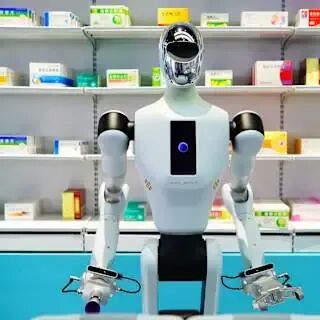 This breakthrough is not just a technical upgrade; it is a significant step towards robots achieving true intelligent autonomy and a key milestone in the process of machines’ “self-awareness.” As we know, preparing training data for AI is burdensome and expensive, especially in fields that require meticulous labeling and large sample sizes. VERSES’ no-data learning system undoubtedly lowers this barrier significantly. The development team is no longer bogged down by “data hell” and can focus more on algorithm and application innovation, rapidly enhancing robot development efficiency. This means that in the future, more startups and niche applications will easily have access to intelligent robots, rather than being monopolized by giants. Traditional systems often struggle when encountering new environments or scenarios. However, changes in the real world are inherently unpredictable, especially in rare or urgent situations where there may be no reference data available. At such times, robots with the ability to generate tasks endogenously and reason autonomously become particularly valuable. They can not only “learn by themselves” from the environment but also flexibly adjust their behavioral strategies, achieving true flexibility and dynamic adaptability, making intelligent robots more aligned with real and complex application needs. The self-learning capability brings about robots’ self-correction and self-optimization abilities, while simultaneously reducing reliance on human intervention. Such robots are not only efficient but also safer and more robust, providing lasting and reliable intelligent services across various scenarios such as homes, industries, and warehouses. Imagine how much easier and more enjoyable your home life would be when robots truly understand “how to do things appropriately.” Lowering the technical barrier not only facilitates research and development but also accelerates the commercialization process. More teams can participate in innovation, leading to a simultaneous improvement in the variety and quality of products in the market. Competition fosters the emergence of better products, allowing intelligent robots to truly enter thousands of households. The absence of a need for large amounts of external data means that user privacy and corporate confidentiality are inherently protected. In an era where data security and privacy protection are increasingly important, this undoubtedly paves the way for the compliant application of intelligent robot technology. From the current technological breakthroughs, robots can explore and learn on their own without being “brainwashed” in advance. This is not only a revolution in the underlying logic of AI but also a crucial step in leading intelligent robots from passive execution to active adaptation. Future robots will no longer be constrained by data traps but will truly become flexible, adaptable partners that can think and act.