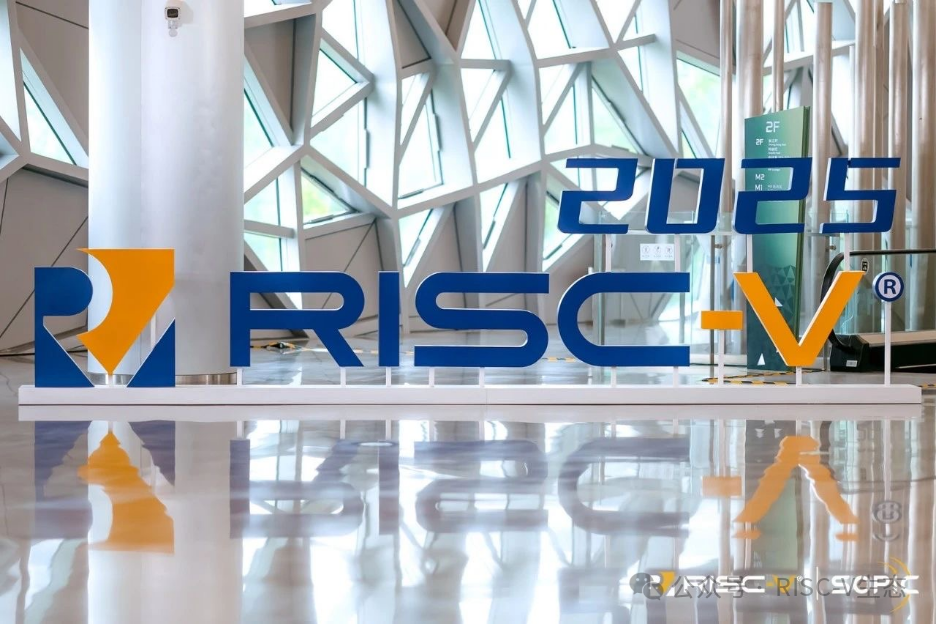
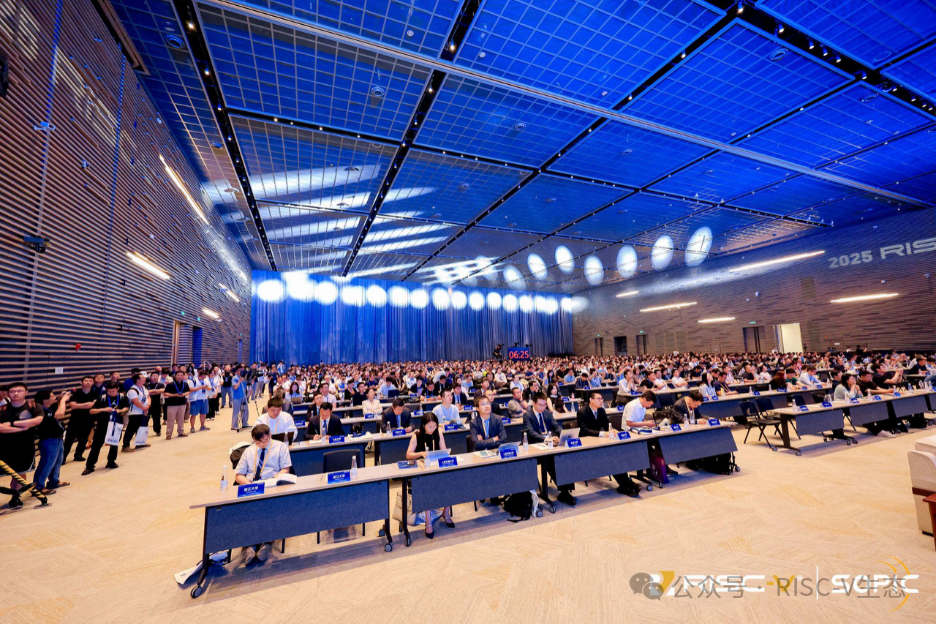
The 2025 RISC-V China Summit was unprecedented in scale, with attendance exceeding 4,000. The main venue was in high demand, and many attendees stood along the sides to participate. This was my second time attending this summit since I began working with RISC-V development, and the information density over the two days was extremely high, providing much to reflect upon.
“CUDA is coming to RISC-V” — The most significant announcement of this summit
If I had to select the most impactful statement from this conference, it would undoubtedly be“CUDA is coming to RISC-V.”
Frans Sijstermans, Vice President of Hardware Engineering at NVIDIA, officially announced during the keynote speech titled “Enabling RISC-V Application Processors in NVIDIA Compute Platforms” that NVIDIA is porting the CUDA software ecosystem to processors based on the RISC-V architecture. This means that RISC-V will truly enter the mainstream view of high-performance computing platforms, with RISC-V processors standing alongside Arm and x86 as officially supported platforms for NVIDIA GPUs.
This is undoubtedly a rare “window of opportunity” for RISC-V CPU manufacturers, especially those in China. However, it also raises the bar: future ecological competition will no longer be solely about whether the “CPU is powerful enough,” but rather whether the “entire platform capability is complete,” including critical factors such as memory bandwidth and inter-chip connectivity, which will become the decisive battleground for high-performance applications.
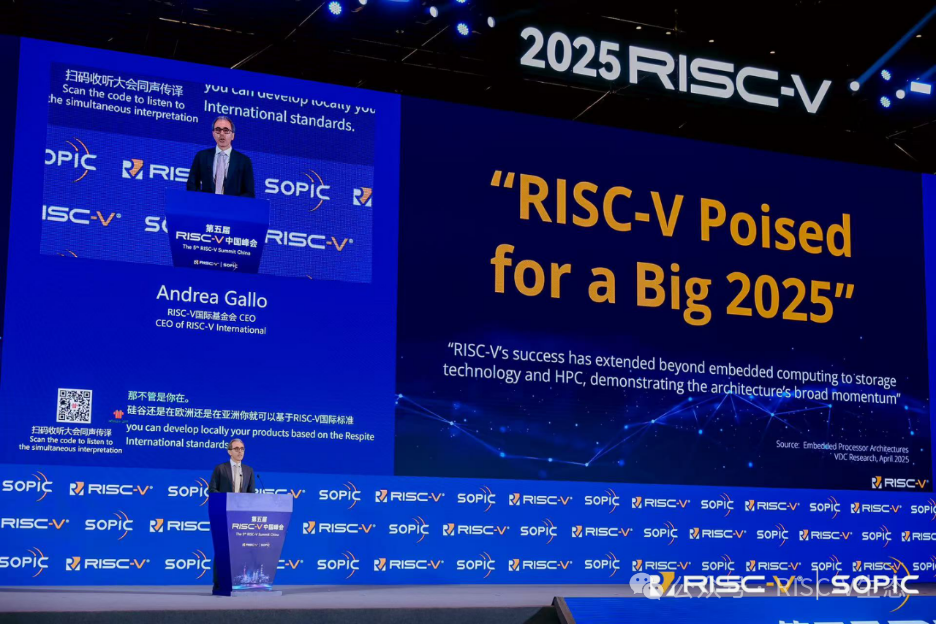
Strong lineup of international guests – “RISC-V Poised for a Big 2025”
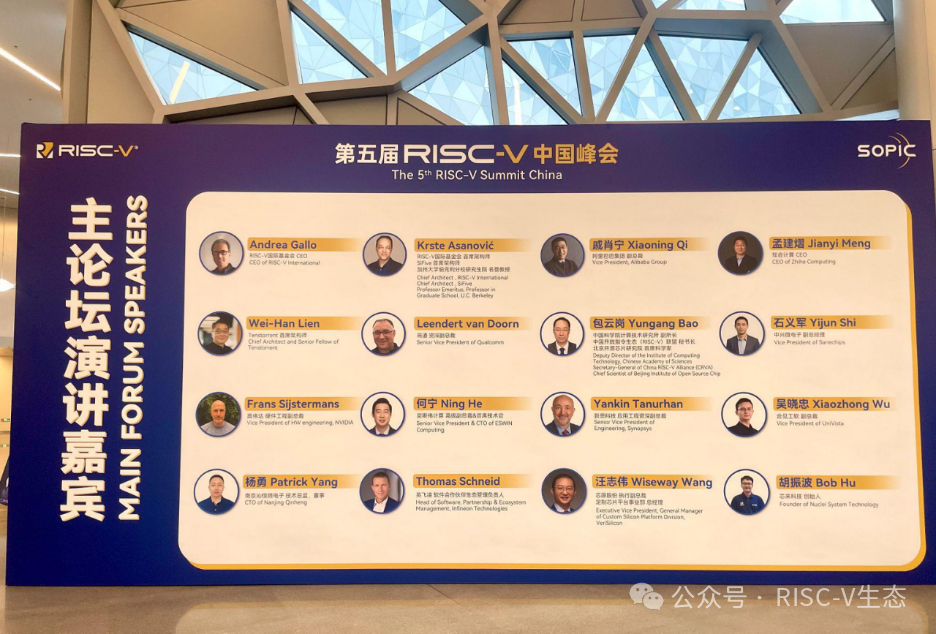
Compared to previous years, the proportion of international speakers at this summit significantly increased. Among the 16 speakers at the main forum, about 7 were from overseas, who flew in specifically to share the latest developments and insights on RISC-V.
Their presentations not only focused on architectural development trends but also emphasized the importance of the software ecosystem, highlighting the global RISC-V community’s ongoing attention to the Chinese market and developer ecosystem.
Notable speakers included:
●Andrea Gallo, CEO of RISC-V International
●Krste Asanovic, Chief Architect of RISC-V International, one of the founders of RISC-V and SiFive
●Leendert van Doorn, Senior Vice President at Qualcomm
●Frans Sijstermans, Vice President of Hardware Engineering at NVIDIA
●Wei-Han Lien, Chief Architect at Tenstorrent
●Thomas Schneid, Head of Software Partnerships at Infineon
RVA23: Frequent IP solutions, mass production still to be observed
Since the RVA23 standard was officially approved in October 2024, high-performance RISC-V CPUs compatible with this standard have remained a focal point for various manufacturers at this summit:
●Beijing Open Source Chip Research InstituteNanhu V5, Kunming Lake V2
●SpacemiT X100/X200
●Alibaba DAMO Academy Xuantie C930
●SiFive P870-D
Unfortunately, most are still in the IP stage and have not yet achieved tape-out.
Currently, it seems that SpacemiT is the most likely company globally to achieve mass production of RVA23 first. They showcased a clear roadmap for two chips: K3 (16 cores) and V100 (64 cores), aiming for tape-out in the fourth quarter of this year. SpacemiT’s presentation was one of the most discussed among domestic manufacturers at this summit.
Ecology, ecology, always ecology
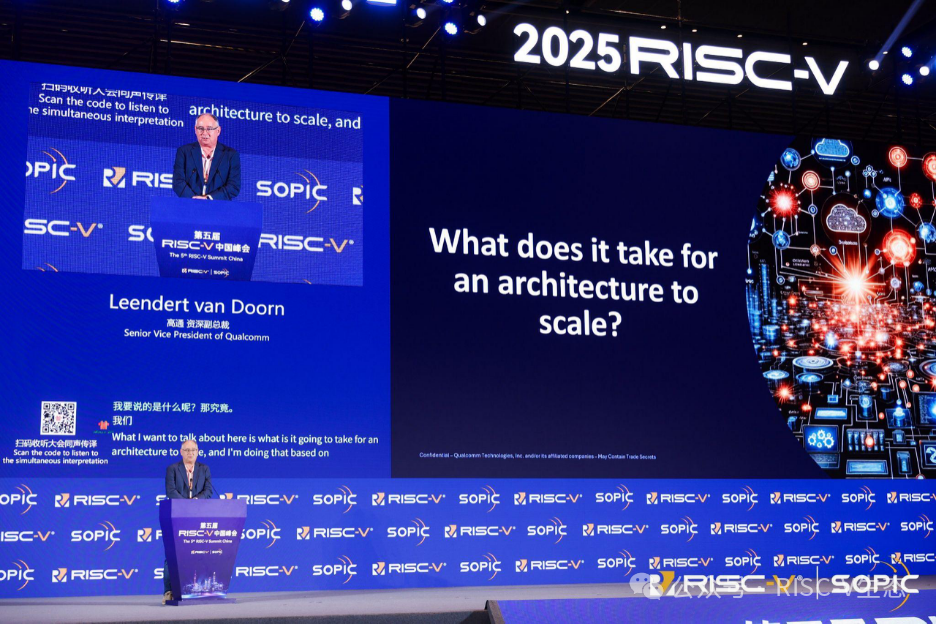
Leendert van Doorn, Vice President at Qualcomm, in his keynote (Scaling RISC-V: Embracing a Platform and Ecosystem Mindset), hardly discussed any chip plans but instead spent 15 minutes posing a question:
“What does it take for an architecture to scale?”
He focused on the construction of the software ecosystem:“We must transition our understanding of RISC-V from merely an ‘ISA’ to the height of an ‘ecosystem.’” (The original quote was: “Transition our thinking and vocabulary of RISC-V as an ecosystem, not just an ISA”). Leendert pointed out that Qualcomm alone cannot complete the construction of the RISC-V ecosystem; it requires the participation of the entire community.
This resonates with NVIDIA’s strategy of promoting CUDA on RISC-V. Both giants expressed a high regard for the software ecosystem at the RISC-V Summit China, indicating that they view China’s large developer community as one of the core forces in building a global ecosystem.
Trivia: About the RVA Profile, there is no RVA24, but RVA30
In Krste’s keynote, he revealed a rather significant detail:
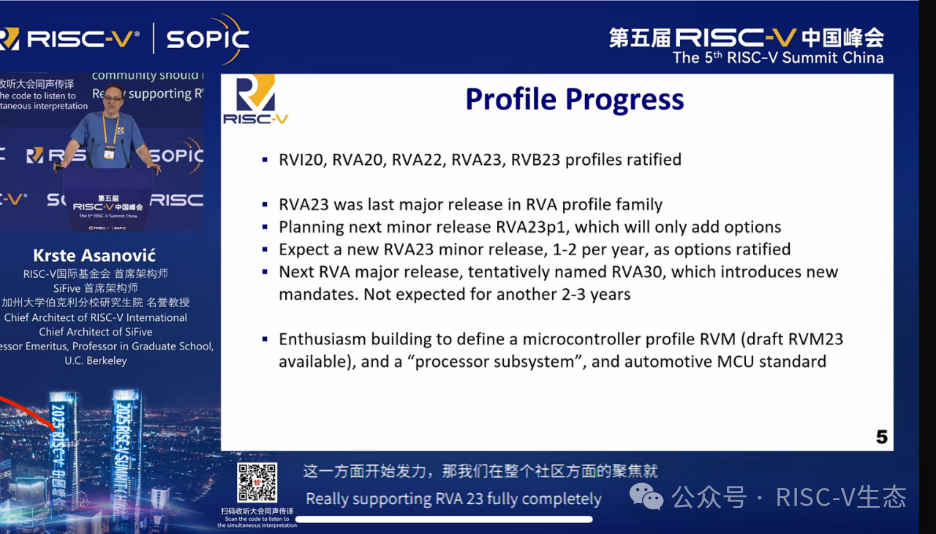
“The next generation specification (Profile) will not be called RVA24, but rather RVA30.” This is quite a leap. So what about the intervening years?
Krste indicated that the foundation will adopt a naming strategy similar to Arm — each year’s feature set will be released in the form of RVA23p1, p2, akin to the cadence of Armv8.1, v8.2. This continuous iteration also provides a more stable and progressive adaptation path for the software ecosystem.
Is Arm present? Indeed, it is
During the conference, I encountered several Arm employees, some representing the company to understand the developments of RISC-V, while others seemed to be planning their next career steps. The presence of so many former colleagues and friends from the Arm ecosystem at the RISC-V conference raises the question of whetherArm itself is closely monitoring or even anxious about the rapid evolution of RISC-V?
China’s influence is steadily increasing in RISC-V International
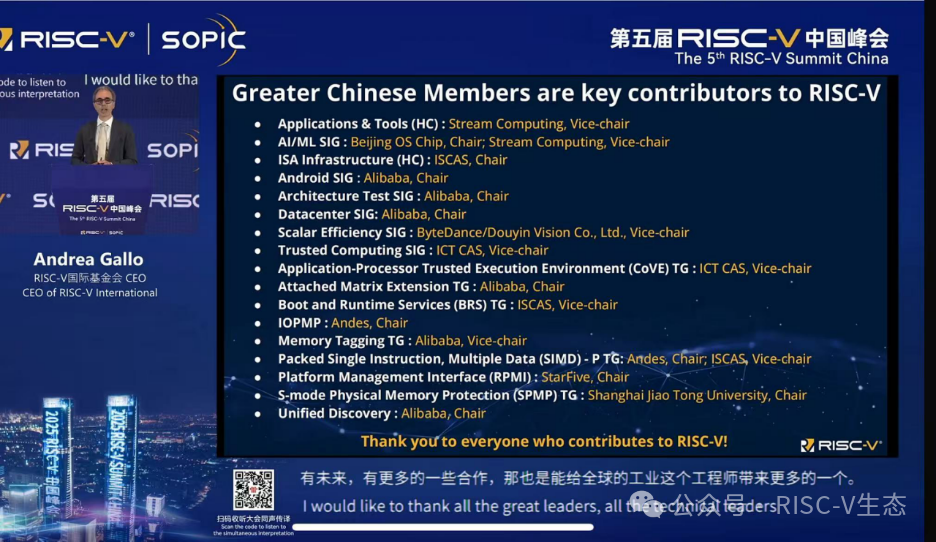
Andrea Gallo, CEO of RISC-V International, specifically mentioned in his speech that engineers from China are increasingly participating in core technology groups (HC, SIGs, TGs) and taking on key roles such as chair or vice-chair.
This is not only a note of thanks but also signifies that China is transitioning from being an “ecosystem user” to a “rule maker” and “technology contributor.”
Final Thoughts
As an engineer who has long been involved in upstream kernel development for both Arm and RISC-V, this summit deepened my understanding of the openness and potential of the RISC-V ecosystem, while also clarifying the future challenges: ecology is not something that can be waited for; it is built step by step.
In closing, I would like to quote a statement from Professor Bao Yungang, Secretary-General of the China Open Instruction Ecosystem Alliance (CRVA) and Chief Scientist at the Beijing Open Source Chip Research Institute, made at this summit: “If RISC-V is only used as a direct replacement for ARM, it will be a waste of talent.”
May we work together to promote this open architecture towards true ecological prosperity and technological innovation. The era of RISC-V is beginning.
Xu Guodong, CRVA Ambassador, RISCstar China Operations Director