The development of artificial intelligence may exceed expectations. Currently, AI Agents are rapidly being implemented, quietly changing the landscape of the inspection and testing industry. With their autonomy, learning capabilities, and collaboration, AI Agents bring unprecedented transformative opportunities to the inspection and testing sector. Next, let us delve into the rich and diverse application scenarios of AI Agents in this field.
👉 Intelligent Sample Management

1. Sample Reception and Registration
Inspection and testing institutions receive a large number of samples daily. In the traditional model, staff must manually record sample information, which is not only time-consuming but also prone to errors. AI Agents can quickly and accurately extract key information such as sample name, source, number, and testing items from sample labels and submission documents using Optical Character Recognition (OCR) technology, and automatically complete the registration process. For example, in a large food testing institution, manually registering 100 samples used to take about 2 hours, with an error rate of approximately 5%. After introducing AI Agents, the registration time was reduced to 20 minutes, and the error rate was nearly zero, significantly improving the efficiency and accuracy of sample reception.
2. Sample Storage Management
Sample storage must adhere to strict conditions such as temperature and humidity. AI Agents can monitor the storage environment in real-time and automatically adjust storage device parameters based on sample characteristics. For instance, for temperature-sensitive biological samples, if the cold storage temperature exceeds the set range, the Agent will immediately activate cooling or heating devices while sending a warning message to the management staff, ensuring that samples are always kept in suitable storage conditions, thus guaranteeing the reliability of testing results.
👉Intelligent Testing Process Planning and Execution
3. Testing Plan Formulation
Formulating the optimal testing plan for different types of samples and testing requirements is not an easy task. AI Agents can analyze historical testing data, industry standards, and the latest research results to recommend the most suitable testing methods, instruments, and operational steps for specific samples. For example, in environmental testing, for heavy metal detection in water samples, the Agent will consider factors such as the source of the water sample and the degree of pollution, comprehensively evaluating the pros and cons of various methods like Atomic Absorption Spectroscopy and Inductively Coupled Plasma Mass Spectrometry to provide the most appropriate testing plan, effectively improving the accuracy and efficiency of testing.
4. Equipment Scheduling and Operation
Inspection and testing institutions possess numerous instruments and devices, and rational scheduling of equipment can enhance utilization rates. AI Agents can automatically arrange equipment usage times based on the priority of testing tasks, equipment usage status, and maintenance schedules. During the execution of testing tasks, the Agent can also perform automated operations according to preset programs by interfacing with the instruments. For example, in a materials testing laboratory, multiple electron microscopes may simultaneously undertake different sample testing tasks, and the Agent can precisely coordinate the working times of each device, avoiding idle time or conflicts while controlling the microscopes to complete focusing, imaging, and other operations, thereby reducing manual operation errors.
👉Real-time Data Monitoring and Analysis
5. Data Collection and Real-time Monitoring
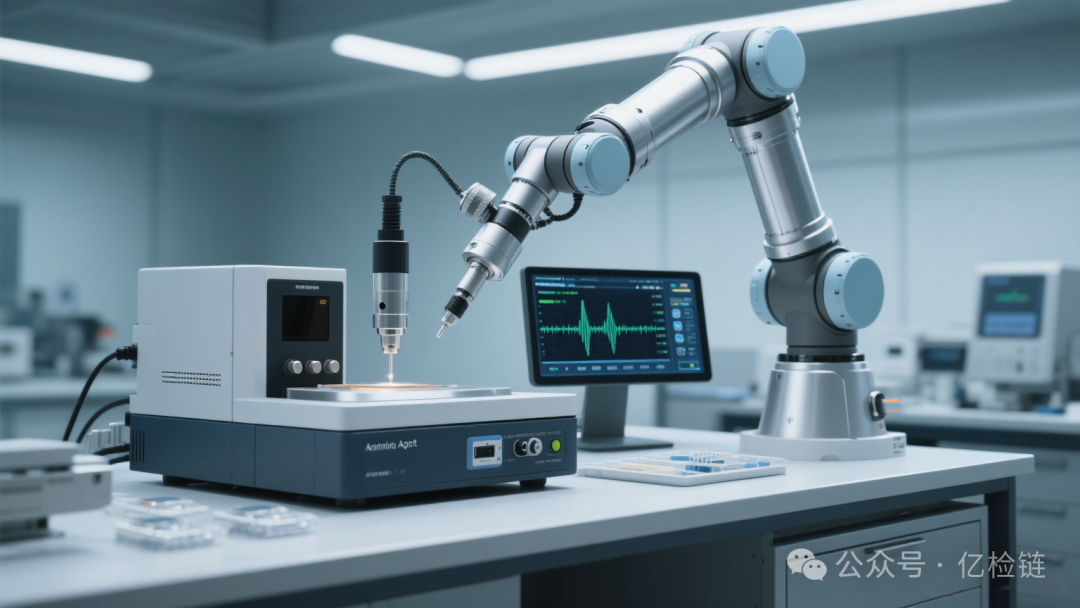
During testing, a large amount of data is generated. AI Agents can collect data from various testing instruments in real-time and monitor the data continuously. If any abnormal fluctuations in the data are detected, an alert is immediately issued. For instance, in drug quality testing, if the data output from a High-Performance Liquid Chromatograph shows abnormal peak shapes or retention time shifts, the Agent can instantly capture this and notify the testing personnel to take timely measures to prevent erroneous results.
6. Data Analysis and Result Prediction
Agents utilize machine learning algorithms to conduct in-depth analysis of the collected data, not only determining whether the testing results are qualified but also predicting trends in the results. In reliability testing of electronic products, by analyzing data from multiple fatigue tests, the Agent can predict changes in product performance over time, helping companies optimize product design or formulate maintenance strategies in advance.
👉 Intelligent Report Generation and Review

7. Report Generation
After testing is completed, generating standardized and accurate reports is crucial. AI Agents can automatically generate testing reports based on testing data, preset report templates, and industry standards. The report content not only includes testing results but also analyzes and interprets the results. For example, in a construction materials testing report, the Agent will detail whether the materials meet relevant construction standards based on the testing data and provide suggestions for potential issues.
8. Report Review
During report review, AI Agents can quickly compare testing data with standard requirements, checking the completeness and accuracy of the report content. For any non-compliance, the Agent will mark it and provide modification suggestions. This significantly reduces the workload of reviewers and improves review efficiency. For instance, in a third-party environmental testing institution, the average time for manual review of a report used to be 30 minutes, but with the use of AI Agents, the review time has been reduced to under 5 minutes, and the accuracy rate has increased from 90% to over 98%.
👉 Intelligent Customer Service
9. Inquiry Response
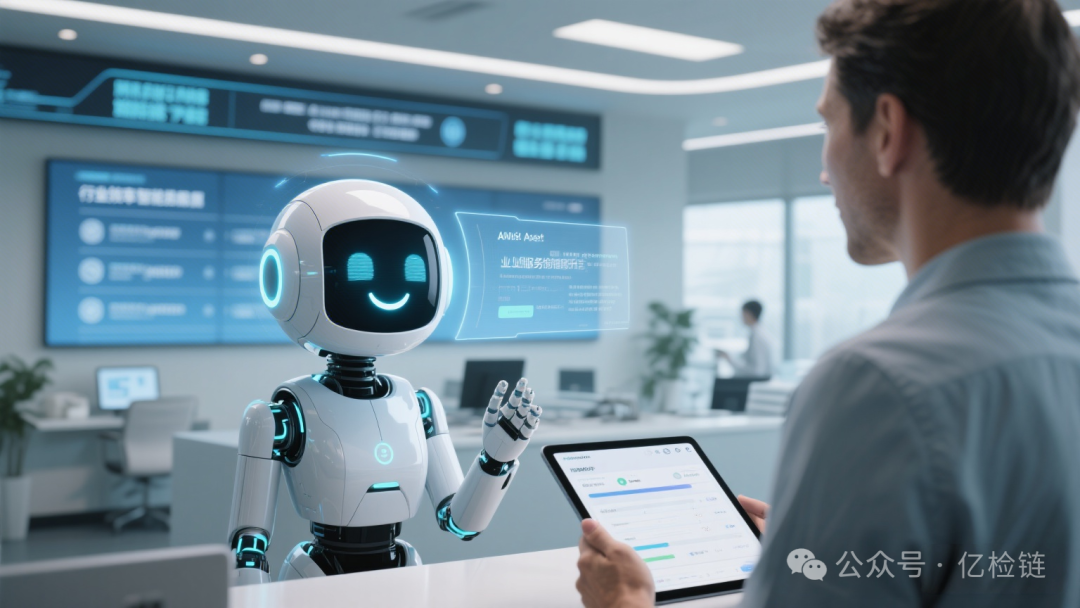
Customers often have various questions during the sample submission process. AI Agents can utilize natural language processing technology to provide real-time answers to customer inquiries regarding testing items, processes, costs, and timelines. Whether through online customer service on websites, WeChat public accounts, or phone calls, the Agent can respond to customer inquiries in a professional and accurate manner, enhancing customer satisfaction.
10. Progress Inquiry and Feedback
Customers can inquire about testing progress at any time, and the Agent can obtain real-time testing information from the system, promptly informing customers of the current stage of their samples. After testing is completed, the Agent can also proactively push the testing report to customers and collect feedback to help the institution continuously improve its services.
AI Agents have a wide and in-depth range of applications in the inspection and testing industry, enhancing efficiency, accuracy, and intelligence across the board, from sample management to report generation, from testing process execution to customer service. With the continuous development and improvement of technology, it is believed that AI Agents will bring even more surprises and transformations to the inspection and testing industry.
What scenarios do you think cannot be replaced? Feel free to leave a comment.
🤜 Follow me to seize this wave of AI dividends!